Why Spray Services Are Critical Before Winter Winds
Estimated Reading Time: 7 minutes
Author: Jim Sprouse | Co-Founder, Ember Pro | BS Environmental Science, Allegheny College
Expert Technical Review: Ryan Kresan, Ember Pro Wildfire Defense Systems Specialist on December 1, 2025
Table of Contents
- Why California’s wind season is more dangerous than you think
- What seasonal spray services do—and don’t do
- Why timing matters: before wind events
- How retardant spray works vs water
- Where Ember Pro spray strategies focus
- How spray fits into a wildfire action plan
- What homeowners are saying
- Frequently asked questions
- Related articles and next steps
- References
Why California’s Wind Season Is More Dangerous Than You Think
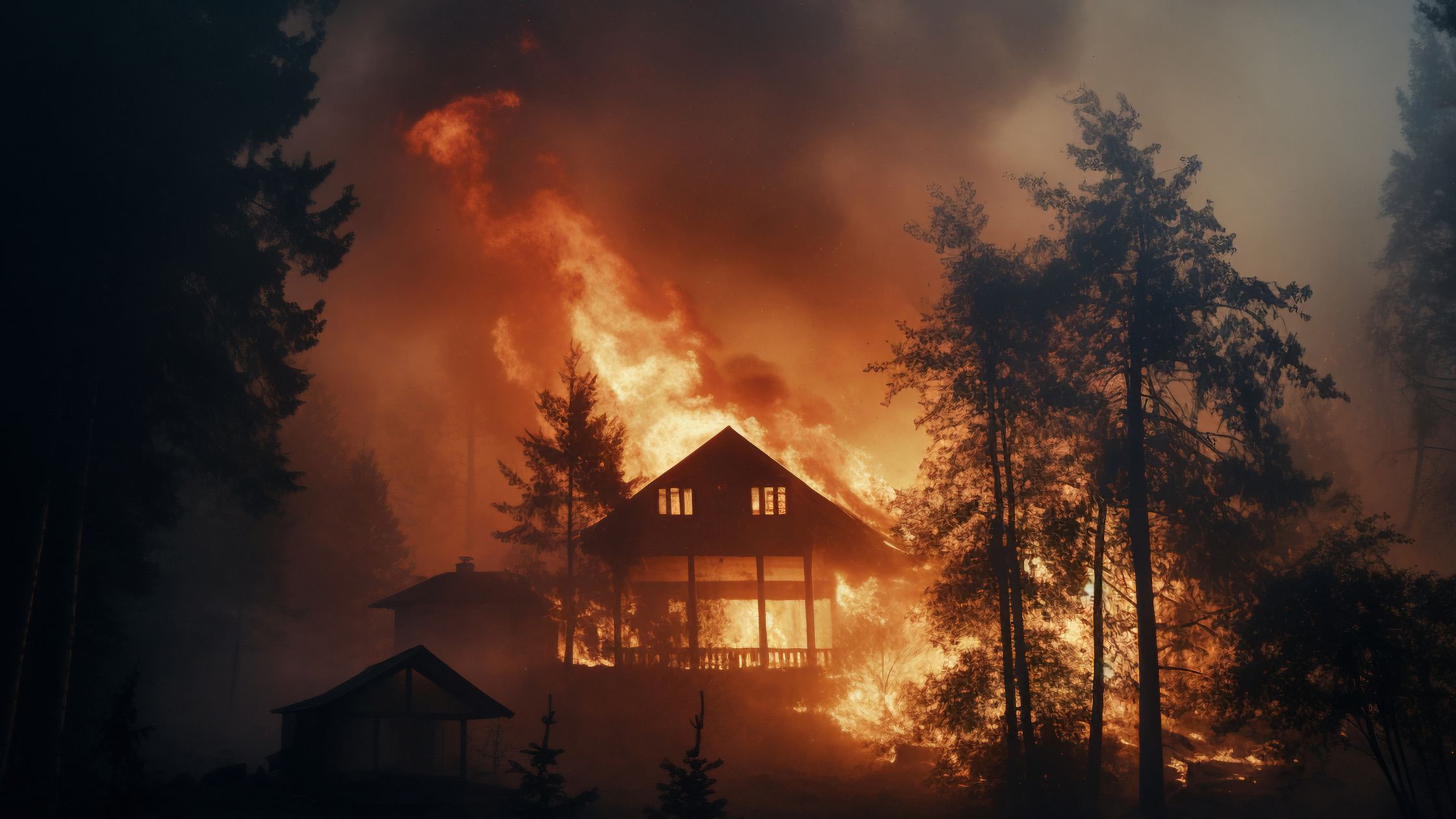
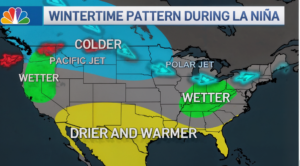
Many homeowners focus on summer heat but California’s most destructive wildfires often strike after October, especially in La Niña years like 2025–2026.
This winter, La Niña conditions are forecast to persist, bringing:
- Stronger and more frequent offshore winds (Santa Ana, Diablo, Sundowner)
- Lower humidity and reduced rainfall in Southern California
- Drier vegetation and explosive fire behavior later into winter
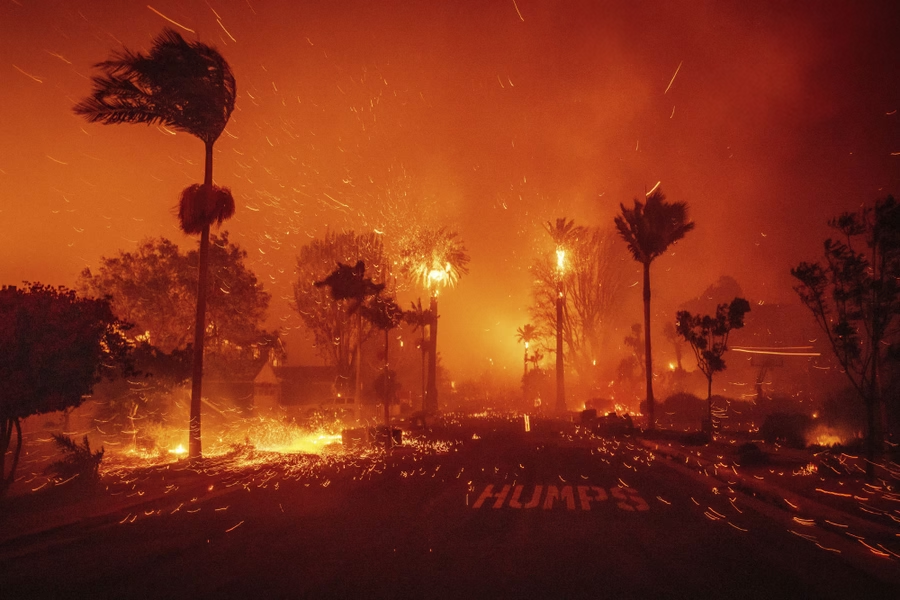
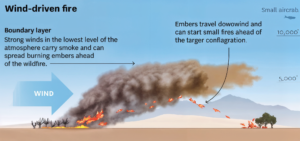
These winds carry embers for miles, knock out power infrastructure, and drive fast-moving fires across dry terrain. With La Niña active, the 2025–2026 winter season is shaping up to be more dangerous than average.
That’s why Ember Pro emphasizes pre-wind spray services in November/December before the first red flag conditions strike.
What Seasonal Spray Services Do—And Don’t Do
Spray services apply a Class A fire retardant to the most vulnerable surfaces around your home.
Used correctly, spray can:
- Prevent ignition from wind-driven embers
- Slow or stop low-intensity flame spread
- Protect wood fencing, decking, vegetation, mulch, outbuildings
But spray is temporary. It must be reapplied before each fire season—or before a forecasted high-risk event.
Spray doesn’t replace hardening or a permanent system. It adds time to your home’s survivability window.
Why Timing Matters: Before Wind Events
In fire mitigation, timing is everything.
Spray needs time to dry and bond. Weather must be:
- Dry (no rain in 24–48 hours)
- Calm enough for even application
- Early enough to beat forecasted winds
That’s why Ember Pro targets November spray operations—just before wind season ramps up. Waiting until December or January is often too late.
How Retardant Spray Works vs Water
Water is effective—for minutes. Retardant works for weeks. But not all retardants are created equal.
At Ember Pro, we use professional-grade, non-toxic Class A retardants designed to withstand at least 3-4 inches of rainfall once cured. This ensures your home remains protected even if light winter storms pass through after application.
Cheaper sprays may wash away too quickly, offering little to no protection during a real fire event.
Where Ember Pro Spray Strategies Focus
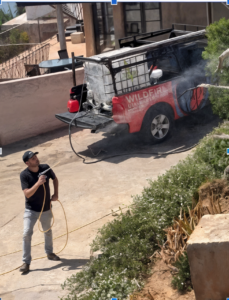
We don’t spray every inch of your yard. We focus on ignition zones.
High-value targets include:
- Fencing within 5–10 feet of the structure
- Under-eave vegetation and mulch
- Decks, patio furniture, and outbuildings
- Wood steps, trellises, and overhead arbors
- Slope-facing vegetation below the structure
Our crews are trained to identify these targets during a spray walkaround and use weather-timed application to maximize effectiveness.
How Spray Fits Into a Wildfire Action Plan
Spray services are a strategic layer—not a full plan.
A complete Wildfire Action Plan should include:
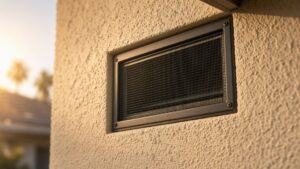
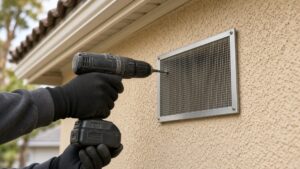
- Ember-resistant vents and roofing
- Defensible space compliance (Zone Zero)
- A permanent Wildfire Defense System (where applicable)
- Wildfire alert and evacuation app setup
- Seasonal spray as the outermost line of defense
Ember Pro uses spray both as a bridge strategy before system installs and as an additional layer for extreme risk properties.
What Homeowners Are Saying
“The winds came through just a week after our spray. Our fence line lit up—but it never reached the house.”
– Eric G., Ventura County
“We’re not ready for a full system yet. Spray gave us time to plan without feeling exposed.”
– Jenna L., Napa Valley
Frequently Asked Questions
When is the best time to schedule a spray service?
Early November, before major wind events. Don’t wait for red flag warnings.
Will one spray treatment last all season?
It depends on exposure and weather. Most applications last up to 30 days. Reapplication is needed if rain or heavy winds occur.
Is fire retardant safe for plants and pets?
Yes. We use non-toxic, biodegradable Class A retardants that are safe once dry.
Can retardant sprays protect roofing?
We do not recommend roof spraying. Instead, we target ember entry points near the structure and yard-level fuels.
Do I still need home hardening if I get spray?
Yes. Spray is supplemental. It doesn’t replace vents, roofing, or defensible space work.
How does Ember Pro choose what to spray?
We walk your property and target surfaces most likely to ignite—especially anything flammable within 30 feet of your home.
Can I combine spray with a permanent Wildfire Defense System?
Absolutely. Many clients use spray to buy time before system install or add it as a seasonal layer.
Do I need spray if I already have a wildfire app?
Yes. Apps give you information. Spray gives you protection. We recommend both.
Related Articles and Next Steps
- Why Wildfire Retardant Systems Work Better Than Water
- Seasonal Spray vs. Permanent Systems—What’s Right for You?
- The Hidden Costs of California FAIR Plan Wildfire Coverage
- How to Build a Wildfire Action Plan That Works
- Wildfire Alert App Every Homeowner Needs →
- Best Wildfire Evacuation App → Genasys Protect
- Commercial Wildfire Mitigation for Multi-Structure Properties
- Understanding California Zone Zero Requirements
- Wildfire Defense That Works—Spray + System Strategy
References
- CAL FIRE Red Flag Event Archives
- Ember Pro Internal Spray Effectiveness Reports (2022–2025)
- National Interagency Fire Center Seasonal Forecasts
- Ember Pro Wildfire Alert App Resource
Curious about your property’s actual wildfire risk? Our free calculator shows your CAL FIRE zone, exposure level, and recommended next steps based on your address.
Get your free risk score