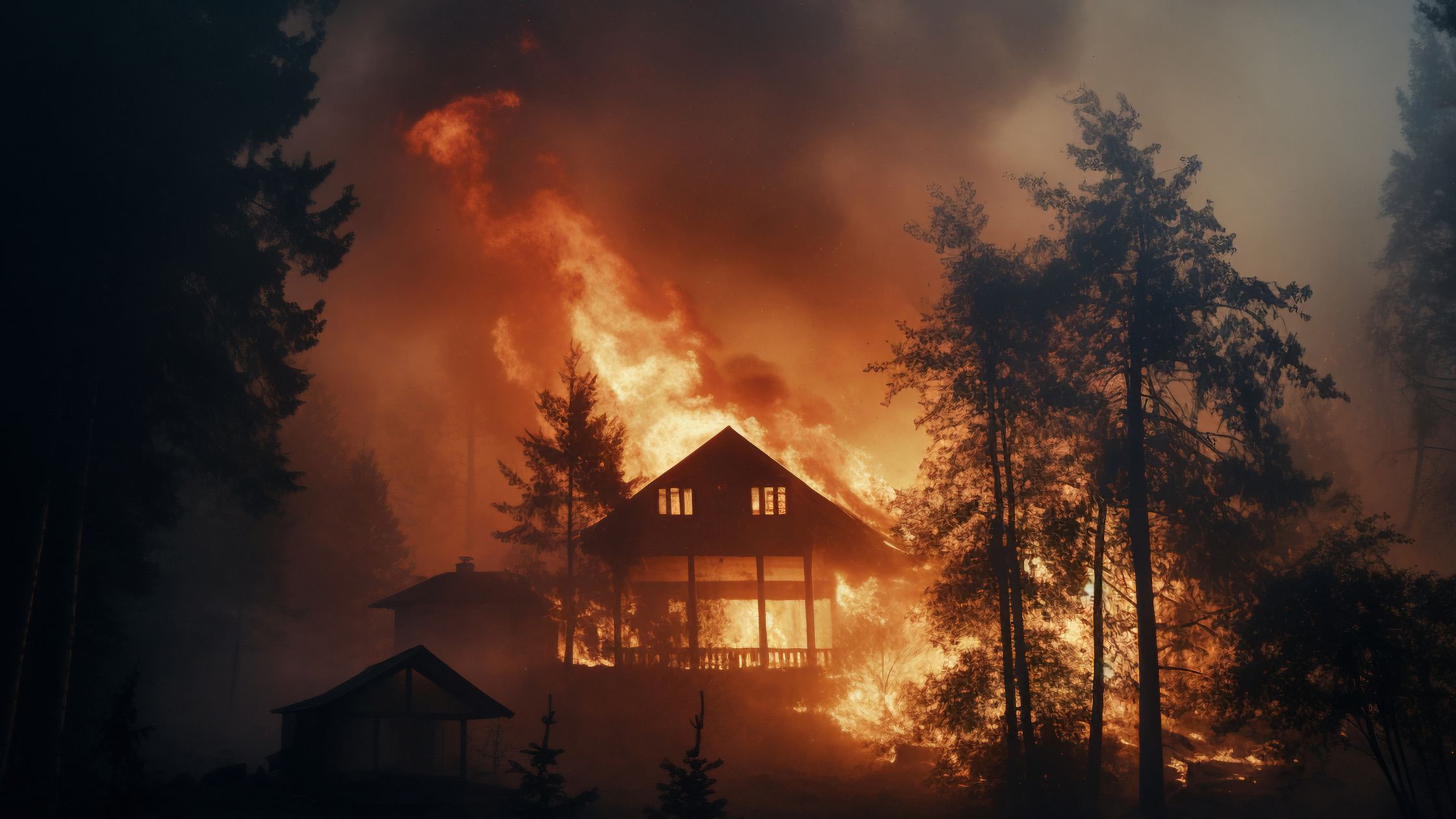

Zone Zero: The 5 Feet That Decide If a Home Ignites
What Is Zone 0 (0–5 Feet) Wildfire Defense?
Zone 0 is the immediate 0–5 foot strip around a California home kept free of combustibles so wind-blown embers cannot ignite against the walls. Under AB 3074 and today’s insurance underwriting, clearing mulch, plants, wood piles, and attached wood fencing there is the highest-ROI ignition fix before spray or a defense system.
- Clear combustibles — remove wood mulch, firewood, furniture, and dense plants in the first five feet.
- Hardscape the strip — gravel, stone, concrete, or other non-combustible ground cover.
- Break wood pathways — address fences, gates, and attachments that touch the structure.
- Check openings — vents, crawl spaces, and eave edges that collect debris and embers.
- Document & maintain — photos for insurers; keep Zone 0 clear year-round.
- Zone 0 (0–5 ft) — non-combustible immediate zone; primary ember landing strip.
- Zone 1 / 2 — farther defensible space; still important, lower ignition density at the wall.
- Home hardening — vents, roof, decks, materials that Zone 0 alone cannot fix.
Is Zone 0 required in California?
AB 3074 established the ember-resistant 0–5 foot Zone 0 concept for high fire hazard areas. Local rollout and inspection timing vary, but many insurers already expect Zone 0 principles on renewals. Treat it as both code trajectory and underwriting reality.
Can I keep plants in Zone 0?
Best practice is a non-combustible strip: hardscape instead of wood mulch and dense ornamentals against siding. Your assessment flags what to remove versus what can stay farther out in maintained defensible space.
Does Zone 0 replace a wildfire defense system?
No. Zone 0 removes the easiest fuels next to the house. A wildfire defense system and seasonal spray add active coating when fire weather peaks. Stack them after the five-foot strip is clean.
How does Zone 0 affect insurance?
Clear, photographed Zone 0 work is one of the most legible mitigation signals for brokers and carriers—including FAIR Plan hardening conversations. See wildfire insurance and California FAIR Plan for the documentation angle.
Who should install or verify Zone 0?
Homeowners can clear many combustibles themselves; Ember Pro’s CSLB-licensed team scopes Zone 0 with hardening, vents, and attachments so the five-foot strip matches a full mitigation plan—not a weekend mulch swap.
Ember Pro’s process is free satellite review → Zoom → on-site assessment → Zone 0 / hardening scope, then spray and/or remotely activated off-grid WFDS as needed. Schedule at emberprousa.com/contact-eco-friendly-wildfire-defense-experts or call ((858) 939-9345. Browse all services.
Reviewed by Ember Pro’s wildfire mitigation team · CSLB-licensed contractor · Serving Southern California
Most homes lost in wildfires don’t ignite from flames. They ignite when embers reach the structure—especially in the first 0–5 feet around the home.
Last reviewed December 15, 2025 • Ember Pro Leadership Team
What is Zone Zero?
Zone Zero refers to the 0–5 foot perimeter around a structure where ember ignition risk is highest. Under AB 3074, this area is moving toward ember-resistant, non-combustible standards in wildfire-prone regions.
Why Homes Ignite Without Flames
Wildfires generate wind-driven embers that can travel ahead of fire fronts and ignite vulnerable points like rooflines, vents, eaves, and combustible materials near the structure.
Zone Zero Checklist (Quick Version)
To prepare for Zone Zero standards, homeowners typically need to address combustibles within five feet of structures.
Remove wood mulch, dry debris, and dead vegetation within 5 feet
Replace ground cover with gravel, stone, concrete, or hardscape
Move combustible items (woodpiles, patio cushions, bins) away from the structure
Keep gutters/rooflines clear of debris
Ensure fences/gates attached to structures are non-combustible
Reduce ember entry points (vents/screens/material transitions)
When Will AB 3074 Be Enforced?
Enforcement timelines are developing through state regulation. Regardless of formal enforcement, insurance carriers are increasingly using Zone Zero principles when evaluating renewals in high-risk areas.
How Ember Pro Helps
We specialize in helping homeowners and property managers understand Zone Zero exposure and implement practical mitigation strategies—without unnecessary destruction or guesswork.
Zone Zero Risk Assessment
Identify where embers can ignite your home and what changes reduce risk
Ember-Resistant Spray Services
Non-toxic fire-inhibiting protection for peak wildfire season
Wildfire Defense Systems
Off-grid, remotely activated systems for continuous protection
Want to Know Your Zone Zero Risk?
A Zone Zero assessment identifies where embers can ignite your home and what changes reduce ignition risk. Drop your info below and we’ll reach out to schedule your assessment.
Serving high-risk LA and Southern California wildfire zones.