
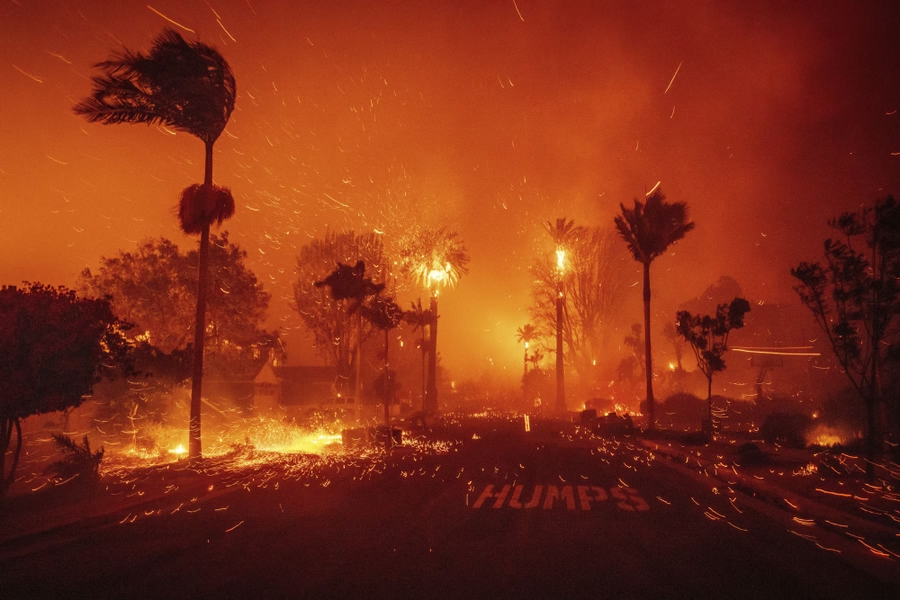
When California wildfires approach, every second counts. While defensible space and home hardening form the foundation of wildfire protection, exterior fire suppression systems represent the next evolution in active home defense. These integrated systems can deploy water and fire-retardant solutions directly at your home’s most vulnerable points, providing an additional layer of protection when evacuation isn’t possible or when defending in place becomes necessary.
Ember Pro specializes in helping California homeowners understand and implement exterior fire suppression systems as part of a comprehensive wildfire defense strategy. Unlike passive defenses alone, active suppression systems engage automatically or remotely during critical moments, potentially making the difference between a home that survives and one that doesn’t.
Types of Exterior Fire Suppression Systems
Modern exterior fire suppression systems come in several distinct configurations, each designed to address different wildfire threats:
Roof-Mounted Sprinkler Systems
Roof-mounted systems represent the most straightforward approach to exterior fire suppression. These networks of fixed sprinkler heads are positioned along roof edges, valleys, and other high-risk areas. During a wildfire, water flows through overhead piping, creating a protective curtain that cools the roof surface and prevents ember ignition. The systems typically operate at 40-80 PSI, requiring adequate water pressure from your main supply. Roof-mounted systems excel at preventing spot fires caused by wind-driven embers—historically the primary cause of structural loss in California wildfires. Integration with your home’s existing irrigation system can optimize water delivery while minimizing installation costs.
Perimeter Spray Systems
Perimeter spray systems focus protection around your home’s perimeter, targeting walls, eaves, decking, and landscaping. These systems use larger spray nozzles positioned to blanket vulnerable zones in fire-retardant mist. Because they cover broader areas with less water intensity than roof systems, perimeter sprays are particularly effective in preventing fires in vegetation and wooden structures adjacent to the home. Many California properties benefit from combining roof and perimeter systems into a unified network—this integrated approach ensures comprehensive coverage while optimizing water usage.
Gel and Foam Application Systems
Advanced exterior fire suppression systems increasingly incorporate biodegradable fire-retardant gels and foams alongside water delivery. These products coat surfaces with a protective layer that inhibits ignition and slows fire spread. Gel systems are particularly valuable for treating decking, wooden siding, and landscaping directly. Unlike water alone, retardant gels remain in place even after application, providing extended protection. Foam systems create a blanket of tiny bubbles that absorb heat and release water gradually—ideal for large surface areas and vegetation perimeters.
Ember-Resistant Vent Covers with Spray Integration
One critical vulnerability in most California homes involves attic vents and foundation vents—tiny openings where wind-driven embers can enter. Modern vent covers now integrate micro-spray nozzles directly into the vent assembly itself. These combination covers block embers mechanically while allowing controlled water spray around the vent perimeter. This hybrid approach addresses one of the top fire spread vectors in residential structures.
How Exterior Fire Suppression Systems Work During Wildfire
Understanding the mechanics of active suppression helps explain why these systems prove so effective. When ember-laden winds approach your property, exterior fire suppression systems operate through one of three activation modes:
Automated Activation
Automated systems use heat sensors (typically set to activate around 130-140°F) positioned strategically around the property perimeter. When radiant heat from an approaching wildfire reaches the threshold, the system triggers automatically without requiring any human intervention. This proves invaluable in evacuation scenarios where no one remains on-site. Automated systems must be plumbed to a reliable water source—either municipal supply with pressure regulation or a dedicated on-site storage tank with pump activation.
Manual Activation
Manual systems require homeowner activation via a remote control or central valve. This approach works well when residents are defending in place and can monitor approaching fire conditions. Manual systems offer more water conservation since you control flow duration. However, they require someone present and aware—a limitation during emergency evacuations.
Remote Activation
The most sophisticated systems support remote triggers via cellular connection or satellite communication. Emergency responders or property managers can activate suppression systems remotely, even if homeowners have already evacuated. This emerging technology represents a significant advancement, particularly for properties in areas with poor cell service. Remote systems provide the control benefits of manual activation combined with the reliability of automated response.
Water vs. Fire Retardant Spray in California Wildfires
A common question from California homeowners concerns the difference between water and fire retardant sprays in active suppression systems. Both serve important functions:
Water excels at cooling—it absorbs massive amounts of heat energy as it evaporates. During a wildfire approach, water provides immediate, large-volume thermal absorption. However, water can evaporate before a fire reaches your property, leaving no lasting protection.
Fire-retardant sprays (typically Phos-Chek LC-95A or equivalent) work differently. Applied to surfaces, they create a protective coating that inhibits ignition by reducing fuel availability and slowing flame spread. Retardants persist on treated surfaces for weeks or months, providing sustained protection even if not recently applied. The most effective exterior fire suppression systems integrate both: water for immediate thermal response and retardants for sustained surface protection.
California Building Code and Compliance Considerations
California’s evolving wildfire code requirements impact exterior fire suppression system design. Recent updates to Title 24 and local fire codes increasingly recognize active suppression as a legitimate compliance and building code component. Some jurisdictions now offer code credit—allowing reduced defensible space distances when verified suppression systems are in place.
Key compliance points for California installations include:
- Water supply verification (minimum 2,500 gallons for high-hazard zones, 1,500 for moderate)
- Pressure regulation systems (most codes require 40-80 PSI for optimal performance)
- Annual inspection and maintenance certification
- Remote access for emergency responders in automated systems
- Clear labeling and documentation of system zones and activation points
Ember Pro works with homeowners and contractors to ensure installations meet both current code and anticipated future requirements, protecting your investment long-term.
Integration with Defensible Space and Home Hardening
Exterior fire suppression systems work best as part of a comprehensive strategy. They complement, not replace, defensible space and structural hardening. Think of it this way:
- Defensible space prevents fire sources from reaching your home
- Home hardening prevents fires from entering structural weaknesses
- Active suppression provides last-line defense and active response capability
When all three layers work together, your home gains resilience that statistically outperforms properties relying on any single strategy. Properties with comprehensive integrated fire defense systems show survival rates 10-15x higher than properties with minimal preparation.
Cost Considerations for California Installations
Typical exterior fire suppression system costs range from $3,000 to $15,000+ depending on:
- Property size and complexity
- Roof design and pitch (more complex roofs require additional fixtures)
- Distance from water supply
- Integration with existing irrigation systems
- Automation level (manual vs. automated vs. remote)
- Retardant system inclusion
While this represents a significant investment, consider that a single destroyed structure in California wildfire losses averages $500,000-$2,000,000. Homeowners insurance occasionally offers discounts of 10-25% for verified suppression systems, and some insurers bundle suppression installation into fire mitigation premium reductions. Several California homeowner associations have begun cost-sharing programs, recognizing that neighborhood-wide suppression infrastructure provides cumulative protection.
How Ember Pro’s Approach Differs
Many companies install suppression systems as simple add-ons. Ember Pro integrates suppression systems into a holistic home hardening strategy. Our process includes:
- Vulnerability Assessment – We identify your property’s specific fire risk vectors rather than applying cookie-cutter solutions
- System Integration – We design suppression to work seamlessly with existing defensible space, venting, and landscaping modifications
- Water Supply Optimization – We engineer solutions that minimize water waste while maximizing pressure and delivery efficiency
- Automation Intelligence – Our automated systems use weatherproof sensors and cellular backup, ensuring reliability during power outages
- Regulatory Navigation – We handle code compliance and can often secure local fire authority pre-approval
- Ongoing Monitoring – Annual inspections and maintenance ensure your system performs when needed most
Frequently Asked Questions About Exterior Fire Suppression Systems
Will Exterior Suppression Systems Save My Home?
While not absolute guarantees, data shows that automated suppression systems significantly improve survival odds. Homes with integrated suppression, hardening, and defensible space demonstrate 10-15x better survival rates than unprepared homes in comparable fire conditions.
What If My Water Supply Is Limited?
Limited water pressure or supply doesn’t eliminate suppression as an option. We can design gravity-fed systems, install pressure tanks with solar-powered pumps, or integrate water-misting systems that use significantly less volume than traditional sprinklers while providing effective thermal protection.
Are Automated Systems Reliable During Power Outages?
Quality automated systems include battery backup and solar panels for sensor power, ensuring activation capability even during grid failures. Pump systems can be powered by propane backup generators or pressure-storage tanks requiring no electricity.
Can I Install This Myself?
While simple water lines can be DIY projects, fire suppression systems integrate with gas, electrical, and water systems. California fire code and homeowner liability concerns strongly recommend professional installation. Ember Pro’s certified technicians ensure proper pressure regulation, sensor calibration, and code compliance.
How Often Do These Systems Need Maintenance?
Annual inspection is standard—checking pipe corrosion, sensor functionality, and pressure calibration. Retardant systems may need reapplication every 1-2 years depending on rainfall and application timing.
References and Resources
- California Department of Forestry and Fire Protection (CAL FIRE) – Defensible Space and Vegetation Management Guidelines
- Institute of Business & Home Safety (IBHS) – Wildfire Research and Home Ignition Zones
- California Building Standards Commission – Title 24 and Fire Code Updates
- Fire-Resistant Materials Database – Retardant Efficacy and Application Guidelines
- American Society of Civil Engineers – Wildfire Risk Assessment Standards
Related Articles
For comprehensive wildfire defense planning, explore these related topics:
- Fire Safe Certification and California Requirements
- Five Common Mistakes in Wildfire Home Defense
- Zone Preparedness Planning for California Wildfire Season
- How Fire Mitigation Affects Insurance Premiums
- Zone Zero: The Critical Perimeter Around Your Home
At Ember Pro, we believe every California home deserves integrated, professional wildfire defense. Exterior fire suppression systems represent cutting-edge protection technology—deployed thoughtfully alongside traditional defenses, they can truly save lives and property.
Ready to explore exterior fire suppression systems for your California property? Contact Ember Pro today for a free vulnerability assessment and custom suppression system design.
Leave a Reply