
Living in a California Wildfire Zone: Your Complete Preparedness Guide
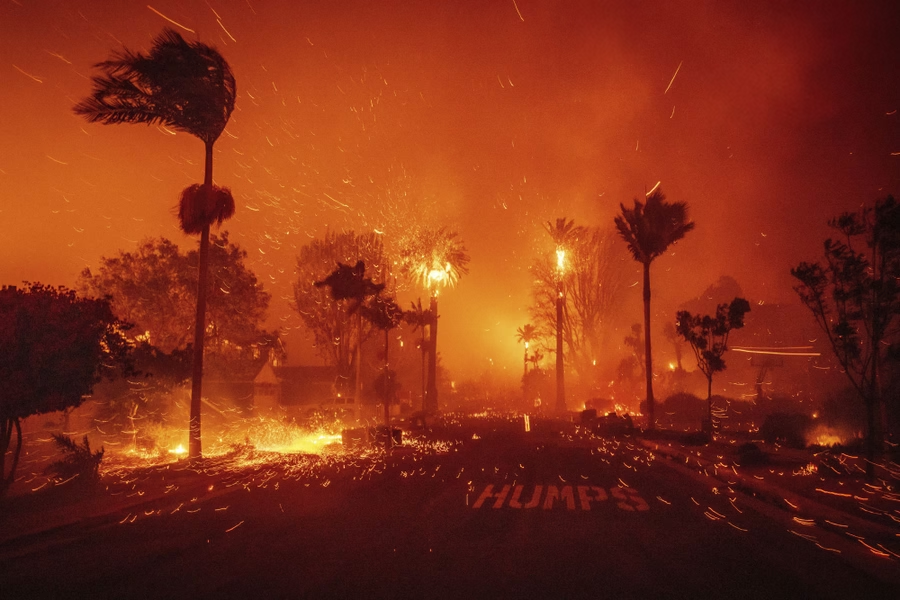
California’s wildfire season has become a year-round threat, with devastating fires expanding into new territories each year. If you’re living in a California wildfire zone, understanding the risks and taking proactive measures isn’t just prudent—it’s essential for protecting your home, family, and peace of mind. This comprehensive guide covers everything you need to know about wildfire preparedness, from understanding fire hazard severity zones to implementing professional home hardening solutions.
Understanding California’s Wildfire Zones: Fire Hazard Severity Zones Explained
California uses a sophisticated system to classify wildfire risk across the state called Fire Hazard Severity Zones (FHSZ). These zones are designated by Cal Fire and appear on official maps that show areas of significant fire probability and fire behavior risk. For those living in California’s wildfire zones, understanding these designations is the first step in preparedness.
The state identifies three main risk categories: State Responsibility Areas (SRA), Local Responsibility Areas (LRA), and Federal Responsibility Areas (FRA). Most residential properties fall within either SRA or LRA designations. Properties within High or Very High Fire Hazard Severity Zones face the most significant risks and are subject to stringent building codes and defensible space requirements under California’s Chapter 7A building standards.
Knowing your property’s FHSZ classification is critical because it determines your legal obligations for home hardening, vegetation management, and insurance eligibility. You can check your property’s designation on the Cal Fire website using your address. Properties in High and Very High zones must comply with specific requirements—failure to do so can result in fines and complications with insurance coverage.
What It Means to Live in an SRA, LRA, or FRA
Understanding the difference between State, Local, and Federal Responsibility Areas helps clarify who oversees fire protection in your region and what regulations apply to your property.
State Responsibility Areas (SRA) cover unincorporated lands where Cal Fire is responsible for fire protection. About 31 million acres across California are classified as SRA. If you live in an SRA, Cal Fire will respond to structure fires, but as a property owner, you’re responsible for vegetation management and home hardening to create defensible space.
Local Responsibility Areas (LRA) include incorporated cities and some unincorporated areas where local fire departments (not Cal Fire) provide fire protection services. In these areas, local fire codes typically align with or exceed California’s statewide standards, and property owners still bear responsibility for defensible space and compliance measures.
Federal Responsibility Areas (FRA) represent a small portion of California and include national forests and parks where the U.S. Forest Service manages fire protection. These areas rarely contain residential properties but may affect adjacent properties.
Regardless of which category applies to your property, living in any designated wildfire zone means implementing the practices outlined in this guide.
Creating and Maintaining Your Defensible Space
Defensible space is arguably the most important line of defense for homes in California’s wildfire zones. This concept divides your property into three zones, each with specific requirements designed to slow fire spread and reduce embers.
Zone 0 (Immediate Zone) extends 5-30 feet from your home’s exterior. In this zone, all dead vegetation, leaves, and pine needles must be removed. All branches must be pruned at least 10 feet from your chimney and 6-10 feet from other structures. No trees should overhang your roof, and no shrubs should touch your home’s walls. This zone is the most critical because it’s where ember accumulation poses the greatest threat.
Zone 1 (Intermediate Zone) extends from the end of Zone 0 to 100 feet from your home. In this zone, thin tree stands by removing ladder fuels (low-hanging branches), remove dead and diseased trees, and maintain 10-20 feet of spacing between tree crowns. Space shrubs so they’re not touching and create a mosaic of cleared and wooded areas.
Zone 2 (Extended Zone) extends from 100 feet to 200 feet from your home. Focus on removing trees that are diseased, dead, or showing signs of bark beetle damage. Maintain spacing between remaining trees and continue thinning forest density.
For those in High Fire Hazard Severity Zones, local ordinances may require compliance with these spacing standards. Non-compliance can result in citations and fines, and fire departments may conduct vegetation management at the property owner’s expense if voluntarily initiated by the city.
Home Hardening: Building a Fortress Against Wildfire
While defensible space prevents fire from approaching your home, home hardening—also called hardening—prevents fire from entering it. California’s Chapter 7A building standards set forth detailed requirements for homes in High Fire Hazard Severity Zones. These standards are updated regularly as our understanding of wildfire behavior improves.
Chapter 7A Exterior Material Requirements
Chapter 7A mandates that homes in designated wildfire zones use fire-resistant materials for exterior walls, roofs, and decking. Acceptable materials include stucco, fiber cement board, and metal siding. Avoid wood siding, composite materials that contain foam, and other materials that ignite easily. Your roof must be Class A-rated, which means materials that provide the highest level of fire resistance when tested using standard fire testing protocols.
Protecting Vulnerable Areas: Vents and Openings
One of the most critical aspects of home hardening involves protecting roof vents, foundation vents, gable vents, and chimney openings. These areas can allow embers to enter your home’s interior spaces, where they can ignite insulation and structural materials. Metal vents with 1/8-inch mesh screening are required by Chapter 7A. These vents allow air circulation necessary for ventilation while blocking ember penetration.
Decking and Exterior Structures
Wooden decks are particularly vulnerable to wildfire. Chapter 7A now requires decking in High Fire Hazard Severity Zones to be constructed from fire-resistant materials such as composite or metal decking. Wooden decks should have enclosed undersides to prevent ember accumulation and ignition. Balconies, porches, and other exterior structures should be evaluated for ember vulnerability.
Advanced Wildfire Defense Systems and Retardant Sprays
Beyond traditional home hardening, homeowners have access to innovative technologies. Wildfire defense systems and fire retardant sprays offer additional layers of protection.
Wildfire defense systems are sophisticated equipment that can be installed on homes to provide active fire protection. These systems monitor external conditions, detect approaching fires through heat and flame sensors, and activate to protect the home when threats are detected. Some systems employ water sprays or mists to wet down exterior surfaces and reduce ignitability; others use foam applications to suppress flames. These technologies are particularly valuable in areas with highly variable fire behavior or in communities where rapid evacuation might not be possible.
Fire retardant sprays, applied by professional applicators, create a chemical barrier on vegetation and exterior surfaces that increases their ignition temperatures and slows fire spread. These products are most effective when applied before fire season begins. When applied to vegetation in your defensible space, retardants can provide crucial additional protection during the critical hours when fires approach.
Creating a Family Evacuation Plan
Preparedness extends far beyond your property’s physical structures. Developing a comprehensive family evacuation plan ensures that when evacuation orders are issued, your family can leave quickly and safely with all critical information and possessions.
Your plan should identify at least two evacuation routes from your property, accounting for the reality that primary routes may become blocked. Identify a meeting place where family members can reunite if separated. Prepare important documents—insurance policies, deeds, medical records, identification—in a waterproof container or digital backup that can be grabbed quickly. Create a supply kit with medications, eyeglasses, hearing aids, and irreplaceable family photos or heirlooms. For pets, have carriers, leashes, and medical records prepared.
Practice your evacuation plan at least twice yearly. Include all household members and even guests in these drills. When actual evacuation warnings are issued, the goal is to execute your plan efficiently without second-guessing or last-minute decisions that slow your departure.
Insurance Considerations for Wildfire Zones
Living in a California wildfire zone significantly impacts home insurance costs and availability. Many insurers have limited coverage in High Fire Hazard Severity Zones or have exited the market entirely. Securing adequate fire insurance requires proactive measures and understanding your options.
Standard homeowners insurance covers wildfire damage, but insurers are increasingly selective about properties they insure in high-risk zones. To improve your insurability and reduce premiums, document your home hardening improvements and defensible space maintenance. Many insurers offer discounts of 10-25% for properties that meet Chapter 7A standards, have Class A roofs, metal vents, or have completed professional home hardening assessments.
If you cannot obtain insurance through traditional carriers, California’s insurer of last resort, the California Fair Plan, provides basic coverage but at higher rates. Exploring mitigation discounts and insurance strategies can yield significant savings and ensure your family has the coverage you need.
Community-Level Preparedness and Community Immunity
While individual property preparedness is essential, community-level efforts amplify protection. Many California communities have established Community Wildfire Prevention Areas (CWPA) where residents, local government, and fire departments coordinate defensible space creation at a landscape scale.
When multiple properties implement defensible space standards simultaneously, the cumulative effect creates zones resistant to wildfire spread—what experts call “community immunity.” This approach has proven highly effective. Communities that have invested in coordinated vegetation management and home hardening have demonstrated significantly lower loss rates in subsequent fires compared to communities where preparedness is fragmented.
Getting involved in your community’s fire safety initiatives—whether through HOA wildfire committees, local fire prevention programs, or neighborhood associations—strengthens everyone’s protection. These collective efforts often attract Cal Fire and state funding for vegetation management projects that would be prohibitively expensive for individual property owners.
Understanding Zone 0 and AB 3074 Compliance
Recent California legislation has further formalized defensible space requirements. Zone 0 standards and AB 3074 compliance represent the state’s commitment to raising wildfire preparedness standards across all properties in fire-prone areas.
Zone 0, sometimes called the “Home Ignition Zone,” focuses specifically on the most critical area immediately surrounding your structure. AB 3074, passed in response to catastrophic fire seasons, expanded defensible space requirements and increased enforcement. Properties that fail to maintain compliance now face potential citations and mandatory-at-owner’s-expense vegetation management.
Understanding these legal requirements is crucial because non-compliance isn’t just a safety issue—it has legal and financial consequences. If your property is in a High Fire Hazard Severity Zone, verify current requirements with your local fire department and ensure your property meets all applicable standards.
Learning from Success: Real-World Case Studies
The effectiveness of comprehensive preparedness is demonstrated through real-world case studies and spray applications where specific intervention strategies prevented or significantly reduced damage. Examining successful outcomes helps homeowners understand which preparedness investments deliver the greatest protection.
Case study data shows that homes with completed Chapter 7A compliance experience fire loss rates 85% lower than non-compliant homes in comparable fire zones. Properties with both defensible space and professional hardening achieve the highest survival rates. These aren’t theoretical projections—they’re documented outcomes from fires that have burned through neighborhoods where some homes were prepared and others were not.
The IBHS Perspective on Wildfire Resilience
The Insurance Institute for Business & Home Safety (IBHS) has conducted extensive research on residential wildfire resilience. Their findings confirm that the combination of defensible space, Chapter 7A compliance, and community-level preparedness provides dramatically improved outcomes. IBHS research forms the basis for updated building codes and insurance discount programs across California.
Suppression Systems and Active Fire Protection Technologies
For homeowners seeking maximum protection, fire suppression systems and fire protection technologies offer active defense mechanisms. These range from automated sprinkler systems that activate when sensors detect radiant heat, to sophisticated foam application systems that coat vulnerable areas with fire-suppressant compounds.
While these technologies represent significant investments, they’re increasingly popular in communities where properties are densely situated or where previous fire near-misses have prompted owners to add extra layers of protection. When integrated with defensible space and home hardening, suppression systems can provide exceptional resilience.
Avoiding Common Mistakes in Wildfire Preparedness
Even well-intentioned property owners often make five critical mistakes in wildfire preparedness that reduce their protection. Understanding these pitfalls helps ensure your efforts are maximally effective.
Common mistakes include: focusing only on defensible space while neglecting home hardening; using inappropriate materials for repairs; failing to maintain preparedness year-round; underestimating the importance of vent screening; and postponing evacuation planning until an actual fire threatens. Learning from others’ errors accelerates your pathway to genuine resilience.
The Fire-Safe Community Approach
Many California communities have formally adopted Fire-Safe Council standards and developed community-wide preparedness programs. These communities provide resources, funding, and technical assistance to help property owners implement the practices outlined in this guide.
If your community hasn’t established a Fire-Safe Council, Ember Pro can help you initiate one. These councils create accountability, share resources, and demonstrate to insurance companies that your community is genuinely committed to reducing risk.
How Ember Pro Supports Wildfire Preparedness
At Ember Pro, we understand the unique challenges facing California homeowners in wildfire zones. Our team of experts provides:
- Professional home hardening assessments that identify specific vulnerabilities and prioritize improvements
- Chapter 7A compliance consulting to ensure your property meets all legal requirements
- Defensible space design and implementation services that balance safety with aesthetics
- Insurance discount optimization to help you access available savings
- Community-scale preparedness programs that coordinate efforts across neighborhoods
- Ongoing monitoring and maintenance planning to keep your preparedness current as regulations evolve
Living in a California wildfire zone requires commitment and continuous attention, but thousands of homeowners have proven it’s entirely possible to create homes and communities that are resilient to wildfire threats. With proper preparation, your family can live safely even in the highest-risk areas.
Frequently Asked Questions About Wildfire Zone Preparedness
How often must I maintain defensible space?
Defensible space is not a one-time project. Vegetation grows year-round in California, and dead needles, leaves, and branches accumulate continuously. Most properties require at least quarterly maintenance checks, with intensive work in spring and fall. During peak fire season (June-November), monthly assessments are advisable to ensure no hazardous accumulation occurs.
Can I handle home hardening improvements myself?
While some homeowners undertake DIY improvements, professional assessment and installation is recommended. Improper vent screening, inadequate material specifications, or incomplete work can leave critical vulnerabilities. Professional contractors ensure compliance with Chapter 7A standards and provide documentation for insurance purposes.
What’s the typical cost for full home hardening compliance?
Costs vary widely based on home size, current condition, and specific vulnerabilities, but typical comprehensive hardening ranges from $15,000 to $50,000. However, insurance discounts, Cal Fire rebate programs, and increased property value often offset these costs over time. Many homeowners view this investment as life insurance for their property.
If I evacuate, is my property automatically protected?
No. Proper preparedness means your home is defensible even without active intervention. Professional home hardening and defensible space create passive protection that operates whether or not anyone is present. This dramatically increases the likelihood your home survives a fire that moves through your area during evacuation.
How do I find and verify local fire safety requirements?
Contact your local fire department’s fire prevention division. They can provide current code requirements, schedule property inspections, and discuss compliance deadlines. Cal Fire’s website also maintains current FHSZ maps and statewide requirements.
References and Additional Resources
- California Fire Code Chapter 7A: Fire and Life Safety Provisions
- Cal Fire Fire Hazard Severity Zone maps: fire.ca.gov
- Insurance Institute for Business & Home Safety (IBHS) research on residential wildfire resilience
- Ready for Wildfire: A Community Wildfire Protection Planning Guide
- California Department of Forestry and Fire Protection (Cal Fire) Home Hardening Guide
- National Fire Protection Association (NFPA) Firewise USA Standards
- California Fair Plan information for property owners unable to obtain traditional insurance
Related Articles
Explore our comprehensive library of wildfire preparedness resources:
- Create Defensible Space Around Your Home
- Understanding Zone 0 and Your Home Ignition Zone
- Fire Retardant Sprays: Protection During Peak Fire Season
- Homeowner’s Insurance in High Fire Hazard Severity Zones
- IBHS Research on Residential Wildfire Resilience
- Advanced Wildfire Defense Systems for Maximum Protection
- Chapter 7A Compliance: What You Need to Know
- Five Critical Mistakes in Wildfire Preparedness
- Real-World Case Studies: Fire Retardant Application Success
- HOAs and Community Insurance Strategies for Wildfire Protection
- Fire-Safe Community Standards and Certification
- Suppression Systems: Active Fire Protection Technologies
- Combining Mitigation Strategies with Insurance Optimization
Leave a Reply