

California’s FAIR Plan stands as the insurance solution of last resort for homeowners who cannot obtain coverage in the standard insurance market. In a state where wildfires have devastated communities and driven insurers to non-renew policies by the thousands, understanding the FAIR Plan is essential for protecting your home and financial stability.
Editor’s note: Your insurance situation depends heavily on your property’s actual fire exposure. Our free risk assessment factors in official CAL FIRE data to show what your risk level actually is — useful context before talking to your carrier.
What Is the California FAIR Plan?
The FAIR Plan—Fair Access to Insurance Requirements Plan—is a state-mandated insurer of last resort established in 1968. It exists to ensure that every California homeowner can obtain basic property insurance coverage, even when private insurers refuse to underwrite policies. While not ideal, the FAIR Plan provides crucial protection when traditional insurance options disappear due to wildfire risk or other factors.
The FAIR Plan operates through the California Insurance Underwriting Association, a nonprofit organization managed by licensed insurers who share the responsibility of covering high-risk properties. This mechanism ensures that wildfire mitigation homeowners aren’t left completely uninsured, though coverage comes with trade-offs in price and protection levels.
Who Qualifies for FAIR Plan Coverage?
Most California homeowners who cannot obtain standard homeowners insurance qualify for FAIR Plan coverage. To apply, you must:
- Own a single-family residence or small multi-family property in California
- Have been denied coverage by at least one private insurer OR be unable to find affordable private insurance
- Meet basic eligibility requirements regarding property condition and location
- Reside in the property or rent it out as a rental
If you’ve received a non-renewal notice from your current insurer or can’t find quotes from any private carrier, you’re likely eligible. The FAIR Plan won’t turn you away for wildfire risk—that’s precisely why it exists. However, properties with significant structural defects or extreme hazard conditions may face denial.
What Does the FAIR Plan Cover?
The FAIR Plan provides dwelling coverage that insures the structure itself against covered perils. Your coverage typically includes:
- Fire and smoke damage from wildfires and structure fires
- Wind damage from storms and high winds
- Hail damage to roof and property
- Lightning strikes and electrical damage
- Theft and vandalism to the structure
- Falling objects like branches or debris
Coverage limits available typically range from $100,000 to $3 million in dwelling coverage, allowing homeowners to insure their properties at replacement value.
What the FAIR Plan Doesn’t Cover
Understanding gaps in FAIR Plan coverage is critical for comprehensive protection:
- Personal property (belongings, furniture, appliances) requires a separate policy rider
- Liability coverage (someone injured on your property) must be purchased separately
- Loss of use/additional living expenses isn’t included in basic FAIR coverage
- Water damage from flooding is excluded (requires separate flood insurance)
- Maintenance issues—damage resulting from poor upkeep isn’t covered
- Coverage for business property or commercial use
These exclusions mean you must purchase additional insurance riders or separate policies to achieve comprehensive homeowner protection. Most homeowners pair FAIR Plan dwelling coverage with a separate liability policy through private insurers or the FAIR Plan’s own liability rider.
FAIR Plan Costs Compared to Standard Insurance
The most significant drawback to FAIR Plan coverage is cost. Because the FAIR Plan covers the highest-risk properties that private insurers refuse, premiums are substantially higher than standard homeowner insurance.
| Coverage Type | Average Annual Premium |
|---|---|
| Standard Homeowners Policy | $1,200–$1,800 |
| FAIR Plan Dwelling Coverage | $2,800–$5,500+ |
| FAIR Plan + Liability Rider | $3,500–$7,000+ |
For a $500,000 home in a high-wildfire zone, FAIR Plan premiums can exceed $6,000 annually—three to four times the cost of standard insurance in lower-risk areas. This disparity creates tremendous financial pressure on California homeowners to mitigate wildfire risk and escape the FAIR Plan.
These are general costs. Your actual investment depends on your property’s fire zone, exposure level, and available grants or rebates.
Check my risk scoreCoverage Limits and Deductibles
FAIR Plan policies typically include:
- Dwelling limits from $100,000 to $3 million
- Deductibles ranging from $1,000 to $10,000 (higher deductibles lower premiums)
- Percentage deductibles for certain perils (like hail at 2–5% of coverage limit)
Understanding your deductible is crucial—a $5,000 deductible means you pay the first $5,000 of any claim from your own pocket. Higher deductibles significantly reduce premiums but increase your out-of-pocket risk during claims.
How to Apply for FAIR Plan Coverage
Applying for the FAIR Plan is straightforward:
- Contact the FAIR Plan directly at 1-800-555-FAIR (3247) or visit www.cfpplan.com
- Provide property information including address, home age, square footage, and construction type
- Submit proof of denial from at least one private insurer (often waived if you can show market rejection)
- Property inspection may be required to assess condition and wildfire risk
- Receive quote and review coverage options
- Pay first premium to activate coverage (typically monthly or annual)
The entire process typically takes 2–4 weeks. Once approved, your FAIR Plan policy remains active as long as you maintain premium payments—even if private insurers later become available to you.
Getting Back to the Private Insurance Market
The most effective strategy to escape FAIR Plan’s high premiums is reducing wildfire risk through mitigation. Insurance companies care about one thing: claim probability. Reduce that probability, and private insurers return to underwrite your property at competitive rates.
Key Mitigation Improvements
To become insurable by private carriers, implement these defensible space and home hardening measures:
- Zone Zero work: Remove dead vegetation, dead trees, and dense brush within 5–30 feet of your home’s foundation
- Roof replacement: Install Class A fire-rated roofing materials (asphalt, metal, tile)
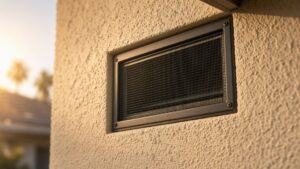
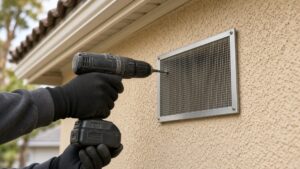
- Ember-resistant vents: Install 1/8-inch metal mesh vents to prevent ember infiltration
- Gutter clearing: Remove leaves, needles, and debris that accumulate and ignite during wildfires
- Window and door upgrades: Install tempered glass and metal frames to resist radiant heat
- Siding replacement: Use fire-resistant materials like fiber cement board instead of wood
- Hardscape improvements: Replace mulch with gravel, remove climbing vines, prune tree canopies
These improvements typically reduce your insurable risk category by one or more levels, opening private insurance options at substantially lower premiums.
How Ember Pro Helps You Escape FAIR Plan Coverage
Ember Pro specializes in helping California homeowners reduce wildfire risk and qualify for standard insurance. Our comprehensive approach includes:
- Wildfire risk assessment: We evaluate your property’s exposure and identify the highest-impact mitigation measures
- Defensible space design: Professional planning for zone zero and surrounding areas to maximize insurance benefit
- Project management: We oversee mitigation work to ensure it meets insurance company standards for premium reduction
- Insurance coordination: We work directly with insurers to document improvements and facilitate re-underwriting
- Cost optimization: We help homeowners access grants and tax credits to offset mitigation costs
Many of our clients have reduced FAIR Plan premiums by $2,000–$4,000 annually by completing strategic mitigation work—often with Ember Pro’s financing solutions offsetting upfront costs.
Frequently Asked Questions About the FAIR Plan
Can I cancel my FAIR Plan policy to switch to private insurance?
Yes, once you obtain a private insurance quote, you can cancel your FAIR Plan policy. However, ensure your new private policy is active before canceling—never go without coverage. Private insurers may offer better rates once you’ve completed mitigation work.
Does the FAIR Plan increase premiums annually?
Yes, FAIR Plan premiums typically increase 5–10% annually or more in high-risk fire zones. This ongoing cost escalation makes mitigation investment even more attractive financially.
What happens if I’m denied FAIR Plan coverage?
Denials are rare but can occur for severely damaged properties or those with extreme hazard conditions. If denied, consult with an insurance broker to explore specialized coverage options or work with Ember Pro to remediate risk factors.
Is the FAIR Plan permanent?
Your FAIR Plan policy continues as long as you pay premiums. However, if you complete mitigation work and become insurable by private carriers, transitioning off FAIR Plan is straightforward and recommended.
Taking Action: Your Path Forward
If you’ve received a non-renewal notice or can’t find standard homeowner insurance, applying for FAIR Plan coverage ensures you’re not left unprotected. However, high premiums create urgency to mitigate wildfire risk and transition to private insurance within 12–24 months.
The most successful California homeowners combine immediate FAIR Plan enrollment with strategic mitigation planning. By implementing defensible space work, home hardening, and other risk-reduction improvements, you can document measurable progress toward private insurance qualification—potentially saving thousands annually.
Ember Pro’s team of wildfire mitigation specialists understands the insurance perspective. We design and execute mitigation improvements specifically to reduce insurable risk, making you attractive to private insurers. Contact us today for a free wildfire risk assessment and to learn how mitigation can restore your insurance options and financial stability.
Related California FAIR Plan Guides
Curious about your property’s actual wildfire risk? Our free calculator shows your CAL FIRE zone, exposure level, and recommended next steps based on your address.
Get your free risk score