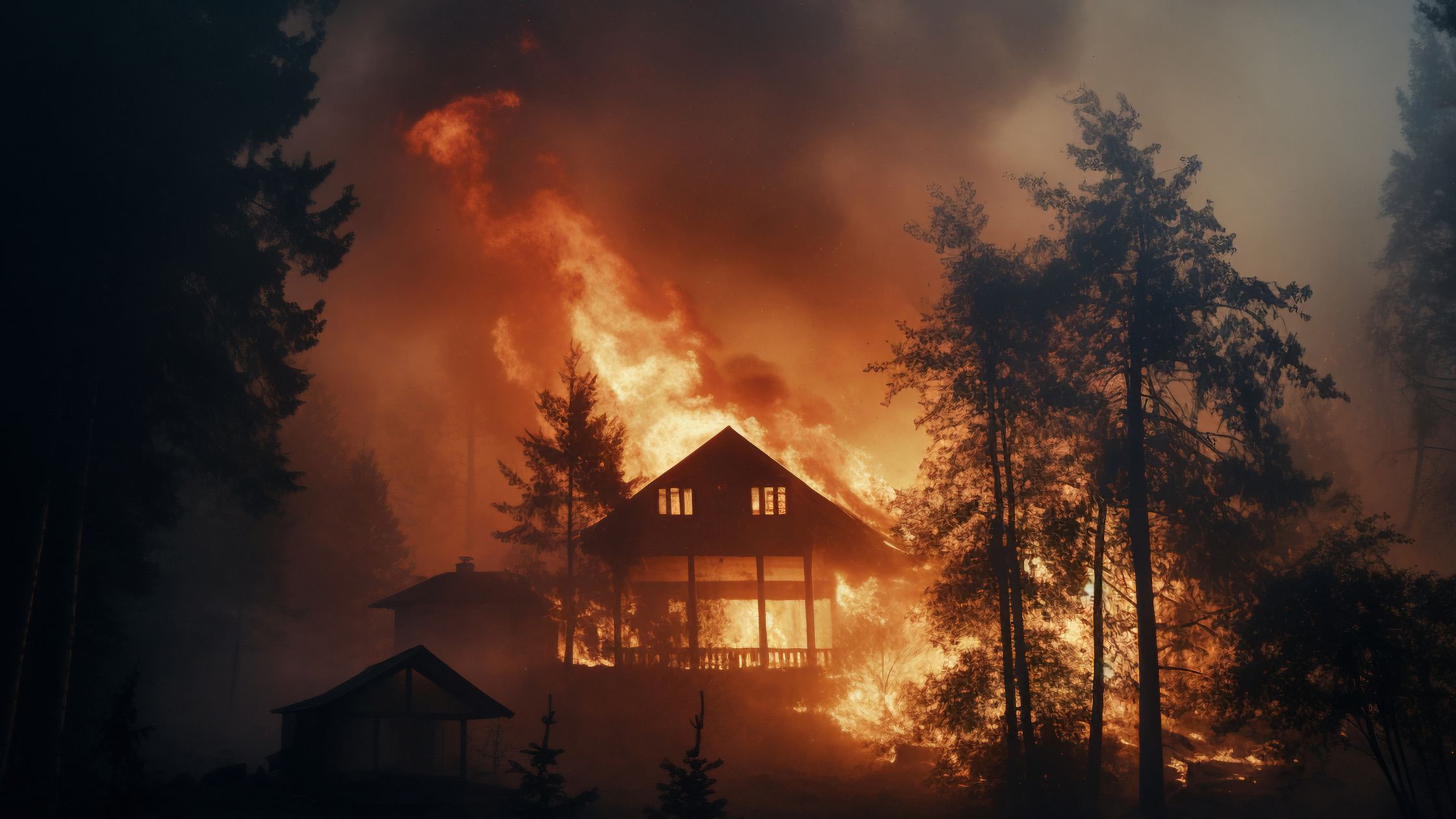


At the latest Fire Safe Council General Membership Meeting, San Diego Fire-Rescue’s Community Risk Reduction Division shared important updates on how the City of San Diego plans to roll out and enforce its new Zone 0 defensible space requirement.
This new policy—officially in effect as of February 28, 2026—represents a major shift in how wildfire risk is managed at the home level. While defensible space has long been required in California, Zone 0 focuses on the most critical area: the first five feet immediately surrounding your home.
Here’s what Zone 0 is, why it matters, and how enforcement will roll out over the next several years—so you can get ahead of it and protect your home.
Editor’s note: Your insurance situation depends heavily on your property’s actual fire exposure. Our free risk assessment factors in official CAL FIRE data to show what your risk level actually is — useful context before talking to your carrier.
What Is Zone 0—and Why Does It Matter?
Zone 0 refers to the first 0-5 feet around your home, sometimes called the ember-resistant zone. This area is the most vulnerable during a wildfire.
Why? Because most homes don’t ignite from a wall of flames—they ignite from wind-blown embers.
These embers can:
- Land in mulch beds
- Get trapped under decks
- Ignite dry leaves in corners or gutters
- Catch firewood stacks or patio furniture
Once something ignites in this immediate zone, flames can quickly spread to your siding, windows, vents, or roofline.
That’s why Zone 0 is so important: if you can prevent ignition in those first five feet, you dramatically increase your home’s chances of surviving a wildfire.
Not sure which step to prioritize first? Our wildfire risk calculator shows your CAL FIRE zone and exposure level — so you know exactly where to start.
Who Does This Apply To?
The Zone 0 requirement applies to homes located in Very High Fire Hazard Severity Zones (VHFHSZ) within the City of San Diego.
If you’re in one of these zones, compliance is not optional—it’s now part of local fire code.
If you’re unsure whether your home is included, the City provides an interactive map where you can check your property.
A Phased Approach: Education First, Then Enforcement
One of the most encouraging takeaways from the presentation is that San Diego Fire-Rescue is taking a phased, realistic approach to implementation.
Rather than jumping straight to citations or penalties, the City is giving homeowners time to learn, adapt, and make changes.
Year 0 – 2026: Education, Not Enforcement
Focus: Awareness and outreach
In this first year, the City is prioritizing education over enforcement. Fire officials will conduct outreach campaigns, provide guidance on Zone 0 best practices, help homeowners understand what compliance looks like, and offer practical, achievable steps.
This is your window to learn and start making changes without pressure.
What You Should Do in 2026
Think of this as your preparation year. Start with:
- Removing leaves, pine needles, and debris near your home
- Evaluating mulch and landscaping choices
- Looking at what’s stored against your house (bins, furniture, wood)
- Identifying vulnerable areas like under decks or stairs
You don’t need to overhaul everything at once—but starting now will make future compliance much easier.
Year 1 – 2027: Maintenance Enforcement Begins
Focus: Removing obvious ignition risks
In 2027, enforcement begins—but it’s targeted at the most immediate and dangerous hazards. Inspectors will look for dead vegetation, combustible mulch (like bark or wood chips), items stored under decks, firewood stacks near the home, trash and recycling bins placed too close, and general debris and clutter.
Why This Matters
These are the low-hanging fruit of wildfire risk—easy to fix, but highly dangerous if ignored. A single ember landing in bark mulch can start a fire within minutes. Firewood stacked against your house can act like kindling. Debris buildup creates fuel right where you don’t want it.
What Compliance Looks Like
By the end of Year 1, your Zone 0 area should be clean and clear, free of flammable materials, and maintained regularly—not just cleaned once.
Year 2 – 2028: Vegetation Removal and Replacement
Focus: Addressing plant-related fire risks
In 2028, enforcement expands to include vegetation compliance. Inspectors will now evaluate plant types, height and density, proximity to the home, and combustibility of landscaping.
What Non-Compliant Vegetation Means
Not all plants are equal when it comes to fire risk. High-risk vegetation includes woody shrubs, dense dry hedges, tall grasses, and resinous or oily plants—anything that easily ignites and spreads flame.
What You May Need to Do
- Remove or trim back high-risk plants
- Replace them with low-flammability alternatives
- Increase spacing between plants
- Transition to hardscape elements like gravel, stone, or pavers
This phase acknowledges that landscaping changes take time and money. That’s why it comes two years after the policy begins. If you start planning early, you can spread out costs and avoid last-minute stress.
Year 3 – 2029: Full Zone 0 Compliance
Focus: All aspects of the zone
By 2029, the City will enforce full compliance with all Zone 0 requirements. This includes everything from previous years, plus fences and gates connected to the home, structural attachments, and any remaining combustible materials or design elements.
Why Fences Matter
Wood fences can act like a fuse—carrying fire directly to your home. If a fence connects to your house, it becomes part of your ignition risk.
Solutions may include replacing the first section with non-combustible material (like metal), adding a break between fence and structure, or using ignition-resistant materials.
What About the Rest of San Diego County?
This phased strategy applies only to the City of San Diego. San Diego County includes 51 different fire agencies, each with its own policies, enforcement timelines, and resource availability.
If you live outside city limits, your local fire agency may move faster, move slower, or take a different approach entirely. Check with your local fire department or Fire Safe Council and ask about their Zone 0 or defensible space policies.
Why This Policy Is a Big Deal
Zone 0 represents a shift from large-scale defensible space (100 feet out) to precision protection right next to the home.
Research shows that most home ignitions happen within 0-5 feet, ember exposure is the primary cause of structure loss, and small changes near the home can have a huge impact.
You don’t need acres of land to make your home safer—you need smart choices in the first five feet.
Common Misconceptions About Zone 0
I have to remove all plants.
Not necessarily. The goal is low-risk landscaping, not a barren yard.
This is just another regulation.
It’s actually based on decades of wildfire behavior research and post-fire investigations.
I will deal with it later.
The phased approach gives you time—but waiting too long can make compliance harder and more expensive.
Practical First Steps You Can Take Today
Clear the Immediate Area
- Remove leaves, needles, and debris
- Clean gutters and corners
Eliminate Combustibles
- Move firewood at least 30 feet away
- Relocate trash bins
- Remove anything stored under decks
Upgrade Ground Cover
- Replace mulch near the home with gravel or stone
- Use non-combustible materials where possible
Evaluate Plants
- Trim back anything touching the house
- Remove dense or dry vegetation
- Plan for gradual replacement if needed
The Bigger Picture: A Community Effort
Wildfire risk isn’t just about individual homes—it’s about neighborhoods. One poorly maintained property can increase ember exposure for nearby homes, create pathways for fire spread, and put firefighters at greater risk. That’s why policies like Zone 0 are being implemented at the community level.
Protect Your Home Before Fire Season
San Diego Fire-Rescue’s phased rollout is designed to support—not punish—homeowners. You have 2026 to learn, 2027 to clean up obvious risks, 2028 to improve landscaping, and 2029 to fully comply. That’s a rare opportunity to prepare gradually and thoughtfully.
The best approach? Start now, even with small steps. Every cleared leaf, every moved woodpile, every replaced plant reduces your risk.
Want to know exactly where your home stands? Get Your Free Satellite Property Review — we will assess your home’s vulnerability and show you what to prioritize in Zone 0 and beyond.
Curious about your property’s actual wildfire risk? Our free calculator shows your CAL FIRE zone, exposure level, and recommended next steps based on your address.
Get your free risk score