
California fire insurance is undergoing a major shift. What used to be a stable, predictable part of homeownership has become uncertain for many homeowners across the state.
Carriers are reassessing risk at a level not seen before. Entire neighborhoods are being reevaluated, and policies that were once routinely renewed are now being canceled or non-renewed.
This is not a temporary adjustment. It is a structural change in how wildfire risk is understood and underwritten.
Curious about your property’s actual wildfire risk? Our free calculator shows your CAL FIRE zone, exposure level, and recommended next steps based on your address.
Get your free risk scoreWhy Carriers Are Dropping Policies
Insurance companies are not exiting markets randomly. They are responding to a combination of financial pressure and evolving wildfire risk.
Key drivers include:
- Increased frequency and severity of wildfires
- Rising claim costs and total loss events
- Higher rebuilding costs across California
- Concentrated exposure in high risk areas
- Regulatory constraints limiting pricing adjustments
When losses exceed what insurers can sustainably cover, they reduce exposure. That often means limiting new policies or dropping existing ones in wildfire prone regions.
Editor’s note: Your insurance situation depends heavily on your property’s actual fire exposure. Our free risk assessment factors in official CAL FIRE data to show what your risk level actually is — useful context before talking to your carrier.
The Real Risk Insurers Are Measuring
The biggest shift in california fire insurance is how risk is evaluated.
It is no longer just about location. It is about survivability.
Insurers are asking:
- How likely is this home to ignite from embers
- How close is combustible material to the structure
- Has the home been hardened against wildfire exposure
- Is there evidence of defensible space maintenance
- Are there systems in place to reduce ignition risk
This means two homes on the same street can be evaluated very differently based on mitigation.
What This Means for Homeowners
For homeowners, this shift can feel sudden and frustrating.
You may receive:
- A non-renewal notice
- A policy cancellation
- A significant premium increase
- A requirement for additional inspections or documentation
This creates uncertainty, especially for homeowners in high value or high risk areas.
But there is also an important takeaway. Homeowners now have more influence over their insurability than before.
The Growing Role of the California FAIR Plan
As traditional carriers pull back, more homeowners are being pushed toward the California FAIR Plan.
This last resort option provides basic fire coverage but comes with limitations.
Common challenges include:
- Higher premiums for less coverage
- Need for supplemental policies
- Coverage gaps and complexity
- Reduced confidence in protection
The FAIR Plan was never designed to be permanent. For many homeowners, the goal is to move off it as soon as possible.
What You Can Do to Keep Your Policy
If you want to maintain or regain california fire insurance coverage, the focus needs to shift to risk reduction.
That starts with visible, verifiable mitigation.
Key steps include:
- Maintaining defensible space across all zones
- Achieving Zone 0 compliance
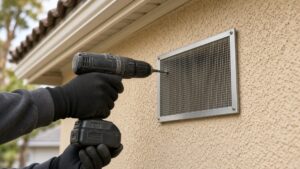
- Completing home hardening upgrades
- Addressing structural vulnerabilities
- Documenting mitigation efforts
These actions signal to insurers that your home presents a lower risk profile.
How Mitigation Changes the Insurance Conversation
Mitigation is no longer just a recommendation. It is becoming a requirement.
When a property demonstrates strong wildfire protection, it changes how insurers evaluate it.
Effective mitigation strategies include:
- Zone 0 management to eliminate ignition sources
- Home hardening to reduce vulnerability
- Defensible space to limit fire spread
- Fire retardant systems to address ember exposure
Wildfire defense systems that use non-toxic chemical retardants add a layer of protection that traditional methods alone cannot provide.
These systems:
- Do not rely entirely on water supply
- Can operate during power outages
- Can be remotely activated
- Include manual activation options
- Provide protection during evacuation
Where Most Homeowners Fall Short
Many homeowners believe they are protected because they have completed basic defensible space work.
While important, this is only part of the solution.
Common gaps include:
- Ignoring Zone 0 requirements
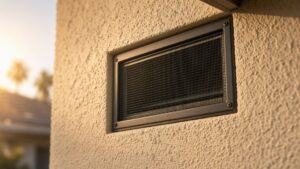
- Overlooking ember entry points
- Relying solely on vegetation clearance
- Lack of documentation for insurance review
- No active protection system in place
Wildfires do not require a large flame front to destroy a home. Embers can ignite small vulnerabilities that go unnoticed.
Building an Insurable Property
The goal is not just compliance. It is survivability.
An insurable property in California today is one that demonstrates layered protection.
This includes:
- Zone 0 compliance
- Home hardening
- Defensible space
- Active wildfire defense systems
When these elements are combined, they create a property that insurers are more willing to evaluate favorably.
Frequently Asked Questions
Why are insurance companies leaving California?
Due to wildfire risk, financial losses, and increased exposure.
What is happening to california fire insurance?
Carriers are reducing coverage and tightening underwriting standards.
Can I keep my insurance policy?
Yes, but it may require additional mitigation and documentation.
What is the California FAIR Plan?
A last resort insurance option for homeowners who cannot obtain traditional coverage.
Does defensible space help with insurance?
Yes, but it must be part of a broader mitigation strategy.
What is Zone 0?
The first five feet around your home where ignition risk must be minimized.
Do wildfire defense systems help?
Yes, especially when they reduce ignition risk and are properly documented.
Are water-based systems reliable?
They have limitations due to water availability and evaporation.
Are retardant systems safe?
Yes, modern systems use non-toxic and environmentally safe formulations.
What is the best way to stay insured in California?
A layered approach combining mitigation, hardening, and active protection systems.
Next Steps
If you are concerned about losing your california fire insurance coverage, the next step is understanding your property’s risk profile.
A professional wildfire assessment can help you identify:
- Vulnerabilities that insurers may flag
- Opportunities to improve your mitigation strategy
- Steps to maintain or regain traditional coverage
Taking action now can make the difference between losing coverage and keeping it.
Want to know where your home stands? Get Your Free Satellite Property Review — we will assess your property’s wildfire risk and help you build a mitigation plan that supports your insurance goals.