
Fire retardant spray for homes is a wildfire mitigation method that applies a specialized chemical solution to structures and surrounding vegetation to reduce the likelihood of ignition.
Unlike traditional wildfire sprinkler systems that rely heavily on water, retardant systems are designed to coat surfaces with a protective layer that resists ignition from embers, radiant heat, and direct flame exposure.
These sprays can be applied in several ways:
- As part of a fixed wildfire defense system
- As a seasonal spray service
- As a targeted application in high risk areas such as Zone 0
In California, where wildfire exposure is a year round concern, these systems are becoming an increasingly important part of wildfire home protection strategies.
Curious about your property’s actual wildfire risk? Our free calculator shows your CAL FIRE zone, exposure level, and recommended next steps based on your address.
Get your free risk scoreHow Fire Retardant Spray Works
Understanding wildfire defense systems and how they work starts with ignition science.
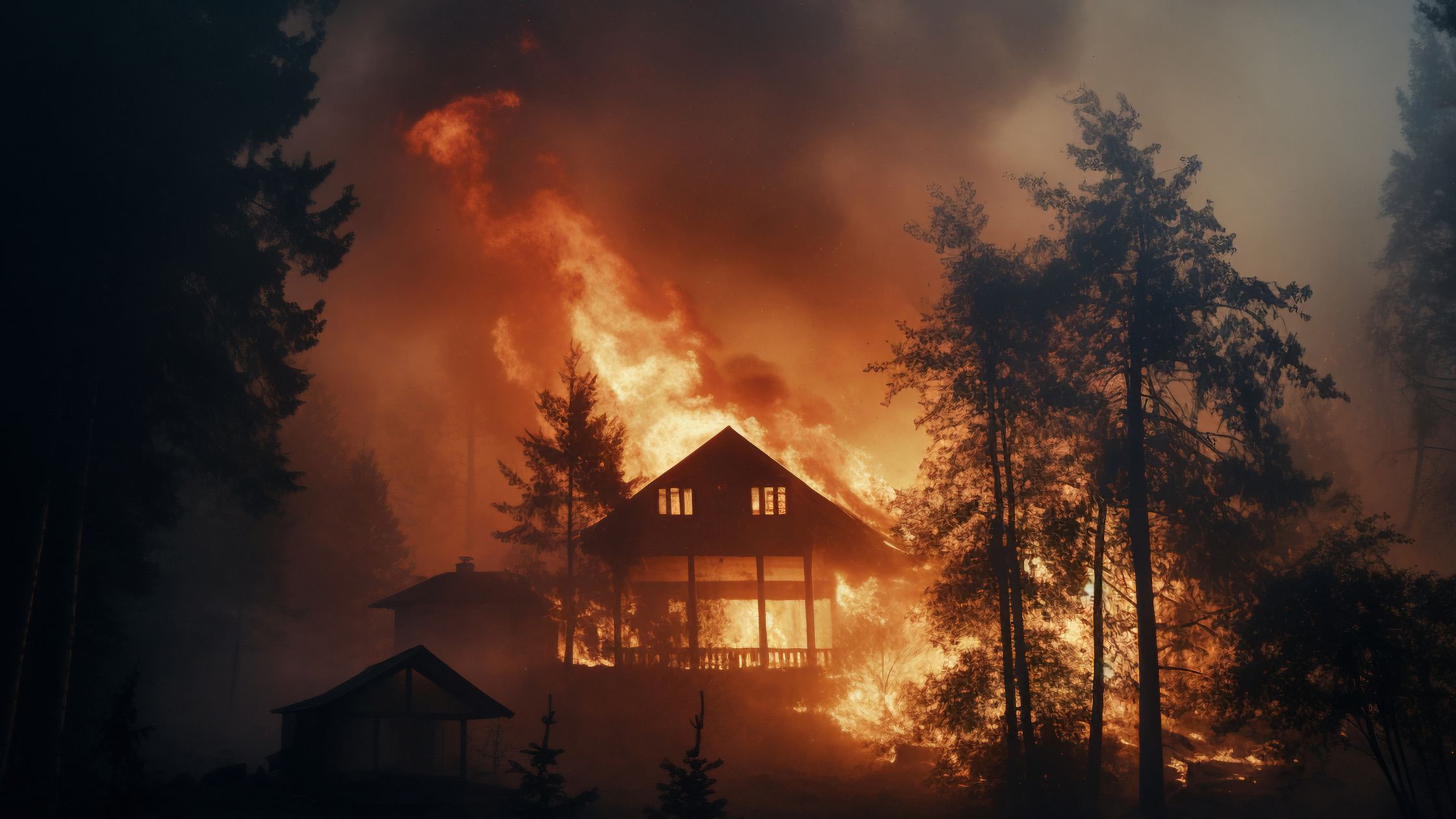
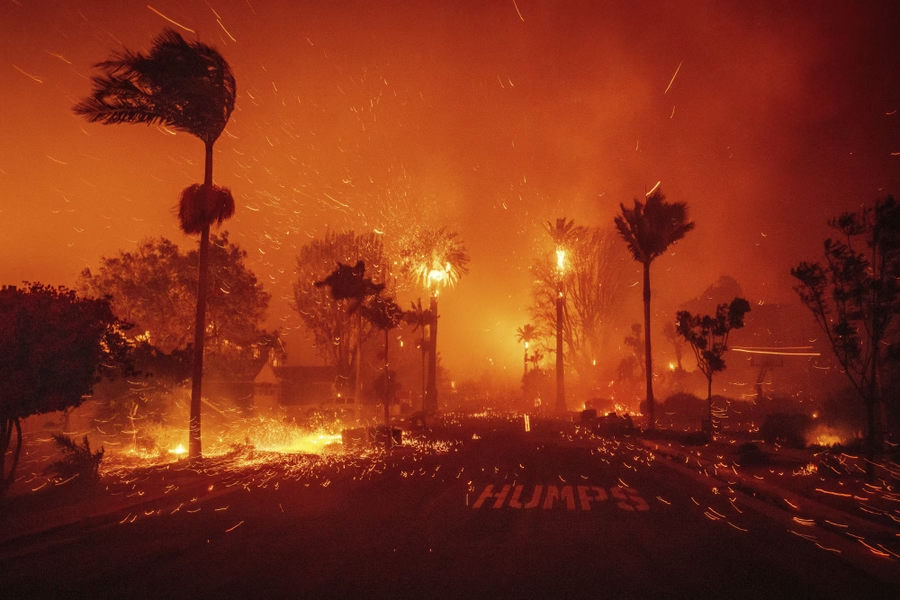
Most homes do not ignite from a wall of flame. They ignite from embers that land on vulnerable surfaces such as roofs, vents, decks, and landscaping.
Fire retardant spray works by:
- Bonding to surfaces such as wood, vegetation, and structural materials
- Interrupting the combustion process
- Reducing the ability of embers to ignite materials
- Continuing to provide protection even after drying
Unlike water, which evaporates quickly under high heat and wind conditions, retardants remain in place and continue to protect surfaces until they are washed away by significant moisture.
This makes them far more effective in real wildfire conditions where timing, heat, and wind all work against traditional water based approaches.
Not sure which step to prioritize first? Our wildfire risk calculator shows your CAL FIRE zone and exposure level — so you know exactly where to start.
Types of Fire Retardant Spray Systems
There are several ways fire retardant spray for homes can be deployed:
Fixed Wildfire Defense Systems
These are permanently installed systems that distribute retardant through a network of lines and nozzles placed around the home and property.
They can:
- Be remotely activated
- Include a manual activation option
- Operate during evacuation
- Deliver consistent coverage across critical areas
Seasonal Spray Services
This approach involves applying retardant to vegetation and surfaces multiple times per year.
Typical applications include:
- Before fire season
- After heavy rain
- During peak wildfire conditions
Hybrid Systems
Some properties combine both system installation and periodic spray services for layered protection.
This aligns with a broader wildfire home defense strategy that includes defensible space and home hardening.
Editor’s note: Your insurance situation depends heavily on your property’s actual fire exposure. Our free risk assessment factors in official CAL FIRE data to show what your risk level actually is — useful context before talking to your carrier.
DIY vs Professional Fire Retardant Spray
Many homeowners consider applying fire retardant spray themselves. While DIY solutions exist, there are important differences to consider:
DIY Approach
- Limited coverage and consistency
- Difficulty reaching roofs and elevated areas
- Uncertainty around proper application timing
- No documentation for insurance purposes
Professional Installation and Service
- Engineered system design for full property coverage
- Proper application based on wildfire conditions
- Integration with wildfire defense systems
- Documentation that can support underwriting and insurance review
Why Water Based Systems Fall Short
Water seems like the obvious solution, but in wildfire conditions it has serious limitations.
To properly saturate a property, water systems require enormous volume. In real scenarios, that can mean tens of thousands of gallons over a short period of time.
The challenges include:
- Rapid evaporation in high heat and wind
- Limited water supply during wildfire events
- Loss of pressure in municipal systems
- Competition with firefighting resources
- Dependence on pools or stored water that may run out
Fire retardant systems solve this problem by using far less volume while providing longer lasting protection.
The Role of Zone 0 and Home Hardening
Fire retardant spray is most effective when combined with other mitigation strategies.
Zone 0
Zone 0 refers to the first five feet around the home and is the most critical ignition zone.
Best practices include:
- Removing combustible materials
- Eliminating ember traps
- Using non-combustible landscaping
Home Hardening
Home hardening focuses on strengthening the structure itself:
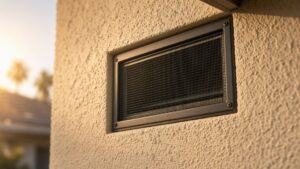
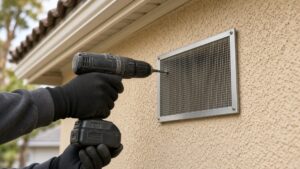
- Ember resistant vents
- Fire rated roofing
- Sealed gaps and openings
Layered Protection
The most effective wildfire home defense strategies combine:
- Zone 0 compliance
- Home hardening
- Defensible space
- Fire retardant spray systems
Cost of Fire Retardant Spray Systems
Costs vary depending on property size, terrain, and system complexity.
Typical considerations include:
- System design and installation
- Tank, pump, and distribution components
- Type of retardant used
- Ongoing maintenance or seasonal applications
While costs can be comparable to advanced water based systems, retardant systems typically deliver greater efficiency and performance.
Many homeowners also view these systems as an investment in:
- Property protection
- Long term insurability
- Real estate value
Insurance Benefits and Market Trends
Insurance carriers are increasingly focused on mitigation and survivability.
Homes that demonstrate strong wildfire protection may benefit from:
- Improved underwriting outcomes
- Greater access to traditional carriers
- Reduced reliance on the California FAIR Plan
- Increased buyer confidence in resale scenarios
Frequently Asked Questions
What is fire retardant spray for homes?
A chemical based solution applied to reduce ignition risk from wildfire exposure.
How is it different from water systems?
Retardant stays on surfaces and continues working after drying, while water evaporates quickly.
Is it safe?
Yes, modern systems use non-toxic, plant safe formulations.
How long does it last?
It remains effective until washed away by significant moisture such as rain.
Can I install it myself?
DIY options exist, but professional systems provide better coverage and reliability.
Does it help with insurance?
Yes, especially when part of a documented mitigation strategy.
What is Zone 0?
The five foot area around your home where ignition risk must be minimized.
Does it replace defensible space?
No, it works alongside defensible space and home hardening.
How often should it be applied?
Typically multiple times per year or as needed based on conditions.
What is the best wildfire protection approach?
A layered strategy combining Zone 0, home hardening, defensible space, and active wildfire defense systems.
Next Steps
If you are exploring fire retardant spray for homes, the next step is understanding how it fits into your overall wildfire protection strategy.
A professional assessment can help you determine:
- Where your property is most vulnerable
- Whether a system or spray service makes sense
- How to improve both protection and insurability
Want to know where your home stands? Get Your Free Satellite Property Review — we will assess your property’s wildfire risk and help you design a protection strategy that fits your home and your goals.