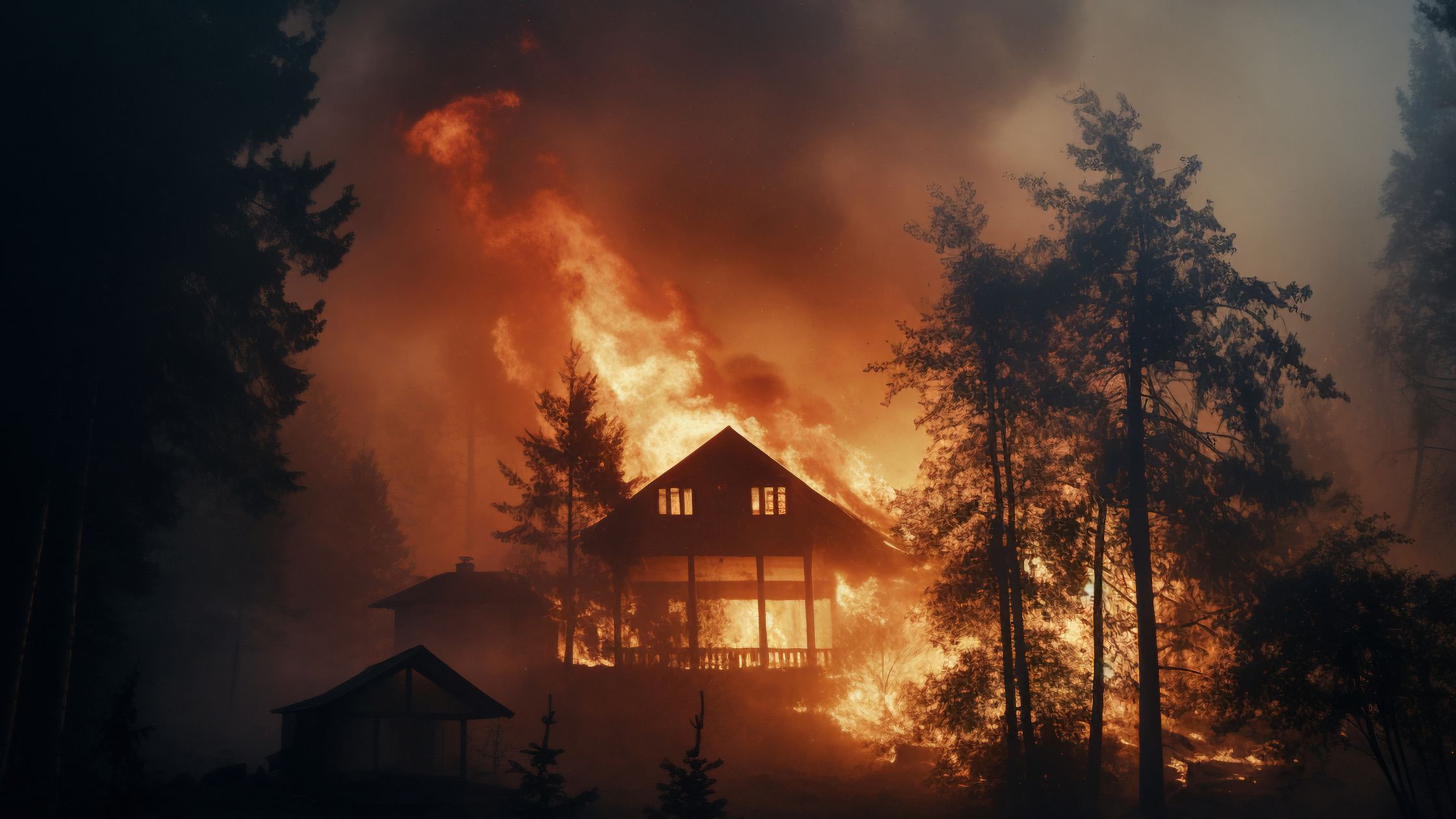


Wood is one of the most common ignition points in a wildfire.
Decks, fences, and siding are especially vulnerable because they:
- Sit close to the ground where embers accumulate
- Trap debris and combustible material
- Are directly exposed to radiant heat and flame
In many wildfire losses, the structure itself does not ignite first. The ignition starts at a deck corner, a fence line, or wood siding near vegetation.
Once that happens, fire can quickly move into the home.
This is why protecting wood surfaces is a critical part of any wildfire home hardening strategy.
Not sure which step to prioritize first? Our wildfire risk calculator shows your CAL FIRE zone and exposure level — so you know exactly where to start.
What Fire Retardant Spray for Wood Does
Fire retardant spray for wood is designed to reduce the likelihood that these surfaces will ignite when exposed to embers or heat.
It works by:
- Coating the surface with a non-toxic chemical solution
- Interrupting the combustion process
- Reducing flame spread potential
- Providing protection even after drying
Unlike water based approaches, which only work while wet, retardant continues to provide protection during extended wildfire exposure.
This is especially important in real wildfire conditions, where events can last for hours or days.
Where It Matters Most: Decks, Fences, and Siding
Not all wood surfaces carry equal risk.
Decks
- Horizontal surfaces collect embers
- Gaps between boards allow ignition underneath
- Often located within Zone 0
Fences
- Can act as a direct pathway for fire to reach the home
- Often connect to structures
- Frequently overlooked in defensible space planning
Siding
- Large surface area exposed to radiant heat
- Vulnerable near landscaping or vegetation
- Can ignite from sustained ember exposure
These areas are some of the most important targets when applying fire retardant spray for homes.
How Fire Retardant Spray Works
Fire retardant spray changes how materials react under heat.
Instead of igniting easily, treated surfaces:
- Resist ignition from embers
- Slow down combustion
- Reduce flame spread
- Limit heat transfer
The key advantage is persistence. The protection remains even after the application dries, which is critical for real wildfire scenarios where constant reapplication is not possible.
This makes it a strong complement to wildfire defense systems, ember resistant home retrofits, and Zone 0 compliance efforts.
Editor’s note: Your insurance situation depends heavily on your property’s actual fire exposure. Our free risk assessment factors in official CAL FIRE data to show what your risk level actually is — useful context before talking to your carrier.
DIY vs Professional Application
Many homeowners consider applying fire retardant spray themselves. There are important differences between DIY and professional approaches.
DIY Application
- Limited coverage and consistency
- Difficulty reaching elevated surfaces
- Uncertainty around proper application rates
- No documentation for insurance purposes
Professional Application
- Full property coverage including hard to reach areas
- Proper material selection and application method
- Integration with wildfire mitigation services
- Documentation that supports insurance conversations
The key difference: DIY focuses on application. Professional service focuses on performance.
How It Fits Into a Full Wildfire Defense System
Fire retardant spray for wood is not a standalone solution. It is one layer in a complete wildfire protection strategy.
A comprehensive approach includes:
- Defensible space across all zones
- Zone 0 compliance
- Wildfire home hardening
- Ember proof vents installation
- Active wildfire defense system integration
When combined, these layers reduce ignition risk across the entire property.
Cost and Maintenance
The cost of fire retardant spray for wood depends on:
- Property size
- Number of surfaces
- Accessibility
- Frequency of application
General considerations:
- Deck and fence treatment costs vary by square footage
- Larger properties require more material and time
- Reapplication may be needed depending on exposure and weather
Compared to the cost of rebuilding or increased insurance premiums, many homeowners view this as a practical investment in wildfire protection.
Frequently Asked Questions
What is fire retardant spray for wood?
A chemical treatment that reduces the likelihood of wood ignition during wildfire exposure.
Is it safe?
Yes, modern formulations are non-toxic and safe for plants and surfaces.
How long does it last?
It remains effective until washed away by significant moisture such as rain.
Can I apply it myself?
Yes, but professional application provides better coverage and results.
Does it replace defensible space?
No, it works alongside defensible space and home hardening.
Does it help with insurance?
It can support mitigation documentation and improve underwriting outcomes.
What surfaces should be treated?
Decks, fences, siding, and other exposed wood elements.
Does it work after drying?
Yes, that is one of its key advantages.
Is it part of a wildfire defense system?
Yes, it is often integrated into broader wildfire protection strategies.
What is the best approach?
A layered strategy combining defensible space, hardening, and active protection.
Next Steps
If you have exposed wood surfaces like decks, fences, or siding, they are likely among the most vulnerable parts of your home during a wildfire.
Start by evaluating these areas within your Zone 0 and defensible space. Look for where embers could accumulate or where ignition could begin.
Want to know where your home stands? Get Your Free Satellite Property Review — we will evaluate your property’s wood surfaces and help you build a protection plan that reduces ignition risk and supports your insurance goals.
Curious about your property’s actual wildfire risk? Our free calculator shows your CAL FIRE zone, exposure level, and recommended next steps based on your address.
Get your free risk score