
Wildfire defense mesh is a 1/16-inch metal screen that retrofits over attic vents, eave openings, and foundation vents to block airborne embers — the leading cause of home ignition during wildfires (responsible for 90%+ of structure losses per IBHS research). A full-home mesh retrofit costs $500-$3,000 and provides passive, maintenance-free ember protection. However, mesh only blocks ember intrusion; it does not protect against radiant heat, direct flame contact, or provide active suppression. For homes in Very High Fire Hazard Severity Zones (VHFHSZ), mesh is a necessary first step but not sufficient — comprehensive wildfire defense systems with active suppression achieve 95%+ structure survivability rates.
This guide breaks down what wildfire defense mesh is, how it works, what types are available, and when you might need to go beyond mesh to a full wildfire defense system.
Not sure which step to prioritize first? Our wildfire risk calculator shows your CAL FIRE zone and exposure level — so you know exactly where to start.
What Is Wildfire Defense Mesh?
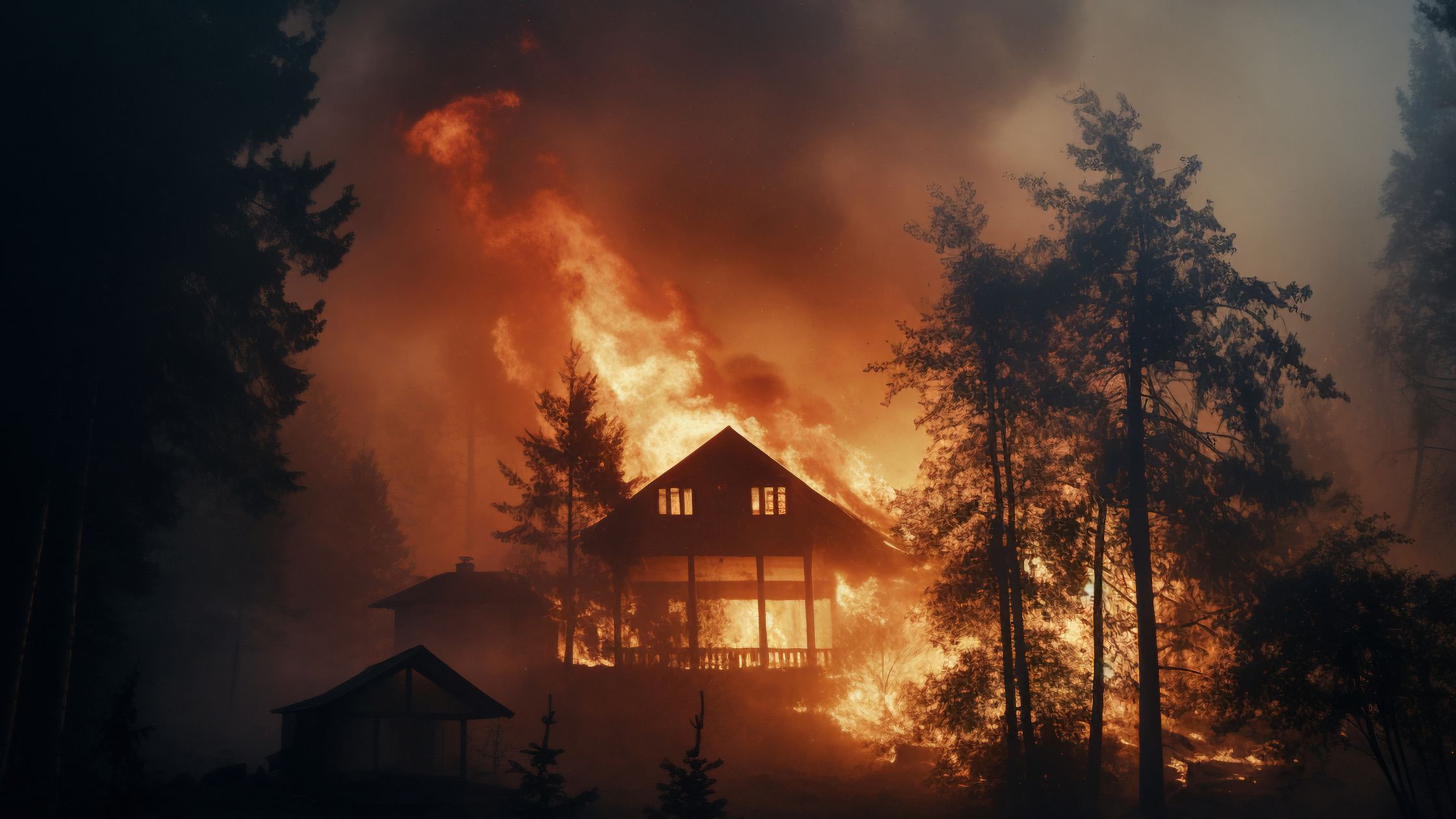
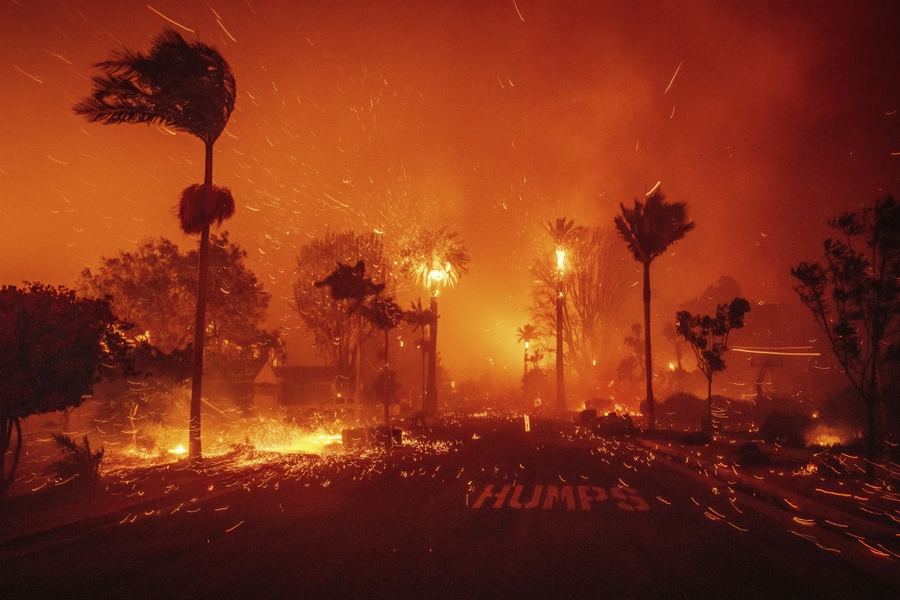
Wildfire defense mesh refers to metal screens and barrier systems designed to block burning embers from entering a structure. During a wildfire, winds can carry embers more than a mile ahead of the fire front. These embers land on roofs, slip through attic vents, settle in eave gaps, and ignite debris trapped against foundations. Research from CAL FIRE and the Insurance Institute for Business and Home Safety (IBHS) consistently shows that ember intrusion is responsible for the majority of home ignitions during wildfire events.
Defense mesh works by placing a physical barrier over every potential entry point. The mesh openings are small enough to block embers but large enough to allow airflow, which is critical for attic ventilation and HVAC performance.
Think of it as a screen door for wildfires. It keeps the dangerous material out while still letting your home breathe.
Wildfire Defense Experts
Worried your home isn’t ready for the next wildfire?
Ember Pro’s wildfire defense experts assess your property, pinpoint the weak points, and build a protection plan — from defensible space and Zone 0 to home hardening.
Editor’s note: Your insurance situation depends heavily on your property’s actual fire exposure. Our free risk assessment factors in official CAL FIRE data to show what your risk level actually is — useful context before talking to your carrier.
How Wildfire Defense Mesh Works
The concept behind wildfire defense mesh is straightforward. Embers need an opening to enter your home. Mesh eliminates those openings.
Installation typically involves retrofitting existing vents, eaves, and foundation screens with fire-rated metal mesh. The process varies by home, but a standard installation covers:
- Attic vents and gable vents
- Soffit and eave openings
- Foundation and crawlspace vents
- Dryer and exhaust vents
- Any gaps where siding meets the roofline
The mesh itself is usually made from galvanized steel, stainless steel, or bronze woven wire cloth. The critical specification is the mesh opening size. The industry standard for ember resistance is 1/16 inch (approximately 1.6 mm), which is small enough to block virtually all airborne embers while still permitting adequate ventilation.
Some newer products use intumescent coatings that expand when exposed to heat, further sealing openings during a fire event. Others incorporate corrosion-resistant alloys designed to withstand the coastal and mountain environments common across California.
Types of Wildfire Defense Mesh
Ember-Resistant Vent Screens (1/16″ Mesh)
These are the most common and most affordable option. Pre-fabricated vent covers with 1/16-inch mesh replace standard window-screen-grade vent covers on attic, soffit, and foundation vents. Many meet the requirements of California’s Chapter 7A building code for new construction in wildfire zones. They are available at most hardware stores and are a reasonable DIY project for handy homeowners.
Exterior Mesh Barrier Systems
These go beyond individual vent covers to create a continuous mesh barrier across larger sections of the building envelope. Exterior mesh barriers are typically installed along eave lines, behind fascia boards, and across open-framed porch or deck undersides. They require professional installation to ensure complete coverage without creating moisture-trapping pockets that could lead to rot or mold.
Roof Mesh Systems
Roof mesh systems cover ridge vents, turbine vents, and the gaps where roofing material meets the deck. These are particularly important for older homes with wood shake roofs or homes where the roof-to-wall junction has not been properly sealed. Roof-level mesh is harder to install and inspect, which is why most fire professionals recommend having a licensed contractor handle this work.
Pros and Cons of Mesh-Only Defense
Mesh has genuine value. It is the most cost-effective first step a homeowner can take to reduce ember vulnerability. A full-home vent retrofit typically costs between $500 and $3,000 depending on the number of openings and the material grade. It requires no power, no maintenance schedule, and no activation. It simply works passively, around the clock.
But mesh has real limitations. It only addresses one vector of wildfire damage: ember intrusion through openings. It does nothing to protect against radiant heat, which can shatter windows and ignite exterior walls from 30 feet away. It does not prevent direct flame contact from burning vegetation within your defensible space. It cannot stop accumulated debris on roofs and in gutters from igniting when embers land on it. And it offers no suppression capability once ignition occurs.
In short, mesh reduces one significant risk factor. It does not eliminate wildfire risk.
Wildfire Defense Mesh vs. Full Defense Systems
To understand where mesh fits in the broader picture, here is a direct comparison:
- Ember blocking: Mesh yes, Full system yes
- Radiant heat protection: Mesh no, Full system yes
- Active fire suppression: Mesh no, Full system yes
- Remote activation: Mesh no, Full system yes
- Works during evacuation: Mesh passive only, Full system fully operational
- Off-grid capable: Mesh N/A (no power needed), Full system yes
- Structure survivability rate: Mesh partial improvement, Full system 95%+
- Insurance benefit potential: Mesh minimal, Full system significant
- Typical cost: Mesh $500-$3,000, Full system $15,000-$40,000
The takeaway is not that mesh is bad. It is that mesh addresses one layer of a multi-layered problem. A comprehensive defense system adds active suppression using non-toxic fire inhibitors, off-grid power so the system runs even when the grid goes down during a fire, remote activation so you can protect your home after you have evacuated, and continuous coverage of the entire building envelope rather than just the openings.
Cost Considerations
Budget is a real factor for most homeowners, and it is worth being honest about the numbers.
A basic vent mesh retrofit is one of the cheapest wildfire hardening measures available. For a few hundred dollars in materials and a weekend of work, you can meaningfully reduce your ember intrusion risk. If you hire a contractor, expect to pay $1,500 to $3,000 for a thorough installation covering all vents and eave openings.
A full wildfire defense system is a larger investment. Systems that include perimeter suppression, fire-inhibitor application, off-grid power, and remote monitoring typically range from $15,000 to $40,000 depending on property size and terrain. That is a significant expense, but it is worth comparing against the cost of rebuilding a home (often $400,000 to $800,000 in California) or the annual cost of wildfire insurance premiums that have been climbing steadily across the state.
Many homeowners who install comprehensive wildfire defense systems see insurance benefits that offset part of the cost. Insurers increasingly recognize active defense systems as a material reduction in risk, which can translate to lower premiums or even the difference between getting coverage and being denied in a high-risk zone.
When Mesh Makes Sense and When You Need More
Mesh is a smart choice when:
- You are on a tight budget and need to start somewhere — mesh is the best bang-for-your-buck first step in wildfire hardening
- Your home is in a moderate fire risk area where ember intrusion is the primary concern
- You are planning a phased approach to wildfire protection and want to knock out the easiest win first
- You are doing new construction or a major remodel and need to meet Chapter 7A vent requirements
You likely need more than mesh when:
- Your property is in a Very High Fire Hazard Severity Zone (VHFHSZ)
- You need to comply with AB 3074 defensible space requirements, particularly the Zone 0 ember-resistant zone within five feet of your structure
- Your home has been flagged by your insurer or you have had trouble obtaining wildfire coverage
- You live in an area with limited fire department response times, such as rural or semi-rural parts of San Diego County, the Sierra foothills, or the Wildland-Urban Interface
- You want protection that works while you are evacuated, not just protection that sits there passively
For homeowners in high-risk zones, mesh should be viewed as one component of a broader strategy, not the strategy itself.
Protect your home before the next fire season.
Talk to Ember Pro about a wildfire defense plan built for your property and California’s 2026 requirements.
Frequently Asked Questions
Does wildfire defense mesh really stop embers?
Yes. Properly installed 1/16-inch metal mesh blocks the vast majority of airborne embers from entering attic vents, eave gaps, and foundation openings. However, mesh only addresses ember intrusion. It does not protect against radiant heat, direct flame contact, or burning debris accumulation, which account for a significant portion of structure ignitions during wildfire events.
How much does wildfire defense mesh cost compared to a full defense system?
Ember mesh screens typically cost $500 to $3,000 for a full home retrofit, depending on the number of vents and the mesh material used. A comprehensive wildfire defense system, which includes active suppression, fire-inhibitor application, and real-time monitoring, generally ranges from $15,000 to $40,000 installed.
Is wildfire defense mesh required by California building code?
California’s Chapter 7A building code requires ember-resistant vents on new construction and major remodels in wildfire-prone areas. AB 3074 expanded defensible space requirements to include a Zone 0 ember-resistant zone within five feet of structures. While mesh screens can help meet some of these requirements, full compliance in Very High Fire Hazard Severity Zones often calls for a more comprehensive approach to hardening.
Can I install wildfire defense mesh myself?
Basic vent mesh screens are a common DIY project. Pre-cut ember-resistant vent covers are available at hardware stores and can be installed with screws and a drill. However, whole-house mesh barrier systems and roof-level installations should be handled by a licensed contractor to ensure proper coverage, code compliance, and fire-rated material selection.
Find Out What Level of Protection Your Home Actually Needs
Every property is different. The right level of wildfire protection depends on your fire hazard zone, your home’s construction, the surrounding vegetation, and your tolerance for risk. Mesh might be enough. Or it might be just the beginning.
Ember Pro USA is a CSLB-licensed wildfire defense contractor (License #1142407) based in San Diego. We install off-grid, remotely activated wildfire defense systems using non-toxic fire inhibitor, and we help homeowners across California understand exactly where their vulnerabilities are.
Schedule a free 10-point wildfire risk assessment and we will walk your property, identify every vulnerability, and give you a clear recommendation on whether mesh, a full system, or a phased approach makes the most sense for your situation. No pressure, no obligation. Just an honest evaluation from people who do this every day.
Curious about your property’s actual wildfire risk? Our free calculator shows your CAL FIRE zone, exposure level, and recommended next steps based on your address.
Get your free risk score