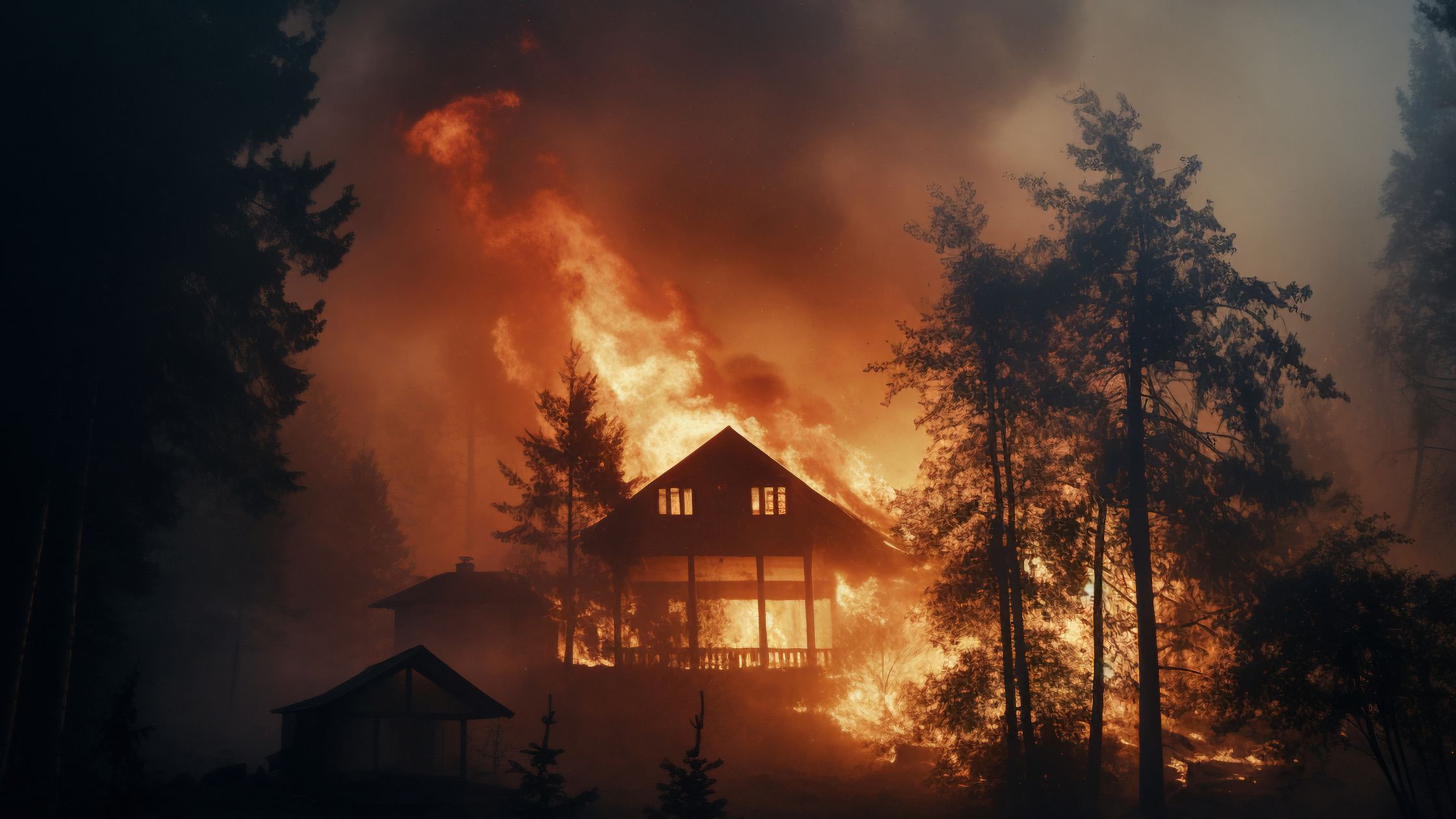


Most homes destroyed by wildfire are not consumed by direct flame contact. They are ignited by embers, burning pieces of vegetation and debris carried by wind up to a mile or more ahead of the fire front. In San Diego County, where Santa Ana winds routinely exceed 60 miles per hour during fire events, ember intrusion is the primary threat to residential structures. An ember resistant home retrofit addresses every vulnerability in your home’s exterior envelope, turning potential ignition points into defended barriers. Ember Pro USA provides comprehensive ember resistant retrofit services for San Diego homeowners, identifying and eliminating the vulnerabilities that cause homes to burn.
Editor’s note: Your insurance situation depends heavily on your property’s actual fire exposure. Our free risk assessment factors in official CAL FIRE data to show what your risk level actually is — useful context before talking to your carrier.
What Ember-Resistant Retrofit Means
An ember-resistant retrofit is the systematic upgrade of your home’s exterior components to resist ignition from wind-driven embers. During a wildfire, embers enter through gaps in vents, accumulate in gutters and deck crevices, lodge under eaves, and collect against combustible siding. Each of these entry points is a potential ignition source. A properly retrofitted home blocks these entry points and replaces combustible materials with fire-resistant alternatives.
Ember-resistant retrofitting works hand-in-hand with defensible space management. While defensible space reduces the fire intensity reaching your home, retrofitting ensures that the embers that do arrive cannot ignite your structure. Together, they form a comprehensive wildfire defense strategy.
Not sure which step to prioritize first? Our wildfire risk calculator shows your CAL FIRE zone and exposure level — so you know exactly where to start.
Common Vulnerabilities in San Diego Homes
San Diego’s housing stock includes a wide range of construction types, from 1960s ranch homes in Tierrasanta to modern hillside construction in Rancho Santa Fe. Each has specific ember vulnerabilities:
Vents
Attic vents, soffit vents, foundation vents, and gable vents are the most common ember entry points. Standard quarter-inch mesh screening allows small embers to pass through directly into attic spaces filled with flammable insulation and framing. Ember-resistant retrofit requires upgrading all vents to 1/8-inch corrosion-resistant metal mesh or installing purpose-built ember-resistant vent products that close automatically when exposed to heat.
Cost: $200-$800 per vent, depending on type and accessibility. A typical San Diego home has 6-15 vents requiring upgrade.
Eaves and Soffits
Open eaves expose roof framing and sheathing to ember accumulation. Even enclosed soffits with vinyl material can melt and expose the structure. Retrofit options include boxing open eaves with non-combustible materials (fiber cement, stucco, or metal) and replacing vinyl soffits with fire-resistant alternatives.
Cost: $1,500-$5,000 for eave enclosure, depending on home size and accessibility.
Decks
Wood decks, especially those with gaps between boards and enclosed undersides where debris accumulates, are among the most vulnerable structural elements. Embers collect between boards, under railings, and in the gap between the deck surface and the house wall. Retrofit options range from installing non-combustible flashing at the deck-wall junction to complete deck replacement with composite or non-combustible materials.
Cost: $500-$2,000 for flashing and gap sealing; $5,000-$15,000 for complete deck replacement with fire-resistant materials.
Windows
Single-pane windows can shatter from radiant heat during a wildfire, allowing embers direct entry into your home. Dual-pane tempered glass dramatically increases heat resistance and is required by Chapter 7A in fire hazard severity zones. Window screens also play a role in deflecting embers from window surfaces.
Cost: $500-$1,500 per window for dual-pane tempered glass replacement. A full home window retrofit typically costs $5,000-$15,000.
Roofing
Non-compliant roofing materials, particularly wood shakes and older composition shingles that have lost their fire rating, allow embers to ignite roof surfaces. Class A fire-rated roofing is required in all fire hazard severity zones. Metal, concrete tile, and Class A asphalt shingles are compliant options.
Cost: $8,000-$25,000 for full roof replacement, depending on material choice and home size.
Gutters
Gutters accumulate leaves, needles, and organic debris that embers easily ignite. Non-combustible gutter guards and regular cleaning are essential. Metal gutters with enclosed gutter guard systems provide the best ember resistance.
Cost: $500-$2,000 for gutter guard installation.
Ember Resistant Retrofit Checklist
Use this checklist to evaluate your San Diego home’s ember resistance:
- All vents upgraded to 1/8-inch metal mesh or ember-resistant products
- Eaves enclosed with non-combustible materials
- Deck-to-wall junction sealed with non-combustible flashing
- No combustible materials stored under decks or porches
- All windows dual-pane tempered glass
- Roof Class A fire-rated
- Gutters have non-combustible guards and are debris-free
- Exterior siding non-combustible or fire-resistant rated
- Garage door weather-sealed at bottom and sides to prevent ember entry
- Exterior doors solid-core or fire-rated
- No combustible fencing attached to the structure
- Chimney fitted with spark arrestor (1/2-inch mesh)
- Dryer and bathroom exhaust vents fitted with back-draft dampers
Chapter 7A Requirements for San Diego
California Building Code Chapter 7A establishes the minimum construction standards for buildings in fire hazard severity zones. For San Diego properties, Chapter 7A compliance is triggered by new construction, major renovations, or roof replacement. Key Chapter 7A requirements include:
- Class A fire-rated roof assemblies
- Enclosed eaves and soffits with non-combustible materials
- 1/8-inch metal mesh on all exterior vents
- Dual-pane tempered glass windows in fire-exposed walls
- Non-combustible or ignition-resistant exterior wall coverings
- Non-combustible deck surfaces within Zone 0
While Chapter 7A technically applies only to new construction and qualifying renovations, Ember Pro recommends proactive retrofitting to these standards for all San Diego homes in fire hazard areas. The investment protects your home and positions you favorably for insurance underwriting.
Ember Pro Retrofit Services in San Diego
Ember Pro USA provides complete ember resistant retrofit services for San Diego homeowners:
- Comprehensive Vulnerability Assessment: We inspect every exterior component of your home, identifying all ember entry points and assigning risk priority to each.
- Prioritized Retrofit Plan: We provide a detailed plan with costs, prioritized by highest-risk vulnerabilities first, so you can phase improvements based on budget.
- Professional Installation: Ember Pro coordinates all retrofit work, from vent replacement to eave enclosure to deck hardening, ensuring every improvement meets or exceeds Chapter 7A standards.
- Integration with Defensible Space: We coordinate retrofit work with your defensible space management to create a comprehensive protection system.
- Defense System Integration: For maximum protection, we can integrate exterior suppression systems with your retrofit improvements.
- Insurance Documentation: Complete documentation of all retrofit work, with before-and-after photos and compliance verification, formatted for insurance submission.
How Retrofitting Affects Insurance
In San Diego’s current insurance market, documented ember-resistant retrofitting can make the difference between maintaining coverage and receiving a non-renewal notice. Insurance companies evaluate:
- Roof fire rating and condition
- Vent screening compliance
- Eave and soffit enclosure status
- Deck construction materials
- Overall home hardening posture
Homeowners who can document Chapter 7A-level retrofitting are significantly more likely to maintain coverage and may qualify for premium reductions of 10-20%. Ember Pro’s documentation package is specifically designed to support insurance applications and renewals for San Diego homeowners.
Before and After: What Retrofit Looks Like
Before: A typical pre-retrofit San Diego home might have open eaves with exposed rafter tails, standard 1/4-inch vent mesh, wood shake roof, single-pane windows, wood deck with debris underneath, and combustible vinyl siding.
After: The same home retrofitted by Ember Pro features boxed eaves with stucco finish, 1/8-inch ember-resistant vent screens, Class A composition or tile roof, dual-pane tempered windows, composite deck with non-combustible flashing at the wall junction, and fiber cement siding. The total cost for this level of retrofit typically ranges from $15,000 to $45,000, depending on home size and existing conditions.
Frequently Asked Questions
How much does a full ember-resistant retrofit cost in San Diego?
Full retrofits typically range from $10,000 to $50,000 depending on home size, current condition, and scope. Many homeowners phase improvements over two to three years, starting with highest-risk items like vents and roof.
Is Chapter 7A compliance required for existing homes?
Currently, Chapter 7A is triggered by new construction and major renovations. However, proactive retrofitting to Chapter 7A standards is strongly recommended and may become mandatory under future California wildfire legislation.
Can I do retrofit work myself?
Some items like vent screen replacement are within DIY capability. However, eave enclosure, window replacement, and roof work require licensed contractors. Ember Pro coordinates all trades needed for a complete retrofit.
How long does a retrofit project take?
A focused retrofit addressing the highest-priority items typically takes one to two weeks. Comprehensive retrofits including roof and window replacement may take three to six weeks. Ember Pro provides detailed timelines with every project proposal.
Will retrofitting increase my property value?
Yes. In San Diego’s fire-prone areas, documented ember-resistant construction is a significant selling point. Buyers increasingly require fire-hardened properties, and real estate agents report that hardened homes sell faster and at higher prices than non-hardened comparable properties.
Ember Pro USA is San Diego’s trusted ember-resistant retrofit contractor. Contact us today at emberprousa.com for a free vulnerability assessment and protect your home from ember intrusion before the next wildfire threatens your community.
Curious about your property’s actual wildfire risk? Our free calculator shows your CAL FIRE zone, exposure level, and recommended next steps based on your address.
Get your free risk score
Leave a Reply