California is not broken. It is behaving exactly as it was designed to.
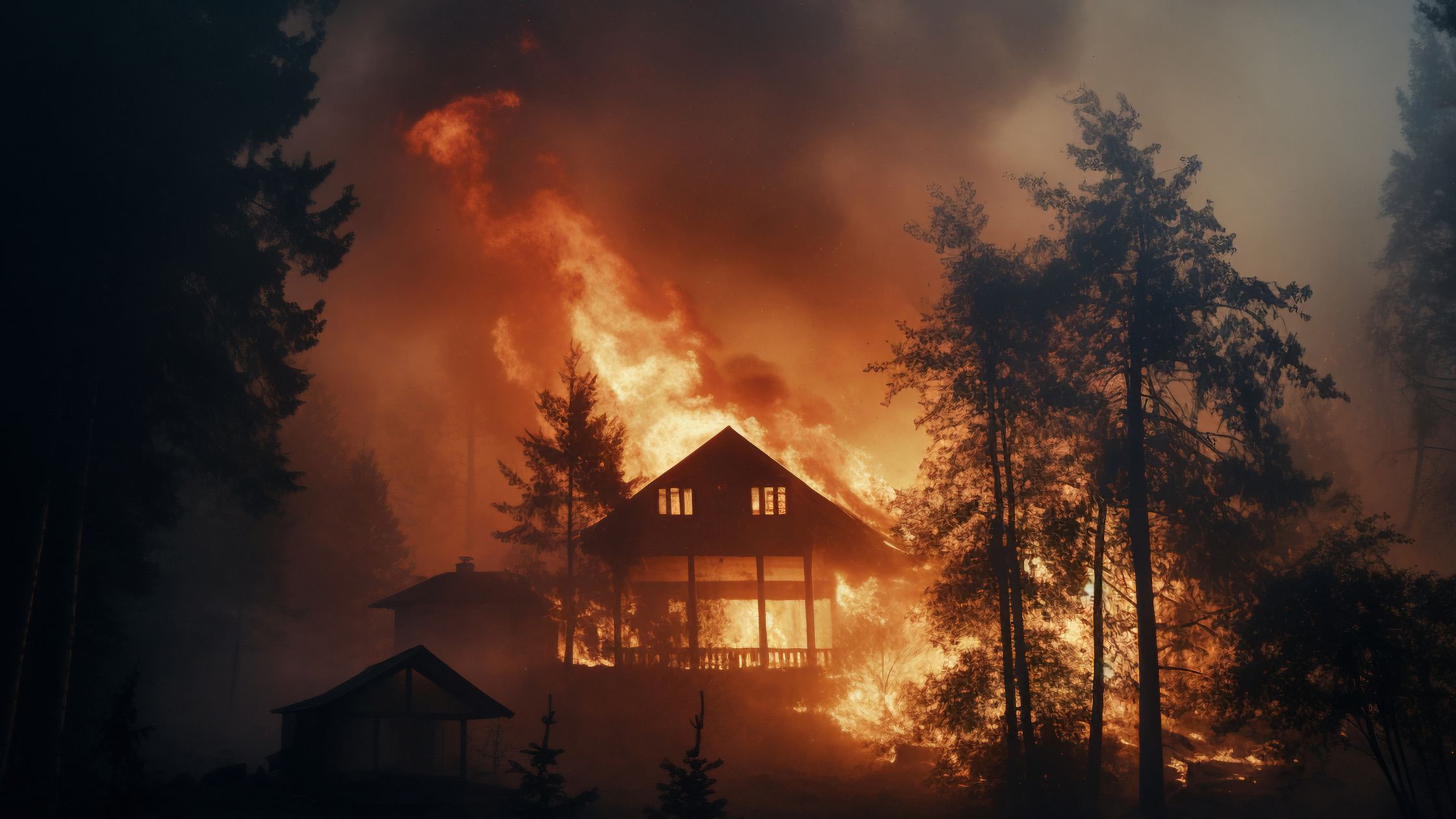
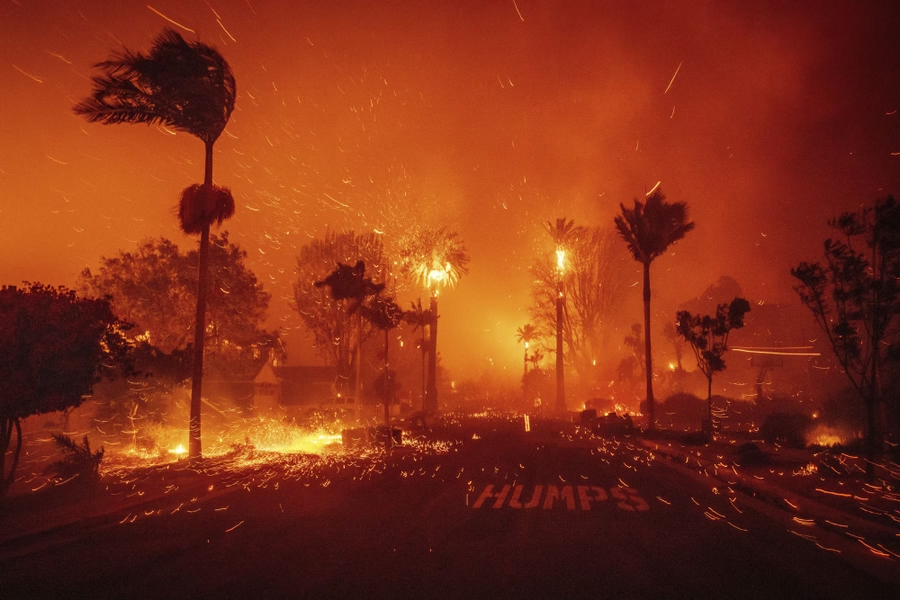
Fire has always been part of this landscape. Long before we built homes in canyons and along ridgelines, wildfire played a critical role in clearing dead vegetation, regenerating native plant species, and maintaining ecological balance. What has changed is not the presence of fire, but the way we have chosen to live within it.
For decades, we suppressed fire and unintentionally allowed fuel to accumulate. We introduced non-native vegetation that burns hotter and faster. We expanded communities into high risk areas without adapting how we build, landscape, or plan. The result is what we are now experiencing across California.
The question is no longer whether wildfire will occur. It will.
The real question is whether our communities are prepared to live with it.
Understanding Community Immunity
Most conversations around wildfire protection begin and end at the individual home. Clear your brush. Harden your structure. Install vents. These actions matter, but they are incomplete on their own.
Wildfire does not move house to house based on property ownership. It moves through available fuel, wind patterns, and structural vulnerabilities. One well prepared home surrounded by unmanaged properties remains at risk.
This is where the concept of Community Immunity becomes essential.
Community Immunity is the point at which enough homes and property owners adopt wildfire resilient practices that the entire neighborhood becomes more resistant to ignition and loss. It is not about perfection at the individual level. It is about participation at scale.
Like any system, resilience emerges when enough parts are working together.
A Shift in Awareness Across California
There is a noticeable change happening on the ground.
Six months ago, I attended a Fire Safe Council meeting in Rancho Penasquitos in San Diego. About thirty people were in the room. It was a small but engaged group, mostly those already paying attention.
Recently, we held another meeting focused on AB 3074 and defensible space requirements. This time, there was standing room only. More than one hundred people showed up from the local community.
That kind of growth does not happen by accident. It reflects a shift in awareness. People are starting to understand that wildfire risk is not isolated to a single property. It is shared across neighborhoods, streets, and entire regions.
Communities are paying attention, and that matters.
The Role of Fire Safe Councils
Fire Safe Councils are often the quiet drivers behind meaningful progress.
They bring together homeowners, fire agencies, local leaders, and professionals to create alignment where it is needed most. They turn policy into practical action and help communities move from awareness to execution.
They also play a critical role in education by providing resources like free wildfire preparedness guides, helping homeowners take the first step toward understanding their risk and how to reduce it. Professionals should be doing the same, offering tools like this free comprehensive planning guide to make it easier for communities to take action.
Working closely with our local council, it is clear that when communities organize around wildfire preparedness, outcomes improve. When they do not, risk compounds quickly.
For those already involved, the opportunity is to step into stronger leadership roles. For those not yet engaged, now is the time to get involved. These organizations are not optional. They are foundational to building resilient communities.
The Responsibility of Professionals
There is another layer to this conversation that cannot be ignored.
Realtors, insurance brokers, and industry professionals play a significant role in shaping how communities respond to wildfire risk. They are often the first point of contact for homeowners navigating decisions about buying, selling, insuring, and improving properties.
Through speaking engagements with the California Association of Realtors, individual broker offices, and podcasts, I spend a significant amount of time sharing what we are seeing in the field. This includes how legislation like AB 3074 is evolving and what best practices are emerging through conferences like CWUIC.
What stands out is that professionals have a choice. They can either reinforce outdated thinking or help drive adoption of practices that actually reduce risk.
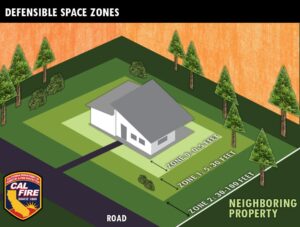
There is still resistance in some circles around concepts like Zone 0 and defensible space. That resistance does not serve homeowners or communities. It delays adoption of measures that are proven to make a difference.
Professionals have an obligation to be clear, informed, and proactive. They are not just participants in the system. They are amplifiers of the message.
Avoiding Common Mistakes in Wildfire Risk Assessment
One of the biggest gaps we see is not a lack of effort, but a lack of clarity.
Homeowners often believe they are protected because they have taken a few visible steps, without fully understanding how wildfire actually ignites structures. Risk is not always obvious, and small oversights can create major vulnerabilities.
This is why education matters.
Understanding what to look for, and what most people miss, can dramatically change outcomes. For those evaluating their own property or advising others, it is worth reviewing the most common pitfalls in this article.
Avoiding these mistakes is one of the fastest ways to improve both individual and community resilience.
Adapting to a Fire Driven Environment
The goal is not to eliminate wildfire. That is neither realistic nor aligned with how California ecosystems function.
The goal is to adapt.
This includes understanding which plant species increase risk, particularly non-native vegetation that can contribute to higher fuel loads and faster fire spread. It includes maintaining defensible space, hardening structures, and reducing ignition pathways.
At the individual level, these actions improve survivability.
At the community level, they determine outcomes.
When multiple properties adopt these practices, the environment itself changes. Fire behavior is influenced. Spread can slow. Opportunities for structure survival increase.
Adaptation is not a single action. It is a collective shift in how we live within this environment.
Rebuilding with Intention
Wildfire does not only test communities. It also reveals their capacity to rebuild.
After a fire, there is a critical window where decisions are made that shape long term resilience. Some communities rebuild exactly as they were. Others take the opportunity to rebuild smarter.
Groups like Team Palisades are demonstrating what this can look like. Through coordinated effort, shared knowledge, and a focus on long term resilience, they are helping guide rebuilding efforts that go beyond replacement and move toward improvement.
This is where Community Immunity becomes visible in practice. It is not just about preparing for the next fire. It is about evolving after the last one.
Moving Forward as a Community
Wildfire risk in California is not going away. It is increasing in frequency, intensity, and complexity.
The response cannot be fragmented.
It requires alignment at multiple levels. Individual homeowners taking responsibility for their properties. Communities organizing through Fire Safe Councils and local initiatives. Professionals guiding and educating with clarity and accountability.
The momentum is building. We are seeing it in packed community meetings. We are seeing it in increased engagement. We are seeing it in conversations that are becoming more informed and more urgent.
The path forward is clear.
Communities that adapt together will be more resilient. Communities that do not will continue to face greater loss.
Protect. Defend. Preserve.
That starts at the individual level.
But it succeeds at the community level.
That is Community Immunity.
About the Author
Jim Sprouse is a Certified Wildfire Mitigation Specialist through NFPA and holds a Bachelor of Science in Environmental Studies with a focus on ecology. As Co-Founder of Ember Pro in California, Jim works directly with homeowners, communities, and industry professionals to reduce wildfire risk through practical, science-backed mitigation strategies.
He regularly speaks with real estate professionals, insurance brokers, and community groups across California, sharing insights from the field and helping drive adoption of best practices like defensible space and structure hardening.
His mission is simple and relentless: Keep homes from burning in wildfires.
Learn more at www.emberprousa.com
Leave a Reply