
Author: Jim Sprouse, Co-founder of Ember Pro, BS in Environmental Studies from Allegheny College, Certified Wildfire Defense Specialist
Expert Review: Ryan Kresan, COO and Co-founder, Ember Pro
Reading Time: Approximately 10 minutes
Introduction
Most homeowners believe they have a pretty good handle on their wildfire risk.
They have checked a map, cleared some brush, maybe talked to their insurance company, and assumed they are either safe enough or out of harm’s way. Unfortunately, post-fire investigations across California tell a very different story.
Homes are not being lost because people did nothing. They are being lost because people focused on the wrong things.
Wildfire behavior has changed. Fire science has advanced. California law has evolved. But many homeowners are still assessing risk based on outdated assumptions.
Here are the five most common mistakes homeowners make when assessing wildfire risk, and why correcting them can make the difference between a home that survives and one that does not.
Mistake One: Relying on Maps Instead of Real Fire Behavior
Many homeowners start their wildfire risk assessment by looking at a Fire Hazard Severity Zone map. If their home is outside a very high hazard area, they feel relieved. If it is inside one, they worry, but often assume the map tells the whole story.
It does not.
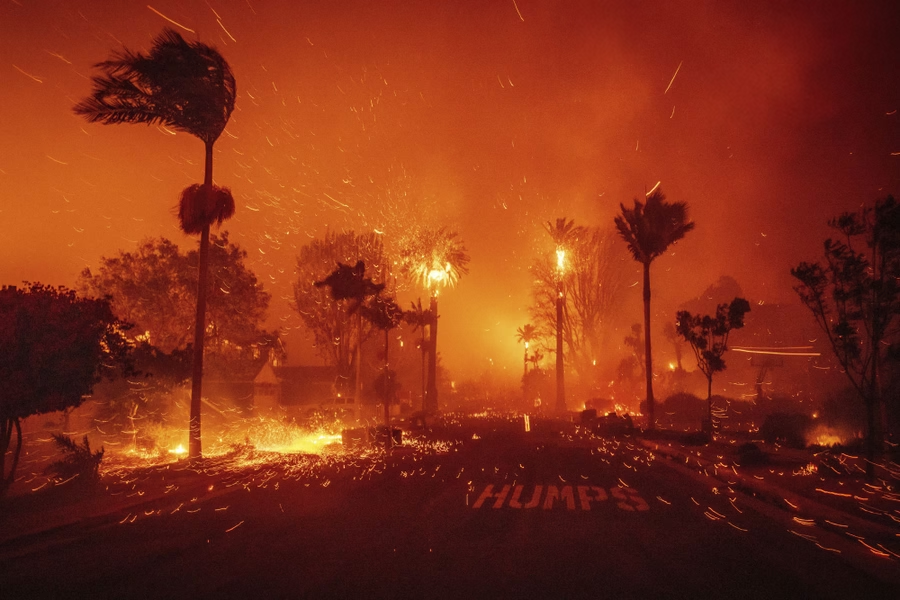
Recent wildfires in Los Angeles, San Diego, Santa Barbara, and throughout California have burned well beyond mapped wildfire zones. Wind-driven embers routinely travel one to three miles, crossing freeways, canyons, and neighborhoods that were never considered high risk.
Fire does not stop at a line on a map.
Fire follows wind, topography, fuel, and building density. During Santa Ana wind events, homes far from wildland edges can face the same ember exposure as those deep in the hills.
Assessing wildfire risk means understanding how fire actually behaves, not where it burned last time.
For a detailed look at how ember-driven fires destroy homes, see our analysis of the IBHS 2025 LA Conflagrations Report.
Mistake Two: Focusing on the Yard and Ignoring the Home
Another common mistake is assuming wildfire protection is primarily about vegetation management.
Homeowners clear brush, trim trees, and mow weeds, then feel confident they have addressed their risk. Defensible space is important, but it is only part of the equation.
Fire science shows that most homes ignite from embers, not from a wall of flames moving through vegetation. Embers target the home itself.
Windows, vents, eaves, siding, decks, and attachments are the most common ignition points. If these elements are vulnerable, even well-maintained defensible space may not be enough.
This is where home hardening becomes critical. Fire-resistant roofing, ember-resistant vents, tempered double-pane windows, and ignition-resistant materials dramatically reduce the chance that embers can ignite the structure.
A hardened home paired with defensible space performs far better than defensible space alone.
Want to understand why modern fire science recommends retardants over water? Read Why Fire Science Favors Retardants Over Water.
Mistake Three: Underestimating Zone 0 and the First Five Feet
The most overlooked area around the home is also the most dangerous.
Zone 0, the first five feet surrounding a structure, is now recognized as the highest ignition risk area. California law acknowledges this through AB 3074, which defines Zone 0 as an ember-resistant zone.
Despite this, many homeowners treat this space as decorative.
Wood mulch, planters, hedges, doormats, firewood, and wood fencing are often placed directly against the home. During a wildfire, embers collect in this area, heat builds, and ignition becomes likely.
Zone 0 is where small details cause big losses.
Replacing combustible materials with gravel, concrete, stone, or other non-combustible options in the first five feet significantly reduces ignition risk. Removing vegetation and eliminating connective fuels in Zone 0 is one of the most effective and affordable wildfire mitigation steps available.
If a home ignites, it almost always starts here.
For a complete breakdown of what Zone 0 requires under California law, read our Zone Zero Wildfire Compliance Guide.
Mistake Four: Assuming Firefighters or Water Will Save the Home
Many homeowners believe that if a fire threatens their neighborhood, firefighters will be there to protect their home, or that sprinklers and hoses will provide sufficient defense.
During extreme wildfire events, this assumption often fails.
Santa Ana winds can ground aircraft. Fire behavior can make neighborhoods inaccessible. Municipal water systems can lose pressure during peak demand. Water evaporates quickly under radiant heat and wind.
Firefighters themselves emphasize that homes must be able to survive without immediate intervention.
This is why modern wildfire mitigation focuses on ignition prevention rather than suppression. Systems and treatments that reduce ignition probability before fire arrives are far more reliable than reactive measures once conditions become extreme.
Water can help in limited scenarios, but it is not a dependable strategy on its own.
Learn how automated systems provide protection even when firefighters cannot reach your home in our guide to wildfire defense systems and how they protect your home.
Mistake Five: Treating Wildfire Risk as an Individual Problem
Perhaps the most misunderstood aspect of wildfire risk is the belief that it is purely personal.
Homeowners often think, “If my house is prepared, I’ll be fine.” Unfortunately, wildfire does not work that way.
Fire spreads from structure to structure through embers, radiant heat, and connective fuels. A single vulnerable home can ignite neighboring homes, even if those homes were otherwise well prepared.
Wildfire risk is shared risk.
This is why neighborhood-level mitigation, HOA standards, and community-wide action matter. Community immunity — where enough homes reduce ignition risk to slow or stop fire spread — is one of the most powerful wildfire defense concepts emerging today.
Individual effort matters, but it works best when neighbors act together.
See how one homeowner worked with Ember Pro to protect their property using a community-friendly spray approach in our Ember Assessment to Spray and Defense Upgrade case study.
How These Mistakes Add Up
When these five mistakes combine, risk compounds.
A homeowner outside a mapped hazard zone, with cleared brush but a vulnerable home, combustible Zone 0 materials, reliance on suppression, and surrounding homes that are not hardened is far more exposed than they realize.
Correcting wildfire risk assessment means shifting focus from assumptions to science.
It means understanding how embers behave, how homes ignite, and how communities burn.
Where Home Hardening and Wildfire Defense Fit In
Modern wildfire mitigation is layered.
Defensible space reduces fuel.
Zone 0 reduces ignition at the structure edge.
Home hardening reduces ember entry.
Wildfire defense systems reinforce protection when conditions escalate.
Each layer supports the others. None work as well alone.
This layered approach aligns with California building codes, CWUIC standards, AB 3074, and guidance from CAL FIRE, NFPA, and IBHS.
Wildfire also carries serious financial risk. Many homeowners are dangerously underinsured without realizing it. Read about the FAIR gap and how underinsurance turns wildfire into a financial trap.
Frequently Asked Questions
What is the biggest mistake homeowners make when assessing wildfire risk?
Relying on maps and past fire history instead of understanding ember-driven fire behavior.
Is defensible space enough to protect a home?
No. Defensible space must be paired with home hardening and Zone 0 compliance.
Why is Zone 0 so important?
Because it is the most common ignition area for homes during ember exposure.
Does home hardening really work?
Yes. Hardened homes consistently perform better in post-fire investigations.
Can water-based systems protect homes?
Water has limitations under wind and heat. Ignition prevention is more reliable.
Do homes ignite from direct flames?
Most ignite from embers, not flame fronts.
Does wildfire risk apply outside hazard zones?
Yes. Recent fires have burned far beyond mapped zones.
Is wildfire risk a community issue?
Yes. Fire spreads through neighborhoods, not just individual parcels.
What does community immunity mean?
It means enough homes reduce ignition risk so fire cannot easily spread.
What is the first step homeowners should take?
Address Zone 0 and evaluate how embers could ignite the home.
References
- California Department of Forestry and Fire Protection — Defensible Space and Zone 0 Guidance
- National Fire Protection Association — Home Ignition Zone and Ember Exposure Research
- Insurance Institute for Business and Home Safety — Wildfire Structure Ignition Studies
- California Assembly Bill 3074 — Fire Prevention, Ember-Resistant Zones
Call to Action
Wildfire risk is no longer theoretical in California.
The good news is that most home losses are preventable when risk is assessed correctly and addressed with proven strategies.
Start by rethinking how you evaluate wildfire risk, beginning with the five feet that matter most.
Related Articles
- Zone Zero Wildfire Compliance Guide
- Wildfire Defense Systems: How They Protect Your Home
- Why Fire Science Favors Retardants Over Water
- What Is the Difference Between Home Hardening and Defensible Space?
- Case Study: Ember Assessment to Spray and Defense Upgrade
- The (UN) FAIR Gap: How Underinsurance Turns Wildfire Into a Financial Trap
- IBHS 2025 LA Conflagrations Report Analysis

Leave a Reply