
By Jim Sprouse, Co-founder of Ember Pro
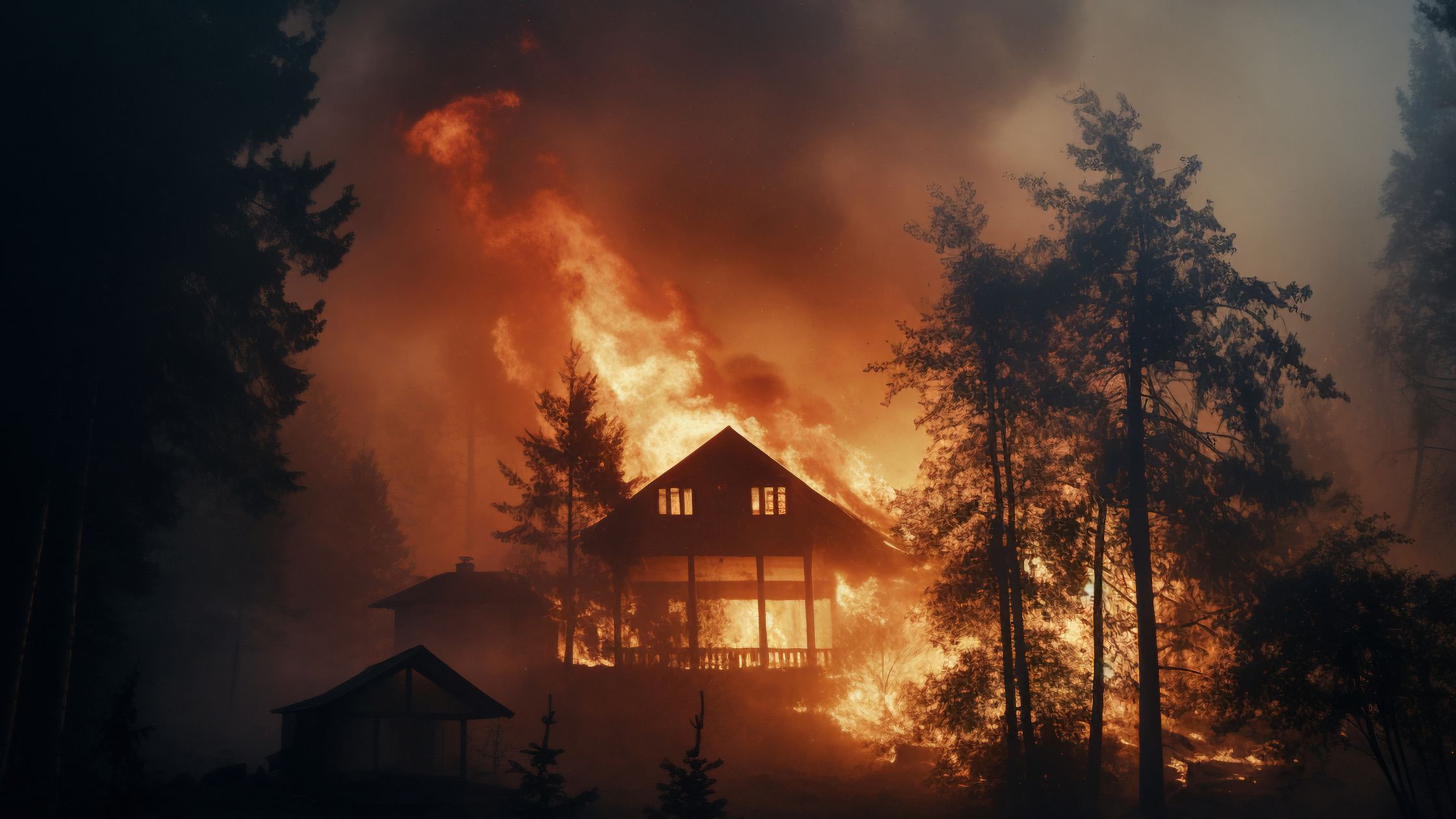
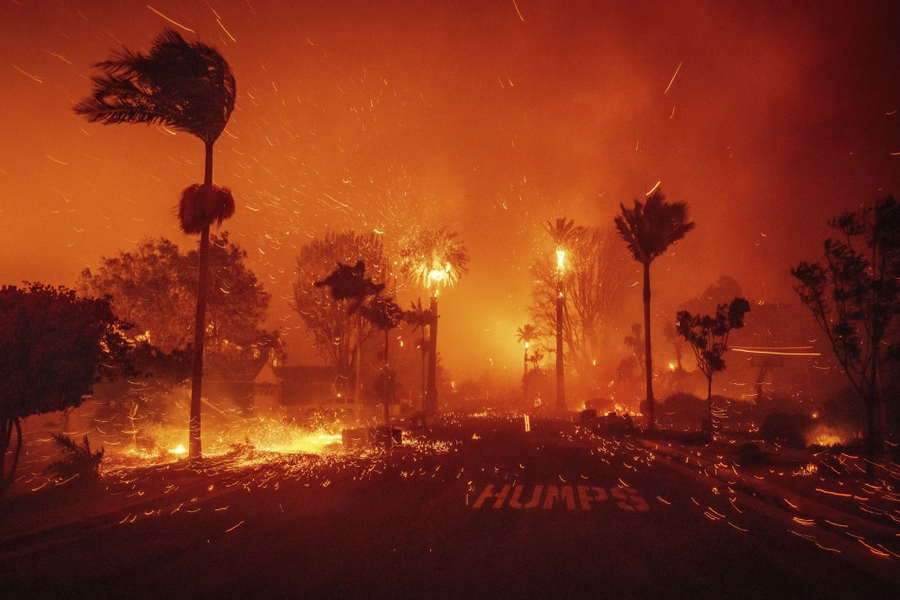
For homeowners association boards across California, wildfire is no longer a distant possibility. It is a present, documented, and growing liability exposure. When wildfires damage or destroy homes within an HOA community, the question of who is responsible for prevention and mitigation lands directly on the board. If common areas were not maintained, if defensible space standards were not met, if the community lacked a wildfire mitigation plan, the board faces legal, financial, and insurance consequences.
This guide covers the key elements of an HOA wildfire liability mitigation plan: what boards are responsible for, how to manage common area defensible space, what liability exposure looks like, how insurance is affected, and how to build a plan that protects both residents and board members.
Editor’s note: Your insurance situation depends heavily on your property’s actual fire exposure. Our free risk assessment factors in official CAL FIRE data to show what your risk level actually is — useful context before talking to your carrier.
HOA Board Responsibilities for Wildfire Mitigation
HOA boards have a fiduciary duty to protect the community’s shared assets and the health and safety of residents. In fire-prone California, this duty explicitly includes wildfire preparedness. The Davis-Stirling Common Interest Development Act, which governs California HOAs, requires boards to maintain common areas in a condition that does not create unreasonable risk to residents.
Specific wildfire-related responsibilities include maintaining defensible space in all common areas, ensuring that landscaping and vegetation in shared spaces comply with PRC 4291 and AB 3074 Zone 0 standards, developing and maintaining a community wildfire mitigation plan, communicating wildfire preparedness information to homeowners, and ensuring the HOA’s master insurance policy adequately covers wildfire-related losses.
Board members who fail to address known wildfire risks may face personal liability under California law, particularly if they were aware of hazardous conditions and failed to act.
Common Area Defensible Space
The most significant area of HOA wildfire liability involves common area vegetation management. Common areas often include hillside open space, greenbelt corridors, landscaped medians, community parks, perimeter buffer zones, and shared slopes adjacent to homes.
Under California law, these areas must meet the same defensible space standards as individual parcels. PRC 4291 requires clearing and maintenance within specified distances of structures, and AB 3074 adds the more stringent Zone 0 requirements within the first five feet of any habitable structure. For HOAs, this means every common area that borders or is near homes must be actively managed.
What Proper Common Area Maintenance Looks Like
Effective common area defensible space management includes removing all dead and dying vegetation, including fallen trees and accumulated leaf litter. Tree crowns must be spaced to prevent fire spread from tree to tree, with lateral spacing of at least two times the tree height. Ladder fuels, where low vegetation connects to tree canopy, must be eliminated. Slopes require special attention because fire travels faster uphill, so fuel breaks and enhanced clearance are needed on steep common area slopes.
Documentation is essential. Boards should maintain records of all vegetation management work, including before-and-after photos, contractor invoices, and compliance inspection reports. This documentation serves as evidence of due diligence if the board’s actions are ever questioned after a fire event.
Not sure which step to prioritize first? Our wildfire risk calculator shows your CAL FIRE zone and exposure level — so you know exactly where to start.
Liability Exposure for HOA Boards
HOA boards face several categories of wildfire liability. Understanding each is critical for developing an effective mitigation plan.
Negligence Claims from Homeowners
If a wildfire spreads through improperly maintained common areas and damages homes, affected homeowners may sue the HOA and individual board members for negligence. The legal standard is whether the board knew or should have known about the hazardous conditions and whether reasonable steps were taken to address them. Boards that have documented wildfire mitigation plans and regular maintenance records are in a significantly stronger defensive position.
Third-Party Liability
If fire originating in or spreading through HOA common areas damages neighboring properties outside the community, the HOA may face third-party liability claims. This exposure is particularly significant for communities that border open space, other residential neighborhoods, or commercial properties.
Board Member Personal Liability
California law provides some protections for volunteer board members acting in good faith, but these protections do not extend to willful neglect of known hazards. Board members who vote against wildfire mitigation spending despite documented fire risks may face personal liability exposure. Directors and officers (D&O) insurance can provide some protection, but policies increasingly include wildfire-related exclusions.
Insurance Implications for HOAs
The wildfire insurance crisis affecting individual homeowners is hitting HOAs even harder. Master insurance policies for communities in fire-prone areas have seen premium increases of 200 to 500 percent in recent years, with some communities receiving non-renewal notices entirely.
What Insurers Want to See
Insurance underwriters evaluating HOA policies now routinely assess whether the community has a written wildfire mitigation plan, whether common areas meet defensible space standards, whether the HOA has documentation of ongoing vegetation management, whether the community has invested in fire-resistant infrastructure, and whether the board has engaged wildfire professionals for assessment and planning.
Communities that can demonstrate proactive, documented wildfire mitigation are significantly more likely to obtain and retain coverage at manageable premiums. Communities that cannot demonstrate these measures face non-renewal, coverage restrictions, or premiums that strain HOA budgets and lead to special assessments.
Master Policy vs. Individual Policies
HOAs must understand the relationship between the community’s master insurance policy and individual homeowner policies. The master policy typically covers common areas and shared structures. If the master policy lapses or is inadequate due to wildfire-related non-renewal, individual homeowner policies may not fill the gap. This creates a situation where inadequate HOA-level wildfire mitigation directly harms every homeowner’s financial protection.
Building an HOA Wildfire Mitigation Plan
An effective HOA wildfire mitigation plan should include the following components:
Risk Assessment
Engage a qualified wildfire mitigation professional to assess the community’s overall fire risk. This assessment should cover common area vegetation conditions, slope and wind exposure, proximity to wildland areas, structural vulnerability of shared buildings, access and evacuation routes, and water supply for fire suppression.
Vegetation Management Plan
Develop a detailed annual vegetation management plan for all common areas. The plan should specify what needs to be cleared, trimmed, or removed, establish a maintenance schedule tied to fire season, identify contractors qualified for wildfire-specific vegetation work, and include budget allocations approved by the board.
Compliance Verification
Ensure all common areas comply with applicable California wildfire laws including PRC 4291, AB 3074, and local ordinances. Schedule regular compliance inspections and maintain documentation of all findings and remediation work.
Communication Plan
Develop a plan for communicating wildfire preparedness information to homeowners. This should include annual reminders about individual defensible space responsibilities, evacuation route information and emergency contact lists, updates on community-level mitigation work, and guidance on home hardening measures individual homeowners should implement.
Emergency Response Coordination
Coordinate with local fire departments and emergency management agencies. Ensure access gates and roads can accommodate fire apparatus. Identify community assembly points and evacuation staging areas.
How Ember Pro Supports HOAs
Ember Pro specializes in working with California HOAs to develop and implement comprehensive wildfire mitigation plans. Our services for HOA communities include:
Community-Wide Ember Assessments: We evaluate the entire community, identifying common area vulnerabilities, structural risk factors, and priorities for mitigation investment.
Vegetation Management Planning: We develop detailed plans for common area fuel reduction that comply with all applicable standards and provide documentation for insurance purposes.
Board Consultation: We advise boards on wildfire liability, regulatory requirements, and cost-effective mitigation strategies. We help boards understand their obligations and develop defensible mitigation plans.
Coordinated Spray Services: For communities seeking seasonal fire protection, we coordinate large-scale spray services across common areas and participating homeowner parcels, reducing per-unit costs through volume scheduling.
Insurance Documentation: We provide the documentation packages that insurers need to see, supporting policy renewal and premium negotiation efforts.
Frequently Asked Questions
Is the HOA board legally responsible for wildfire prevention?
Yes. California law requires HOA boards to maintain common areas in a safe condition, which includes wildfire defensible space compliance. Boards that fail to address known fire hazards may face negligence claims and personal liability.
Can board members be personally liable for wildfire damage?
Board members acting in good faith are generally protected, but willful neglect of documented fire hazards can expose individual board members to personal liability. Directors and officers insurance can provide additional protection.
How much does community-wide wildfire mitigation cost?
Costs vary significantly based on community size, vegetation density, and terrain. Initial assessments typically range from $5,000 to $25,000. Annual vegetation management may cost $20,000 to $100,000 or more for larger communities. These costs are typically far less than the premium increases or special assessments that result from inadequate mitigation.
Will wildfire mitigation lower our HOA insurance premiums?
Documented mitigation improves the HOA’s position with insurers. While premium reductions are not guaranteed, communities with comprehensive mitigation plans are more likely to obtain coverage and avoid the extreme premium increases affecting unprepared communities.
How often should the mitigation plan be updated?
Review and update the mitigation plan annually, ideally before fire season. Major updates should occur whenever regulations change, the community landscape changes significantly, or after any fire event in the area.
References
- Davis-Stirling Common Interest Development Act — California Civil Code Sections 4000-6150
- California Public Resources Code Section 4291 — Defensible Space Requirements
- California Assembly Bill 3074 — Zone 0 and Enhanced Defensible Space Standards
- CAL FIRE — Community Wildfire Protection Plan Guidelines
- Insurance Institute for Business & Home Safety — Community-Scale Wildfire Mitigation Research
- California Department of Insurance — HOA Insurance Guidelines
Related Articles
- Complete Guide to Defensible Space
- Understanding Zone Zero Requirements
- Wildfire Insurance Guide for California Communities
- California Fire Safety Compliance Checklist
- California Wildfire Laws You Need to Know
- Wildfire Defense Systems for Communities
- Home Hardening Recommendations for HOA Homeowners
Curious about your property’s actual wildfire risk? Our free calculator shows your CAL FIRE zone, exposure level, and recommended next steps based on your address.
Get your free risk score