
How Wildfire Defense Systems Perform in High-Wind Conditions
Reading time: 7 minutes
Last reviewed by: Ryan Kresan, COO and Co-founder, Ember Pro, December 15, 2025
Author: Jim Sprouse, Co-founder of Ember Pro, BS in Environmental Studies from Allegheny College
Published: December 2025
Insights, Wildfire Defense, Wind and Wildfire Defense Systems
Introduction
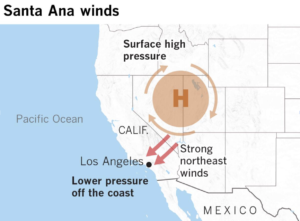
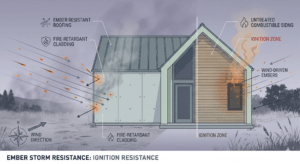
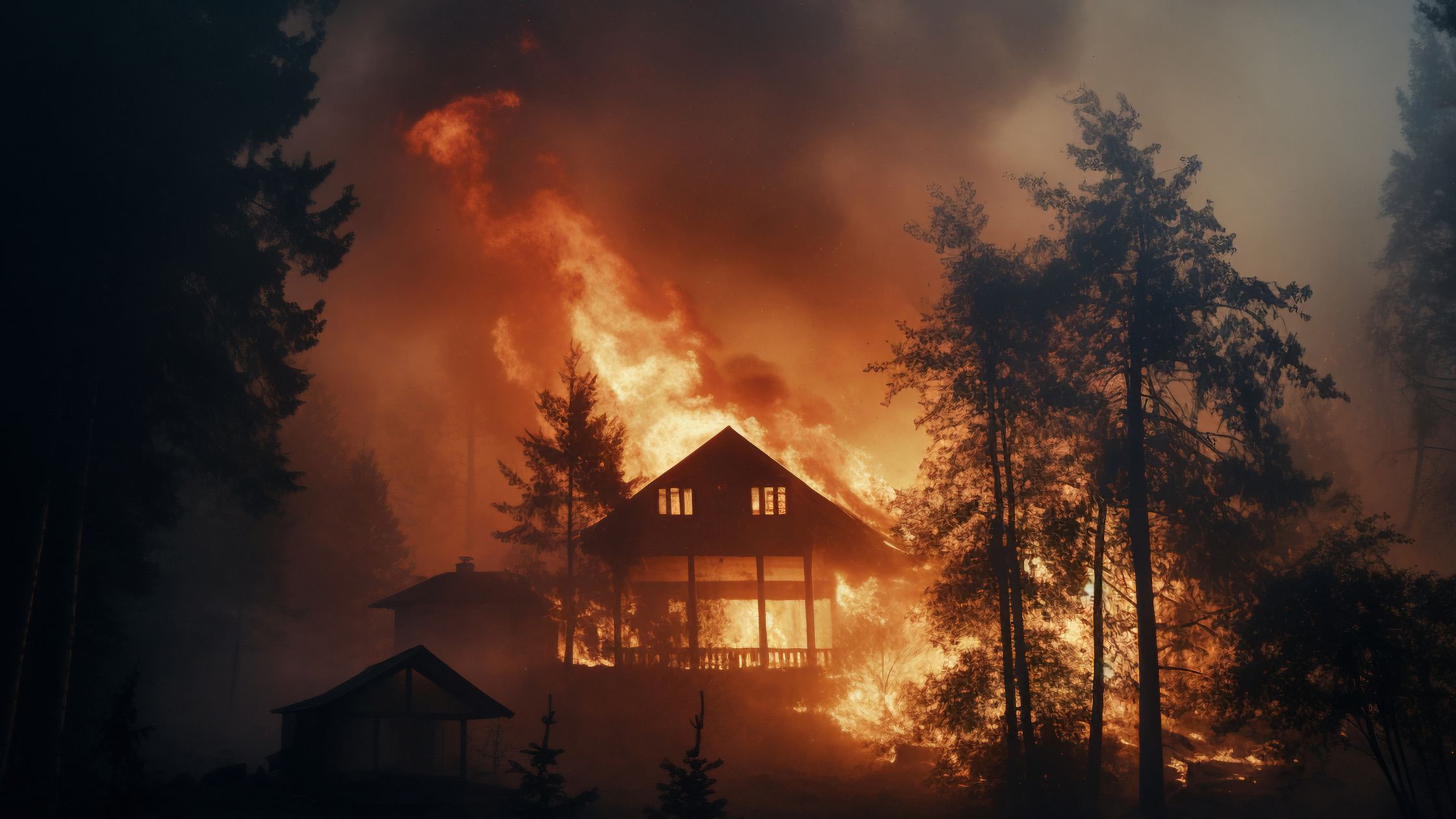
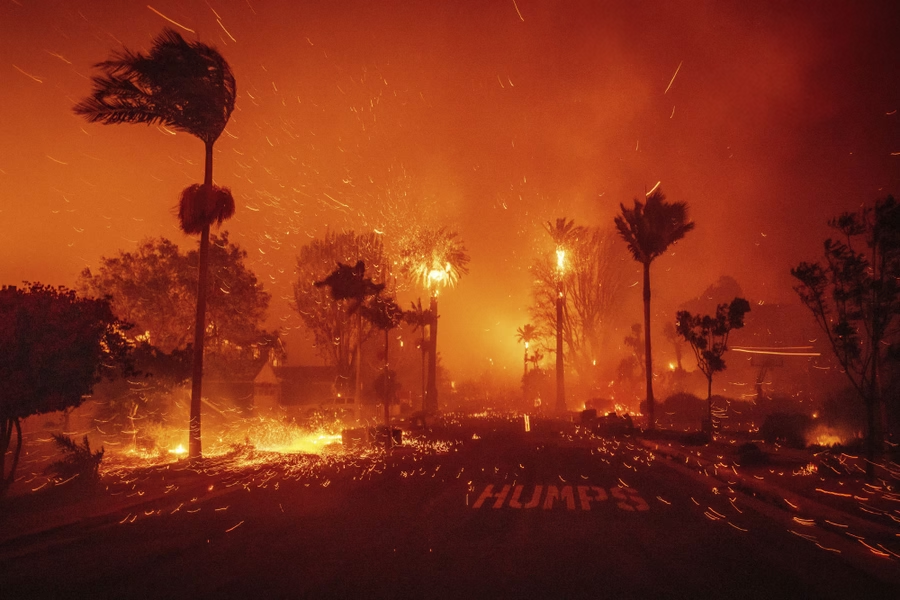
In California wildfire country, wind changes everything. From San Diego to Santa Barbara, and deep into the canyons of Los Angeles and Riverside Counties, the Santa Ana winds create some of the most dangerous wildfire conditions in the country. These powerful east-to-west gusts turn brush fires into firestorms, push embers miles ahead of the flame front, and test every layer of a home’s fire protection system.
Adding to the risk, California is currently in a La Niña cycle, which is bringing drier-than-average conditions to Southern California and increasing the frequency and intensity of winds. This combination creates a perfect storm for fast-moving, wind-driven wildfires.
At Ember Pro, we are often asked: Do wildfire defense systems still work in high winds? The answer is yes—if they’re designed correctly. Ember Pro systems are engineered specifically to perform under extreme wind conditions, using directional spray heads, high-pressure pumps, and placement strategies that account for prevailing wind patterns like the Santa Anas.
This article breaks down how our systems work in real-world wind events, what design principles support their effectiveness, and why blowback is not a failure—it’s part of the plan.
Why Wind Is Such a Threat in Wildfire Conditions
High winds increase wildfire risk by:
- Spreading embers far beyond the main fire line
- Intensifying flame height and speed
- Overwhelming firefighting resources
- Pushing fire into residential zones faster than alerts can be issued
The most infamous winds in California are the Santa Ana winds, which blow from the desert east toward the coast. These typically occur in fall and winter but can strike year-round. They are dry, strong, and unpredictable—making fire behavior more aggressive and far-reaching.
As La Niña continues into 2026, Santa Ana events are expected to occur more frequently, increasing the threat to hillside homes and communities across Southern California.
Wildfire Defense Systems vs Wind, How We Design for It
Most sprinkler or misting systems fail in high wind because they are:
- Low pressure
- Poorly placed
- Spraying vertically or in random directions
- Not built for wildfire-specific conditions
Ember Pro systems are different. Here’s why:
Directional Spray Head Placement Based on Wind Patterns
Our spray heads are never installed to spray upward or randomly. They are installed at specific angles to:
- Direct retardant into the wind flow, not against it
- Allow wind to carry retardant toward high-risk surfaces
- Position coverage zones downwind from the structure, based on local Santa Ana patterns
This approach ensures that as embers arrive from the east, they encounter pre-treated areas that resist ignition.
High-Pressure Pumps Cut Through Gusts
Each Ember Pro system includes a custom pump system capable of delivering powerful, consistent spray. These pumps maintain pressure even when:
- Gusts reach 30 to 50 miles per hour
- Evaporation rates increase
- Airborne embers fill the area
Unlike garden or irrigation systems, our units are built for active fire conditions. This allows the retardant to adhere to surfaces and vegetation even in windy environments.
Blowback Is an Advantage, Not a Weakness
One of the most misunderstood effects of high-wind operation is blowback—the partial redirection of retardant spray back toward the structure.
Here’s why we embrace it:
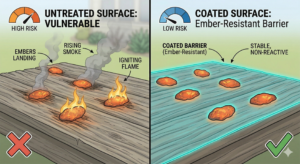
- Blowback coats vertical surfaces (siding, windows, vents) that embers target
- The wind helps push retardant into gaps, crevices, under eaves, and fascia
- It increases the odds that embers landing anywhere near the structure will hit retardant-treated areas
Our systems are calibrated to allow for controlled blowback during Santa Ana-style events, increasing coverage where it counts.
Case Study, LA Firestorm 2025
During the January 2025 firestorm in the Palisades area of Los Angeles, gusty Santa Ana winds drove flames into hillside neighborhoods.
Of 61 homes equipped with wildfire defense systems:
- 59 survived the fire with minimal damage
- 100 percent of homes with retardant-based systems remained standing
- Homes with directional spray heads and high-pressure units performed best
- Witnesses reported visible retardant trails on siding, eaves, and ground cover, protecting homes from flying embers
This event confirmed that with proper placement and pressure, wildfire defense systems can succeed—even in high-wind events.
Ember Pro’s Design Approach for Wind Defense
We install systems across all of California, including high-risk wind zones such as:
- San Diego foothills
- Inland Empire canyons
- Santa Barbara ridgelines
- Malibu and Topanga passes
- Rural fire corridors near Lake Elsinore, Julian, and Temecula
Each installation includes:
- Wind mapping and property orientation
- Spray angle calibration based on downwind risks
- Zoning by structure type (home, barn, fencing, landscape)
- Custom pump sizing to maintain flow under pressure
- Non-roof-penetrating design to protect building integrity
We do not connect to public water, we do not bury tanks, and our systems are often installable without permits, making them ideal for retrofits.
How Wind Can Help, Not Hurt
When used properly, wind is not the enemy—it’s part of the defense.
- It helps distribute retardant more widely
- It increases coating depth on hard-to-reach areas
- It supports Zone Zero treatment by pushing material onto fences, mulch, and siding
- It ensures that homes are treated before the flame front arrives, which is often when firefighters cannot access the area
Our goal is to deploy protection early, using wind to our advantage before the fire reaches your property.
10 Frequently Asked Questions About Wind and Wildfire Systems
- Do wildfire defense systems still work in strong wind?
Yes, if properly designed. Ember Pro systems are tested and proven to function during Santa Ana wind events. - Will the wind blow away the retardant?
Some drift is expected, but we angle our spray heads to maximize coverage. Wind often helps by coating vertical surfaces. - Do you install based on local wind patterns?
Absolutely. We factor in prevailing winds, especially east-to-west Santa Ana winds, during every installation. - Will the spray get into vents or sensitive areas?
Yes—and that’s good. Retardant in and around eaves, vents, and fascia helps prevent ember ignition. - Can water-based systems do the same thing?
No. Water evaporates quickly in wind and heat. Retardants remain effective longer and work better under windy conditions. - Do you install in places like Malibu or Santa Barbara?
Yes. We serve the entire state, including high-wind, high-risk zones from the border to Northern California. - Do the systems require trenching or electrical upgrades?
No trenching or roof penetration. We rarely require service panel upgrades, so permits are often not needed. - Can the system be activated before evacuation?
Yes. Systems are typically triggered before evacuation, allowing retardant to be deployed in advance of the flame front. - How far does the spray reach in wind?
High-pressure pumps can deliver retardant up to 30 feet, and more when wind is used directionally. - Has this been tested in real fires?
Yes. The LA Firestorm in January 2025 proved the systems work during high-wind wildfires, with a 96 percent survival rate among protected homes.
References
- California Fire Code – Ember Protection Guidelines
- NFPA – Wind and Ember Behavior in Wildland Urban Interface
- Cal Fire – Santa Ana Wind Incidents and Structure Loss Reports
- Ember Pro – How Effective Are Wildfire Defense Systems
- LA County Fire Department – After-Action Reports, January 2025
- NOAA – La Niña Winter 2025–2026 Climate Outlook
- University of California Cooperative Extension – Wind-Driven Ember Behavior
Ready to Protect Your Home from Wind-Driven Wildfires?
If your home is exposed to Santa Ana winds—or any of California’s notorious wind corridors—now is the time to act. Ember Pro designs and installs directional wildfire defense systems tailored to your site, slope, and wind profile.
Contact us today to schedule your wildfire risk assessment and see how a properly designed system can give you peace of mind—even when the wind is howling.
Related Articles
- What You Need to Know About Zone Zero and AB 3074
- How Fire Retardant Sprays Perform Compared to Coatings
- Wind and Ember Movement in California’s WUI Zones