
Neighborhood Scale Fire Protection for HOAs
How Community Immunity Reduces Risk, Liability, and Loss
Author: Jim Sprouse, Co-founder of Ember Pro, BS in Environmental Studies from Allegheny College, Certified Wildfire Defense Specialist
Expert Review: Ryan Kresan, COO and Co-founder, Ember Pro
Insights, HOA Wildfire Risk, Community Immunity, California Wildfires
Introduction

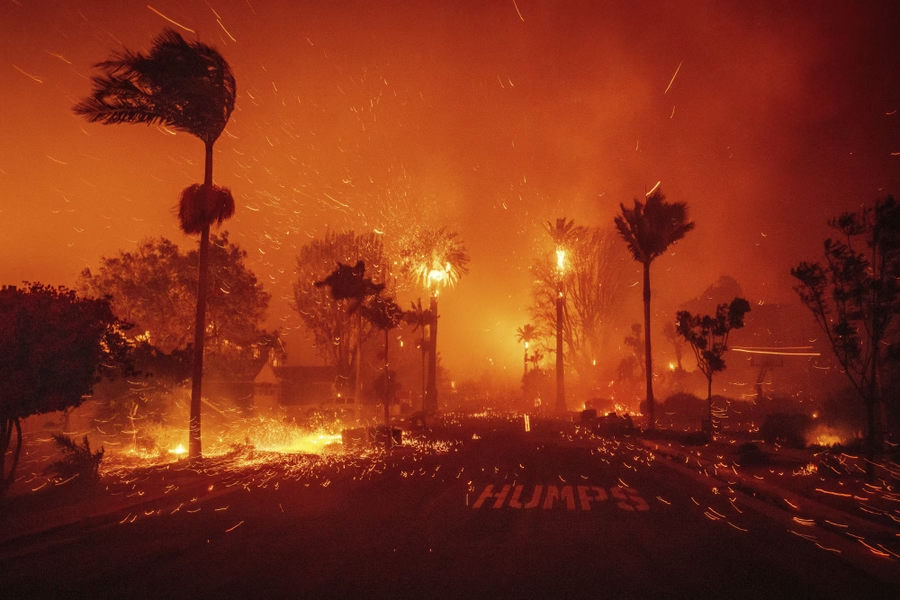
Homeowners associations across California are facing a new and growing responsibility. Wildfire risk is no longer limited to individual homeowners. It is now a community-level exposure that affects property values, insurance availability, board liability, and resident safety.
From San Diego County through Los Angeles, Santa Barbara, and inland foothill communities, HOAs located in wildfire-prone areas are being forced to rethink how they approach fire protection. Clearing brush and issuing annual reminders about defensible space is no longer enough.
The future of wildfire mitigation for HOAs lies in neighborhood scale fire protection, built around coordinated spray services and what is increasingly referred to as community immunity.
This article explains what community immunity means for HOAs, why it matters, and how coordinated wildfire defense systems can dramatically reduce loss, exposure, and long-term cost.
Why HOAs Are Uniquely Exposed to Wildfire Risk
HOAs manage shared risk by design. Unlike single homeowners, an HOA’s exposure includes:
- Dense housing patterns
- Shared walls, roofs, and access roads
- Common landscaping and fuel continuity
- Collective insurance policies
- Fiduciary duty to residents
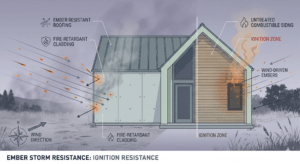
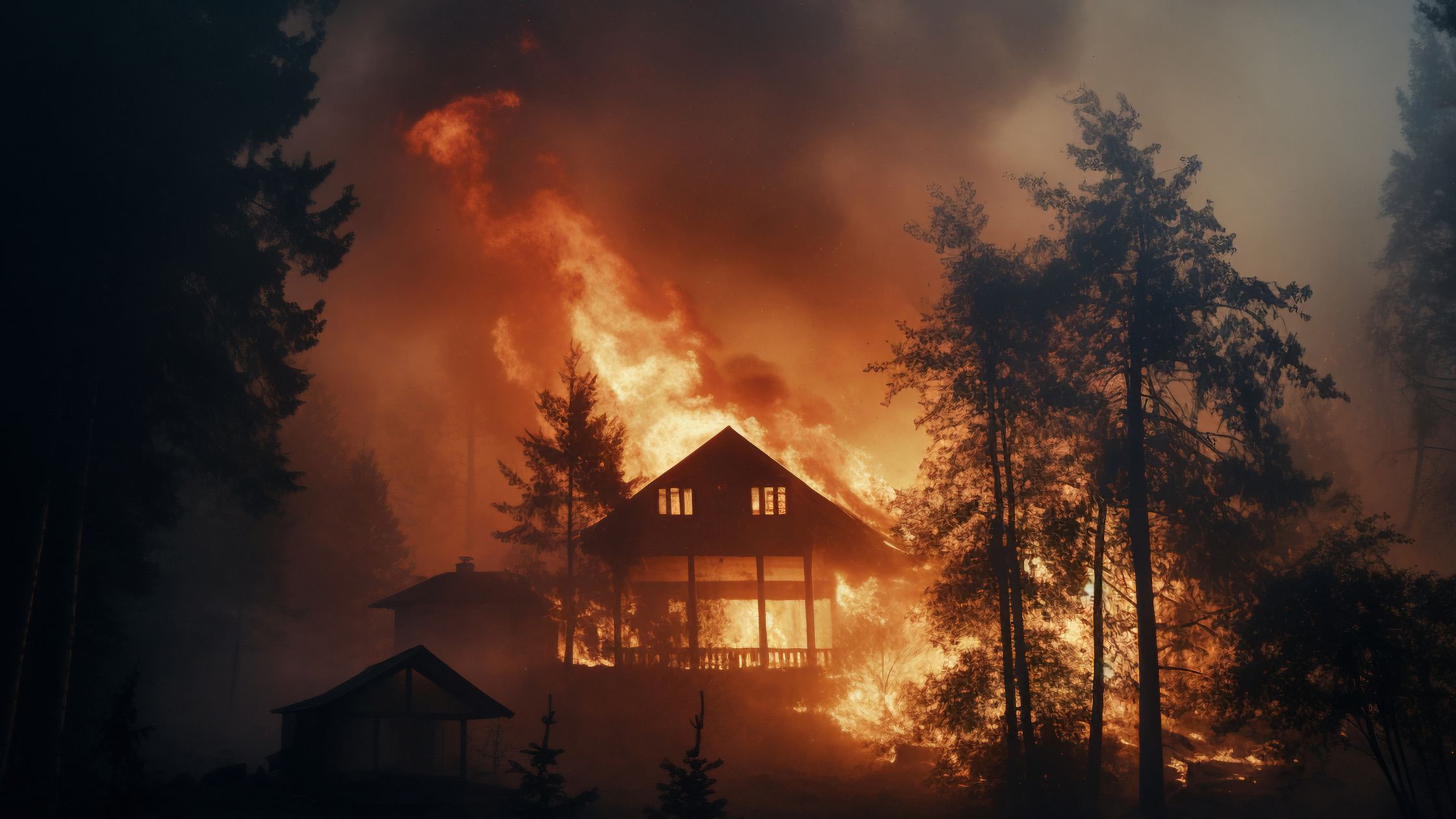
When one structure ignites in an HOA community, the fire does not stay contained. Embers, radiant heat, and burning debris quickly spread to neighboring units, often overwhelming individual mitigation efforts.
For HOAs, wildfire is not just a natural disaster. It is a governance issue.
What Is Community Immunity and Why It Matters for HOAs
Community immunity in wildfire defense means that enough structures within a defined area are protected so that fire spread is disrupted or stopped altogether.
For HOAs, this translates into:
- Fewer ignition points
- Reduced structure-to-structure fire spread
- Lower ember density across the community
- Less radiant heat buildup during fire events
Instead of relying on individual homeowners to act independently, community immunity creates a baseline level of protection across the entire development.
This is especially important in townhome, condo, and planned unit developments where one unit’s vulnerability becomes everyone’s risk.
The Structure-to-Structure Fire Problem in HOA Communities
Many of the most destructive wildfire losses in California occur not because a fire front sweeps through untouched land, but because structures ignite other structures.
Once a building burns, it becomes an intense fuel source. Burning siding, decking, furniture, and vehicles generate extreme heat and embers that overwhelm adjacent units.
In HOA communities, this creates a domino effect:
- One unit ignites
- Adjacent units are exposed to radiant heat
- Embers accumulate on roofs and in vents
- Multiple structures ignite within minutes
Community immunity is designed to stop this chain reaction before it begins.
How Neighborhood Scale Spray Services Work for HOAs
Neighborhood scale wildfire spray services build on proven wildfire defense system technology, but apply it in a coordinated, community-wide manner.
Core Elements of an HOA Spray Program
A typical HOA-focused program includes:
- Wildfire defense systems installed on multiple units or buildings
- Retardant-based spray coverage for roofs, eaves, and perimeters
- Coordinated activation protocols
- Protection of common areas, access roads, and fuel corridors
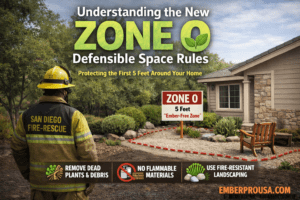
- Emphasis on Zone 0 and the five feet immediately around structures
Each system functions independently, but together they form a networked layer of protection.
Why Retardant Is Essential at the Community Scale
Water-based systems are difficult to manage at scale. They require constant flow, large water volumes, and continuous operation.
Retardant-based systems are better suited for HOA communities because:
- Retardant remains effective after drying
- Systems can be activated in advance of a fire
- Protection persists during evacuation and power loss
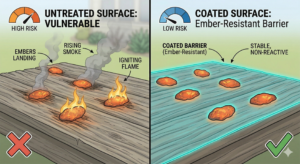
- Ember ignition is significantly reduced
This allows HOAs to protect their communities without relying on uninterrupted water supply or on-site personnel during emergencies.
Community Immunity and Defensible Space Compliance
California law is increasingly focused on ignition prevention.
AB 3074 and the creation of Zone 0, the five feet immediately around structures, reflect this shift. Most ignitions occur in this area.
For HOAs, Zone 0 compliance is often challenging due to:
- Shared landscaping responsibilities
- Resident confusion about rules
- Inconsistent enforcement
Neighborhood scale spray services help reinforce Zone 0 protection by treating vulnerable surfaces during fire events, even when perfect compliance is difficult to achieve year-round.
This layered approach strengthens both compliance and real-world performance.
Insurance Implications for HOAs
Insurance carriers are no longer evaluating wildfire risk solely at the individual unit level. They increasingly assess community-level risk.
Factors include:
- Density of combustible structures
- Defensible space management
- Fire history
- Documented mitigation measures
HOAs that adopt coordinated wildfire defense strategies may experience:
- Improved insurability
- Fewer non-renewals
- Better negotiating position with carriers
- Reduced long-term premiums
While no system guarantees coverage, documented mitigation demonstrates proactive risk management, which insurers increasingly expect.
Liability and Fiduciary Duty Considerations
HOA boards have a fiduciary duty to act in the best interest of the association.
As wildfire risk becomes more predictable and mitigation options more available, failure to act may create liability exposure related to:
- Foreseeable risk
- Failure to maintain common areas
- Inadequate emergency planning
Implementing neighborhood scale fire protection can be part of a defensible risk management strategy that shows due diligence and responsible governance.
Environmental and Community Benefits
Community immunity offers benefits beyond property protection.
Reduced Environmental Impact
Every structure that does not burn prevents:
- Toxic smoke from plastics and furnishings
- Debris requiring hazardous disposal
- Large scale aerial retardant use
Faster Community Recovery
HOA communities that retain most of their housing stock recover more quickly, with:
- Less displacement
- Lower cleanup costs
- Reduced strain on local services
These outcomes benefit residents, municipalities, and insurers alike.
Why Ember Pro Is Well Suited for HOA Deployment
Ember Pro systems are designed to scale efficiently across multiple properties.
Key advantages for HOAs include:
- Modular design that reduces per-unit cost
- No roof penetrations unless required
- No trenching unless necessary
- Retardant-first approach for ember defense
- Coordinated activation options
This makes Ember Pro particularly effective for:
- Townhome communities
- Condo associations
- Gated neighborhoods
- Planned unit developments
We work directly with boards and property managers to design systems that align with budgets, bylaws, and operational realities.
Overcoming Common HOA Concerns
Cost Allocation
Costs can often be shared through:
- Association reserves
- Special assessments
- Phased implementation
- Bulk installation efficiencies
As participation increases, cost per unit often decreases.
Resident Buy-In
Education is critical. When residents understand that wildfire risk is shared, participation and support increase significantly.
Clear communication, demonstrations, and data-driven planning help build consensus.
10 Frequently Asked Questions for HOAs
- Is neighborhood scale fire protection appropriate for HOAs?
Yes, especially where structures are close together. - Does every unit need a system?
Higher participation improves effectiveness, but partial deployment still reduces risk. - Is this compliant with AB 3074?
Yes, it supports Zone 0 and defensible space objectives. - Can systems be installed on shared buildings?
Yes, including multi-unit and mixed-use structures. - Does this replace firefighters?
No, it supports firefighting by reducing ignition and spread. - How are systems activated?
Remotely or automatically based on predefined triggers. - Do these systems require permits?
Most installations do not unless trenching or electrical upgrades are required. - Is retardant safe for landscaping?
Modern products are designed to minimize long-term impact. - Can this reduce insurance risk?
It can improve insurability and demonstrate proactive mitigation. - How does an HOA get started
With a community wildfire risk assessment and phased deployment plan.
Final Thoughts
Wildfire risk is no longer an individual homeowner problem. It is a community challenge that requires community solutions.
For HOAs, neighborhood scale fire protection and community immunity represent the next evolution of wildfire defense. They reduce loss, protect residents, strengthen insurance positioning, and demonstrate responsible governance.
The HOAs that act early will be the ones that remain intact when wildfire threatens.