
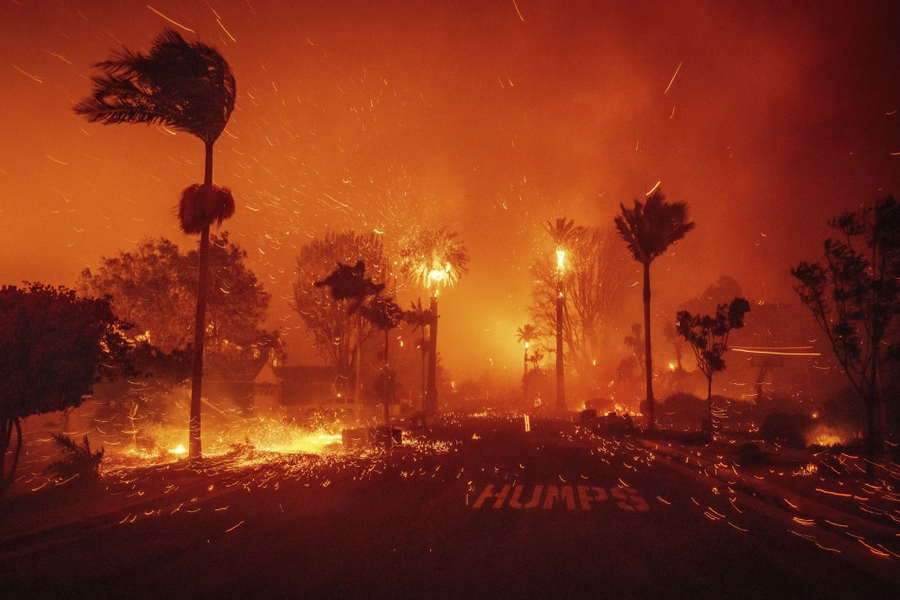
Wildfire Defense vs Rebuilding in California: Pay Now or Pay More Later
Author: Jim Sprouse, Co-founder of Ember Pro, BS in Environmental Studies from Allegheny College, Certified Wildfire Defense Specialist
Expert Review: Ryan Kresan, COO and Co-founder, Ember Pro
Published: December 2025
Reading Time: 9 minutes
Insights, Wildfire Mitigation, Cost Analysis, California Wildfires
Introduction
In wildfire-prone areas of California, especially across San Diego, Los Angeles, Santa Barbara, and communities near the wildland urban interface, the financial decision for property owners is becoming clearer every season:
Invest in wildfire defense now or pay a steep price to rebuild after fire.
With longer fire seasons, increasing wind events, stricter building codes, and shrinking insurance options, California homeowners and commercial property owners need to consider the real cost of doing nothing. Whether you own a hillside estate or a multifamily apartment building, the question is not if you will be impacted—but when.
This article breaks down the actual cost of installing a wildfire defense system compared to the costs of rebuilding, the gaps in most insurance policies, and the environmental price that comes with every structure lost to fire.
Table of Contents
- Understanding the Cost of Wildfire Defense
- The Real Cost of Rebuilding After Fire
- Insurance Gaps, Premiums, and the Numbers
- Commercial Properties, Bigger Risk, Bigger Loss
- Environmental Costs That Don’t Show on a Balance Sheet
- Why Ember Pro Offers More Value Than Competitors
- Frequently Asked Questions
- Final Thoughts
- References
Understanding the Cost of Wildfire Defense
What Does a Wildfire Defense System Cost?
For an average 2,500 to 3,000 square foot home in California’s most fire-prone zones, Ember Pro installs a fully integrated wildfire defense system that includes:
- Perimeter spray heads
- High-pressure fire pump
- Non-toxic chemicals, no environmental damage
- No roof penetrations
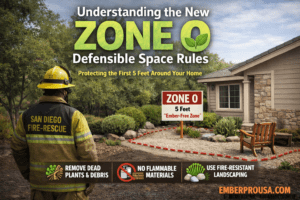
- Zone 0 coverage (within 5 feet of the structure, compliant with AB 3074)
- Remote activation
Typical cost: between $15,000 and $30,000, depending on complexity, property size, and design requirements.
Unlike some competitors, Ember Pro does not require trenching, roof penetrations, or tying into the water main unless required by local permitting. This lowers costs, speeds up installation, and keeps the system non-invasive.
Scalability That Makes Sense
Our systems are scalable, but cost does not increase in direct proportion. For example:
- A 10,000 square foot property can be fully protected for about $75,000
- By comparison, Frontline and other providers may charge over $125,000 for similar coverage
Because Ember Pro uses modular components and smart layout designs, we can protect large estates, commercial buildings, and complex sites at a lower cost per square foot than legacy systems.
The Real Cost of Rebuilding After Fire
Residential Rebuilding in California (2025 Estimates)
Based on data from CAL FIRE, FEMA, and the California Department of Insurance:
- Rebuild cost per square foot: $375 to $600
- A 3,000 square foot home = $1.1 million to $1.8 million
- Debris removal and hazardous waste cleanup: $50,000 to $100,000
- Mandatory code upgrades (CBC Chapter 7A, AB 3074): $25,000 to $50,000
- Temporary housing during rebuild: $3,000 to $6,000 per month
- Permit delays and inspections: 6 to 18 months
Most homeowners face $2 million or more in total recovery costs, especially if they are underinsured or face policy limitations.
Unseen Costs and Delays
After a wildfire, thousands of homes may need to be rebuilt at the same time, leading to:
- Construction labor shortages
- Material price surges
- Months-long wait times for inspections and utility restoration
- Emotional stress and legal challenges
For homeowners, the loss is not just financial. It’s time, safety, and peace of mind.
Insurance Gaps, Premiums, and the Numbers
California’s Insurance Crisis
- Home insurance premiums in wildfire-prone areas have risen 100 to 300 percent in recent years
- Many major carriers are leaving the state or no longer writing new policies
- California’s FAIR Plan offers basic coverage, but low limits and high deductibles
Common Gaps in Coverage
- Landscaping, fencing, pools, and driveways often excluded
- Upgrades to meet current fire codes not always covered
- Content insurance pays depreciated value, not replacement cost
- Deductibles for fire claims can exceed $25,000 or more
Even if a policy “covers” a loss, many homeowners end up paying $300,000 to $500,000 out of pocket.
Commercial Properties, Bigger Risk, Bigger Loss
For commercial buildings—retail centers, apartments, offices, mixed-use developments—the risks and recovery costs are even higher:
- Rebuild cost: $650 to $800 per square foot
- Lost income and rent, tenant lawsuits, and delayed occupancy
- Cleanup of chemicals, fuels, and inventory
- Stricter permitting requirements and accessibility upgrades
Insurance Pressures on Commercial Properties
Many insurers now require:
- Fire mitigation plans
- Ember-resistant vents
- Defensible space documentation
- Roof upgrades
- NFPA 1140 or IWUIC compliance
Ember Pro’s commercial systems typically cost $25,000 to $100,000, depending on size and layout, but provide full-site coverage and crucial documentation to maintain insurance.
Environmental Costs That Don’t Show on a Balance Sheet
What Actually Burns in a Home
When a structure burns, it doesn’t just release smoke. It releases:
- Carbon dioxide and monoxide
- PM2.5 and ultrafine particles
- Formaldehyde, benzene, and dioxins
- Lead, asbestos (in older homes), and plastic-derived toxins
- Melted PVC piping, foam insulation, and synthetic fabrics
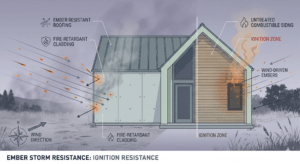
Each house that burns can release 10 or more tons of carbon and create toxic ash that contaminates air, soil, and water.
Fires Cause Chain Reactions
Once one home ignites, embers often carry the fire to nearby homes, creating:
- Exponential property loss
- Massive spikes in retardant use
- Widespread air and water pollution
The Hidden Impact of Phos-Chek
During the January 2025 LA fires, over 140,000 gallons of Phos-Chek were used. When rain followed weeks later, runoff carried it into storm drains and eventually into the ocean near Santa Monica and Malibu.
Phos-Chek contains ammonium phosphate, which acts as a fertilizer in water. That leads to:
- Algae blooms that deplete oxygen
- Fish kills and shellfish collapse
- Damage to kelp forests and coral habitats
- Long-term disruption to plankton, bait fish, and sea mammal diets
- Economic loss from fishing, tourism, and beach closures
By preventing structures from igniting in the first place, wildfire defense systems reduce the need for toxic aerial drops and protect both inland and ocean ecosystems.
Why Ember Pro Offers More Value Than Competitors
Side-by-Side Comparison
Feature | Ember Pro | Frontline and Similar Providers |
Average Cost for Home | $15,000 to $30,000 | $35,000 or more |
Large Estate (10,000 sq ft) | ~$75,000 | Often over $100,000 |
Roof Penetrations | No | Often yes |
Trenching Required | Not required | Frequently required |
Remote Activation | Yes | Varies |
Zone 0 and AB 3074 Compliance | Included | Limited |
Installation Time | 1 to 2 days | Up to 1 week |
Commercial Capable | Yes | Yes, often higher cost |
Frontline has been in the market longer, but Ember Pro’s engineering, pricing, and installation method are designed specifically for California terrain, weather, and wildfire behavior.
Frequently Asked Questions
- How much does a wildfire defense system cost?
Most homes range from $15,000 to $30,000. Large estates can be protected for around $75,000. - How much does it cost to rebuild after a fire?
$1.1 to $1.8 million or more, not including temporary housing or delays. - Do these systems need permits?
Only if trenching or electrical panel upgrades are required. Most installs do not. - Are they effective in wind?
Yes. Ember Pro systems are designed for Santa Ana winds, using angled spray heads and powerful pumps. - Does this replace insurance?
No, but it helps keep coverage and reduce claims. Some insurers may offer credits. - Can I use retardant or water in the system?
Yes. Ember Pro systems are compatible with both. - Can you protect commercial buildings?
Absolutely. Offices, apartments, and retail centers benefit from our scalable design. - Why is Zone 0 important?
AB 3074 mandates a five-foot ember-resistant zone. Ember Pro systems are built to protect it. - Do you tie into my water system?
No, unless requested or required. Our systems can operate independently. - Why choose Ember Pro over others?
Lower cost, smarter design, faster install, no trenching or roof work, and built for California.
Final Thoughts
There’s no avoiding fire risk in California. But there is a clear choice:
Pay a little now to defend your property—or pay everything later to rebuild it.
Wildfire defense systems are no longer a luxury. They’re a necessity for preserving homes, commercial assets, and the ecosystems that surround them. Ember Pro gives you that protection—without the invasive installation, extreme cost, or insurance guesswork.
In wildfire country, time is not on your side. But preparation is.
References
- CAL FIRE Wildfire Structure Loss Data
- CA Department of Insurance Rebuild Estimates (2025)
- NFPA 1140, IWUIC, CBC Chapter 7A
- FEMA Benefit-Cost Toolkit
- Phos-Chek Environmental Reports (UC Santa Barbara, NOAA)
- Insurance Institute for Business and Home Safety (IBHS)
- Ember Pro System Install Data (2023–2025)