
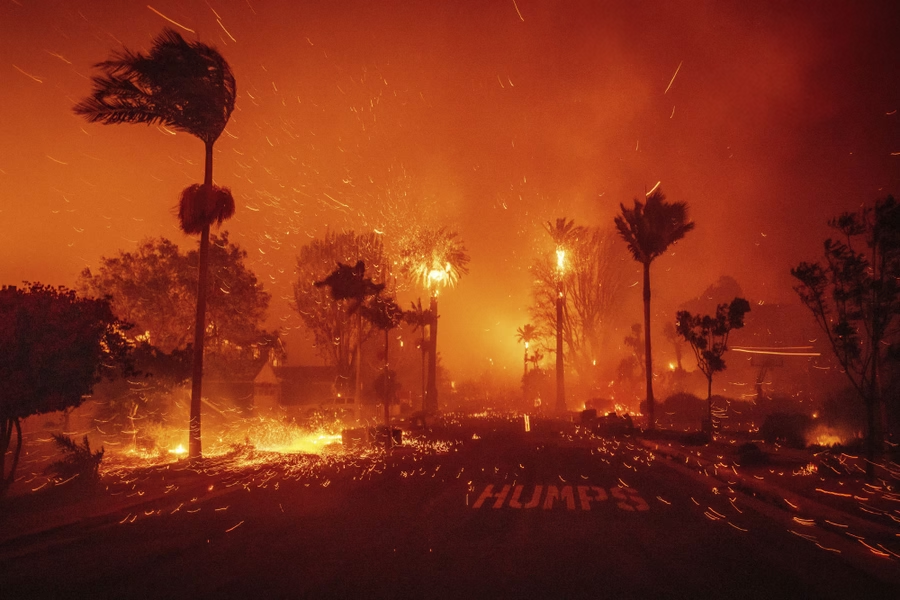
Self-Insuring Homes in Wildfire Country
Trends, Exposure, and Why Mitigation Is Replacing Insurance in California
Author: Jim Sprouse, Co-founder of Ember Pro, BS in Environmental Studies from Allegheny College, Certified Wildfire Defense Specialist
Expert Review: Ryan Kresan, COO and Co-founder, Ember Pro
Breadcrumb: Insights, Wildfire Risk, Insurance, California Wildfires
Introduction
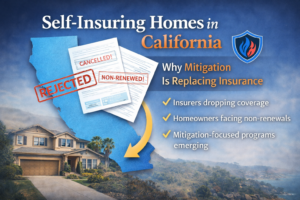
Across California, a quiet but significant shift is underway. Homeowners in wildfire-prone regions are increasingly choosing to self-insure their properties, not because they want to, but because traditional insurance is becoming unavailable, unaffordable, or inadequate.
This trend is especially visible in high-value, high-risk communities like Rancho Santa Fe in San Diego County, parts of Malibu, Montecito, and foothill neighborhoods throughout Los Angeles and Santa Barbara counties. In these areas, many homeowners are discovering that insurance premiums no longer align with the actual protection provided, or that coverage limits fall far short of rebuild costs.
As a result, wildfire defense systems, defensible space, Zone 0 compliance, and home hardening are no longer just best practices. They are becoming the primary risk strategy for properties that are effectively self-insured.
This article explains what self-insuring really means, why it is happening, what the exposure looks like, and why wildfire defense systems are now central to property protection in California wildfire country.
What Does It Mean to Self-Insure a Home?
Self-insuring does not always mean a homeowner has consciously opted out of insurance. In many cases, it means one of the following:
- A policy was non-renewed and replacement coverage is unavailable
- The only available option is the FAIR Plan with low limits and high deductibles
- Premiums have risen to a level where coverage feels economically irrational
- Coverage limits are far below actual rebuild costs
- Claims history or location makes renewal unlikely
In practice, self-insuring means the homeowner is financially responsible for the majority or entirety of a loss if a wildfire destroys the structure.
For large custom homes, estates, and rural properties, this exposure can easily reach into the millions.
Why Self-Insurance Is Increasing in California
Insurance Is Retreating From Fire Risk
Insurance carriers are not leaving California randomly. They are responding to:
- Increased wildfire frequency and severity
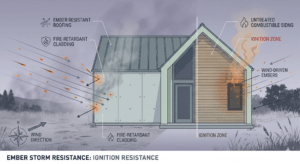
- Structure-to-structure fire spread
- Higher rebuild costs due to labor and materials
- Regulatory limitations on rate adjustments
The result is widespread non-renewals in Very High Fire Hazard Severity Zones, even for homeowners who have never filed a claim.
The FAIR Plan Is Not a Full Solution
The California FAIR Plan is often described as a safety net, but for many homeowners it is incomplete protection.
Common issues include:
- Coverage limits well below replacement cost
- High deductibles
- Limited coverage for contents, landscaping, and outbuildings
- No protection for prolonged displacement or code upgrades
For a 3,000 square foot custom home, FAIR Plan limits may cover only a fraction of actual rebuild cost, leaving the homeowner largely self-insured whether they realize it or not.
Rancho Santa Fe, A Case Study in De Facto Self-Insurance
Rancho Santa Fe is one of the clearest examples of this trend in California.
Characteristics that make it representative include:
- Large custom homes often exceeding 5,000 to 10,000 square feet
- High property values with complex rebuild requirements
- Extensive vegetation and wildfire exposure
- Limited access routes and evacuation challenges
In this community, many homeowners are choosing to invest heavily in mitigation rather than insurance, recognizing that:
- Insurance may not pay out in full
- Claims can take years to resolve
- Rebuilding without mitigation only recreates the same risk
For these homeowners, wildfire defense systems, defensible space management, Zone 0 compliance, and home hardening are viewed as capital protection, not optional upgrades.
The True Exposure of a Self-Insured Home
Rebuild Costs Are Higher Than Most People Expect
In California, current rebuild costs commonly range from:
- 375 to 600 dollars per square foot for residential construction
- Higher for custom, hillside, or architect-designed homes
That means a 3,000 square foot home can cost 1.1 to 1.8 million dollars or more to rebuild, before factoring in:
- Debris removal and hazardous material handling
- Temporary housing
- Design updates required by current codes
- Landscaping, fencing, and site work
For larger homes, the exposure grows rapidly.
Commercial Properties Face Even Greater Risk
Commercial buildings introduce additional exposure:
- Inventory losses
- Business interruption
- Environmental cleanup
- Tenant claims and liability
Fires do not discriminate. They will take a residence, a warehouse, a retail center, or an office building just as readily, and commercial losses often carry longer recovery timelines and higher secondary costs.
Why Self-Insurance Changes the Risk Equation
When insurance is limited or absent, the burden shifts entirely to loss prevention.
That changes priorities:
- Preventing ignition becomes more important than responding after loss
- Defensible space becomes non-negotiable
- Zone 0 compliance becomes critical
- Wildfire defense systems move from optional to essential
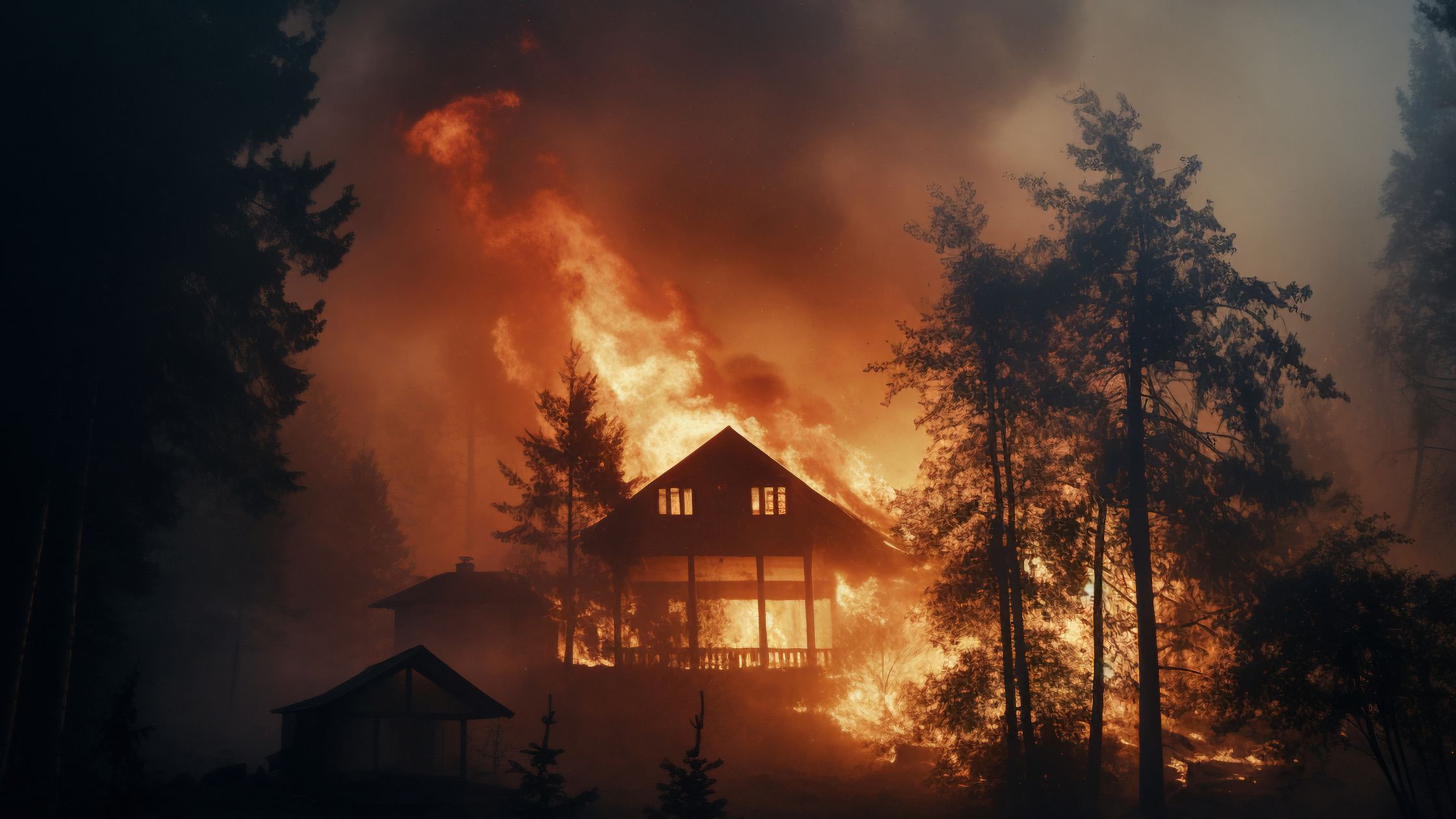
A homeowner who is self-insured cannot afford to “roll the dice” on evacuation alone. The structure must be able to defend itself when firefighters cannot access the area.
Wildfire Defense Systems as Risk Infrastructure
A wildfire defense system is not an insurance product. It is physical risk infrastructure.
Properly designed systems:
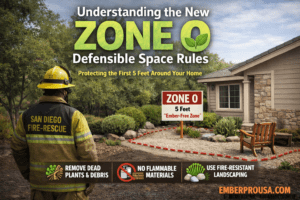
- Protect Zone 0, the five feet immediately surrounding the structure
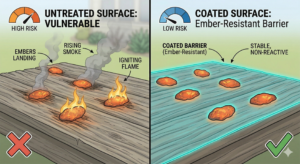
- Wet or coat vulnerable surfaces before embers arrive
- Reduce ignition from radiant heat and ember accumulation
- Operate during evacuation and power outages
- Reduce structure-to-structure fire spread
In real fires, these systems have demonstrated survival rates exceeding 90 percent when installed and activated correctly.
For a self-insured property, this is often the single most effective way to reduce catastrophic loss.
Cost of Defense vs Cost of Loss
Defense Is Predictable
A typical wildfire defense system investment might be:
- 15,000 to 30,000 dollars for an average home
- Around 75,000 dollars for a 10,000 square foot estate
Costs scale, but not linearly. Larger properties benefit from shared infrastructure and efficient design.
Loss Is Not Predictable
A single wildfire event can result in:
- Total structure loss
- Years of rebuilding
- Environmental contamination
- Loss of irreplaceable personal property
For self-insured homeowners, the comparison is stark. A known, controlled investment versus an uncontrolled, potentially devastating loss.
Defensible Space, Zone 0, and AB 3074
California is also moving toward stricter enforcement of defensible space requirements.
AB 3074 establishes the concept of Zone 0, the five feet immediately around structures that must be ember-resistant.
For self-insured homeowners, compliance matters because:
- Insurance companies may enforce before fire departments
- Zone 0 is the most common ignition zone
- Defense systems are designed specifically to protect this area
Wildfire defense systems work best when paired with proper defensible space and home hardening, creating multiple layers of protection.
Environmental and Financial Consequences of Structure Loss
When a structure burns, the impact extends beyond the property owner.
- Toxic materials enter the air and soil
- Debris requires specialized disposal
- Fire retardants may be deployed at large scale
- Watersheds and coastal ecosystems can be affected
Every structure that does not burn reduces environmental damage, public cost, and long-term cleanup burden.
Self-insuring homeowners who invest in mitigation are not just protecting themselves. They are reducing broader community risk.
10 Frequently Asked Questions
- Is self-insuring becoming more common in California?
Yes, especially in wildfire-prone, high-value areas where insurance options are limited. - Does self-insuring mean having no insurance at all?
Not always. Many homeowners have partial coverage but remain exposed to major losses. - Why Rancho Santa Fe specifically?
It combines high wildfire exposure, large homes, and insurance challenges, making mitigation more attractive than coverage alone. - Can wildfire defense systems replace insurance?
No, but they reduce the likelihood of loss and are critical when coverage is limited. - Are defense systems effective in high winds?
Yes, when designed for prevailing wind patterns and pressure requirements. - Do commercial buildings face the same trend?
Yes, especially properties with inventory, chemicals, or limited access. - Is Zone 0 really that important?
Yes, most structures ignite within five feet of the building. - Does AB 3074 apply to existing homes?
Yes, enforcement is expected to extend to existing structures. - Are wildfire defense systems permitted in California?
Most installations do not require permits unless trenching or electrical upgrades are involved. - Why invest now rather than later?
Because mitigation installed before a fire is always cheaper than recovery after one.
Final Thoughts
Self-insuring is not a trend driven by preference. It is a response to reality.
As insurance retreats from wildfire risk, California homeowners are being forced to rethink how they protect their most valuable assets. In this new landscape, wildfire defense systems, defensible space, Zone 0 compliance, and home hardening are not upgrades. They are necessities.
For those effectively self-insured, the goal is simple. Prevent the loss entirely.
And prevention starts long before the smoke is visible.