
How Effective Are Wildfire Retardant Systems for California Home Protection
Reading time: 7 minutes
Last reviewed by: Ryan Kresan, COO and Co-founder, Ember Pro, December 15, 2025
Author: Jim Sprouse, Co-founder of Ember Pro, BS in Environmental Studies from Allegheny College
Published: December 2025
Insights, Wildfire Defense, Wildfire Retardant Systems
Introduction
In wildfire-prone regions of California—from San Diego and Riverside to the hills of Santa Barbara and Los Angeles—homeowners face an evolving threat. The rise of year-round fire seasons, driven by climate shifts and overgrowth, has made traditional defense measures increasingly insufficient. That is where wildfire retardant systems come in.
These systems are no longer experimental. They are engineered, field-tested, and increasingly trusted by homeowners, emergency officials, and insurers across the state. At Ember Pro, we believe every property located in a California wildfire risk zone should understand how wildfire defense systems work—and why they are one of the most effective investments in home protection.
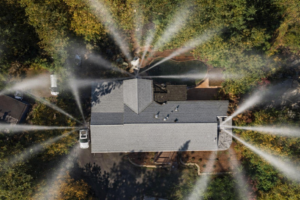
What Are Wildfire Defense Systems
Wildfire defense systems (WFDs) are automated installations designed to defend homes and surrounding property by deploying water or long-term fire retardant through rooftop sprinklers, ground-level nozzles, or fixed perimeter lines.
These systems typically include:
- High-capacity water or retardant tanks
- Distribution lines running along rooftops, fences, or defensible zone.
- Timers or remote-activated pumps for strategic deployment
- Specialized nozzles for wide or targeted coverage
The most advanced wildfire defense systems use retardants instead of water. Unlike water, which often evaporates under extreme heat or wind conditions, retardants can remain effective for hours or days—even in dry, windy weather.
How Retardant Systems Outperform Water-Only Protection
Scientific testing and field data show that wildfire retardant systems offer a significant edge over traditional water-based solutions. Here’s why:
- Water evaporates quickly under high heat, often before the flame front arrives
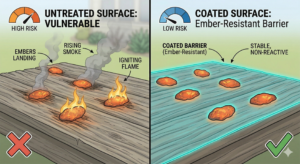
- Retardants form a chemical barrier on surfaces that slows ignition
- The protective effect lasts through radiant heat, ember attacks, and flame exposure
- Retardants can remain effective even if activated hours before the fire arrives
In a wildfire, timing matters. A system that activates and then evaporates is of limited value. Retardant systems give California homeowners more reliable protection in real-world conditions.
Performance in Real Fires, What the Data Shows
Several documented fires demonstrate the effectiveness of these systems:
- Los Angeles Firestorm, January 2025
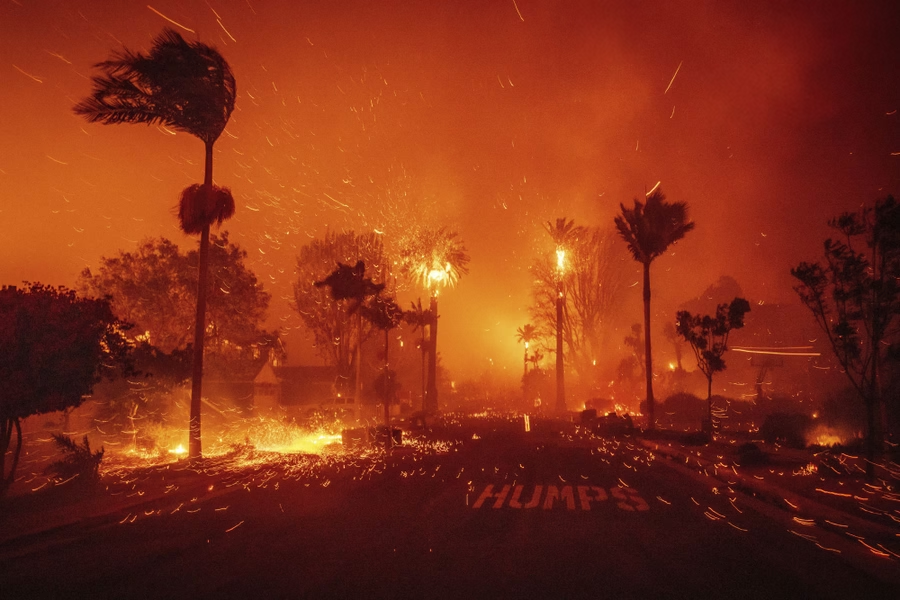
In neighborhoods near the Palisades and Eaton Canyon, 59 of 61 homes with wildfire defense systems survived. A separate report confirmed 40 homes saved in a single block. - Ham Lake Fire, Minnesota, 2007
All 188 homes equipped with exterior sprinklers survived. Over 100 surrounding properties without protection were lost. - Black Saturday Fires, Victoria, Australia, 2009
Homes with rooftop sprinkler systems had double the survival rate compared to unprotected homes. If water supply was maintained, survival rose to over 80 percent. - Dunalley, Tasmania, 2013
Rooftop sprinklers helped save multiple community buildings and homes during widespread fire damage. - Yarloop Fire, Western Australia, 2016
Commercial and residential properties with automated sprinkler systems were left standing in a town where most buildings were destroyed.
In every case, the common denominator was early activation and consistent coverage. When installed correctly and triggered before fire arrival, these systems drastically improved the odds of structure survival.
What Do Homeowners Say
While the statistics are impressive, the stories from property owners often leave the strongest impression:
- Some describe watching their system activate as flames approached, and the fire visibly stopping at the perimeter
- Others returned to their homes after evacuation to find untouched photos, animals, vehicles, and vegetation still in place
- On equestrian properties, owners reported livestock left in barns and paddocks survived with no smoke inhalation or fire injury
- Parents shared how their children sheltered safely indoors as the system ran overhead, keeping the home cool and protected
These accounts may be anecdotal, but they consistently echo the data. Properly installed wildfire retardant systems do more than protect property—they protect lives and peace of mind.
Why Ember Pro Recommends Retardant Systems in California
Ember Pro serves homeowners throughout California—from San Diego and Orange County to Santa Barbara, Ventura, and inland areas like San Bernardino. Our wildfire defense strategies include a mix of:
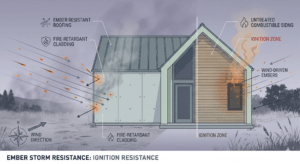
- Ember-resistant construction
- Defensible space maintenance
- Retardant-based wildfire defense systems
We strongly recommend retardant systems for:
- Homes in Very High Fire Hazard Severity Zones
- Rural or equestrian properties with animals or outbuildings
- Remote access sites where firefighting support may be delayed
- Clients with critical contents (artwork, medical supplies, heirlooms)
These systems offer a layer of protection when evacuation is not possible, or when firefighting resources are stretched thin.
Insurance Trends and Recognition
Insurance companies in California are beginning to acknowledge the role of wildfire defense systems in reducing risk. Some trends include:
- Lower premiums for homes with documented fire protection measures
- Case-by-case movement off California FAIR Plan coverage for hardened homes
- Interest in integrating WFD systems into mitigation credit programs
- Requests from insurers for wildfire defense documentation during policy renewals
While not yet standard across the industry, these shifts indicate that insurers are taking wildfire defense systems seriously—especially those with third-party installation verification and retardant use.
10 Frequently Asked Questions About Wildfire Retardant Systems
- Do wildfire defense systems really work?
Yes. Case studies from California and beyond show survival rates above 90 percent when systems are installed and activated properly. - What is the difference between water and retardant systems?
Water evaporates quickly and requires constant spraying. Retardants coat surfaces and remain effective longer, even under high heat. - Are retardants safe for my landscaping or pets?
Most modern retardants used in residential systems are biodegradable and safe when applied correctly, though some cleanup may be needed. - How are these systems activated?
They can be manually activated, set on timers, or remotely triggered by app or emergency service integration. - Will my water pressure be enough for a system?
Many installations include booster pumps or independent tanks to ensure adequate pressure during a fire event. - What maintenance do these systems require?
Annual inspection, nozzle checks, and making sure the tanks are filled—simple but critical tasks. - Can I install this on an existing home?
Yes. Systems can be retrofitted onto most rooflines, fences, and perimeter zones. - Do insurers give discounts for installing one?
Some do. Others are starting to shift policy requirements based on wildfire defense systems and home hardening efforts. - How much does a wildfire defense system cost?
Costs vary by property size and complexity, but many homeowners consider them essential protection given rising fire risks and insurance limits. - Is this just for California?
No, but California has become a proving ground. The systems are used across the West, but demand is highest in high-risk zones like Los Angeles, San Diego, and Central Coast counties.
References
- NBC Bay Area – “New tech helped homes defend LA firestorm”
- Spectrum News – “Roof sprinkler system saves homes”
- Minnesota Wildfire Sprinkler Report
- CSIRO – Bushfire Research Centre, Australia
- Tasmania Fire Service, Dunalley Bushfires Review
- Shire of Harvey, Yarloop Bushfire Recovery Report
- Ember Pro – Why Wildfire Retardant Systems Work Better Than Water
- Ember Pro – California FAIR Plan Home Hardening Discounts
Schedule Your Wildfire Defense System Consultation
If your home is located anywhere in California’s fire zones—whether in the coastal canyons of Santa Barbara, the inland hills of Riverside, or the equestrian areas of San Diego—Ember Pro can help.
We design, install, and maintain proven wildfire defense systems that include retardant-based protection, tailored to your site. Contact us for a full risk assessment and system quote.
Related Articles
- California FAIR Plan Home Hardening Discounts for Wildfire Preparedness
- Why Wildfire Retardant Systems Work Better Than Water for Home Protection
- Fire Protection Systems for Wildfire Home Defense