
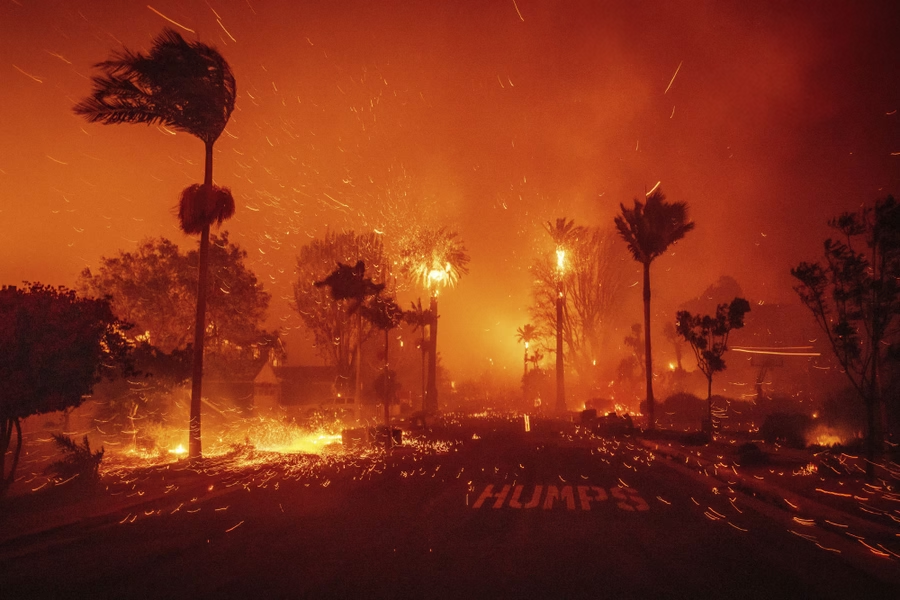
Fire-Proofing the Future: Why Commercial Buildings Must Address Wildfire Mitigation Now
Reading time: 8 minutes
Last reviewed by: Ryan Kresan, COO and Co-founder, Ember Pro, December 15, 2025
Author: Jim Sprouse, Co-founder of Ember Pro, BS in Environmental Studies, Allegheny College
Published: December 2025
Insights, Commercial Wildfire Protection, Fire-Resistant Construction
Introduction
California’s commercial real estate sector is on fire—literally and figuratively. From Los Angeles County to the foothills of Santa Barbara and across wildfire-prone inland zones like Riverside, the state’s Wildland-Urban Interface (WUI) has expanded, and so has the threat to commercial buildings, especially multi-family housing and mixed-use developments.
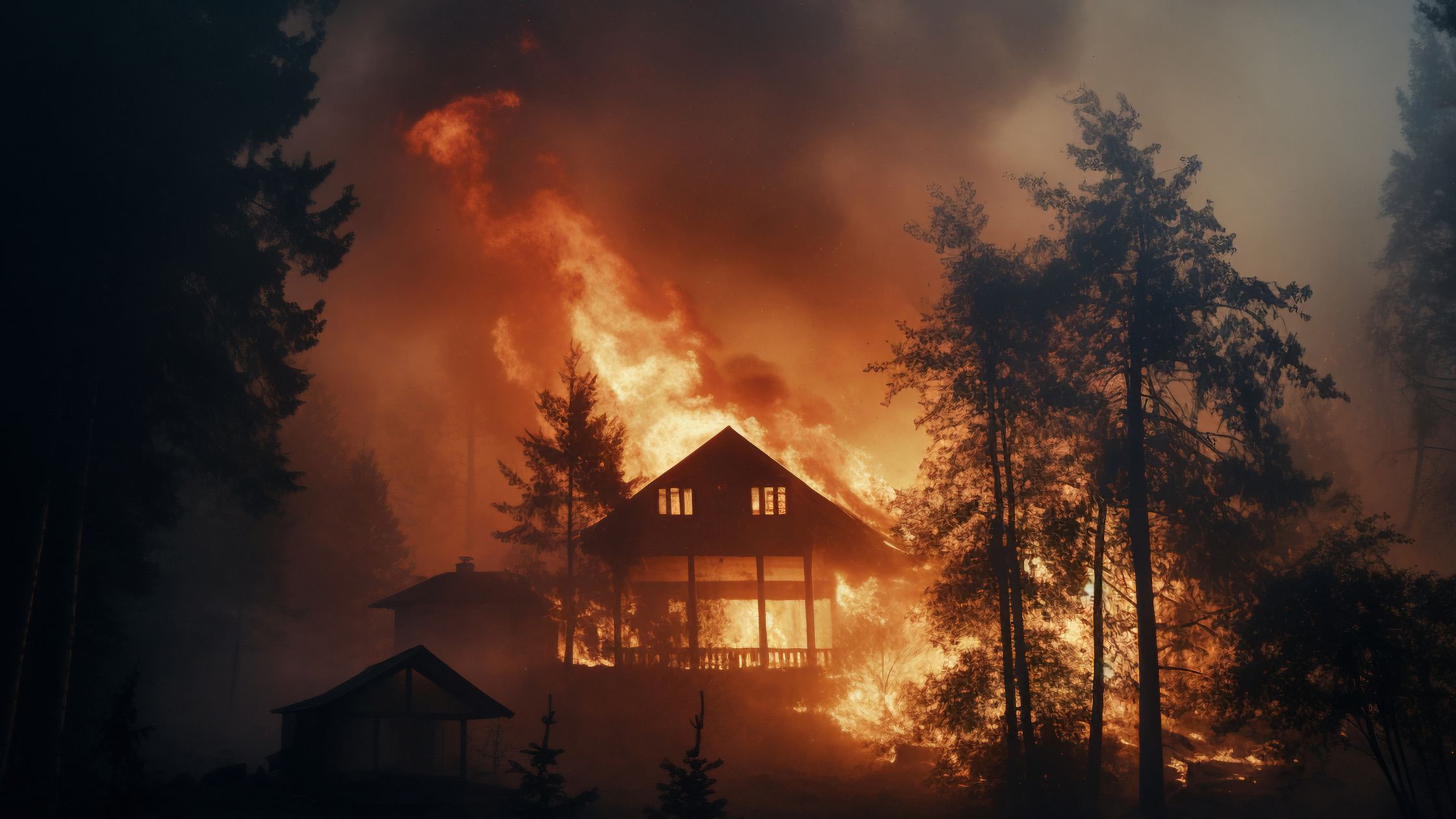
It’s no longer a matter of if wildfires will impact commercial properties—it’s when. With La Niña driving dry, windy conditions into 2026, fire behavior has become more erratic, and the regulatory landscape has evolved to match the urgency.
The codes now demand action. NFPA 1140, the International Wildland-Urban Interface Code (IWUIC), California Building Code Chapter 7A, and the emerging ICC 605 standards now hold commercial buildings to higher wildfire mitigation standards than ever before. Add to that the increasing pressure from insurance carriers and underwriters, and wildfire resilience is no longer optional. It’s essential.
Why Commercial Properties Can’t Afford to Wait

In the past, fire mitigation was reactive—property managers trimmed brush once a year and hoped for the best. That mindset no longer works in 2025. Here’s what’s changed:
1. Insurance Carriers Are Enforcing Wildfire Compliance
Insurers are increasingly requiring commercial clients in high-risk areas to demonstrate wildfire preparedness before issuing or renewing policies. That means:
- Class A roofing
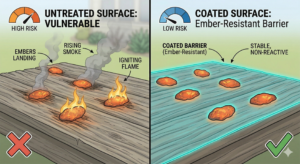
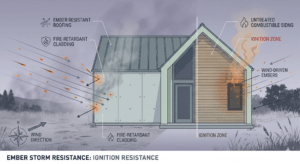
- Ember-resistant vents and enclosed eaves
- Defensible space documentation
- Fire-resistant siding materials
Buildings that don’t meet these expectations are often dropped from coverage or pushed into costly, last-resort policies like the California FAIR Plan.
2. Code Compliance Now Impacts Property Valuation
In 2025, real estate transactions increasingly include wildfire code compliance as a due diligence factor. Buyers, lenders, and investors request:
- Wildfire hazard assessments
- Proof of WUI compliance
- Inspection records from fire authorities or third-party assessors
Failure to meet standards can result in:
- Reduced property valuations
- Escrow delays
- Escalated insurance costs
- Lost tenants due to perceived safety issues
3. Renovations and New Builds Must Prove WUI Code Adherence
If you’re expanding a commercial property or retrofitting a structure in a Very High Fire Hazard Severity Zone (VHFHSZ), your plans must now meet wildfire mitigation codes before permits are approved.
Local authorities now routinely ask for:
- WUI hazard maps
- Fire behavior modeling
- Wildfire mitigation plans stamped by qualified professionals
- Proof of fire-rated materials and systems (UL or ASTM documentation)
Know the Codes: Key Commercial Wildfire Standards
Here’s what commercial property owners need to know about the four dominant code systems for wildfire mitigation:
NFPA 1140 (2022 Edition)
Formerly known as NFPA 1144 and 1141, this national standard now covers fire mitigation for structures and vegetation in wildfire-prone areas, applying to both residential and commercial occupancies.
Key elements:
- Emergency access road specs
- Fire-resistant construction
- Fuel modification zones
- On-site water supply systems
International Wildland-Urban Interface Code (IWUIC)
Adopted across multiple states and counties, IWUIC governs:
- Ember-resistant venting
- Roof and siding ignition resistance
- Clearances around gas and power systems
- Vegetation management in zones up to 100 feet
In California, more local jurisdictions have adopted IWUIC overlays in building permit reviews, especially after the 2023 fire seasons.
California Building Code Chapter 7A
Applies to all new construction in designated fire hazard zones. Chapter 7A enforces:
- Use of non-combustible siding, decking, and window assemblies
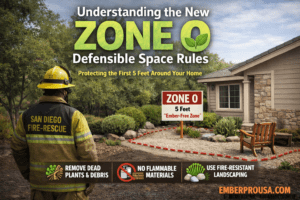
- Defensible space (Zone 0, Zone 1, Zone 2) compliance
- Eave and soffit protection
- Documentation of all fire-rated components used
Note: Chapter 7A does not apply retroactively to existing structures—but insurers often enforce it anyway as a standard of care.
ICC 605 (Coming Soon)
This upcoming code standard from the International Code Council will specifically address commercial WUI compliance and is expected to bridge the gap between single-family-focused codes and larger occupancy types.
Although still in draft form, ICC 605 is being used by some fire jurisdictions as an enforcement baseline, especially for senior housing, apartments, and schools in fire zones.
What Does Code-Aligned Wildfire Mitigation Look Like?
Let’s break it down by category:
Applicability and Risk Designation
Properties must be designated as being in a WUI zone or Very High Fire Hazard Severity Zone (VHFHSZ) based on local or CAL FIRE mapping tools.
Emergency Access
- 20-foot minimum road width
- Minimum turning radius for fire trucks
- Visible reflective signage with contrasting address numbers
Defensible Space Zones
- Zone 0 (0–5 feet): Must be free of combustibles like mulch, furniture, and wood fencing
- Zone 1 (5–30 feet): Requires reduced vegetation density, tree trimming, and spacing
- Zone 2 (30–100+ feet): Calls for ladder fuel reduction, managed slopes, and clearances
Roofing, Vents, and Eaves
- Class A roofing systems only
- Metal mesh vent screens (1/8-inch max)
- No plastic vents or open eaves without protection
Walls, Windows, and Decking
- Non-combustible siding (fiber cement, stucco, brick)
- Dual-pane windows with at least one tempered glass layer
- Enclosed underdeck areas with no storage of combustible items
Utilities and Equipment
- Propane tanks must be 10 feet from structures and have barrier protection
- Generators must be enclosed or surrounded by non-combustible materials
- Electrical panels and conduit must be protected with flame-resistant barriers
Water Supply and Fire Flow
- Must meet NFPA fire flow standards (e.g., 1,000–1,500 gallons per minute)
- Commercial developments must have accessible hydrants or on-site water tanks
Emergency Planning
- Must have evacuation signage and escape route maps posted in common areas
- Properties must document fire drills and emergency response coordination
How to Future-Proof Your Property
Wildfire mitigation is not a one-time fix. It’s an operational philosophy. Here’s how to start:
1. Commission a Wildfire Vulnerability Assessment
Hire a certified wildfire defense contractor or WUI consultant (like Ember Pro) to:
- Map your property’s exposure
- Review existing construction features
- Identify gaps in code compliance
- Produce a documented mitigation strategy
2. Develop a Code-Aligned Mitigation Plan
The plan should include:
- Fire-rated materials upgrades
- Defensible space management calendar
- Site evacuation protocols
- Insurance compliance documentation
- Staff wildfire response training schedule
3. Train Maintenance and Property Teams
Your frontline defense is your on-site staff. They must be trained to:
- Keep gutters clear of debris
- Trim vegetation per Zone 1 standards
- Monitor fence lines, trash areas, and propane tank setbacks
- Document and photograph quarterly compliance checks
4. Maintain Fire Compliance Records
Regulators, lenders, and insurers now demand proof, including:
- Receipts and spec sheets for all fire-rated materials
- Date-stamped photos of defensible space
- Contractor certifications
- Inspection logs
10 FAQs About Wildfire Compliance for Commercial Properties
- Do these codes apply to existing buildings?
Some do. Chapter 7A applies only to new construction, but NFPA 1140 and IWUIC are often enforced retroactively by insurers and local fire marshals. - Do I need a permit to retrofit vents or roofing?
Yes. Most jurisdictions require a permit for Class A roof replacement or vent retrofits in a WUI zone. - Can a wildfire assessment reduce my insurance premium?
Yes. Some carriers are now offering discounts for documented compliance—especially with Ember Pro’s support. - Is the California FAIR Plan permanent?
No. It’s meant as a last resort. Many owners can move off the FAIR Plan with the right mitigation plan. - Can I be fined for non-compliance?
Yes. Jurisdictions like Los Angeles and Santa Barbara County have begun issuing citations for non-compliant defensible space or hazardous structures. - Does Ember Pro work with commercial properties?
Yes. We assess and protect multi-family, agricultural, and light commercial structures across California. - How often do defensible space inspections occur?
Most counties inspect annually, especially in VHFHSZ areas. Insurers may require more frequent third-party inspections. - Can I use synthetic turf in Zone 0?
Only if it meets flame spread ratings and is not in direct contact with structures. - Does La Niña affect fire risk in California?
Yes. La Niña typically brings drier, windier conditions to Southern California, increasing wildfire frequency. - What’s the first step?
Schedule a wildfire risk consultation and develop a mitigation plan aligned with NFPA 1140 and IWUIC.
References
- California Building Code, Chapter 7A (2022)
- NFPA 1140 Standard for Wildland Fire Protection (2022)
- IWUIC – International Code Council (2021)
- ICC 605 Draft – Commercial Wildfire Protection (2025)
- Cal Fire Defensible Space Zones
- California Department of Insurance – FAIR Plan Guidelines (2025)
- Wildfire Partners – Commercial Mitigation Playbook
- FEMA Wildfire Risk Reduction for Multi-Family Housing
Wildfire season is now year-round.
Ember Pro helps commercial property owners across California assess risk, meet code, and stay insured. Whether you’re in San Diego, Los Angeles, or Santa Barbara, we offer compliance-driven wildfire protection systems and mitigation planning tailored for your structure type and location.
→ Schedule a Commercial Wildfire Risk Assessment Today