
Author: Jim Sprouse, Co-founder of Ember Pro, BS in Environmental Studies from Allegheny College, Certified Wildfire Defense Specialist
Expert Review: Ryan Kresan, COO and Co-founder, Ember Pro
Reading Time: Approximately 12 minutes
Introduction
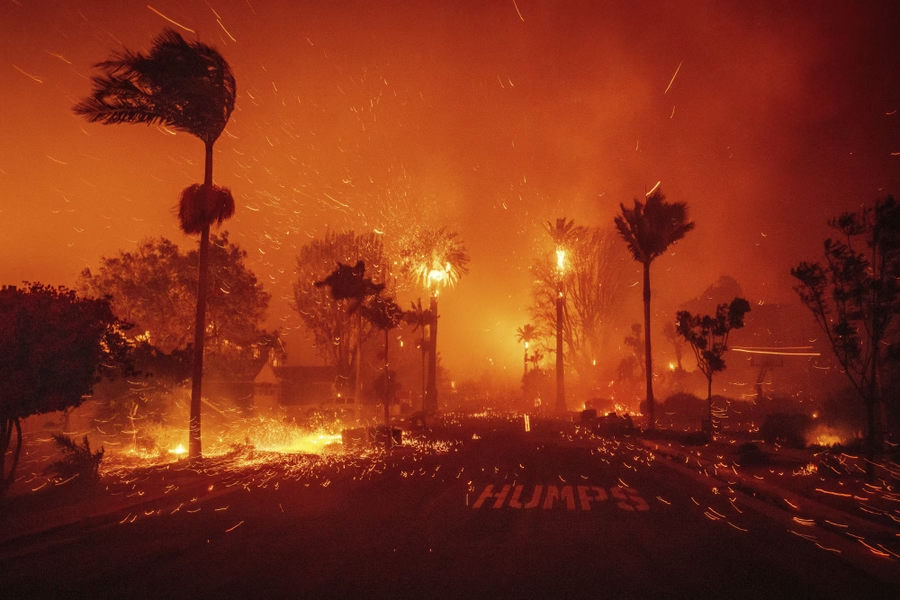
When most homeowners think about wildfire loss, they imagine a single catastrophic moment followed by an insurance claim and a long but manageable rebuild. The assumption is that insurance exists to restore life to normal, even if the process is painful.
For a growing number of California homeowners, that assumption no longer holds.
The real damage of wildfire often begins after the flames are gone. Underinsurance, displacement, and rising costs can turn one destructive event into years of financial strain. This slow unraveling is what we call the (UN) FAIR Gap.
It is the space between what homeowners believe their insurance will cover and what limited policies actually provide when a high value home is lost to wildfire.
And for expensive homes, that gap does not stay fixed. It widens over time.
What the FAIR Plan Was Designed to Do, and What It Was Not
The California FAIR Plan was created as an insurer of last resort. Its primary role is to ensure that properties remain insurable enough to satisfy lenders when traditional carriers withdraw from high risk markets.
It was never designed to make homeowners whole after a catastrophic loss.
Typical FAIR Plan coverage includes limited dwelling limits, restricted endorsements, and little to no protection for contents, code upgrades, or additional living expenses. While this structure may keep a mortgage in compliance, it leaves homeowners exposed to substantial out of pocket costs.
Being insured under the FAIR Plan does not mean being financially protected.
When Coverage Limits Meet Reality
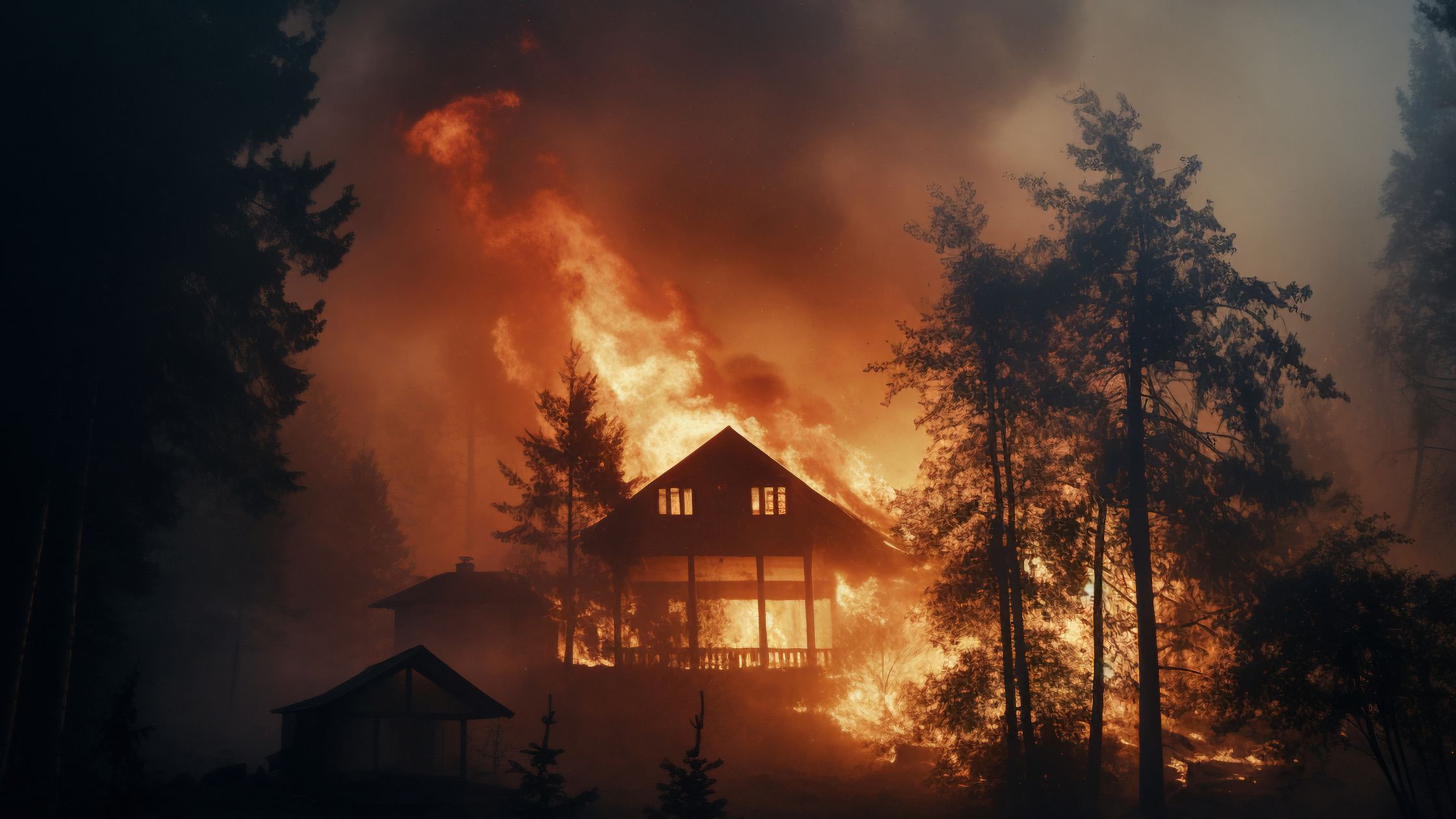
A recent case study involving a multi million dollar California home illustrates this problem clearly. When wildfire destroyed the structure, insurance coverage reached its limits quickly, leaving the homeowner exposed to years of financial strain beyond the initial loss.
What made the situation worse was not just the initial coverage shortfall, but what happened next. As rebuilding plans moved forward, construction costs continued to rise. Labor shortages, material inflation, permitting delays, and increased code requirements drove replacement costs higher month after month.
Lumber, concrete, steel, mechanical systems, and skilled labor all increased in cost while insurance limits remained fixed. Each delay widened the gap between what insurance paid and what rebuilding actually required. What began as underinsurance became a multi year financial burden that extended far beyond the burned structure.
This is how wildfire loss turns into a long term trap. The fire ends, but the costs do not.
Additional Living Expenses: The Cost Most People Underestimate
Additional living expenses are often misunderstood. Many homeowners assume displacement means a short hotel stay or a temporary rental while repairs are completed.
In high value California communities, the reality is very different.
In areas such as Pacific Palisades, Malibu, Santa Barbara, and other coastal or hillside neighborhoods, wildfire rebuild timelines often stretch three to six years. Permitting backlogs, labor shortages, environmental regulations, and design review processes add months or years to recovery.
Without meaningful ALE coverage, homeowners must self fund housing for the entire duration. This means paying market rate rent for years while still carrying an existing mortgage and absorbing out of pocket rebuild costs.
This is not a double burden. It is a triple exposure.
- Mortgage payments
- Rental payments
- Rebuild expenses
For many families, this becomes unsustainable.
Rental Inflation After Fire: A Hidden Multiplier
Large fires displace thousands of households at once. When that happens, they all enter the rental market simultaneously. Housing supply does not increase overnight, but demand does.
The result is rental inflation.
In high demand California markets, rents often increase dramatically following major wildfire events. Long term leases become scarce, competition intensifies, and families are pushed farther from jobs, schools, and support networks.
Homeowners without ALE coverage absorb these costs entirely. Each rent increase widens the unfair gap and accelerates financial exhaustion.
Displacement That Becomes Permanent
Another difficult reality is that many homeowners never return to rebuild.
Years of overlapping expenses can lead to financial collapse, health impacts, family strain, and loss of community connection. Even households with significant assets can reach a breaking point when losses compound for years without relief.
Wildfire does not just destroy homes. It quietly dismantles lives.
Why Expensive Homes Are Often More Exposed
There is a persistent assumption that wealth provides insulation from wildfire risk. In practice, the opposite is often true.
High value homes face higher replacement costs, custom construction, complex site work, extensive hardscape, and significant code upgrade requirements. Insurance limits rarely keep pace with these realities.
The more valuable the home, the wider the gap between insured value and true replacement cost tends to be. When wildfire strikes, that mismatch becomes painfully visible.
The FAIR Plan Protects Mortgages, Not Lifestyles
The FAIR Plan exists to protect the financial system, not personal outcomes. It ensures that loans remain backed by an insured asset.
It does not protect lifestyle continuity, community stability, or long term financial planning.
For homeowners, this distinction matters. Insurance may satisfy a lender while still leaving a family financially exposed for years.
Time Is the Most Expensive Variable
The most dangerous aspect of the (UN) FAIR Gap is time.
Each month after a wildfire loss brings continued mortgage payments, continued rent, continued rebuild costs, and continued uncertainty. Construction inflation compounds the problem, pushing replacement costs higher while coverage remains capped.
What begins as a coverage issue becomes a prolonged financial bleed.
Prevention Is the Only Way to Opt Out
At some point, insurance math reaches its limit. No policy can fully absorb years of displacement, inflation, and emotional stress.
The only reliable way to avoid the unfair math is to avoid the loss itself.
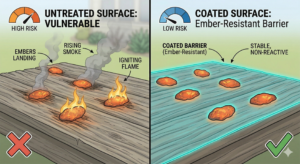
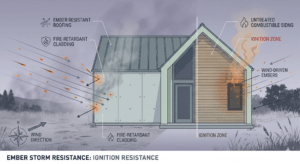
This is where wildfire prevention, home hardening, defensible space, Zone 0 compliance, and layered wildfire defense strategies matter. Homes that do not burn do not trigger insurance gaps, ALE shortfalls, or years of displacement.
The best insurance claim is the one never filed.
How Ember Pro Fits Into This Reality
Ember Pro’s role is not to replace insurance, but to reduce reliance on it. By focusing on ignition prevention and layered defense, the goal is to keep structures standing when wildfire passes through.
Preventing loss avoids the cascading consequences that follow. It protects not just property, but financial stability, family continuity, and future plans.
The (UN) FAIR Gap Is Growing
As insurance markets continue to tighten and rebuild costs rise, more homeowners will find themselves exposed. High value homes will increasingly fall into underinsured scenarios.
Understanding the (UN) FAIR Gap is no longer optional. It is a critical part of owning property in California.
Frequently Asked Questions
What is the (UN) FAIR Gap?
It is the difference between expected insurance protection and what limited wildfire policies actually provide.
Why does the gap grow over time?
Because displacement, rent, and rebuild costs continue while coverage remains capped.
Does the FAIR Plan cover additional living expenses?
Generally no, or only at very limited levels.
Why are expensive homes more exposed?
Because replacement costs escalate faster than policy limits.
How long do wildfire rebuilds take?
Often three to six years in high value California markets.
Is underinsurance common?
Yes, especially as construction costs rise.
What role does construction inflation play?
It widens the gap as material and labor costs increase over time.
Can homeowners avoid displacement costs?
Only by avoiding total loss.
Does prevention really make a difference?
Yes. Homes that do not burn avoid the financial trap entirely.
What is the biggest takeaway?
Wildfire is a long term financial risk, not just a property risk.
References
- California FAIR Plan Association
- California Department of Insurance
- California Department of Forestry and Fire Protection
- National Fire Protection Association
Call to Action
Wildfire insurance is no longer a safety net for many homeowners. Understanding the (UN) FAIR Gap is the first step. Reducing the likelihood of ever falling into it is the next.
Protecting your home is about more than rebuilding. It is about avoiding years of financial and personal loss that follow.
Schedule a free wildfire defense consultation to learn how Ember Pro can help protect your home and your financial future.