

What Is the Home Ignition Zone — and How Ladder Fuels Put Your Home at Risk
Breadcrumb: Insights, Wildfire Science, Defensible Space, California Wildfires
Author: Jim Sprouse, Co-founder of Ember Pro, BS in Environmental Studies from Allegheny College, Certified Wildfire Defense Specialist
Expert Review: Ryan Kresan, COO and Co-founder, Ember Pro
Published: Current
Reading Time: Approximately 8 minutes
Introduction
When homes are lost in California wildfires, the cause is often misunderstood. Many people imagine a wall of flames racing through the landscape and overwhelming everything in its path. In reality, most structures ignite because of conditions immediately surrounding the home, not because of the intensity of the wildfire far away.
This is the foundation of the Home Ignition Zone, commonly referred to as HIZ.
The Home Ignition Zone explains why some homes survive while others do not, even when they are located on the same street. It also explains why ladder fuels are one of the most dangerous and underestimated wildfire hazards around homes, HOAs, and commercial properties.
Understanding HIZ and ladder fuels is essential for anyone serious about defensible space, Zone 0 compliance under AB 3074, and effective wildfire defense in California.
Table of Contents
- What Is the Home Ignition Zone
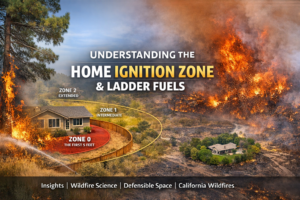
- The Three Zones of the Home Ignition Zone
- What Are Ladder Fuels
- How Ladder Fuels Bring Fire to the Structure
- Ladder Fuels and Structure Attachments
- Why Ladder Fuels Are Especially Dangerous in California
- Ladder Fuels in HOA and Neighborhood Settings
- How Wildfire Defense Systems Reinforce HIZ Protection
- Commercial Properties and Ladder Fuel Risk
- Frequently Asked Questions
- References
- Call to Action
- Related Articles
What Is the Home Ignition Zone
The Home Ignition Zone is the area surrounding a structure where conditions determine whether the structure will ignite during a wildfire.
Rather than focusing on how intense the wildfire is miles away, HIZ focuses on what happens right at the structure. Fire science has consistently shown that homes ignite due to embers, radiant heat, and direct flame contact within this zone.
In simple terms, if the conditions inside the Home Ignition Zone are right for ignition, the home will burn, regardless of how far away the wildfire started.
The Three Zones of the Home Ignition Zone
The Home Ignition Zone is divided into three functional areas. Each zone influences fire behavior differently, but all contribute to structure survival or loss.
Zone 0, The First Five Feet
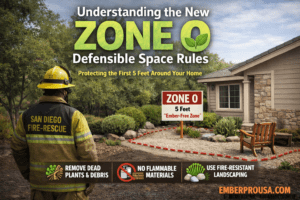
Zone 0 is the five feet immediately surrounding the structure, now formally recognized in California under AB 3074.
This zone is the most critical because:
- Most embers land within this area
- Radiant heat exposure is highest
- Combustible materials here can ignite the structure directly
Zone 0 should contain no combustible materials. This includes wood mulch, firewood, outdoor furniture, fencing attached to the home, and unmanaged vegetation.
If fire reaches Zone 0, the structure is already at extreme risk.
Zone 1, The Intermediate Zone
Zone 1 typically extends from five to thirty feet from the structure.
This zone influences flame length and radiant heat intensity. Vegetation in Zone 1 should be:
- Properly spaced
- Regularly maintained
- Trimmed away from buildings
Zone 1 does not need to be bare ground, but it must not allow continuous fire spread toward the structure.
Zone 2, The Extended Zone
Zone 2 generally extends from thirty to one hundred feet or more, depending on slope and local regulations.
The goal in Zone 2 is to reduce overall fire intensity before it reaches the home by:
- Breaking up fuel continuity
- Managing ladder fuels
- Reducing crown fire potential
What Are Ladder Fuels
Ladder fuels are combustible materials that allow fire to move vertically, from the ground up into taller vegetation and ultimately into the structure.
They function like rungs on a ladder, enabling fire to climb from surface fuels into shrubs, trees, and buildings.
Common ladder fuels around homes include:
- Tall grasses beneath shrubs
- Shrubs planted under tree canopies
- Low hanging tree branches
- Wooden fences attached to structures
- Trellises, pergolas, and arbors connected to siding
- Climbing plants on walls or fences
- Storage or debris beneath decks
Ladder fuels are dangerous because they connect ground level fire directly to the home.
How Ladder Fuels Bring Fire to the Structure
Fire naturally moves upward due to rising heat. Ladder fuels take advantage of this behavior.
A common ignition sequence looks like this:
- Surface fuels ignite, such as grass or leaf litter
- Flames reach shrubs or low branches
- Fire climbs into tree canopies or structure attachments
- Radiant heat and embers overwhelm the structure
Once fire reaches rooflines, vents, eaves, or siding, the likelihood of structural ignition increases dramatically.
This is why homes with unmanaged ladder fuels often ignite even when surrounding vegetation appears sparse.
Ladder Fuels and Structure Attachments
One of the most overlooked ladder fuel pathways involves attachments connected directly to the structure.
Examples include:
- Wooden fences connected to siding
- Decks with combustible materials underneath
- Storage sheds placed against walls
- Landscaping touching vents or eaves
When these attachments ignite, they become a direct ignition source for the structure itself.
Modern defensible space guidance and AB 3074 increasingly focus on eliminating these direct pathways.
Why Ladder Fuels Are Especially Dangerous in California
California wildfire conditions amplify ladder fuel risk due to:
- Steep terrain that accelerates fire spread
- Extremely dry vegetation
- Offshore wind events such as Santa Ana and Diablo winds
- Dense landscaping around homes
Under wind driven conditions, ladder fuels allow flames to climb rapidly and generate ember showers that attack neighboring structures, leading to structure to structure fire spread.
This is one of the primary reasons entire neighborhoods are lost in a single event.
Ladder Fuels in HOA and Neighborhood Settings
HOA communities face unique ladder fuel challenges, including:
- Uniform landscaping designs
- Dense shrub plantings
- Trees planted close to buildings
- Fences connecting multiple units
In these environments, one ignition can rapidly spread across multiple structures.
This is why HOAs benefit from coordinated defensible space standards, Zone 0 enforcement, and neighborhood scale wildfire defense systems.
How Wildfire Defense Systems Reinforce HIZ Protection
Wildfire defense systems do not replace vegetation management, but they reinforce it during fire events.
Properly designed systems:
- Treat vulnerable surfaces when embers arrive
- Reduce ignition of ladder fuels near structures
- Protect rooflines, siding, and attachments
- Reduce structure to structure fire spread
By focusing protection within the Home Ignition Zone, these systems help interrupt the ladder fuel pathway when it matters most.
Commercial Properties and Ladder Fuel Risk
Commercial properties face many of the same risks as residential homes, often intensified by:
- Larger roof surfaces
- Dense ornamental landscaping
- Storage areas near walls
- HVAC units surrounded by vegetation
Fire does not discriminate based on property type. Ladder fuels can deliver fire to commercial structures just as easily as homes.
Managing HIZ and ladder fuels is essential for offices, retail centers, and mixed use developments in wildfire prone areas.
Frequently Asked Questions
- What is the Home Ignition Zone
The area around a structure where conditions determine whether it ignites during a wildfire. - Is Zone 0 part of the Home Ignition Zone
Yes. Zone 0 is the most critical portion of the HIZ. - What are ladder fuels
Materials that allow fire to move vertically from the ground to the structure. - Why are ladder fuels dangerous
They connect surface fires directly to buildings. - Are trees always ladder fuels
No. Trees become ladder fuels when lower branches or nearby vegetation allow vertical fire spread. - Do fences count as ladder fuels
Yes, especially when attached to structures. - Can wildfire defense systems stop ladder fuel ignition
They reduce ignition risk but must be paired with vegetation management. - Does AB 3074 address ladder fuels
Indirectly, by requiring Zone 0 to be ember resistant. - Are ladder fuels an HOA responsibility
Often yes, particularly in common areas and shared landscaping. - What is the most effective way to reduce ladder fuel risk
Eliminate vertical fuel continuity and protect the Home Ignition Zone.
References
California Department of Forestry and Fire Protection
Defensible Space and Wildland Urban Interface Guidelines
National Fire Protection Association
Firewise USA and Home Ignition Zone Research
Insurance Institute for Business and Home Safety
Ember Exposure and Structure Ignition Studies
California Assembly Bill 3074
Fire Prevention, Wildfire Risk, Defensible Space, Ember Resistant Zones
US Forest Service
Wildfire Behavior and Fuel Management Guidance
Call to Action
If you are unsure whether ladder fuels or Home Ignition Zone conditions are putting your property at risk, Ember Pro can help.
Schedule a free Home Ignition Zone and wildfire risk assessment to identify vulnerabilities and build a layered wildfire defense strategy tailored to your property.
Related Articles
- Understanding Zone 0 and the Five Feet That Matter Most
- Defensible Space Requirements for California Homes and HOAs
- How Wildfire Defense Systems Protect Homes During Ember Storms