
AB 3074 & Zone Zero: What California Homeowners Need to Know
Reading time: 8 minutes
Last reviewed by: Ryan Kresan, COO and Co-founder, Ember Pro, December 15, 2025
Author: Jim Sprouse, Co-founder of Ember Pro, BS in Environmental Studies from Allegheny College
Published: December 2025
Breadcrumb: Insights, Wildfire Defense, Zone Zero Wildfire Compliance
Introduction
If you are an architect, builder, homeowner, or property manager in California’s wildfire-prone regions, you cannot afford to ignore the evolving wildfire defense codes. Two critical developments now shape wildfire resilience strategies statewide, the transition from Chapter 7A to the California Wildland-Urban Interface Code, CWUIC, and the upcoming enforcement of Assembly Bill 3074, AB 3074, which introduces the concept of Zone Zero wildfire compliance.
These regulatory shifts are not optional. They are reshaping how we design, build, and protect structures in high-risk fire zones. This article will explain what you need to know about CWUIC, AB 3074, and how to stay compliant with Zone Zero defensible space standards.
What is AB 3074 and Why It Matters
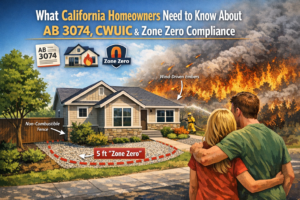
Assembly Bill 3074, passed in 2020 and signed into law effective January 1, 2021, introduces a groundbreaking requirement for wildfire protection in California, the creation of an ember-resistant zone within five feet of any structure. This area is now defined as Zone Zero, and it is central to what is now known as Zone Zero wildfire compliance.
This bill was introduced because embers are the number one cause of home ignition during wildfires. These embers travel far ahead of flame fronts and ignite anything combustible they land on. By removing fuels immediately adjacent to structures, Zone Zero increases the chances a building will survive without direct firefighting intervention.
AB 3074 is not just about defensible space, it is about creating an ignition-free buffer around every home, business, and building in designated fire hazard zones.
Understanding Zone Zero, Ember-Resistant Defensible Space
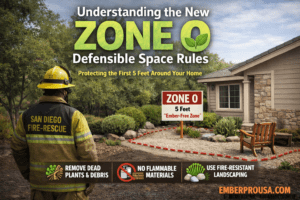
Zone Zero refers to the 0 to 5-foot perimeter surrounding any structure. Once enforcement begins, no combustible materials will be allowed in this zone. This means both natural fuels and manmade items must be eliminated or modified.
To comply with Zone Zero wildfire compliance standards, property owners should:
- Remove wood mulch, dry leaves, pine needles, firewood stacks, outdoor furniture, and trash cans from the area immediately surrounding structures.
- Replace organic ground covers with non-combustible materials such as gravel, decomposed granite, stone, or concrete.
- Limit vegetation to only fire-resistant species or none at all, depending on local enforcement.
- Upgrade to ember-resistant vents, screens, and building materials.
- Ensure fencing and gates within the 5-foot zone are non-combustible.
- Regularly clear rooflines and gutters of debris.
In essence, Zone Zero is about eliminating every opportunity for an ember to ignite your home.
When Will AB 3074 Be Enforced
Although AB 3074 was signed into law in 2021, enforcement has been delayed pending the development of vegetation management regulations by the Office of the State Fire Marshal. As of December 2025, those regulations are expected to be finalized in mid-to-late 2026 and will be added to Title 19 of the California Code of Regulations.
Here is the expected rollout of Zone Zero wildfire compliance:
- New Construction, enforcement begins immediately once the State Fire Marshal’s standards are adopted, projected in 2026.
- Existing Structures, enforcement will begin one year after adoption, likely in 2027.
Who is responsible for enforcement?
- The Office of the State Fire Marshal develops and proposes the regulatory standards.
- The California Building Standards Commission approves them.
- Local fire departments and code enforcement agencies implement them on the ground.
- Insurance companies are increasingly enforcing these standards independently of government action.
For many homeowners and builders, insurance carriers are already demanding Zone Zero compliance to renew or issue policies in high fire risk zones.
How CWUIC Replaces Chapter 7A
As of January 1, 2024, the California Wildland-Urban Interface Code, CWUIC, has replaced CBC Chapter 7A. While AB 3074 focuses on defensible space outside the structure, CWUIC governs fire-resistant construction methods and materials for new buildings in wildfire hazard zones.
Key updates under CWUIC include:
- Performance-based testing for roofing, siding, decking, vents, and other assemblies.
- Application to additions, remodels, and repairs in certain areas, not just new construction.
- Stricter documentation and submittal requirements during plan review.
- Clarity on what constitutes compliance in fire hazard zones, improving consistency across jurisdictions.
Together, CWUIC and AB 3074 form a two-part strategy, fire-resistant design plus ember-resistant landscaping.
What Architects and Designers Need to Know
For those in the architectural and design industries, both CWUIC and AB 3074 introduce new layers of responsibility. Compliance must now be considered in both the construction documents and the site design.
Key considerations include:
- Project scope now triggers CWUIC compliance, including significant remodels and accessory structures.
- Landscape planning must now account for Zone Zero wildfire compliance as part of defensible space strategy.
- Detailing for non-combustible fencing, pathways, and gates is now part of the design process.
- Early coordination with local fire marshals and planning departments is more critical than ever.
- Material selection must be validated with product listings or testing reports showing CWUIC approval.
Architects who can design wildfire-resilient structures with compliant defensible space will be increasingly in demand in California’s evolving fire landscape.
Zone Zero Wildfire Compliance Checklist
Use this checklist as a baseline for planning your compliance with AB 3074.
- Remove all wood mulch, pine needles, dry vegetation, and dead plant material within five feet of any structure.
- Relocate combustible items such as propane tanks, patio cushions, trash cans, and woodpiles.
- Replace flammable groundcovers with stone, gravel, or other hardscaping.
- Clear and maintain eaves, gutters, and roofs free of leaves and flammable debris.
- Use non-combustible materials for fences and gates attached to buildings.
- Install ember-resistant vents and cover other structure openings with approved screens.
- Maintain a clean, fuel-free barrier between the structure and the surrounding landscape.
Applicability to Commercial and Rental Properties
AB 3074 applies broadly to all structures located in a Very High Fire Hazard Severity Zone. This includes:
- Commercial buildings, including retail, office, industrial, and mixed-use developments.
- Multi-family housing units such as apartments and condominiums.
- Single-family rental properties and vacation homes.
Whether a property is owner-occupied, leased, or part of a larger commercial portfolio, compliance with Zone Zero wildfire regulations is mandatory once enforcement begins.
Site managers and real estate investors must incorporate defensible space maintenance into operational budgets and landscape contracts now to prepare for future compliance demands.
Insurance Impacts of Noncompliance
One of the most urgent reasons to act now is the behavior of insurance companies in California. Even in the absence of formal enforcement, carriers are denying coverage to homes and businesses that do not meet modern wildfire protection standards.
Noncompliance may result in:
- Denied coverage or inability to renew policies.
- Forced placement in the California FAIR Plan with higher premiums and limited coverage.
- Difficulty securing financing or refinancing if insurance cannot be maintained.
- Increased out-of-pocket costs for fire mitigation after a claim is denied due to noncompliance.
Zone Zero wildfire compliance is quickly becoming the standard expected by the insurance industry, not just state regulators.
Frequently Asked Questions About AB 3074 and Zone Zero Wildfire Compliance
- Who enforces AB 3074?
Local fire departments and code enforcement officers implement enforcement, but most property owners first feel the impact through their insurance provider. - When will AB 3074 enforcement begin?
New construction must comply starting in 2026. Existing structures are expected to fall under enforcement by 2027. - Does this apply to existing homes?
Yes. The compliance window for existing homes begins one year after final regulations are adopted. - Are commercial and rental properties included?
Yes. AB 3074 applies to any structure in a Very High Fire Hazard Severity Zone, regardless of use or occupancy. - Can I plant vegetation in Zone Zero?
Only highly fire-resistant species may be permitted, and some insurers prohibit all vegetation in the five-foot zone. - What types of materials are allowed in Zone Zero?
Only non-combustible materials such as concrete, stone, gravel, and metal may be used for fencing and hardscaping. - What happens if I do not comply?
You may face insurance denial, premium increases, enforcement actions, or inability to sell or refinance your property. - Will there be financial incentives?
Some insurers may offer discounts for compliance. State or local rebates may be introduced in the future. - Is Zone Zero a one-time upgrade?
No. It requires ongoing maintenance and inspection to remain compliant. - How do I get started?
Begin by removing combustibles within five feet of all structures and consult a wildfire defense specialist for a site assessment.
References
- California Office of the State Fire Marshal, osfm.fire.ca.gov
- California Building Standards Commission, dgs.ca.gov/bsc
- AB 3074 Full Bill Text, leginfo.legislature.ca.gov
- CAL FIRE, fire.ca.gov
- NFPA Wildfire Reports, 2024
- Insurance Institute for Business and Home Safety, ibhs.org
Schedule a Wildfire Defense Consultation
At Ember Pro, we specialize in helping California residents and professionals navigate Zone Zero wildfire compliance and implement practical wildfire defense systems. Whether you are a homeowner, builder, or property manager, our team can provide risk assessments, defensible space guidance, and CWUIC-compliant design support.
Contact us today to schedule your consultation.
Related Articles
- How CWUIC Impacts 2025 New Construction Projects
- Fire-Resistant Materials, What’s Approved Under CWUIC
- Insurance Trends in VHFHSZ Zones for 2026


Leave a Reply