By Jim Sprouse, Co-founder of Ember Pro
California’s wildfire season is no longer a single defined period. Climate change, prolonged drought cycles, and shifting wind patterns have extended fire risk across more months of the year than ever before. Understanding the month-by-month risk profile for 2026 helps homeowners plan mitigation work, schedule maintenance, review insurance, and stay prepared throughout the year.
This wildfire season 2026 month-by-month risk calendar covers what California homeowners should expect and do during each phase of the year.
Editor’s note: Your insurance situation depends heavily on your property’s actual fire exposure. Our free risk assessment factors in official CAL FIRE data to show what your risk level actually is — useful context before talking to your carrier.
January and February: Winter Recovery Window
Risk Level: Low to Moderate
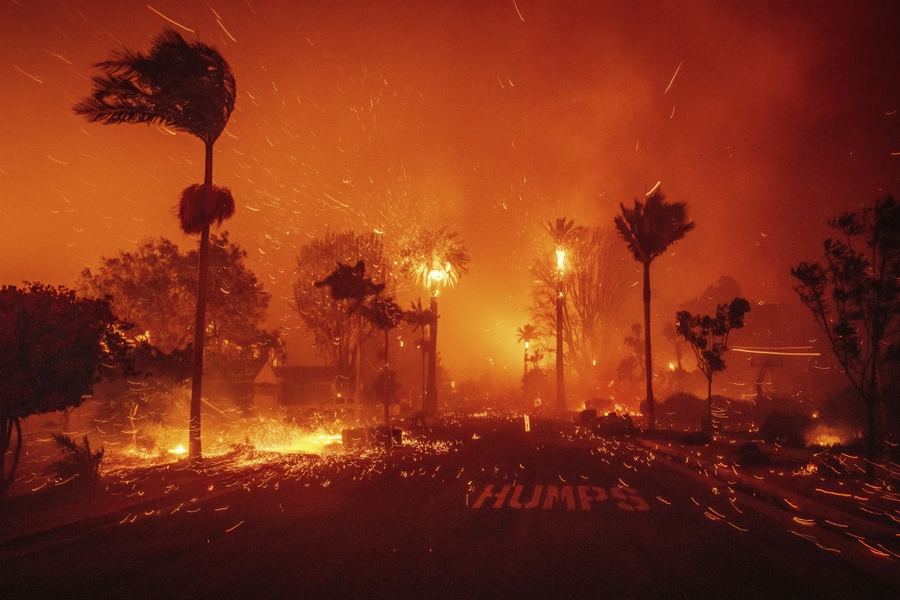
January and February are typically California’s wettest months, when rain and sometimes snow reduce fire danger across most of the state. However, “low risk” does not mean “no risk.” Dry winters, which have become increasingly common, can leave vegetation desiccated and fire-prone even in traditionally wet months. The January 2025 fires in Los Angeles demonstrated that devastating wildfires can occur in any month when conditions align.
What to Do in January-February
- Review and renew your wildfire insurance policy before fire season begins
- Schedule a professional wildfire assessment for your property
- Begin planning home hardening projects while contractors are less busy
- Clear gutters and remove accumulated debris from the roof
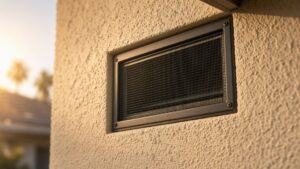
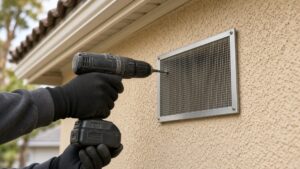
- Check and replace ember-resistant vent screens if damaged
- Review your evacuation plan with your family
March and April: Pre-Season Preparation
Risk Level: Moderate
As winter rains taper off, grasses and annual plants begin to grow rapidly before drying out. March and April mark the critical transition from winter recovery to fire season preparation. Vegetation that grew during wet months will become fuel as it dries, making this the optimal time for vegetation management work.
What to Do in March-April
- Complete defensible space clearing around your home to the full 100-foot requirement
- Address Zone 0 requirements: clear the first five feet around your home of all dead vegetation and combustible materials
- Trim tree limbs to at least 10 feet from chimneys and maintain proper crown spacing
- Remove dead plants, dry brush, and leaf litter from landscaping
- Service irrigation systems to ensure landscape plants stay hydrated through summer
- Schedule fire retardant spray services for slopes and perimeter areas
- Verify compliance with all applicable fire codes before inspection season begins
Not sure which step to prioritize first? Our wildfire risk calculator shows your CAL FIRE zone and exposure level — so you know exactly where to start.
May and June: Early Fire Season
Risk Level: Moderate to High
May and June mark the official beginning of fire season in most California jurisdictions. CAL FIRE typically declares fire season in phases, starting with Southern California and inland regions in May and expanding statewide by June. Grasses that grew during winter begin to cure and dry, creating continuous fine fuel beds. Temperatures rise, humidity drops, and wind events become more consequential.
The first significant fires of the year often occur in May or June, frequently in grassland and chaparral areas of the Central Coast, Inland Empire, and foothills. These early fires can catch homeowners off guard if they have not completed their preparation work.
What to Do in May-June
- Complete all remaining defensible space and home hardening work before peak season
- Install the Watch Duty app and configure alerts for your area
- Test wildfire defense systems if installed
- Prepare an evacuation go-bag with essential documents, medications, and valuables
- Photograph your property inside and out for insurance documentation
- Confirm that your address is correctly registered with your county’s emergency alert system
July and August: Peak Fire Season
Risk Level: High to Very High
July and August represent peak wildfire danger across California. Extended heat waves, single-digit humidity, and dried-out vegetation create ideal conditions for large, fast-moving fires. Lightning from monsoonal moisture can trigger fires in remote areas that grow rapidly before containment resources arrive.
These months account for a significant share of California’s annual acreage burned. The combination of extreme heat, accumulated dry fuel, and occasional thunderstorm activity makes July and August the months when preparedness matters most.
What to Do in July-August
- Maintain situational awareness: check fire conditions daily through Watch Duty and CAL FIRE
- Keep defensible space maintained by clearing any new dry vegetation growth
- Ensure vehicles are fueled and evacuation routes are clear
- Keep exterior areas free of combustible items: patio furniture cushions, firewood, propane tanks
- Monitor red flag warnings and be ready to evacuate when ordered
- Stay hydrated and manage outdoor activities to reduce heat-related ignition risk
September and October: Santa Ana Wind Season Begins
Risk Level: Very High (Highest)
September and October are historically California’s most dangerous wildfire months. This is when Santa Ana winds in Southern California and Diablo winds in Northern California create the most extreme fire weather conditions of the year. These hot, dry, offshore wind events can push fires across landscapes at extraordinary speed, with ember transport distances of over a mile.
Many of California’s most devastating fires have occurred during September and October Santa Ana events: the Tubbs Fire, Camp Fire, Thomas Fire, and others were all driven by these seasonal wind patterns. The 2026 fire season is expected to follow this pattern, with the highest fire danger concentrated in the September-through-November period.
What to Do in September-October
- Achieve maximum readiness: this is the highest-risk period of the year
- Monitor weather forecasts daily for red flag warnings and wind advisories
- Keep all windows and doors closed during wind events to prevent ember intrusion
- Move all combustible items away from structure exteriors
- Have your evacuation plan activated and ready to execute immediately
- Consider applying fire retardant spray to perimeter vegetation before wind events
- Do not leave outdoor fires, grills, or any open flame unattended
November and December: Late Fire Season
Risk Level: High (declining to Moderate)
November remains a high-risk month as Santa Ana wind patterns continue through the first half of the month. Some of California’s most destructive urban interface fires have occurred in November, when dry conditions persist and wind events can still produce extreme fire behavior.
By December, the first significant winter storms typically arrive, gradually reducing fire danger. However, the transition is not always smooth. Extended dry periods can stretch high fire risk into December, and climate models suggest that delayed winter rain patterns may become more common in coming years.
What to Do in November-December
- Maintain vigilance through November, especially during Santa Ana wind events
- Schedule end-of-season property assessment to identify any maintenance needs
- Review your wildfire law compliance status and address any gaps before the new year
- Begin planning next year’s mitigation improvements while lessons from the current season are fresh
- Review and update your insurance coverage for the coming year
- Clean gutters and clear roof debris before winter rains begin
Red Flag Warnings: What They Mean
Throughout fire season, the National Weather Service issues Red Flag Warnings when weather conditions are particularly conducive to wildfire ignition and spread. These warnings indicate a combination of low humidity (typically below 15 percent), strong winds (sustained winds above 25 mph or gusts above 35 mph), dry fuels, and warm temperatures.
When a Red Flag Warning is issued for your area, treat it as the highest possible alert level. Ensure your defensible space is clear, your go-bag is packed, your vehicles are fueled, and you are ready to evacuate on short notice. Many of California’s worst fire disasters have occurred during Red Flag Warning periods.
How Ember Pro Helps You Stay Prepared Year-Round
Wildfire preparedness is not a one-time project. It requires ongoing attention, seasonal maintenance, and adaptation as conditions change. Ember Pro provides year-round wildfire mitigation services for California homeowners:
Pre-Season Assessments: Professional evaluation of your property’s wildfire readiness, identifying priorities for the coming fire season.
Vegetation Management: Scheduled defensible space maintenance timed to seasonal vegetation conditions.
Spray Services: Fire retardant application to perimeter areas and slopes before peak fire weather periods.
Home Hardening Consultation: Guidance on structural improvements that provide the greatest fire resistance benefit.
Insurance Documentation: Comprehensive documentation of your mitigation work to support insurance applications and renewals.
Frequently Asked Questions
When does wildfire season start in California?
CAL FIRE typically declares fire season between May and June, depending on conditions. However, significant fires can occur year-round, as demonstrated by the January 2025 Los Angeles fires.
What are the most dangerous months for wildfires in California?
September and October are historically the most dangerous due to Santa Ana and Diablo wind events. July and August also present high risk due to extreme heat and dry conditions.
What is a Red Flag Warning?
A Red Flag Warning is issued by the National Weather Service when weather conditions, including low humidity, strong winds, and warm temperatures, are highly favorable for wildfire ignition and spread.
Should I prepare for wildfires even if I am not in a fire zone?
Yes. Wildfires can occur outside designated fire hazard severity zones, and ember transport can carry fire risk over a mile from the fire front. All California homeowners benefit from basic wildfire preparedness.
How often should I maintain my defensible space?
Defensible space should be maintained year-round, with major clearing work completed before fire season in March-April and maintenance checks throughout summer and fall.
References
- CAL FIRE — Annual Fire Season Declarations and Fire Hazard Severity Zones
- National Weather Service — Red Flag Warning Criteria and Issuance
- California Climate Assessment — Projected Wildfire Season Changes Through 2030
- NOAA Climate Prediction Center — Seasonal Outlooks for Temperature and Precipitation
- UC ANR Fire Information — Santa Ana and Diablo Wind Pattern Research
- California Public Resources Code Section 4291 — Defensible Space Requirements
Related Articles
- Complete Guide to Defensible Space
- Understanding Zone Zero Requirements
- Wildfire Insurance Guide for California Homeowners
- Home Hardening: Essential Upgrades
- Wildfire Defense Systems for Your Property
- California Fire Safety Compliance Checklist
- California Wildfire Laws You Need to Know
Curious about your property’s actual wildfire risk? Our free calculator shows your CAL FIRE zone, exposure level, and recommended next steps based on your address.
Get your free risk score