
Home hardening in California means upgrading your home to better resist ignition during a wildfire.
It focuses on reducing vulnerabilities from:
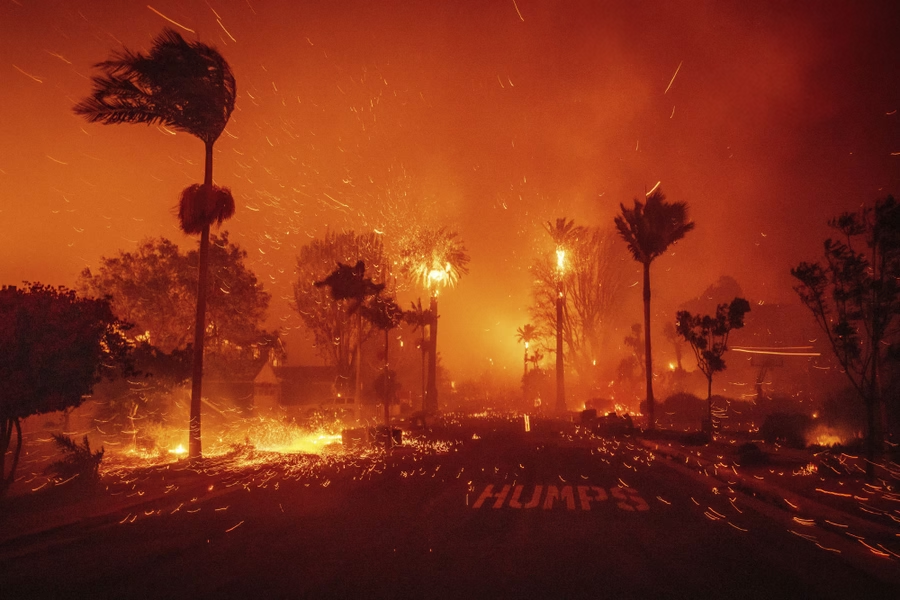
- Wind driven embers
- Radiant heat
- Direct flame contact
- Combustible materials near the structure
Home hardening is no longer a niche concept. It is becoming one of the most important responsibilities for homeowners in wildfire prone areas.
It also directly impacts:
- Home insurance wildfire requirements
- Property value
- Long term insurability
- Wildfire survivability
For many homeowners, home hardening strategies now matter just as much as interior remodeling.
Editor’s note: Your insurance situation depends heavily on your property’s actual fire exposure. Our free risk assessment factors in official CAL FIRE data to show what your risk level actually is — useful context before talking to your carrier.
Why AB 3074 Matters to Homeowners
AB 3074 is one of the most important wildfire laws California homeowners should understand.
The law accelerated focus on ember resistant communities and the five foot area immediately surrounding homes, often referred to as Zone 0.
Why this matters:
- Most homes ignite from small vulnerabilities close to the structure
- Embers often land near walls, decks, mulch, fences, and vents
- The first five feet can determine whether a fire becomes a total loss
AB 3074 helped move wildfire policy toward prevention instead of reaction.
For homeowners, this means preparation is increasingly expected.
What Zone 0 Means Under AB 3074
Zone 0 is the first five feet around the home.
This is now considered the most critical wildfire defense zone because it is where ember ignition commonly begins.
A compliant Zone 0 should minimize combustible materials such as:
- Bark mulch
- Dry leaves
- Wood planters
- Patio cushions stored against walls
- Firewood stacks
- Wood fencing touching the structure
- Debris under decks
Better alternatives include:
- Gravel
- Stone
- Concrete walkways
- Clean pavers
- Non-combustible decorative surfaces
Exterior Hardening Requirements
Exterior walls and surfaces are often overlooked.
Higher risk materials and conditions include:
- Unmaintained wood siding
- Cracks or gaps in exterior walls
- Combustible trim
- Vegetation touching siding
- Accumulated debris in corners
Recommended home hardening improvements include:
- Sealing gaps and penetrations
- Replacing vulnerable materials where practical
- Maintaining clear separation from vegetation
- Applying fire retardant spray where appropriate
- Keeping surfaces clean before fire season
Not sure which step to prioritize first? Our wildfire risk calculator shows your CAL FIRE zone and exposure level — so you know exactly where to start.
Roof, Vent, and Ember Protection
Many wildfire losses begin on the roof or through vents.
Critical upgrades include:
- Class A roof assemblies
- Clean gutters and valleys
- Metal mesh ember resistant vents
- Screened openings
- Removal of debris around chimneys and skylights
Embers can travel long distances and ignite homes without direct flame contact. Older vents are one of the most common hidden vulnerabilities identified during wildfire risk assessments.
Wondering if your property is in a high-risk fire zone? Check your wildfire risk score to see your CAL FIRE zone and exposure level based on your address.
Decks, Fences, and Attached Structures
Attached combustible features can carry fire directly to the home.
Examples include:
- Wood fencing connected to siding
- Decks with leaf buildup beneath
- Wooden gates touching structures
- Pergolas attached to walls
- Storage sheds too close to buildings
Hardening strategies include:
- Creating non-combustible breaks between fence and structure
- Cleaning under decks
- Applying fire retardant spray for wood surfaces
- Replacing high risk components during remodel cycles
- Evaluating wildfire protection system options for added defense
This is especially important in canyon, foothill, and WUI neighborhoods.
Landscaping and Defensible Space Integration
Home hardening and defensible space must work together.
Many homeowners do one and ignore the other.
Strong wildfire mitigation combines:
- Zone 0 compliance
- Managed vegetation in Zone 1
- Fuel reduction farther from the home
- Tree limb separation
- Healthy irrigated landscaping
- Ongoing maintenance
Defensible space and home hardening should be viewed as a single strategy.
How Home Hardening Affects Insurance
Insurance carriers increasingly look beyond zip code risk and examine property condition.
Hardening improvements may help with:
- Renewals
- Underwriting exceptions
- Better placement opportunities
- Reduced FAIR Plan dependence
- Stronger risk narratives through brokers
Insurers are asking: how likely is this structure to survive wildfire conditions?
That means documented upgrades now have financial value.
Common AB 3074 Compliance Mistakes
Many homeowners believe they are ready when they are not.
Common mistakes include:
- Removing brush but ignoring Zone 0
- Cleaning the yard but not the roof
- Upgrading landscaping while keeping old vents
- Installing expensive features without addressing ignition pathways
- Waiting until inspection season
The best results come from a systematic approach.
Frequently Asked Questions
What is home hardening California?
It means upgrading a home to better resist wildfire ignition and damage.
What is AB 3074?
A California law that advanced wildfire prevention standards and Zone 0 focus.
What is Zone 0?
The first five feet around your home where ignition risk is highest.
Does home hardening help insurance?
Increasingly yes, especially when documented properly.
What are the most important upgrades?
Zone 0 cleanup, ember resistant vents, roof maintenance, and defensible space.
Is home hardening only for rural homes?
No. Many suburban California homes face wildfire ember risk.
Can decks and fences create risk?
Yes. Attached combustible features are common ignition pathways.
Should I get an assessment first?
Yes. It helps prioritize the highest value improvements.
Do wildfire defense systems help?
Yes, especially as part of layered protection.
What is the goal of compliance?
To reduce ignition risk and improve survivability.
Next Steps
If you live in California, home hardening should now be part of normal property maintenance, not an optional project.
Start with a wildfire risk assessment, inspect your Zone 0, evaluate vents and roof conditions, and identify attached combustible features like decks or fences. Then prioritize improvements that meaningfully reduce ignition risk.
The homes that perform best in wildfire events are usually not the newest or most expensive. They are the ones that were prepared intentionally.
Check your risk first: Get your free wildfire risk score
Want a professional assessment? Get Your Free Satellite Property Review — we will evaluate your property and help you build a home hardening strategy that improves both survivability and insurability.
Curious about your property’s actual wildfire risk? Our free calculator shows your CAL FIRE zone, exposure level, and recommended next steps based on your address.
Get your free risk score