
Editor’s note: Your insurance situation depends heavily on your property’s actual fire exposure. Our free risk assessment factors in official CAL FIRE data to show what your risk level actually is — useful context before talking to your carrier.
Home Insurance Non-Renewal in California Wildfire Zones: What You Need to Know
Across California, tens of thousands of homeowners are opening their mailboxes to find a letter they never expected: a non-renewal notice from their home insurance provider. If you live in or near a wildfire-prone area, receiving a non-renewal notice is a growing reality. This comprehensive guide explains why insurers are dropping coverage, what protections exist under California law, and the concrete steps you can take to maintain or restore your homeowner insurance.
Why Insurers Are Non-Renewing Policies in Wildfire Zones
The California insurance market has fundamentally shifted in recent years. Major carriers including State Farm, Allstate, and Farmers have either paused writing new homeowner policies or actively non-renewed existing coverage in high-risk wildfire areas. The reasons are straightforward but painful for homeowners:
- Catastrophic wildfire losses have exceeded projections by billions of dollars, eroding insurer reserves and profitability across the state.
- Reinsurance costs have skyrocketed as global reinsurers reassess wildfire risk in the western United States, forcing primary carriers to raise rates or exit markets.
- Climate change is extending fire seasons, increasing fire intensity, and expanding the wildland-urban interface where homes and wildlands meet.
- Regulatory constraints under Proposition 103 historically limited insurers’ ability to price policies according to catastrophe model projections, creating a gap between risk and premium.
For homeowners, the result is the same regardless of the cause: a non-renewal notice that gives you a limited window to find replacement coverage or face going uninsured.
Understanding Your Non-Renewal Notice
California law requires insurers to provide at least 75 days’ written notice before a non-renewal takes effect. This notice must include the specific reason for the non-renewal decision. Common reasons cited include proximity to wildfire-prone vegetation, location within a State Responsibility Area or Very High Fire Hazard Severity Zone, claims history, or the insurer’s broader decision to reduce exposure statewide.
When you receive a non-renewal notice, do not panic, but do act promptly. You have a limited window to secure alternative coverage, and waiting until the last week before expiration leaves you with fewer options and less negotiating leverage.
Moratorium Protections After a Declared Disaster
California Insurance Code Section 675.1 provides critical protections for homeowners after a declared wildfire disaster. When the governor declares a state of emergency due to a wildfire, insurers are prohibited from non-renewing or canceling residential property insurance policies for properties located within or adjacent to the declared disaster area. This moratorium typically lasts one year from the date of the emergency declaration and can be extended by the Insurance Commissioner for an additional year.
Key aspects of the moratorium protection include:
- Geographic scope: The moratorium applies to all residential properties within the ZIP codes designated in the emergency declaration, not just properties that sustained damage.
- Coverage continuation: Insurers must renew existing policies on the same terms and conditions during the moratorium period.
- Premium limits: While insurers can apply approved rate increases during a moratorium, they cannot impose surcharges or dramatically alter coverage terms.
- Mandatory notification: Insurers must inform policyholders of the moratorium and their rights under it.
If a recent wildfire has been declared in your area, check with the California Department of Insurance to confirm whether a moratorium is active for your ZIP code. This can buy you critical time to implement home hardening improvements and explore long-term coverage options.
What to Do When You Receive a Non-Renewal Notice
Taking immediate, organized action is essential when you receive a non-renewal notice. Follow these steps:
Step 1: Contact Your Current Insurer
Call your insurance agent or carrier directly and ask whether the decision can be reconsidered. In some cases, completing specific mitigation work such as defensible space clearing or roof upgrades can persuade the insurer to reverse the non-renewal. Ask exactly what conditions would need to change for them to continue your policy.
Step 2: Shop Multiple Carriers Immediately
Contact an independent insurance broker who represents multiple carriers. Some smaller or regional insurers still write policies in high-risk areas that major carriers have abandoned. Surplus lines carriers may also offer coverage, though typically at higher premiums.
Step 3: Apply to the California FAIR Plan
The California FAIR Plan is the state-mandated insurer of last resort. While FAIR Plan premiums are typically higher than standard coverage and the plan has coverage limitations, it ensures you are not left completely uninsured. Apply to the FAIR Plan as a backup even while shopping for private coverage. The FAIR Plan covers dwelling fire damage but does not include personal property or liability coverage without additional endorsements.
Step 4: Document Your Mitigation Efforts
Take photographs and keep receipts of all wildfire mitigation work you have completed or plan to complete. This documentation strengthens your position when negotiating with insurers and can qualify you for mitigation discounts under California law. Key improvements include Zone Zero vegetation management, ember-resistant vent installation, Class A fire-rated roofing, and non-combustible siding.
Step 5: File a Complaint if Necessary
If you believe your non-renewal is unjust or the insurer failed to consider your mitigation efforts as required under AB 1054, file a complaint with the California Department of Insurance. The department investigates complaints and can compel insurers to reconsider non-renewal decisions that violate state regulations.
The FAIR Plan as Last Resort
The California FAIR Plan provides essential coverage when no private insurer will write a policy. Understanding its scope and limitations is critical:
- Dwelling coverage protects the physical structure against fire, smoke, wind, and other covered perils up to $3 million.
- Personal property is not included in the base plan and requires a separate endorsement or a companion policy from another carrier.
- Liability coverage must be obtained separately through a standalone liability policy.
- Premiums are typically 2 to 4 times higher than standard homeowner insurance rates for comparable dwelling coverage.
- Deductibles tend to be higher, ranging from $2,500 to $10,000 or more depending on the policy structure.
The FAIR Plan should be viewed as a bridge, not a permanent solution. While enrolled, focus on implementing mitigation improvements that will make your property attractive to private insurers again.
Mitigation Steps to Keep or Restore Coverage
Insurance companies respond to measurable risk reduction. The most effective steps to prevent non-renewal or qualify for private coverage after being dropped include:
- Defensible space: Maintain 100 feet of properly managed vegetation around your home, with Zone Zero kept to bare-minimum combustible material within 5 feet of the structure.
- Roof upgrades: Install Class A fire-rated roofing materials such as metal, tile, or fire-rated asphalt shingles.
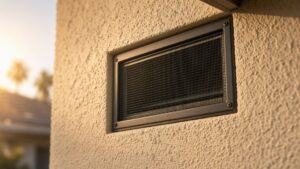
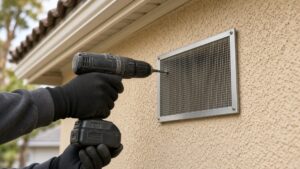
- Vent protection: Replace standard vents with 1/8-inch metal mesh ember-resistant vents to prevent ember intrusion during wind-driven fires.
- Gutter maintenance: Install metal gutters with gutter guards and keep them clear of leaves and debris year-round.
- Window upgrades: Install dual-pane tempered glass windows that resist radiant heat and direct flame contact.
- Exterior materials: Replace wood siding with fiber cement, stucco, or other non-combustible materials.
AB 1054 requires California insurers to offer premium discounts for documented mitigation work. Keep detailed records and provide them proactively to any insurer you approach for coverage.
Documentation Tips for Insurance Success
Proper documentation can make the difference between a non-renewal and a renewed policy at a fair rate:
- Before-and-after photos of all mitigation work with dates and descriptions.
- Contractor invoices and receipts for professional vegetation management, roofing, vent installation, and other improvements.
- Inspection reports from local fire departments or CAL FIRE confirming defensible space compliance.
- Wildfire mitigation certificates if your jurisdiction offers them.
- Annual maintenance logs showing ongoing vegetation management and property upkeep.
Submit this documentation to your insurer in writing and request written confirmation of receipt. Under California wildfire laws, insurers must consider documented mitigation efforts when making underwriting decisions.
How Ember Pro Helps You Fight Non-Renewal
Ember Pro specializes in helping California homeowners prevent and respond to insurance non-renewals through professional wildfire mitigation services:
- Comprehensive risk assessment: We evaluate your property against the exact criteria insurers use to determine coverage eligibility and identify the highest-impact improvements.
- Professional mitigation execution: Our team implements defensible space, home hardening, and wildfire defense system improvements that directly address insurer concerns.
- Insurance-ready documentation: We provide detailed reports, photographs, and compliance certifications that you can submit directly to insurers to demonstrate measurable risk reduction.
- Ongoing support: We help you maintain compliance year after year so your coverage remains secure through future renewal cycles.
Many of our clients have successfully reversed non-renewal decisions or transitioned from FAIR Plan coverage back to private insurance after completing Ember Pro’s recommended mitigation program. Contact us today for a free wildfire risk assessment and learn how to protect both your home and your insurance coverage.
Schedule Your Free Wildfire Risk Assessment
Curious about your property’s actual wildfire risk? Our free calculator shows your CAL FIRE zone, exposure level, and recommended next steps based on your address.
Get your free risk score