
By Jim Sprouse, Co-founder of Ember Pro
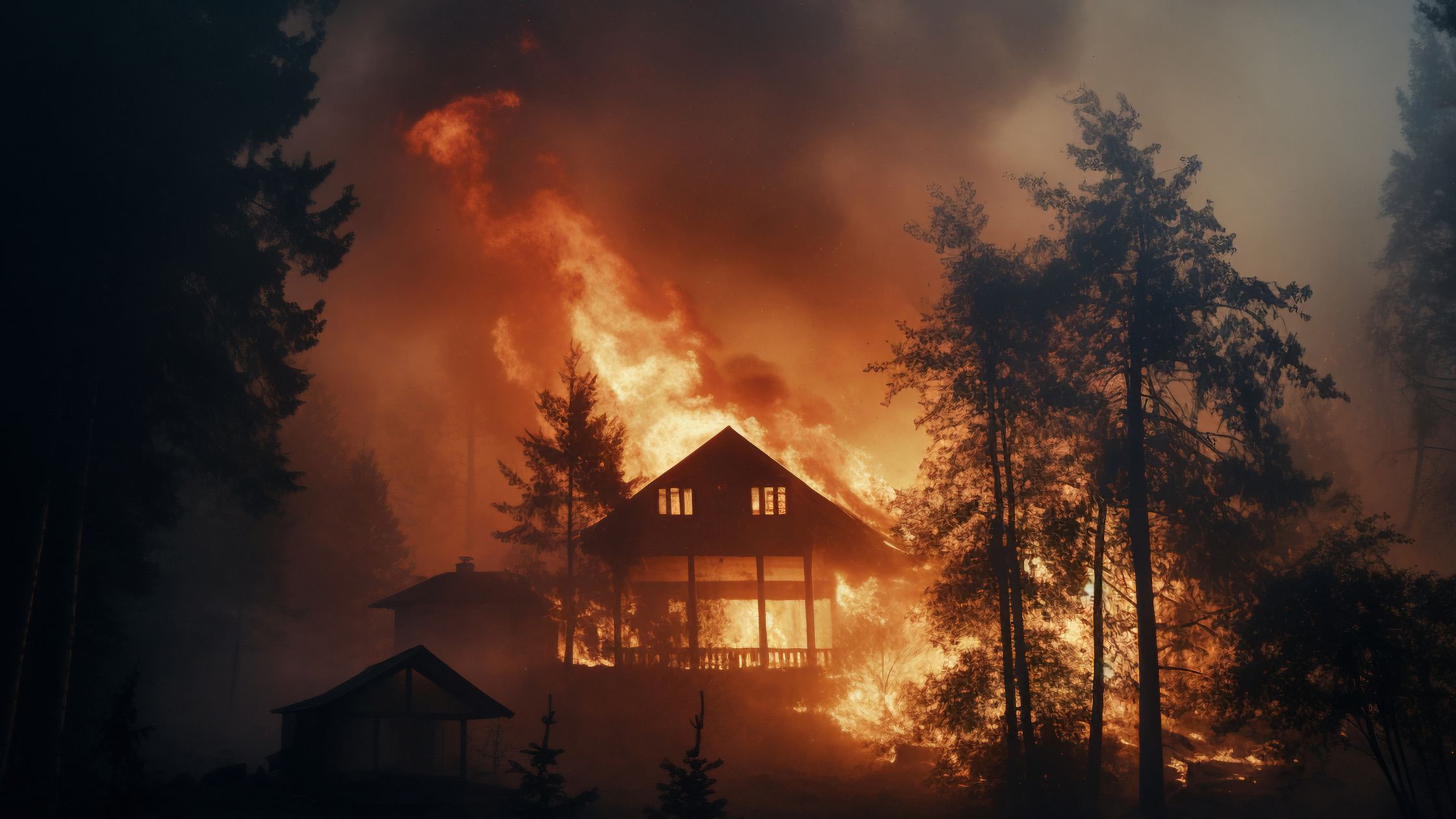
When California homeowners think about wildfire protection, they usually focus on clearing brush, upgrading roofing materials, and installing ember-resistant vents. But there is one major vulnerability that is consistently overlooked: the deck. Decks are among the most fire-prone components of any home, and wildfire deck hardening is one of the most important steps you can take to protect your property from ignition during a wildfire event.
In this comprehensive guide, we will explain why decks are so vulnerable to wildfire, compare the fire performance of different decking materials, walk through the critical hardening measures every California homeowner should consider, and break down the costs of deck hardening versus the devastating expense of rebuilding after a fire.
Curious about your property’s actual wildfire risk? Our free calculator shows your CAL FIRE zone, exposure level, and recommended next steps based on your address.
Get your free risk scoreWhy Decks Are Extremely Vulnerable to Wildfire
Decks present a unique combination of wildfire risk factors that make them one of the weakest points in a home’s fire defense. Understanding these vulnerabilities is the first step toward effective wildfire deck hardening.
Ember Traps
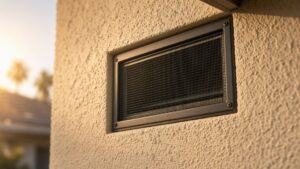
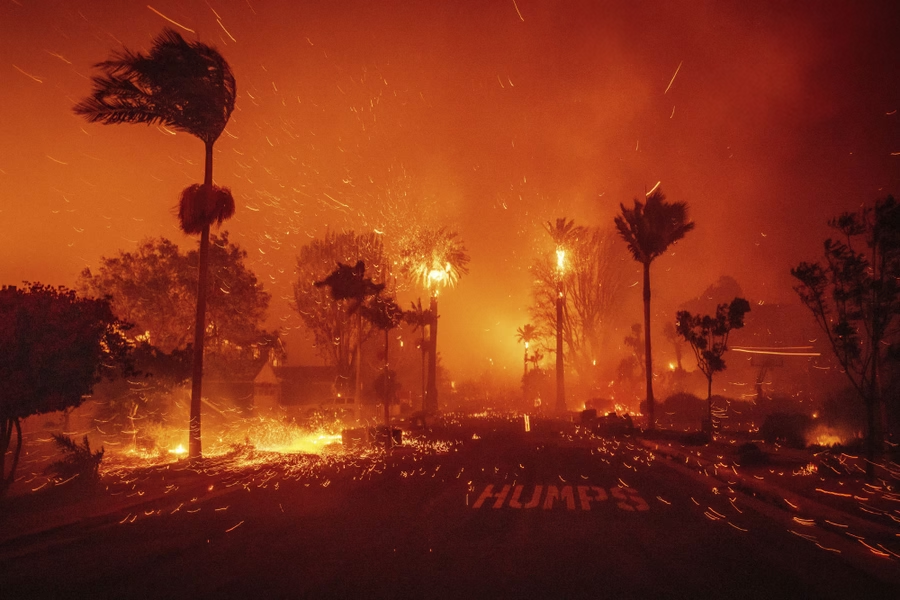
The gaps between deck boards are designed to allow water drainage, but during a wildfire, those same gaps become ember traps. Wind-driven embers—which can travel more than a mile ahead of the fire front—land on and between deck boards, lodging in the narrow spaces where dry leaves, pine needles, and other combustible debris accumulate. Once an ember lands in a debris-filled gap, it has the fuel and shelter it needs to ignite. The fire can then spread across the entire deck surface and reach the home’s exterior wall, siding, or windows within minutes.
Radiant Heat Exposure
Decks that face wildland areas or neighboring properties are exposed to intense radiant heat during a fire. Even without direct flame contact, radiant heat can raise the surface temperature of wood decking to its ignition point. A standard wood deck exposed to radiant heat from burning vegetation 30 feet away can reach ignition temperature in under 10 minutes. The horizontal orientation of deck surfaces makes them particularly effective at absorbing radiant energy from nearby flames.
Under-Deck Combustible Accumulation
The space beneath a raised deck is often neglected. Leaves, dried vegetation, firewood, cardboard boxes, and other combustible materials accumulate under decks over time. During a wildfire, embers that land beneath the deck can ignite this accumulated fuel, creating a fire that burns upward through the deck boards and directly against the home’s foundation or exterior wall. The enclosed nature of many under-deck spaces creates a chimney effect that accelerates fire growth.
Not sure which step to prioritize first? Our wildfire risk calculator shows your CAL FIRE zone and exposure level — so you know exactly where to start.
Decking Materials Compared: Fire Performance
Not all decking materials perform equally when exposed to wildfire conditions. Here is how the most common options compare for wildfire deck hardening in California:
Traditional Wood Decking
Pressure-treated lumber, cedar, and redwood are the most common decking materials in California. Unfortunately, they are also the most flammable. Wood decking ignites readily from ember exposure and radiant heat, and once burning, it produces significant flame length that can spread fire to the home. Even fire-retardant-treated wood, while somewhat more resistant to ignition, will eventually burn under sustained wildfire conditions. Wood decking is the highest-risk option for homes in wildfire-prone areas.
Composite Decking
Composite decking products, made from a blend of wood fibers and plastic polymers, vary widely in their fire performance. Some composite products have achieved Class A fire ratings, meaning they resist flame spread effectively in standardized testing. However, composites can still melt, deform, and produce toxic smoke when exposed to extreme heat. Higher-quality composite products with mineral-filled cores perform significantly better than economy composites with higher wood fiber content. When selecting composite decking for a fire-prone area, look for products that carry specific wildfire or WUI certifications, not just a generic Class A rating.
Metal Decking
Aluminum and steel decking systems are the most fire-resistant option available. Metal decking will not ignite from ember exposure or radiant heat, and it does not contribute fuel to a fire. Aluminum decking is lighter, corrosion-resistant, and available in profiles that mimic the appearance of wood planks. Steel decking is heavier and more industrial in appearance but offers superior structural strength. The primary drawbacks of metal decking are higher upfront cost and the fact that metal surfaces can become uncomfortably hot in direct sunlight—an important consideration in California’s climate.
Concrete and Masonry
Concrete pavers, poured concrete, and stone patios are completely non-combustible and provide the highest level of fire resistance. While these materials lack the traditional deck aesthetic, they are increasingly popular as ground-level patio alternatives in fire-prone communities. For homeowners willing to reconsider the traditional raised wood deck, a concrete or masonry patio eliminates deck fire risk entirely.
Editor’s note: Your insurance situation depends heavily on your property’s actual fire exposure. Our free risk assessment factors in official CAL FIRE data to show what your risk level actually is — useful context before talking to your carrier.
Under-Deck Enclosure: Closing the Gap
One of the most critical and often overlooked elements of wildfire deck hardening is addressing the space beneath the deck. An open under-deck area allows embers to collect in accumulated debris and provides a sheltered environment where fire can establish and grow before anyone notices.
Under-deck enclosure involves installing non-combustible skirting or screening around the perimeter of a raised deck to prevent ember entry. Options include:
- Metal skirting panels — galvanized steel or aluminum panels installed from the deck edge to the ground, creating a solid barrier against ember intrusion
- Cement board skirting — fiber cement panels that provide fire-resistant enclosure while allowing some ventilation through strategically placed openings with ember-resistant mesh
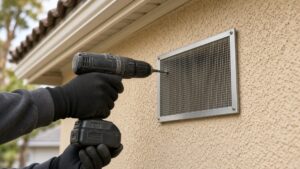
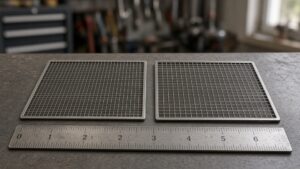
- 1/16-inch metal mesh screening — for homeowners who want to maintain airflow and visibility under the deck while blocking ember entry
Regardless of which enclosure method you choose, the under-deck area must be cleared of all combustible storage and debris before enclosure. Do not seal combustible materials inside the enclosure—remove everything first, then install the barrier.
Ember-Resistant Screening for Deck Gaps
For homeowners who want to keep their existing wood or composite deck, ember-resistant screening offers a way to reduce the risk of ember ignition through board gaps without replacing the entire deck surface. Fine metal mesh strips can be installed beneath the gaps between deck boards, preventing embers from falling through to the framing and debris below.
This approach is most effective when combined with regular debris removal from the deck surface and gaps. Even with screening in place, leaves and pine needles that accumulate on the deck surface can ignite from ember contact, so ongoing maintenance is essential. Screening addresses the under-deck ignition pathway but does not eliminate surface ignition risk.
Joist and Framing Protection
The structural framing beneath a deck—joists, beams, ledger boards, and posts—is typically made of wood and is highly vulnerable to fire. Even if you install a fire-resistant deck surface, wooden framing can ignite from embers that reach the under-deck space or from radiant heat transmitted through the deck boards.
Joist protection strategies include:
- Metal joist hangers and connectors — replacing wood-to-wood connections with steel hardware to maintain structural integrity longer during a fire
- Joist wrap — applying non-combustible wrapping material to exposed wooden joists. Products like intumescent coatings or mineral fiber wrap can delay ignition and slow fire spread through the framing
- Steel or aluminum framing — for new construction or major renovations, replacing wood joists entirely with metal framing eliminates this vulnerability. Steel and aluminum framing systems designed for residential decks are widely available
- Ledger board protection — the ledger board, which attaches the deck to the house, is the most critical connection point. If the ledger board burns through, the deck can collapse away from the house—but not before transmitting fire to the home’s exterior wall. Protecting the ledger board with metal flashing, cement board, or fire-resistant caulking is essential
Outdoor Furniture and Storage: The Forgotten Fuel
Even a perfectly hardened deck can become a fire hazard if it is covered with combustible outdoor furniture, cushions, rugs, potted plants in plastic containers, and stored items. During wildfire season, deck furniture management is a critical part of your defensible space strategy:
- Remove or cover all cushions and fabric items when red flag warnings are issued
- Store combustible items inside or in a fire-resistant storage container away from the structure during high-risk periods
- Choose metal or fire-resistant furniture for permanent outdoor use in wildfire-prone areas
- Eliminate combustible doormats, rugs, and decorative items from the deck during fire season
- Move firewood, lumber, and other stored combustibles at least 30 feet from the deck and home
Creating a pre-evacuation checklist that includes deck furniture removal can make the difference between a home that survives and one that ignites from a burning patio cushion that caught a wind-driven ember.
Zone 0 Deck Requirements in California
California’s Zone 0 regulations, established under AB 3074, define a 0-to-5-foot ember-resistant zone immediately surrounding the home. Decks that fall within this zone—which most attached decks do—must meet specific fire-resistance standards. Under Zone 0 requirements:
- Combustible materials within 5 feet of the structure must be removed or replaced with non-combustible alternatives
- Decking surfaces within Zone 0 should be non-combustible or carry a Class A fire rating
- Under-deck areas must be free of combustible storage and vegetation
- The connection between the deck and the home’s exterior must be hardened to prevent fire transmission
These requirements are part of California’s broader wildfire legislation framework and are enforced with increasing rigor as the state responds to escalating wildfire losses. Homeowners who proactively harden their decks to meet or exceed Zone 0 standards position themselves ahead of regulatory requirements that will likely become more stringent over time.
Meeting Zone 0 standards is also an important element of California building code compliance for any home in a designated fire hazard severity zone.
Cost of Deck Hardening vs. Replacement After Fire
One of the strongest arguments for proactive wildfire deck hardening is the dramatic cost difference between hardening and post-fire replacement:
- Mesh screening beneath deck boards: $200 to $600 for a typical 300-square-foot deck
- Under-deck enclosure with metal skirting: $1,000 to $3,000 depending on deck height and perimeter length
- Composite deck replacement (Class A rated): $8,000 to $20,000 for a 300-square-foot deck including labor and framing
- Aluminum deck replacement: $15,000 to $35,000 for a comparable deck with metal framing
- Joist wrapping and ledger board protection: $500 to $2,000 for professional installation
Compare these proactive costs to the expense of rebuilding after a fire:
- Complete deck rebuild after fire damage: $15,000 to $50,000 or more, depending on size and materials
- Structural repairs to the home from fire transmitted through the deck: $30,000 to $200,000 or more
- Total home loss where deck ignition led to full structure fire: $400,000 to $1,000,000+ in rebuilding costs
The economics are clear. Spending $1,000 to $5,000 on deck hardening measures today can prevent hundreds of thousands of dollars in losses. And for homeowners struggling with wildfire insurance availability and affordability, documented deck hardening can be the difference between obtaining coverage and being left uninsured.
How Deck Hardening Supports Your Insurance Position
Insurance carriers evaluating wildfire risk increasingly look at specific home hardening measures when deciding whether to write or renew a policy. Deck condition and materials are frequently assessed during wildfire risk inspections. Documented deck hardening improvements can:
- Help qualify your property for coverage from selective carriers
- Support premium reductions or wildfire mitigation discounts
- Strengthen a non-renewal appeal by demonstrating proactive risk reduction
- Provide evidence for FAIR Plan transition strategies
Photograph every stage of your deck hardening project—before, during, and after. Save receipts for all materials and professional services. Keep a file with product specifications and fire ratings for any materials you install. This documentation is your evidence that you have taken meaningful steps to reduce your home’s wildfire risk.
Integrating Deck Hardening With Whole-Home Defense
Deck hardening does not exist in isolation. It is most effective when integrated with a comprehensive wildfire defense strategy that includes defensible space management, structural home hardening across all building components, and where appropriate, active fire defense systems that can provide suppression capability during a wildfire event.
At Ember Pro, we evaluate decks as part of every whole-home wildfire assessment. We look at decking materials, under-deck conditions, framing vulnerability, attachment points, and proximity to combustible landscaping. Our recommendations are prioritized by risk level so homeowners can address the most critical vulnerabilities first and work through additional hardening measures over time.
Frequently Asked Questions About Wildfire Deck Hardening
What is wildfire deck hardening?
Wildfire deck hardening is the process of modifying a residential deck to resist ignition from wind-driven embers, radiant heat, and direct flame contact during a wildfire. It includes upgrading decking materials, enclosing under-deck spaces, protecting framing, and managing combustible items on and around the deck.
Why are decks so vulnerable to wildfire?
Decks combine multiple fire risk factors: horizontal surfaces that catch embers, gaps between boards where embers lodge in debris, exposed wood framing underneath, and frequent accumulation of combustible furniture and storage. The connection between the deck and the home creates a direct pathway for fire to spread to the structure.
What is the best decking material for fire resistance?
Metal decking (aluminum or steel) and concrete or masonry surfaces offer the highest fire resistance. Class A rated composite decking is a good middle-ground option that provides better fire performance than wood while maintaining a traditional deck appearance. Traditional wood decking is the most fire-prone option.
Do I have to replace my wood deck to meet California fire codes?
Not necessarily for existing homes, though new construction and major renovations in fire hazard severity zones must meet Chapter 7A standards. However, proactive deck hardening—even without full replacement—significantly reduces your wildfire risk and can help with insurance eligibility.
What does Zone 0 require for decks?
Zone 0 (the 0-to-5-foot ember-resistant zone around the home) requires removal or replacement of combustible materials, non-combustible or Class A rated surfaces, clear under-deck areas, and hardened connections between the deck and the home. Most attached decks fall within Zone 0.
How much does deck hardening cost?
Costs range from a few hundred dollars for mesh screening and debris management to $15,000 or more for a complete deck replacement with fire-resistant materials. Under-deck enclosure typically costs $1,000 to $3,000. These costs are a fraction of the $50,000 to $500,000+ expense of rebuilding after fire damage.
Will deck hardening help me get homeowners insurance?
Yes. Many insurance carriers include deck condition in their wildfire risk assessments. Documented deck hardening improvements can help you qualify for coverage, reduce premiums, or support a non-renewal appeal.
Can I harden my deck myself?
Some measures like debris removal, furniture management, and basic mesh screening installation are manageable DIY projects. Under-deck enclosure, framing protection, and deck surface replacement are typically best handled by professionals to ensure proper installation and code compliance.
Take Action on Your Deck Before Fire Season
Wildfire deck hardening is one of the most impactful and cost-effective investments you can make in protecting your California home. Your deck may be the single largest unaddressed vulnerability in your home’s wildfire defense. Every season that passes without hardening your deck is another season of unnecessary risk.
At Ember Pro, we specialize in helping California homeowners identify, prioritize, and complete the home hardening work that makes the biggest difference. Whether you need a full deck replacement with fire-resistant materials, under-deck enclosure, or a comprehensive wildfire risk assessment that includes your deck and every other component of your home, we are here to help. Contact us today for a professional evaluation and start protecting your home before the next wildfire season arrives.
References
- Insurance Institute for Business & Home Safety (IBHS) — Wildfire Research: Deck and Attached Structure Vulnerability Studies
- California Building Standards Commission — Title 24, Chapter 7A: Materials and Construction Methods for Exterior Wildfire Exposure
- CAL FIRE — Defensible Space and Home Hardening Guidelines
- California Assembly Bill 3074 (2020) — Ember-Resistant Zone and Zone 0 Standards
- National Fire Protection Association (NFPA) — Firewise USA: Decks and Wildfire
- University of California Agriculture and Natural Resources — Deck Fire Performance Research
- IBHS — Reducing Wildfire Risk to Homes: Deck Fire Testing Results
- California Department of Insurance — Wildfire Mitigation and Insurance Eligibility Guidance