
Editor’s note: Your insurance situation depends heavily on your property’s actual fire exposure. Our free risk assessment factors in official CAL FIRE data to show what your risk level actually is — useful context before talking to your carrier.
Why Windows Are the Weakest Link During a Wildfire
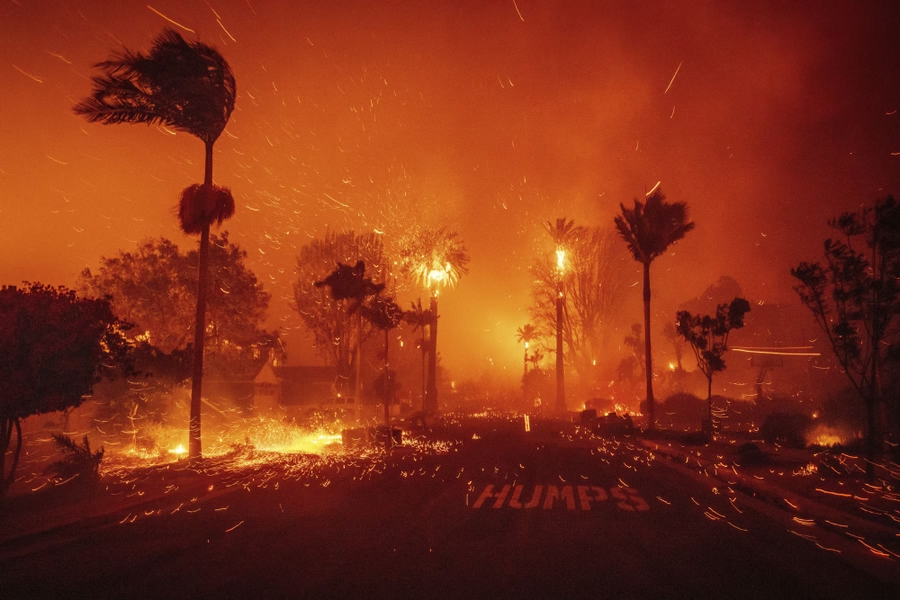
When wildfire threatens a home, most people think about flames reaching the structure. But the real danger often arrives invisibly: radiant heat. Windows are the most vulnerable surface on any home during a wildfire event. Standard residential glass can shatter at temperatures as low as 300 degrees Fahrenheit, allowing superheated air, embers, and flames to pour inside and ignite furnishings within seconds. Understanding home hardening starts with recognizing that your windows are the single most critical point of failure in wildfire defense.
Research from the Insurance Institute for Business & Home Safety (IBHS) confirms that radiant heat exposure is responsible for the majority of structure ignitions during wildland-urban interface (WUI) fires. Even homes with adequate defensible space and home hardening can be lost when windows fail. A single broken window during a fire event transforms a survivable exterior exposure into a total interior loss.
Single-Pane vs. Dual-Pane vs. Tempered Glass: How They Compare
Not all window glass performs equally under wildfire conditions. Here is how the three most common types compare:
- Single-pane glass — Standard annealed single-pane windows offer virtually no wildfire protection. They crack and fail rapidly under radiant heat, typically breaking at temperatures between 250 and 350 degrees Fahrenheit. If your home still has single-pane windows, upgrading is one of the most impactful Zone 0 wildfire protection steps you can take.
- Dual-pane (insulated) glass — Double-pane windows with an air or argon gas gap offer improved thermal resistance. The insulating layer slows heat transfer, buying additional minutes before failure. However, standard dual-pane windows still use annealed glass and will eventually crack and collapse under sustained radiant heat exposure.
- Tempered glass — Tempered glass is heat-treated to be approximately four times stronger than standard annealed glass. It withstands significantly higher temperatures before failure and, when it does break, shatters into small granular pieces rather than dangerous shards. Dual-pane windows with at least one tempered pane represent the minimum standard for wildfire-prone areas under California Building Code Chapter 7A.
Not sure which step to prioritize first? Our wildfire risk calculator shows your CAL FIRE zone and exposure level — so you know exactly where to start.
Fire-Rated Windows: Understanding the Standards
Fire-rated windows go beyond simple tempered glass. They are tested and certified to withstand specific fire exposure durations, typically rated at 20, 45, or 60 minutes. These windows use specialized glazing such as ceramic glass, intumescent interlayers, or multi-laminate fire-resistant glass that maintains integrity even under direct flame impingement.
For California homeowners in designated WUI zones, California building code compliance under Chapter 7A requires that exterior windows meet specific fire-resistance standards. At minimum, windows must be dual-pane with one tempered pane, but higher-rated fire-resistant glazing provides substantially greater protection. Fire-rated assemblies include not just the glass but also the frame material and installation method, all tested as a complete system.
Exterior Shutters and Window Screens: Additional Layers of Defense
Beyond upgrading the glass itself, homeowners can add exterior protection layers that dramatically improve window survivability during a wildfire:
- Fire-rated exterior shutters — Metal or fire-rated shutters that deploy over windows create a physical barrier against radiant heat, flying embers, and direct flame contact. Some systems are automatic and deploy when ambient temperatures reach a trigger threshold, providing protection even when homeowners have evacuated.
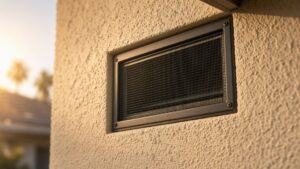
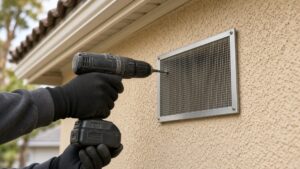
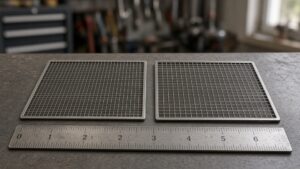
- Ember-resistant window screens — Fine metal mesh screens (typically 1/8-inch or smaller openings) installed over windows prevent burning embers from accumulating against glass surfaces. While screens alone will not stop radiant heat, they significantly reduce ember accumulation, which is a leading cause of window failure and subsequent interior ignition.
- Window film and coatings — Specialized fire-resistant window films can improve the heat resistance of existing glass. While not a replacement for tempered or fire-rated glass, they offer an affordable interim solution for homeowners who cannot immediately replace all windows.
Combining multiple layers of protection is the foundation of integrated fire defense systems. No single product provides complete protection; layered defense creates redundancy that significantly improves survival odds.
Retrofit Options for Existing Homes
Many California homeowners face the challenge of upgrading windows in existing construction rather than building new. Here are the primary retrofit approaches ranked by effectiveness and cost:
- Full window replacement — Replacing existing windows with dual-pane tempered or fire-rated assemblies provides the highest level of protection. This is the most expensive option but delivers the greatest improvement in both wildfire resistance and energy efficiency.
- Interior storm windows with tempered glass — Adding a secondary tempered glass layer inside existing window frames provides meaningful improvement without full replacement. This approach is approximately 40 to 60 percent less expensive than complete replacement.
- Exterior shutter installation — Adding fire-rated shutters to existing windows provides excellent protection without modifying the window itself. Shutters range from manual roll-down models to fully automated systems with heat sensors.
- Screen and film application — The most affordable option, combining ember-resistant screens with fire-resistant window film. While providing the least protection of the four approaches, this combination still offers meaningful improvement over unprotected windows.
Cost Comparison: Window Protection Options
The cost of wildfire window protection varies significantly based on approach, window size, and home configuration. Here is what California homeowners can expect to invest:
- Tempered dual-pane replacement windows: $400 to $800 per window installed, depending on size and frame material. A typical 15-window home costs $6,000 to $12,000.
- Fire-rated window assemblies: $800 to $2,000 per window installed. Higher cost reflects specialized glazing and certified frame systems. Full-home cost: $12,000 to $30,000.
- Exterior fire shutters: $300 to $1,200 per window for manual systems; $800 to $2,500 per window for automated systems with heat sensors.
- Ember screens: $50 to $200 per window for professional installation of metal mesh screens.
- Fire-resistant window film: $15 to $40 per square foot of glass, professionally applied.
These are general costs. Your actual investment depends on your property’s fire zone, exposure level, and available grants or rebates.
Check my risk scoreInsurance Implications of Window Upgrades
Upgrading to tempered glass and fire-rated windows directly impacts your ability to obtain and afford wildfire insurance. Many California insurers now require photographic documentation of window types before issuing or renewing policies in WUI zones. Homes with single-pane windows are increasingly being denied coverage entirely.
Conversely, homeowners who can document tempered glass, fire-rated windows, and additional protection measures like shutters and screens often qualify for premium discounts ranging from 5 to 15 percent. Some insurers offer specific credits for homes that meet or exceed Chapter 7A window requirements, making the investment in upgraded windows partially self-funding over time through reduced premiums.
California Code Requirements: Chapter 7A Window Standards
California Building Code Chapter 7A applies to all new construction and significant remodels in designated WUI zones. Understanding California wildfire laws is essential for homeowners planning window upgrades. Key window requirements include:
- Exterior windows must be dual-pane with at least one tempered pane, or meet equivalent fire-resistance performance.
- Skylights must meet the same glazing requirements as vertical windows.
- Window frames must be constructed of approved materials — wood clad with metal, fiberglass, vinyl, or aluminum.
- Windows must be tested as complete assemblies, not just individual glass panes.
- Vents near windows must include ember-resistant screening to prevent ignition of interior spaces.
Local jurisdictions may impose requirements beyond Chapter 7A minimums. Always verify with your local building department before beginning window replacement projects.
Frequently Asked Questions
Can tempered glass windows survive direct flame contact?
Tempered glass can withstand significantly higher temperatures than standard annealed glass, but no residential window glass is designed for prolonged direct flame impingement. Tempered glass excels at resisting radiant heat exposure, which is the primary threat during most wildfire scenarios. For direct flame resistance, fire-rated window assemblies with ceramic or intumescent glazing are required.
Do I need to replace all windows at once?
No. Prioritize windows on the side of your home facing the greatest wildfire exposure — typically the side facing prevailing winds or downslope vegetation. Bedrooms and rooms with the most combustible contents should also be prioritized.
Will tempered glass windows also improve energy efficiency?
Yes. Upgrading from single-pane to dual-pane tempered windows typically reduces heating and cooling costs by 15 to 25 percent. This energy savings further offsets the investment cost over time.
How do I verify whether my existing windows are tempered?
Look for a small etched mark in one corner of the glass, usually bearing a manufacturer logo and the letters “TEMP” or “TEMPERED.” If no marking is visible, a professional glass inspector can test the glass using a polarized light method.
Are there tax credits or rebates for fire-resistant window upgrades?
California has periodically offered wildfire hardening incentive programs. Check with your local fire safe council and the California Department of Insurance for current programs. Some utility companies also offer rebates for energy-efficient window upgrades that overlap with fire-resistant products.
Protect Your Home with Ember Pro USA
At Ember Pro USA, we specialize in comprehensive wildfire defense solutions for California homeowners. Our team evaluates your home’s specific vulnerabilities — including window exposure — and designs a layered protection plan that meets or exceeds Chapter 7A requirements. From tempered glass upgrades to exterior shutter systems and ember-resistant screening, we provide end-to-end installation and documentation for insurance compliance. Contact Ember Pro USA today for a free wildfire vulnerability assessment and take the first step toward protecting your home and family.
References
- Insurance Institute for Business & Home Safety (IBHS) — Wildfire Prepared Home Program
- California Building Standards Commission — Chapter 7A: Materials and Construction Methods for Exterior Wildfire Exposure
- CAL FIRE — Defensible Space and Home Hardening Guidelines
- National Fire Protection Association (NFPA) — Standard for Reducing Structure Ignition Hazards from Wildland Fire
- California Department of Insurance — Wildfire Resilience and Insurance Resources
Curious about your property’s actual wildfire risk? Our free calculator shows your CAL FIRE zone, exposure level, and recommended next steps based on your address.
Get your free risk score