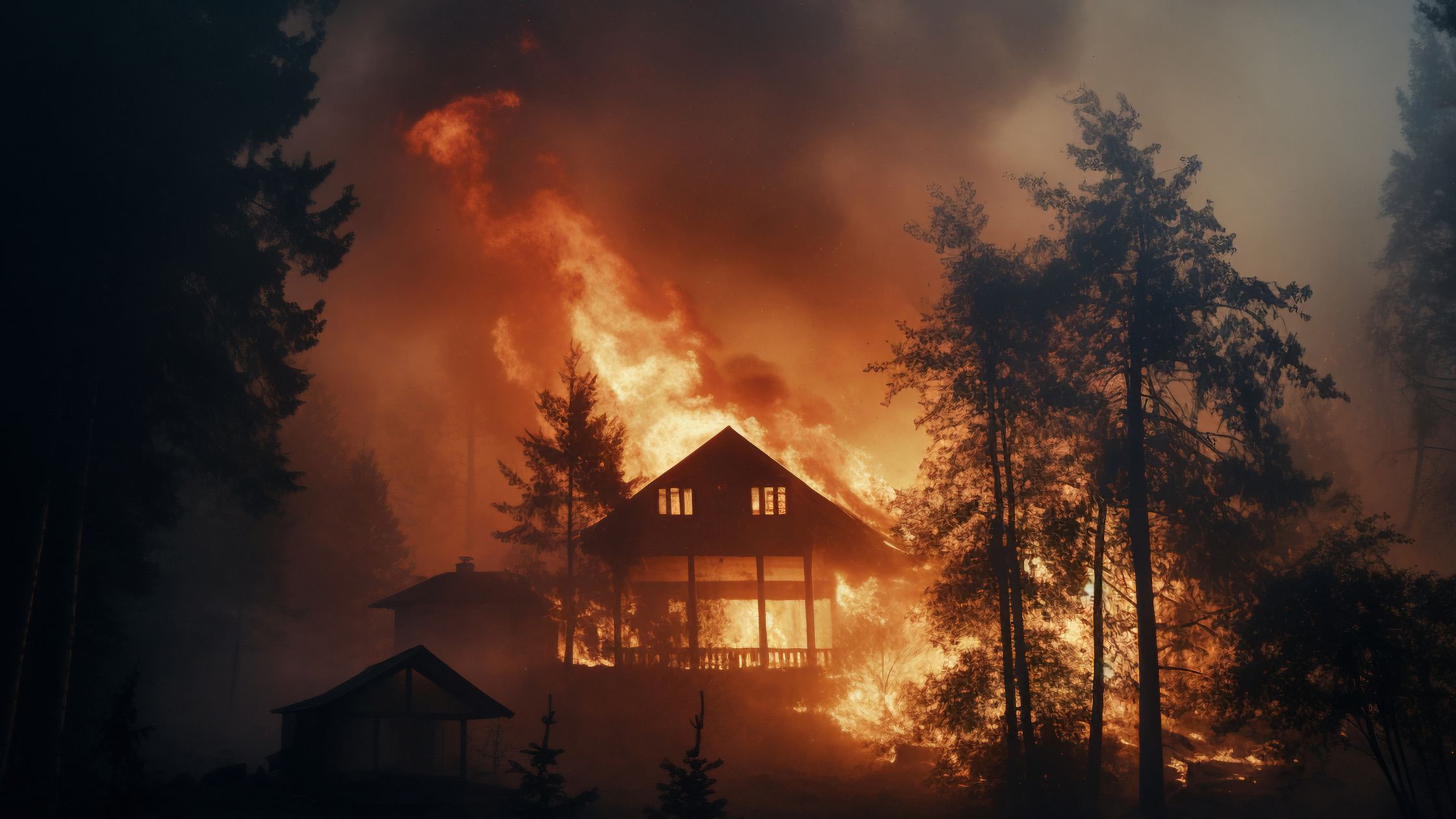

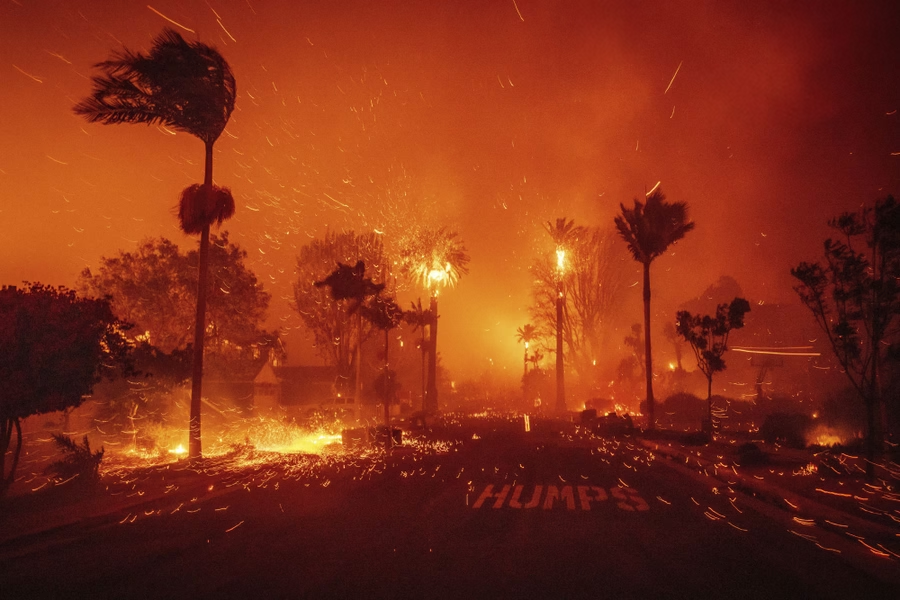
Your gutters may be the most overlooked wildfire vulnerability on your California home. While most homeowners focus on landscaping and roof materials when preparing for fire season, clogged gutters filled with dry leaves, pine needles, and organic debris represent one of the easiest ignition points for wind-driven embers. During a wildfire, a single ember landing in a debris-filled gutter can ignite your roofline and destroy your home in minutes. Understanding why gutter maintenance is a critical part of defensible space and wildfire preparedness could save your property and your life.
Not sure which step to prioritize first? Our wildfire risk calculator shows your CAL FIRE zone and exposure level — so you know exactly where to start.
Why Gutters Are a Primary Wildfire Ignition Point
Research from the Insurance Institute for Business and Home Safety (IBHS) and CAL FIRE consistently identifies gutters as one of the top ignition points on residential structures during wildfire events. The reason is simple: gutters collect and concentrate exactly the kind of fine, dry organic material that embers ignite most easily.
Throughout the year, leaves, pine needles, twigs, seed pods, and bark fragments accumulate in gutters. By late summer and fall, this material is bone-dry and highly combustible. When embers arrive during a wildfire, they land in this tinder-filled channel running along the entire perimeter of your roof. The result is a continuous line of fire at the junction of your roof and fascia, two of the most vulnerable structural components of any home.
Gutter debris ignition is particularly dangerous because it occurs at the roofline, where fire can quickly spread to fascia boards, soffit vents, attic spaces, and roof sheathing. A gutter fire can compromise your roof’s integrity within minutes, turning a survivable ember exposure into a total loss.
Editor’s note: Your insurance situation depends heavily on your property’s actual fire exposure. Our free risk assessment factors in official CAL FIRE data to show what your risk level actually is — useful context before talking to your carrier.
How Embers Ignite Debris in Gutters
During a wildfire, intense heat creates powerful convection columns that loft burning embers high into the air. Wind carries these embers distances of one mile or more ahead of the fire front. When they land in debris-filled gutters, several factors make ignition almost certain:
- Concentrated fuel: Gutters funnel debris into a narrow channel, creating a dense fuel bed that ignites easily
- Wind exposure: Gutters sit at the roofline where wind is strongest, fanning any ember that lands into full combustion
- Sheltered combustion: Once ignited, the gutter channel shelters the fire from extinguishment while directing heat against the fascia and roof edge
- Sustained burning: Accumulated debris in a typical gutter system can sustain fire for 15 to 30 minutes, more than enough time to ignite structural components
- Chain reaction: Fire in one section of gutter spreads along the entire run, creating a continuous flame line across your roofline
Metal vs. Plastic Gutters: Which Survives Wildfire
The material of your gutters matters significantly for wildfire protection:
Aluminum Gutters: Aluminum is the most common gutter material and offers moderate fire resistance. While aluminum will not ignite, it melts at approximately 1,220 degrees Fahrenheit. A sustained debris fire can generate enough heat to warp and fail aluminum gutters, but they will not contribute additional fuel to the fire.
Steel Gutters: Galvanized steel and stainless steel offer the highest fire resistance. Steel gutters will not melt or deform under typical wildfire ember exposure and are the preferred material in high fire hazard severity zones.
Copper Gutters: Copper provides excellent fire resistance with a melting point of 1,984 degrees Fahrenheit. However, the cost makes copper impractical for most residential applications.
Vinyl and Plastic Gutters: Vinyl gutters are a serious wildfire liability. They ignite at relatively low temperatures, melt, and drip burning material onto walls, siding, and vegetation below. If you live in a wildfire-prone area, replace vinyl gutters with metal immediately. This is one of the most important and cost-effective home hardening upgrades you can make.
Ember-Resistant Gutter Guards
Gutter guards designed for wildfire protection serve two critical functions: they prevent debris accumulation inside the gutter channel and they block embers from reaching any residual material. Not all gutter guards provide adequate wildfire protection. Look for these features:
- Metal construction: Guards must be made of aluminum, steel, or stainless steel. Never use plastic or vinyl gutter guards in fire-prone areas
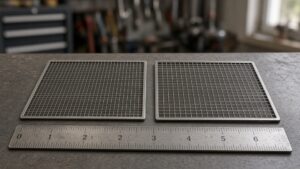
- Fine mesh screening: Mesh openings should be no larger than 1/8 inch to block embers while allowing water flow
- Full coverage: Guards must cover the entire gutter opening with no gaps at seams, corners, or end caps
- Secure attachment: Guards must be firmly attached to withstand high winds that accompany wildfires
- Easy maintenance access: Even with guards installed, periodic inspection and cleaning are necessary
Micro-mesh gutter guards with surgical-grade stainless steel screens offer the best combination of ember blocking and water flow. These systems cost more than basic guards but provide significantly better protection in Zone 0 of your wildfire defense perimeter.
Gutter Cleaning Schedule for Fire Season
Maintaining clean gutters requires a consistent schedule, especially in California’s extended fire season:
- March-April: Complete thorough cleaning before fire season. Remove all accumulated winter debris, check for damage, and verify gutter guard integrity
- June: Mid-season inspection. Clear any new accumulation from spring seed drop and pollen
- August-September: Critical pre-peak cleaning. Clear all material before Santa Ana wind season begins. This is the most important cleaning of the year
- November: Post-peak season cleaning. Remove fall leaf drop and prepare gutters for winter rain drainage
- After any wind event: Check and clear gutters after significant wind events that deposit debris on your roof
Homes surrounded by trees, particularly pine, eucalyptus, and oak, may need monthly cleaning during the dry season. Consider this maintenance a core part of your California fire code compliance responsibilities.
Downspout Protection
Downspouts are often overlooked in wildfire gutter protection, but they present their own ignition risks:
- Debris accumulation at outlets: Leaves and needles collect at the gutter-to-downspout transition, creating concentrated fuel pockets
- Ground-level ignition: Downspouts discharge near the foundation, where embers and burning debris can ignite ground-level vegetation or stored materials
- Ember entry: Open downspout tops can allow embers to enter the gutter system from below during high wind events
Install strainer caps at downspout inlets to prevent debris clogging. Ensure downspout discharge points are clear of combustible materials and direct water away from the foundation onto non-combustible surfaces. Metal downspouts are strongly preferred over PVC in wildfire-prone areas.
Wondering if your property is in a high-risk fire zone? Check your wildfire risk score to see your CAL FIRE zone and exposure level based on your address.
Maintenance Before Fire Season
Your pre-fire-season gutter maintenance checklist should include these steps as part of your broader integrated wildfire defense strategy:
- Remove all debris from gutters, downspouts, and roof valleys
- Inspect gutter guards for damage, gaps, or displacement
- Replace any vinyl or plastic gutter components with metal
- Check gutter slope to ensure proper drainage and prevent standing water
- Seal gaps at gutter seams, end caps, and fascia connections
- Clear overhanging branches that drop debris into gutters
- Verify that downspout discharge areas are free of combustible materials
- Document your maintenance with dated photographs for insurance documentation
How Gutter Protection Fits Your Overall Wildfire Defense
Gutter protection is one component of comprehensive home hardening. Combined with ember-resistant vents, Class A fire-rated roofing, Zone 0 clearance, and proper defensible space, clean and protected gutters eliminate one of the primary pathways through which embers attack homes.
California’s evolving wildfire laws increasingly emphasize the complete fire-resistant envelope concept, where every component of your home’s exterior works together to resist ignition. Gutters are a critical link in that envelope.
Frequently Asked Questions
How often should I clean my gutters for wildfire protection?
At minimum, clean gutters four times per year: in spring before fire season, mid-summer, before Santa Ana wind season in August or September, and after fall leaf drop. Homes near heavy tree cover may need monthly cleaning during the dry season.
Are gutter guards enough to protect against wildfire embers?
Quality metal gutter guards with fine mesh significantly reduce risk by preventing debris accumulation and blocking embers, but they are not a substitute for regular inspection and maintenance. Even guarded gutters should be checked quarterly.
Should I replace my vinyl gutters before fire season?
Yes. Vinyl gutters are a significant wildfire liability. They ignite easily, melt, and drip burning material onto lower portions of your home. Replacing vinyl with aluminum or steel gutters is one of the most cost-effective wildfire hardening improvements you can make.
Can debris in gutters really cause my house to burn down?
Absolutely. Post-fire investigations by IBHS and CAL FIRE have documented numerous cases where gutter debris ignition led to total home loss. Embers landing in dry leaf litter in gutters can ignite a roofline fire that spreads into the attic within minutes.
What type of gutter guard is best for wildfire areas?
Micro-mesh stainless steel gutter guards offer the best wildfire protection. They block embers as small as 1/8 inch while maintaining excellent water flow. Avoid any gutter guard made from plastic, vinyl, or foam materials.
Does gutter maintenance affect my wildfire insurance?
Yes. Many insurers evaluate gutter condition as part of wildfire risk assessments. Documented gutter maintenance and ember-resistant guards can support insurance applications and may qualify for premium reductions with some carriers.
References
- Insurance Institute for Business and Home Safety (IBHS) — Roofline and Gutter Ignition Research
- CAL FIRE — Home Hardening and Defensible Space Guidelines
- National Fire Protection Association (NFPA) — Firewise USA Gutter Maintenance Standards
- California Building Code Chapter 7A — Materials and Construction for Wildfire Exposure
- USDA Forest Service — Ember Transport and Structure Ignition Studies
- California Department of Insurance — Wildfire Mitigation and Insurance Requirements
Related Articles
- Complete Guide to Defensible Space and Home Hardening
- Understanding Zone 0 Wildfire Protection
- Wildfire Insurance Guide for California Homeowners
- Home Hardening: Essential Upgrades for Fire Safety
- Integrated Fire Defense Systems for Your Property
- California Building Code Compliance Checklist
- California Wildfire Laws Every Homeowner Should Know
Ember Pro USA specializes in comprehensive wildfire protection for California homes, including professional gutter assessment, ember-resistant guard installation, and complete home hardening services. Contact us today to schedule your wildfire gutter protection evaluation and ensure your roofline is ready for fire season.
Curious about your property’s actual wildfire risk? Our free calculator shows your CAL FIRE zone, exposure level, and recommended next steps based on your address.
Get your free risk score