
By Jim Sprouse, Co-founder of Ember Pro
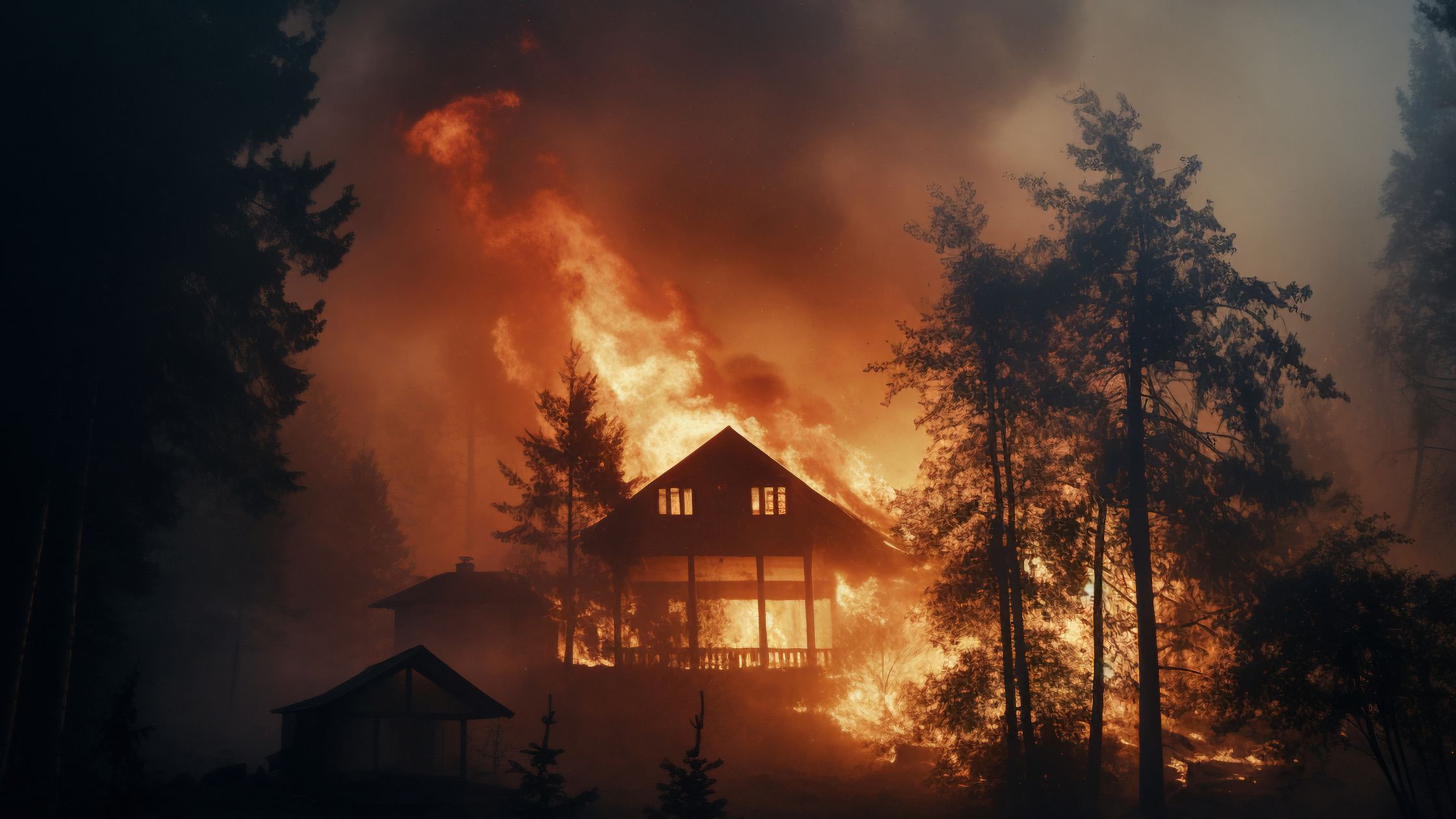
Every homeowner in California’s wildfire-prone regions faces a fundamental financial question: is it worth investing in wildfire defense now, or is it more practical to rely on insurance and rebuild if the worst happens? The numbers tell a clear story. Wildfire defense investment is not just cheaper than rebuilding—it is dramatically, overwhelmingly more cost-effective by virtually every measure.
In this article, we break down the real costs on both sides of the equation. We compare the price of proactive mitigation and defense systems against the financial, emotional, and temporal costs of rebuilding after a wildfire destroys a home. The data consistently shows that investing in wildfire defense delivers one of the highest returns on investment available to California homeowners.
Editor’s note: Your insurance situation depends heavily on your property’s actual fire exposure. Our free risk assessment factors in official CAL FIRE data to show what your risk level actually is — useful context before talking to your carrier.
The True Cost of Rebuilding After a Wildfire
When people think about rebuilding after a fire, they tend to focus on the construction cost. But the total financial impact extends far beyond the contractor’s invoice.
Construction Costs
The average cost to rebuild a home destroyed by wildfire in California ranges from $300,000 to $500,000 or more, depending on location, home size, and current material and labor prices. In high-demand areas like Los Angeles County, the Bay Area, and parts of San Diego County, rebuilding costs frequently exceed $500,000. After major wildfire events, demand for contractors and materials surges, driving costs even higher. Following the 2018 Camp Fire and the 2020-2021 fire seasons, many homeowners reported rebuilding estimates 30 to 50 percent above their pre-fire home values.
Insurance Gaps
Many homeowners discover after a fire that their insurance coverage falls short of actual rebuilding costs. Underinsurance is epidemic in California’s wildfire zones. Extended replacement cost endorsements help, but they typically cap at 25 to 50 percent above the dwelling coverage limit. When construction costs spike after a regional disaster, that gap can leave homeowners responsible for six figures out of pocket.
Temporary Housing
While rebuilding, homeowners must find temporary housing. In California’s expensive rental markets, this can cost $3,000 to $6,000 or more per month. The average rebuild timeline after a total loss is 18 to 36 months—sometimes longer when permitting delays and contractor shortages compound the timeline. That translates to $54,000 to $216,000 in temporary housing costs alone.
Personal Property Replacement
Furniture, electronics, clothing, appliances, tools, keepsakes, documents, and everything else inside the home must be replaced. Even with contents coverage, the depreciated value that insurers pay rarely covers the cost of purchasing new replacements. Homeowners routinely spend $50,000 to $150,000 out of pocket on personal property that insurance does not fully cover.
Emotional and Health Costs
The psychological toll of losing a home to wildfire is severe and well-documented. Studies show elevated rates of anxiety, depression, PTSD, and stress-related health problems among wildfire survivors. These are real costs—measured in therapy bills, lost productivity, strained relationships, and diminished quality of life—that no insurance policy fully compensates.
Business and Income Disruption
For homeowners who work from home, run a home-based business, or store business equipment and inventory at their residence, a fire can mean months or years of lost income. Business interruption coverage on a homeowners policy is limited, and many home-based businesses are not covered at all.
Total Rebuilding Cost Estimate
When you add construction, insurance gaps, temporary housing, personal property, emotional costs, and lost income, the total cost of rebuilding after a wildfire commonly ranges from $400,000 to $800,000 or more. For many California families, this represents a financial catastrophe that takes a decade or longer to recover from—if they recover at all.
The Cost of Wildfire Defense and Mitigation
Now compare that to the cost of proactive wildfire defense. The investments fall into several categories, all of which are a fraction of the rebuilding scenario.
Defensible Space
Creating and maintaining defensible space around your home—clearing vegetation within 100 feet, managing fuel loads, and maintaining Zones 0, 1, and 2—typically costs $1,000 to $5,000 for initial clearing, with annual maintenance of $500 to $2,000. This is the foundation of wildfire protection and is required by California law.
Home Hardening
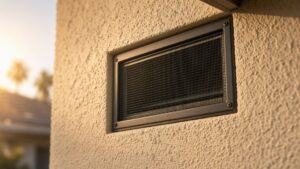
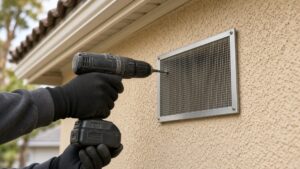
Structural home hardening improvements—ember-resistant vents, Class A roofing, tempered glass windows, non-combustible siding and decking, enclosed eaves—typically cost $5,000 to $20,000 depending on the home’s current condition and size. Many of these improvements also increase the home’s overall value and durability beyond wildfire protection.
Active Defense Systems
Active fire defense systems—including exterior sprinkler systems, spray-down systems, and automated suppression technology—range from $3,000 to $15,000 installed. These systems provide an active layer of protection during a fire event, wetting the structure and surrounding area to reduce ignition risk. Ember Pro’s integrated systems are designed to activate remotely or automatically, providing protection even during mandatory evacuations.
Fire Retardant Spraying
Professional fire retardant spraying services, which apply long-term retardant to structures and surrounding vegetation, typically cost $500 to $3,000 per application, depending on property size and coverage area. This provides a chemical barrier that significantly reduces ignition potential.
Compliance and Documentation
Professional inspections, compliance documentation, and insurance mitigation reports cost $300 to $1,500. While this may seem like a minor expense, proper documentation is often the key to unlocking insurance discounts that pay for the inspection many times over.
Total Mitigation Investment
A comprehensive wildfire defense program—including defensible space, home hardening, active defense systems, and professional documentation—typically costs $5,000 to $30,000. Even at the high end, this is less than 5 percent of the average rebuilding cost.
The ROI of Wildfire Defense
The return on investment for wildfire mitigation is extraordinary by any standard. Consider the math:
- Direct cost comparison: $5,000-$30,000 in mitigation vs. $400,000-$800,000+ in rebuilding costs—a ratio of roughly 15:1 to 80:1
- Insurance savings: Documented mitigation measures can reduce annual premiums by $500 to $3,000 or more. Over 10 years, that is $5,000 to $30,000 in savings—potentially paying for the entire mitigation investment through premium reductions alone
- Property value protection: Homes with documented wildfire mitigation consistently sell for 5 to 15 percent more than comparable unprotected properties in fire-prone areas. On a $600,000 home, that is $30,000 to $90,000 in preserved or added value
- Insurance availability: In a market where carriers are fleeing California, having documented mitigation can be the difference between obtaining private market coverage and being forced into the FAIR Plan at significantly higher rates
Case Examples: What the Numbers Look Like in Practice
Example 1: Suburban Home in San Diego County WUI
A 2,200-square-foot home in a high-fire-severity zone. The homeowner invested $18,000 in comprehensive mitigation: $4,000 for defensible space clearing and landscaping, $8,000 for home hardening (ember-resistant vents, enclosed eaves, and a deck replacement), and $6,000 for an exterior spray-down system. Their insurance premium dropped by $1,800 per year, and their home appraised for $45,000 more than a comparable unprotected neighbor’s property. Total 10-year ROI: the mitigation paid for itself in premium savings alone, while adding $45,000 in home equity.
Example 2: Rural Property in El Dorado County
A 3,400-square-foot home on 5 acres. The homeowner spent $28,000 on mitigation: $8,000 for extensive vegetation management, $12,000 for structural hardening, and $8,000 for an integrated defense system with remote activation. Without mitigation, they faced FAIR Plan-only coverage at $9,500 per year. With documentation of their mitigation work, they secured private market coverage at $4,200 per year—a savings of $5,300 annually. The mitigation investment paid for itself in just over 5 years through insurance savings alone.
Example 3: Small Ranch in Ventura County
A homeowner with a 1,600-square-foot home and several outbuildings spent $12,000 on mitigation across all structures. When a wildfire came within 200 yards of their property the following season, their structures survived while three neighboring properties without mitigation were damaged or destroyed. The rebuilding costs for those neighbors ranged from $350,000 to $620,000. The $12,000 mitigation investment literally saved this homeowner from financial ruin.
Beyond the Numbers: What Money Cannot Replace
The financial comparison alone makes a compelling case for wildfire defense investment. But some of the most important benefits are the ones that cannot be easily quantified:
- Peace of mind: Knowing your home has multiple layers of protection during fire season reduces the chronic stress that affects millions of Californians in wildfire-prone areas
- Evacuation confidence: When you have active defense systems that operate remotely, mandatory evacuations feel less like abandoning your home and more like a temporary precaution
- Family photos and irreplaceable items: No amount of insurance money replaces a lifetime of family photographs, heirlooms, and personal items. The best way to protect what cannot be repurchased is to prevent the fire from entering your home in the first place
- Community resilience: When you invest in wildfire defense, you protect not just your own property but contribute to the overall fire resilience of your neighborhood, consistent with Zone 0 community protection standards
- Time: The 18 to 36 months spent rebuilding is time away from normal life, career advancement, family activities, and personal pursuits. You cannot buy that time back
How California Law Supports the Investment Case
California’s evolving wildfire laws and regulations increasingly recognize and incentivize proactive mitigation. AB 38 requires sellers in high-fire-risk areas to disclose defensible space compliance. AB 3074 established Zone 0 standards for the area immediately surrounding structures. SB 894 streamlined rebuilding processes but also highlighted the enormous costs involved. And legislative efforts around insurance reform continue to push for premium credits tied to documented mitigation measures.
The regulatory direction is clear: California is moving toward a framework that rewards homeowners who invest in wildfire defense and increases costs for those who do not. Early investment positions you ahead of requirements that will likely become mandatory.
Making the Decision
The question is not whether wildfire defense is worth the investment. The data is unambiguous: mitigation costs a fraction of rebuilding, delivers measurable insurance savings, protects property values, and provides benefits that no insurance policy can replicate.
The real question is where to start and how to prioritize investments for maximum impact. Not every property needs $30,000 in mitigation. Many homes can achieve significant protection with $5,000 to $10,000 in targeted improvements. The key is having a professional assessment that identifies your specific vulnerabilities and recommends the most cost-effective interventions.
At Ember Pro, we help California homeowners understand their wildfire risk, develop a prioritized mitigation plan, and execute the improvements that deliver the highest return on investment. Whether you are starting from scratch or building on existing defensible space work, we can help you make the home hardening and defense investments that protect your property, your finances, and your family.
Frequently Asked Questions
How much does wildfire defense cost compared to rebuilding?
Comprehensive wildfire defense typically costs $5,000 to $30,000, while rebuilding after a total loss commonly costs $400,000 to $800,000 or more when you include construction, insurance gaps, temporary housing, and personal property replacement.
Can wildfire mitigation reduce my insurance premiums?
Yes. Documented mitigation measures can reduce annual premiums by $500 to $3,000 or more. In some cases, mitigation is the difference between obtaining private market coverage and being limited to the FAIR Plan at much higher rates.
Does wildfire mitigation increase property value?
Homes with documented wildfire mitigation consistently sell for 5 to 15 percent more than comparable unprotected properties in fire-prone areas. Buyers and appraisers increasingly value visible wildfire preparedness.
What is the most cost-effective wildfire defense investment?
Defensible space clearing and ember-resistant vent installation typically offer the highest impact per dollar spent. After those foundations are in place, active defense systems and structural hardening provide additional layers of protection with strong ROI.
How long does it take for wildfire mitigation to pay for itself?
Through insurance premium savings alone, most comprehensive mitigation programs pay for themselves within 5 to 10 years. When you factor in property value protection and avoided rebuilding costs, the payback period is immediate.
References
- Insurance Institute for Business & Home Safety (IBHS) — Wildfire Cost and Loss Prevention Studies
- California Department of Insurance — Wildfire Insurance Market Data and Premium Analysis
- CoreLogic — Wildfire Risk and Property Value Impact Reports
- California Building Standards Commission — Title 24, Chapter 7A Compliance Cost Estimates
- National Fire Protection Association (NFPA) — Firewise USA Community Cost-Benefit Analysis
- CAL FIRE — Defensible Space and Home Hardening Cost Guidelines
- California Legislative Analyst’s Office — Wildfire Mitigation Policy and Cost Analysis
- RAND Corporation — Economic Analysis of Wildfire Risk Reduction Strategies in California
Curious about your property’s actual wildfire risk? Our free calculator shows your CAL FIRE zone, exposure level, and recommended next steps based on your address.
Get your free risk score