
By Jim Sprouse, Co-founder of Ember Pro
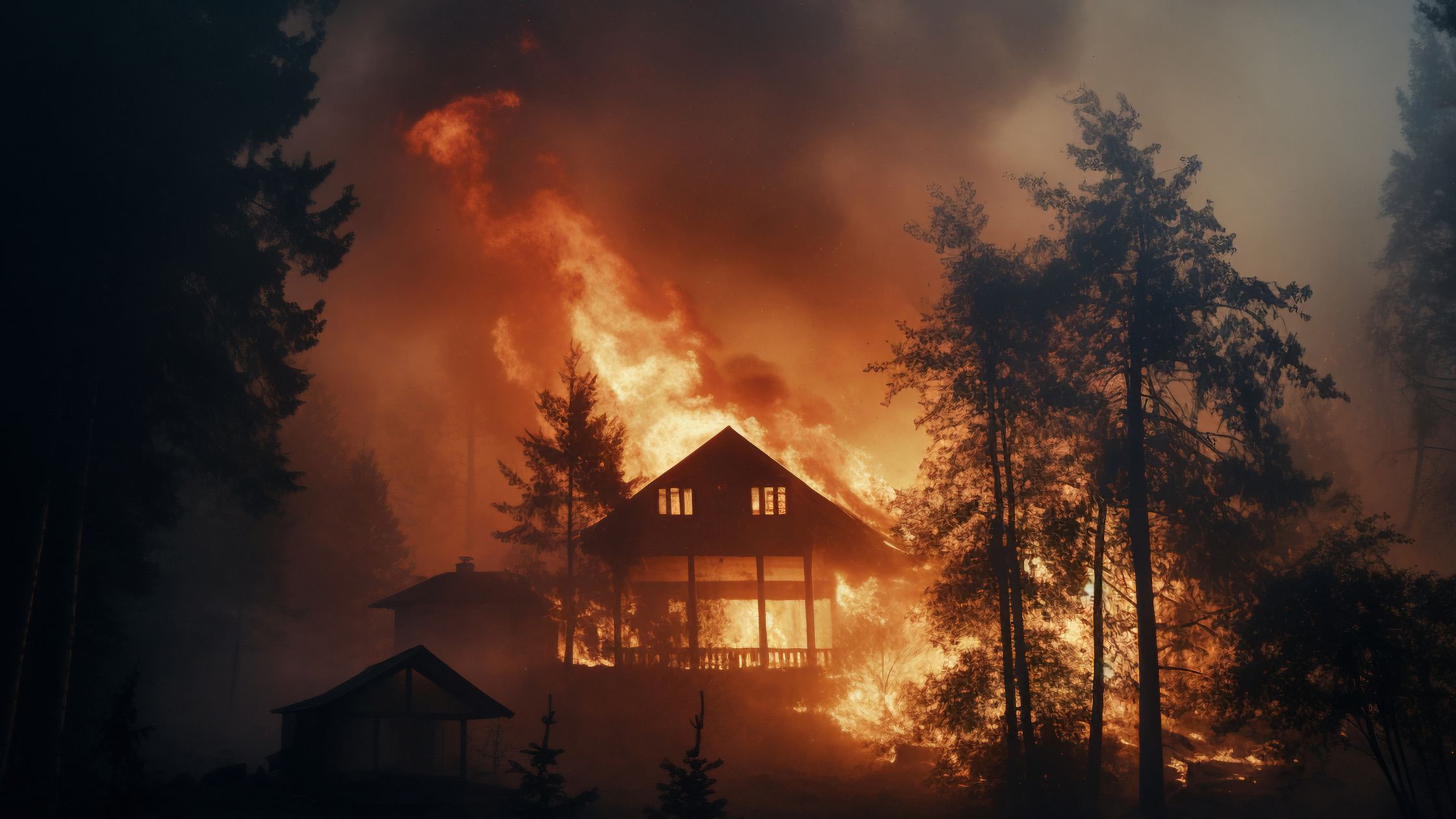
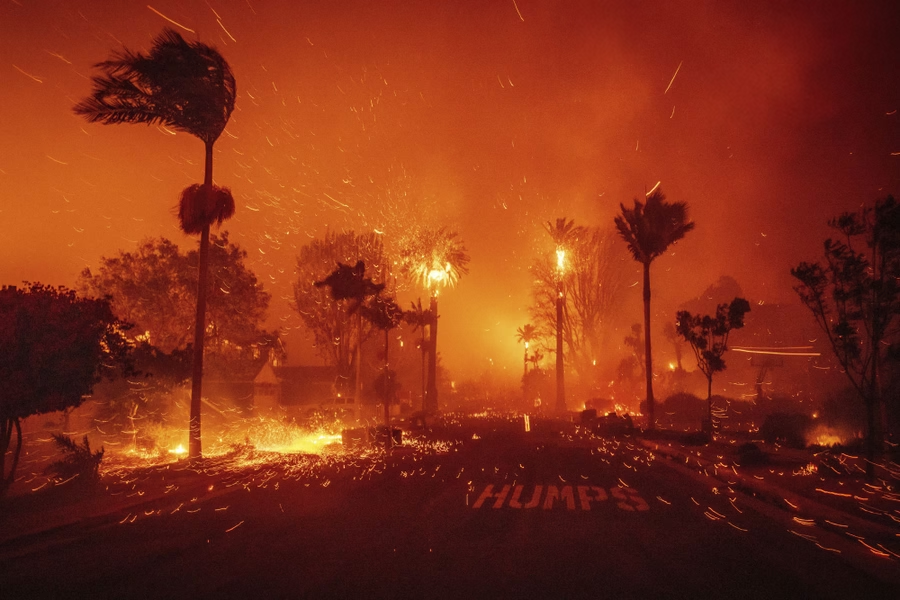
When a mandatory evacuation order is issued, you have minutes to grab essentials and leave. Your home stays behind. For most California homeowners in wildfire-prone areas, that moment—driving away while smoke fills the sky—is the most helpless feeling imaginable. You have no control over what happens next.
But that does not have to be the case. Modern wildfire suppression systems are designed to protect your home even when you are miles away. These systems activate remotely or automatically, spraying fire-resistant solutions and water onto your structure and surrounding area to prevent ignition from embers, radiant heat, and direct flame contact. They transform the evacuation experience from total helplessness into informed confidence.
Editor’s note: Your insurance situation depends heavily on your property’s actual fire exposure. Our free risk assessment factors in official CAL FIRE data to show what your risk level actually is — useful context before talking to your carrier.
The Evacuation Problem
California’s wildfire evacuations have become increasingly common and increasingly urgent. Wind-driven fires like the 2017 Tubbs Fire, the 2018 Camp Fire, and numerous fires since have demonstrated that fire can move faster than traffic. When an evacuation order is issued, the priority is human life. There is no time to set up ad hoc fire protection, no time to run garden hoses, no time to do anything except leave.
This creates a critical vulnerability gap. The period between evacuation and either fire arrival or all-clear can last hours to days. During that time, your home is undefended. Embers can travel a mile or more ahead of the fire front, landing on roofs, decks, and in gutters. Radiant heat from nearby burning vegetation can ignite siding and window frames. Without any active defense, your home’s survival depends entirely on its passive home hardening and whether the fire service can allocate resources to protect it.
Wildfire suppression systems close this vulnerability gap by providing active, continuous protection that operates independently of human presence.
Not sure which step to prioritize first? Our wildfire risk calculator shows your CAL FIRE zone and exposure level — so you know exactly where to start.
How Automated Wildfire Suppression Systems Work
Modern wildfire suppression systems for residential properties combine several technologies to create a comprehensive defense that functions without anyone on site.
Exterior Spray Systems
The core of most home wildfire suppression systems is a network of spray nozzles mounted on the roof, eaves, and around the foundation of the home. When activated, these nozzles spray water, fire retardant gel, or a combination of both onto the structure’s exterior surfaces. The goal is to saturate the roof, walls, decks, and immediate surroundings so that embers cannot find dry, combustible material to ignite.
Spray systems typically draw from a dedicated water storage tank—usually 500 to 5,000 gallons depending on the property—or from an existing well or pool. The pump system is designed to operate at pressures high enough to achieve full coverage across the entire structure. Run times vary, but most systems are designed to operate continuously for 4 to 12 hours, providing sustained protection throughout the critical window of fire exposure.
Sensor-Based Activation
The most advanced systems include environmental sensors that detect wildfire conditions and trigger activation automatically. These sensors monitor temperature, smoke density, particulate levels, and wind direction. When conditions reach predetermined thresholds—indicating that a fire is approaching—the system activates without any human input.
Sensor-based activation solves the timing problem. Even with remote activation capability, a homeowner might not know the exact moment when their property faces the greatest threat. Sensors on site detect conditions in real time and respond within seconds, ensuring the system is running before embers arrive rather than after damage has already begun.
Remote Activation and Monitoring
Remote activation allows homeowners to start their suppression system from anywhere using a smartphone app, web interface, or phone call. This capability is essential during evacuations, when you may receive information about fire proximity from news reports, neighbor communications, or official updates before your on-site sensors detect the threat.
Monitoring capabilities vary by system, but advanced setups include:
- Real-time system status: Confirm that the system is running, check water levels, and verify pump operation from your phone
- Camera feeds: Some systems integrate with outdoor cameras that provide live or periodic still images of your property, showing conditions and system operation
- Alert notifications: Receive push notifications when the system activates automatically, when water levels drop below thresholds, or if any system component fails
- Activation history: Review when the system was activated, how long it ran, and water consumption data
The psychological value of monitoring cannot be overstated. Being able to check on your home and confirm that your suppression system is actively working transforms the evacuation experience from anxious uncertainty into managed awareness.
Types of Suppression Systems
Several categories of fire defense systems are available for residential properties, each with different capabilities and price points.
Roof and Eave Sprinkler Systems
These are permanently installed sprinkler heads mounted along the roof ridge, eaves, and fascia. They create a curtain of water that flows down the roof and exterior walls, keeping surfaces wet and washing away landing embers. Roof sprinkler systems are the most common residential wildfire suppression approach and are effective at preventing ember ignition on the most vulnerable surfaces of the home.
Ground-Level Perimeter Spray Systems
Perimeter systems use ground-mounted spray heads to wet the area immediately surrounding the home—decks, patios, landscaping, fences, and the critical Zone 0 area within five feet of the structure. These systems address the threat of ground-level embers and radiant heat from burning vegetation or structures near the home.
Gel and Retardant Application Systems
Some systems apply fire retardant gel rather than plain water. These gels adhere to surfaces and provide longer-lasting protection than water alone, which evaporates quickly in the extreme heat of an approaching fire. Gel-based systems can extend effective protection time significantly, which matters when the fire exposure window is unpredictable.
Integrated Multi-Zone Systems
The most comprehensive installations combine roof sprinklers, perimeter spray, and gel application into a single integrated system with zone-by-zone control. The system can activate different zones based on the fire’s approach direction—for example, activating the north-facing roof and perimeter zones first if the fire is approaching from the north, then expanding to full coverage as conditions change.
What Happens During a Mandatory Evacuation
Here is a typical scenario for a homeowner with a properly installed wildfire suppression system during a mandatory evacuation:
- Evacuation order received. You gather your family, important documents, and essential items. Before leaving, you verify that your suppression system is in standby mode and water tanks are full. This takes 30 seconds on your phone.
- Departure. You leave your property knowing that your system is ready to activate. You drive to your evacuation destination.
- Fire approach detected. On-site sensors detect rising temperatures, smoke, or airborne embers. The system automatically activates, beginning to wet the roof, walls, and perimeter. You receive a push notification on your phone confirming activation.
- Active protection. The system runs continuously, maintaining wet surfaces across the entire structure. Embers land on saturated roofing and walls and are extinguished on contact. Radiant heat is absorbed by the water layer rather than heating combustible surfaces to ignition temperature.
- Monitoring from evacuation site. You check the app periodically, seeing system status, water levels, and if available, camera images showing your home and the surrounding conditions. You can adjust system settings or activate additional zones remotely if needed.
- Fire passes or conditions ease. The system continues running until you deactivate it remotely or it completes its programmed run cycle. You receive confirmation that the system has protected your home throughout the fire exposure period.
- Return home. When the evacuation order is lifted, you return to a standing home. The suppression system may need refilling and inspection, but your property survived the fire event.
Choosing the Right System for Your Property
The right suppression system depends on several property-specific factors:
- Water availability: Properties with wells, pools, or municipal water have more options than those relying solely on stored water tanks
- Property size: Larger homes and properties require more spray heads, larger pumps, and greater water storage capacity
- Power source: Systems need reliable power for pumps and controls. Battery backup, generator integration, or solar-powered options ensure operation during power shutoffs that often accompany wildfire events
- Fire risk profile: Properties in extreme-risk areas or with specific vulnerabilities (wooden decks, older roofing, dense vegetation proximity) may need more comprehensive systems
- Budget: Systems range from $3,000 for basic roof sprinkler kits to $15,000 or more for fully integrated, multi-zone systems with monitoring and remote activation
These are general costs. Your actual investment depends on your property’s fire zone, exposure level, and available grants or rebates.
Check my risk scoreEmber Pro’s Suppression System Capabilities
At Ember Pro, we design and install wildfire suppression systems specifically for California’s fire environment. Our systems include:
- Custom-designed spray coverage based on your home’s architecture, roof type, and specific vulnerability points
- Remote activation and monitoring through our mobile app, allowing you to activate, monitor, and control your system from anywhere
- Sensor-based automatic activation that detects fire conditions and starts protection without human intervention
- Integrated water storage solutions sized for your property’s protection requirements
- Backup power systems that ensure operation during PSPS events and grid outages
- Professional documentation for insurance purposes, demonstrating active fire protection that may support premium reductions or coverage qualification
Our systems are designed to complement your existing defensible space and home hardening measures, creating a layered defense strategy that maximizes your home’s survival probability during a wildfire event.
The Peace of Mind Factor
Beyond the physical protection, wildfire suppression systems fundamentally change how homeowners experience fire season. Instead of spending months in low-grade anxiety about whether your home will survive the next fire, you have a concrete, actionable defense in place. Instead of feeling helpless during an evacuation, you have visibility and control. Instead of hoping the fire service can protect your neighborhood, you have your own dedicated system working exclusively for your property.
This peace of mind has real value. It affects sleep quality, daily stress levels, family wellbeing, and your ability to make clear-headed decisions during emergency situations. Many of our customers tell us that the emotional benefit of their suppression system is worth as much as the physical protection it provides.
Compliance and Insurance Benefits
Active wildfire suppression systems increasingly factor into regulatory compliance discussions and insurance evaluations. While no California law currently mandates residential suppression systems, documented active fire protection demonstrates a level of risk mitigation that exceeds basic wildfire law requirements. This proactive approach can strengthen your position with insurers who are evaluating whether to write or renew your policy in a high-risk area.
Frequently Asked Questions
Can wildfire suppression systems really work when no one is home?
Yes. Modern systems are designed specifically for unattended operation. Sensor-based activation, remote monitoring, and automated controls ensure the system operates effectively without anyone on site. This is their primary purpose—protecting your home during evacuations.
How long can a suppression system run on stored water?
Run time depends on tank size and system flow rate. A typical residential system with a 2,500-gallon tank can run for 6 to 10 hours. Systems with access to wells, pools, or municipal water can run indefinitely as long as power is available.
What happens if the power goes out?
Well-designed systems include battery backup or generator integration to maintain operation during power outages. Since PSPS shutoffs and fire-related grid failures are common during wildfire events, backup power is an essential component of any reliable system.
Do wildfire suppression systems work against embers?
Embers are the primary threat these systems address. By keeping roof surfaces, walls, and surrounding areas continuously wet, suppression systems prevent embers from finding dry combustible material to ignite. This is the most common way homes are lost in wildfires.
Will a suppression system help with my insurance?
Many insurers view active fire suppression favorably when evaluating wildfire risk. Documented systems can support premium reductions, coverage qualification, or non-renewal appeal arguments. Professional documentation of your system’s capabilities is important for these conversations.
How much does a residential wildfire suppression system cost?
Systems range from approximately $3,000 for basic roof sprinkler setups to $15,000 or more for fully integrated systems with remote activation, sensor-based automation, gel application, and monitoring capabilities. The investment is a fraction of potential rebuilding costs.
References
- Insurance Institute for Business & Home Safety (IBHS) — Exterior Sprinkler System Effectiveness Studies
- CAL FIRE — Wildfire Preparedness and Home Protection Guidelines
- National Fire Protection Association (NFPA) — Exterior Fire Sprinkler Standards and Research
- California Building Standards Commission — Residential Fire Protection System Requirements
- University of California Cooperative Extension — Wildfire Home Protection Technology Assessment
- California Governor’s Office of Emergency Services — Evacuation Planning and Property Protection Resources
- International Association of Fire Chiefs — Residential Wildfire Suppression Best Practices
Curious about your property’s actual wildfire risk? Our free calculator shows your CAL FIRE zone, exposure level, and recommended next steps based on your address.
Get your free risk score