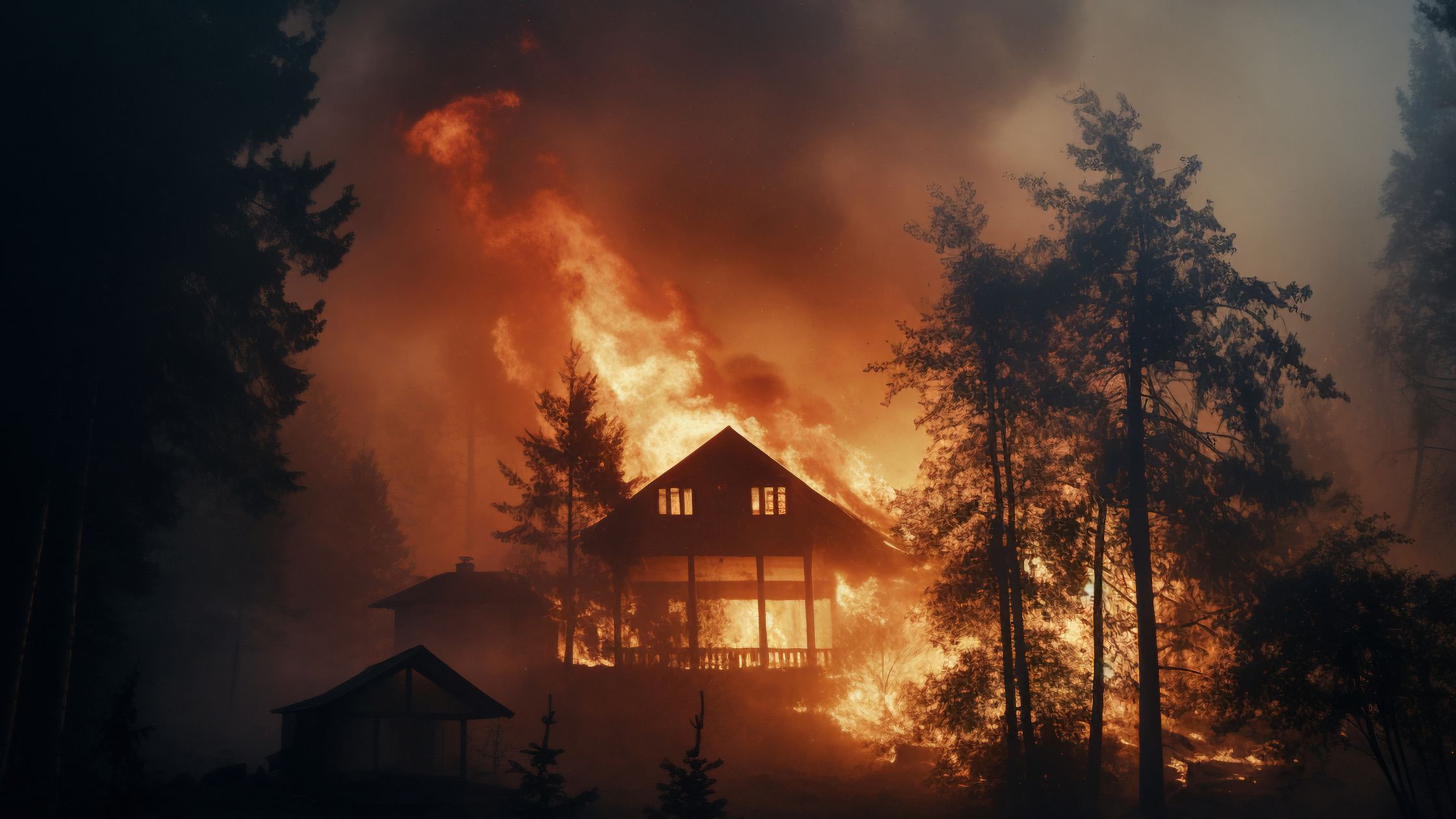

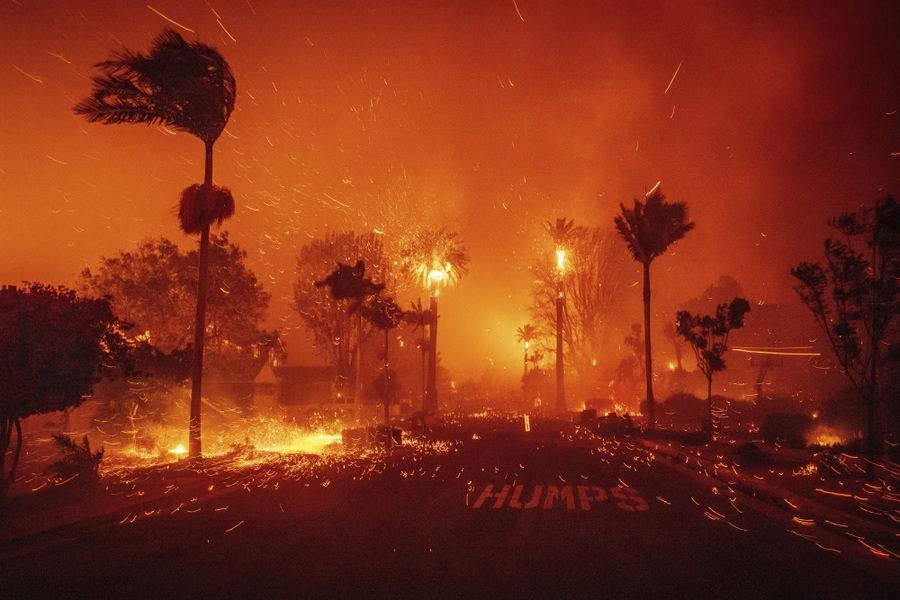
When a wildfire threatens your California home, every minute matters. CAL FIRE estimates that most residents in evacuation zones have fewer than 30 minutes to leave once an evacuation order is issued. Without a wildfire evacuation checklist prepared in advance, critical items get left behind, family members get separated, and stress leads to dangerous mistakes. This comprehensive California wildfire evacuation checklist ensures you and your family can leave safely, quickly, and with everything you need to survive the days ahead.
Wondering if your property is in a high-risk fire zone? Check your wildfire risk score to see your CAL FIRE zone and exposure level based on your address.
Why Every California Homeowner Needs an Evacuation Checklist
California’s wildfire seasons have grown longer and more intense. The 2025 fire season saw multiple communities evacuated with little warning, and experts project 2026 will be equally challenging. An evacuation checklist eliminates decision-making under stress. When smoke fills the air and sirens sound, you follow the list—no thinking, no debating, no forgetting.
Beyond personal safety, having a prepared checklist also protects your financial future. Homeowners who evacuate with proper documentation—insurance policies, asset inventories, and identification—recover faster after a wildfire than those who leave with nothing.
Editor’s note: Your insurance situation depends heavily on your property’s actual fire exposure. Our free risk assessment factors in official CAL FIRE data to show what your risk level actually is — useful context before talking to your carrier.
Understanding CAL FIRE Evacuation Warnings and Orders
Before building your checklist, understand California’s three-tier evacuation system:
- Evacuation Warning: A potential threat exists. Begin preparing to leave. Load vehicles, secure pets, and review your checklist.
- Evacuation Order: Immediate danger. Leave now. Do not delay to gather additional items beyond your go-bag.
- Shelter-in-Place: Leaving is more dangerous than staying. Seal your home and await further instructions.
Your checklist should be designed so that when a Warning is issued, you complete all preparation steps. When an Order hits, you grab your go-bag and leave immediately.
The Go-Bag: Your 72-Hour Survival Kit
Every household member should have a personal go-bag pre-packed and stored near the front door or in the garage. Here is what each bag should contain:
Essential Documents (Copies in Waterproof Bag)
- Driver’s license and passport copies
- Homeowners or renters insurance policy numbers and contact information
- Home inventory photos or video (stored on USB drive)
- Birth certificates and Social Security cards (copies)
- Prescription medication list with dosages
- Bank account and credit card numbers
- Emergency contact list (printed, not just on your phone)
- Property deed or mortgage documents
Personal Essentials
- Three days of prescription medications
- First aid kit with burn treatment supplies
- N95 masks (minimum 5 per person for smoke protection)
- Eyeglasses or contacts with solution
- Three changes of clothing and sturdy closed-toe shoes
- Personal hygiene items
- Phone charger and portable battery pack
- Cash ($200-$500 in small bills)
- Flashlight and extra batteries
Family-Specific Items
- Baby supplies: formula, diapers, bottles, blankets
- Pet supplies: food (3 days), leash, carrier, vaccination records
- Special medical equipment: CPAP, oxygen, mobility aids
- Children’s comfort items and entertainment
- Water: one gallon per person per day (minimum 3 gallons each)
- Non-perishable snacks and energy bars
Before You Leave: The 30-Minute Home Prep Checklist
When an evacuation warning is issued, use this checklist to prepare your home while you still have time. These steps can help your home survive even if fire reaches your property, especially when combined with proper defensible space maintenance.
Exterior Preparation
- Move all patio furniture, cushions, and flammable items indoors or away from the house
- Close all exterior vents if you have vent covers installed
- Shut off propane tanks and natural gas at the meter
- Connect garden hoses and fill any available containers with water
- Move vehicles into the garage or face them outward on the driveway for quick departure
- Remove flammable doormats and hanging plants from porches
- Close garage doors
Interior Preparation
- Close all windows, doors, and interior doors
- Remove lightweight curtains from windows (they can ignite from radiant heat)
- Move furniture away from windows
- Turn off air conditioning and heating systems
- Leave interior lights on (helps firefighters see your home in smoke)
- Leave exterior lights on
- Shut off automatic garage door openers (so doors can be opened manually by firefighters)
Not sure which step to prioritize first? Our wildfire risk calculator shows your CAL FIRE zone and exposure level — so you know exactly where to start.
Pet Evacuation Planning
Pets are family members, and California law requires evacuation shelters to accommodate service animals. However, planning for pets requires additional preparation:
- Keep pet carriers accessible and pre-loaded with a blanket and small toy
- Maintain current vaccination records in your go-bag
- Microchip all pets and keep registration current
- Identify pet-friendly hotels along your evacuation routes
- Have a backup plan: a friend or family member outside the fire zone who can take your pets
- For large animals (horses, livestock), pre-arrange trailer transport and identify evacuation sites
Evacuation Routes: Plan Three Ways Out
Never rely on a single evacuation route. Wildfires can block roads with terrifying speed. Plan at least three routes from your home to safety:
- Primary route: The most direct path to a major highway or freeway
- Secondary route: An alternate path avoiding the same intersections as your primary
- Emergency route: A back-road option if both primary routes are blocked
Drive each route at least once so every family member knows the way. Program all three into your phone’s GPS. Keep a printed map in each vehicle—cell service often fails during major fires.
Communication Plan
Establish a family communication plan before fire season begins:
- Designate an out-of-state contact as your family’s central communication point
- Agree on a meeting location outside the evacuation zone
- Sign up for your county’s emergency alert system (Nixle, AlertCA, or local equivalent)
- Download the CAL FIRE Ready for Wildfire app
- Follow your local fire department on social media for real-time updates
- Text rather than call during emergencies—texts get through when voice networks are overloaded
After the Fire: Returning Home Safely
Do not return home until authorities give the all-clear. When you do return:
- Wear N95 masks—ash and debris contain hazardous materials
- Document all damage with photos and video before touching anything
- Contact your insurance company immediately to begin the claims process
- Do not enter structures that appear damaged until inspected by a professional
- Check for hotspots—embers can smolder in walls and attics for days
- Test your water supply before drinking—fire can contaminate water lines
How Ember Pro Helps You Prepare
Evacuation planning is one part of comprehensive wildfire preparedness. Ember Pro’s wildfire defense systems and professional assessments help California homeowners protect their properties before, during, and after fire season. Our services include:
- Professional wildfire risk assessments and defensible space evaluations
- Home hardening consultations and implementation
- Wildfire defense system installation for active ember protection
- Compliance documentation for insurance requirements
The best evacuation is one where you return to find your home still standing. Ember Pro helps make that possible.
Frequently Asked Questions
How much time do I have to evacuate during a wildfire?
It varies dramatically. Some evacuations give 24-48 hours of warning; others provide less than 30 minutes. Always assume you will have minimal time and keep your go-bag ready year-round during fire season.
Should I stay and defend my home instead of evacuating?
No. CAL FIRE strongly advises against civilians staying to fight wildfires. Even with defense systems installed, evacuation when ordered is the safest choice. Your systems work without you present.
What if I cannot drive during an evacuation?
Contact your local fire department before fire season to register for evacuation assistance. Many counties maintain lists of residents who need transportation help during evacuations.
Are hotels required to accept evacuees with pets?
California law requires emergency shelters to accept service animals. Regular pets may not be accepted at all shelters. Research pet-friendly options along your evacuation routes in advance.
How do I protect important documents I cannot take?
Use a fireproof safe rated for at least 1 hour at 1700 degrees Fahrenheit. Store copies of critical documents in a bank safe deposit box or with a trusted person outside the fire zone. Digital backups in cloud storage provide additional protection.
What should I do if I get trapped by fire while evacuating?
If roads are blocked, call 911 immediately. If driving, stay in your vehicle with windows up and vents closed. Park away from vegetation, lie on the floor, and cover yourself with a wool blanket. Your car provides significant protection from radiant heat.
References
- CAL FIRE Ready for Wildfire Program – Evacuation Planning Guidelines
- California Governor’s Office of Emergency Services (Cal OES) – Evacuation Procedures
- FEMA – Wildfire Evacuation Checklist and Emergency Planning
- California Department of Insurance – Post-Wildfire Claims Process
- American Red Cross – Wildfire Preparedness and Evacuation Guide
- National Fire Protection Association (NFPA) – Firewise USA Evacuation Planning
Related Articles
- Complete Guide to Defensible Space in California
- Wildfire Defense Systems for California Homes
- Wildfire Insurance: What California Homeowners Need to Know
- Home Hardening Strategies for Wildfire Protection
- California Wildfire Laws 2026: What Changed
Ember Pro helps California homeowners prepare for wildfire season with professional risk assessments, defensible space planning, and wildfire defense system installation. Contact us today to protect your home and family before the next fire.
Curious about your property’s actual wildfire risk? Our free calculator shows your CAL FIRE zone, exposure level, and recommended next steps based on your address.
Get your free risk score