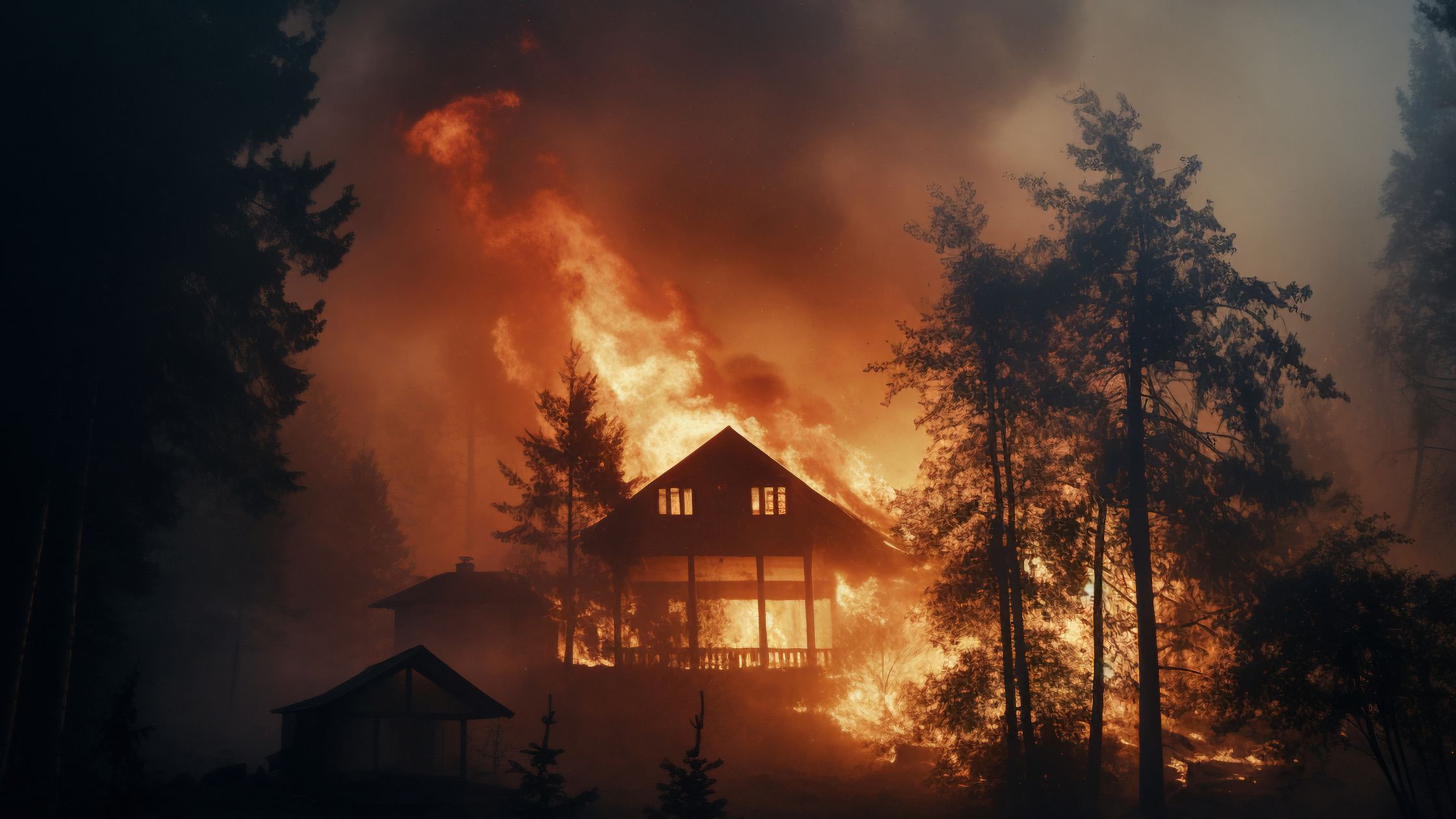

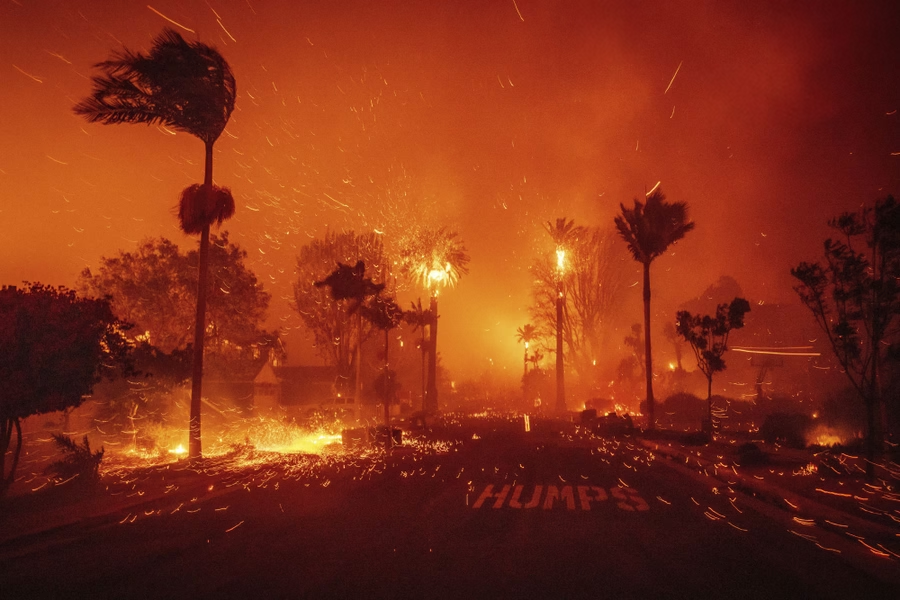
When passive protection measures like home hardening and defensible space are not enough, wildfire defense systems provide an active layer of protection that can mean the difference between a home that survives and one that is lost. These systems use exterior sprinklers, spray networks, monitoring technology, and remote activation to defend properties even when owners have evacuated. This comprehensive guide covers everything California homeowners need to know about wildfire defense system installation, from how the technology works to costs, maintenance, and real-world performance.
Editor’s note: Your insurance situation depends heavily on your property’s actual fire exposure. Our free risk assessment factors in official CAL FIRE data to show what your risk level actually is — useful context before talking to your carrier.
How Wildfire Defense Systems Work
Wildfire defense systems operate on a simple but powerful principle: keep exterior surfaces wet and cool so embers cannot ignite them and radiant heat cannot raise materials to their ignition temperature. Modern systems combine several technologies to achieve comprehensive coverage:
Exterior Sprinkler and Spray Networks
The core of any wildfire defense system is the exterior sprinkler network. These systems use strategically placed sprinkler heads mounted on the roof ridge, eaves, exterior walls, and around the property perimeter to saturate the home’s exterior and surrounding vegetation with water when activated.
- Roof-mounted sprinklers: High-flow nozzles on the roof ridge that cascade water down all roof surfaces, preventing ember ignition on the most exposed area of the home
- Eave-line sprinklers: Nozzles mounted along the eave line that wet exterior walls, windows, and the critical Zone 0 area directly below
- Wall-mounted spray heads: Low-profile nozzles on exterior walls that create a water curtain over siding, windows, and other vulnerable surfaces
- Perimeter sprinklers: Ground-level or post-mounted sprinklers that wet vegetation and ground cover within the immediate defensible space zone
- Deck and patio coverage: Dedicated spray heads for decks, patios, pergolas, and other attached structures
Remote Activation
Modern wildfire defense systems offer multiple activation methods so homeowners can protect their property even after evacuating:
- Smartphone app activation: Start the system remotely from anywhere with cellular or internet connectivity
- Automated sensor activation: Heat sensors, smoke detectors, or ember detectors trigger the system automatically when conditions exceed thresholds
- Timer-based activation: Pre-set activation schedules during red flag warnings or fire weather events
- Manual on-site activation: Push-button or valve activation for homeowners who choose to shelter or defend in place (only recommended with professional guidance)
- Monitoring service integration: Some systems connect to professional monitoring services that can activate the system when fire is detected in the area
Monitoring and Detection
Advanced wildfire defense systems include monitoring components that provide situational awareness and trigger automated responses:
- External camera systems: Heat-sensing and visible-light cameras that monitor the property perimeter for approaching fire
- Weather stations: On-site weather monitoring for wind speed, direction, humidity, and temperature to assess fire risk in real time
- Ember detection: Specialized sensors that detect airborne embers and trigger immediate system activation
- Water pressure monitoring: Sensors that verify water supply is available and the system is functioning properly
- System status alerts: Push notifications to the homeowner’s phone confirming system status, activation events, and any issues
Types of Wildfire Defense Systems
Permanent Exterior Sprinkler Systems
Permanent systems are professionally installed with fixed piping, dedicated water supply connections, and hardwired controls. They are the most reliable and comprehensive option for California homes in high-risk areas.
- Pros: Always ready, most reliable, comprehensive coverage, best insurance impact, highest survival rate
- Cons: Highest upfront cost, requires professional installation, may require permits
- Cost range: $8,000-$30,000 for a typical California home
Portable and Deployable Systems
Portable systems use temporary sprinkler heads connected to garden hoses or portable pumps. They can be deployed before evacuation and retrieved after the threat passes.
- Pros: Lower cost, no permanent installation, can be stored when not needed
- Cons: Requires deployment time (30-60 minutes), less reliable, limited coverage, manual activation only
- Cost range: $500-$3,000 for basic setups
Hybrid Systems
Hybrid systems combine permanent infrastructure (piping, water supply connections, control panels) with seasonal or deployable spray components. This approach reduces cost while maintaining core functionality.
- Pros: Moderate cost, permanent core infrastructure, seasonal component flexibility
- Cons: Requires seasonal setup of temporary components, partial coverage year-round
- Cost range: $5,000-$15,000
Gel and Foam Systems
Specialized systems that apply fire-blocking gel or foam to exterior surfaces instead of (or in addition to) water. These products create a protective coating that insulates surfaces from heat and prevents ember ignition.
- Pros: Longer-lasting protection per application, effective in low water supply situations, proven technology used by professional firefighters
- Cons: Higher consumable cost (gel/foam refills), cleanup required after activation, some products require professional application
- Cost range: $10,000-$25,000 including application system and initial gel/foam supply
Integrated Smart Systems
The newest generation of wildfire defense systems integrate sprinklers, monitoring, detection, and remote control into a unified smart platform with app-based management.
- Pros: Most comprehensive protection, automated response, remote management, data logging for insurance, integration with smart home systems
- Cons: Highest cost, requires reliable internet/cellular for remote features, technology maintenance
- Cost range: $15,000-$50,000
Installation Process
Professional wildfire defense system installation follows a structured process:
- Site assessment (1-2 hours): Ember Pro evaluates your property’s specific fire risk profile, water supply, structural characteristics, and terrain to design a system tailored to your needs
- System design (3-5 business days): Engineering of sprinkler head placement, piping layout, water supply sizing, control panel location, and activation methods
- Permit acquisition (if required, 1-4 weeks): Some jurisdictions require plumbing or building permits for permanent exterior sprinkler installations
- Infrastructure installation (2-5 days): Piping runs, sprinkler head mounting, control panel installation, and water supply connection
- Electrical and controls (1-2 days): Wiring for automated controls, sensor installation, monitoring equipment, and app connectivity setup
- Testing and commissioning (half day): Full system activation test, coverage verification, water pressure testing, and remote activation verification
- Owner training (1-2 hours): Complete walkthrough of system operation, maintenance requirements, app usage, and emergency procedures
Costs
Wildfire defense system installation costs in California depend on system type, property size, water supply configuration, and terrain complexity:
| System Type | Cost Range | Best For |
|---|---|---|
| Basic portable system | $500-$3,000 | Budget-conscious homeowners, renters |
| Permanent exterior sprinklers | $8,000-$30,000 | Standard residential properties |
| Hybrid system | $5,000-$15,000 | Moderate risk properties |
| Gel/foam system | $10,000-$25,000 | Properties with limited water supply |
| Integrated smart system | $15,000-$50,000 | High-value properties, maximum protection |
Additional cost factors include: water storage tank installation ($3,000-$10,000), dedicated pump system ($2,000-$8,000), backup power generator for pump operation ($3,000-$15,000), and annual monitoring service subscription ($200-$600 per year).
These are general costs. Your actual investment depends on your property’s fire zone, exposure level, and available grants or rebates.
Check my risk scoreProperty Requirements
Before installing a wildfire defense system, your property must meet certain requirements:
- Water supply: Adequate water pressure and volume for the system’s run time. Municipal water connections typically provide sufficient pressure; well water systems may require booster pumps
- Structural mounting points: Roof, eave, and wall surfaces must be structurally sound enough to support sprinkler heads and piping
- Electrical supply: Dedicated circuit for system controls, monitoring equipment, and pump operation (if applicable)
- Access for installation: Equipment access around the full property perimeter
- Complementary measures: Defense systems work best when combined with proper home hardening and defensible space maintenance. Ember Pro evaluates these factors during the site assessment
Water Supply Needs
Water supply is the most critical factor in wildfire defense system design. System requirements depend on the number of zones, sprinkler head count, and desired run time:
- Municipal water connection: Most suburban California homes have sufficient municipal water pressure (40-80 PSI) to run a basic exterior sprinkler system. Flow rates of 15-30 GPM are typical for residential systems
- Dedicated water storage: For properties with limited water supply or those wanting extended run times, dedicated water storage tanks (500-5,000 gallons) provide independent supply. A 2,500-gallon tank provides approximately 2-4 hours of system operation
- Well water systems: Properties on well water may require booster pumps and intermediate storage tanks to achieve adequate pressure and flow
- Pool water diversion: Some systems can draw from swimming pools as an emergency water source, providing 10,000-20,000+ gallons of immediately available water
- Pump requirements: Gas-powered or electric pumps rated for the system’s flow requirements, with backup power for electric pumps
Not sure which step to prioritize first? Our wildfire risk calculator shows your CAL FIRE zone and exposure level — so you know exactly where to start.
Maintenance
Regular maintenance ensures your wildfire defense system is ready when you need it:
- Annual system test: Full activation test to verify all sprinkler heads, valves, and controls function properly
- Seasonal inspection: Check sprinkler heads for blockage, inspect piping for leaks, verify water supply connections
- Filter cleaning: Clean intake filters and strainers to prevent debris from clogging sprinkler heads
- Freeze protection (mountain properties): Drain systems before winter to prevent freeze damage, or install heat trace on exposed piping
- Battery and power backup: Test backup batteries and generator starting annually
- Software updates: Keep smart system firmware and apps updated for security and functionality
- Consumable replacement: Replace gel/foam concentrates before expiration (typically 2-5 year shelf life)
Ember Pro offers annual maintenance contracts for all installed systems, ensuring your defense system is always ready for activation.
Ember Pro System Offerings
Ember Pro designs, installs, and maintains wildfire defense systems throughout California. Our system offerings include:
- Ember Shield residential system: Permanent exterior sprinkler system with roof, eave, and wall coverage, remote app activation, and water pressure monitoring. Starting at $8,500 installed
- Ember Shield Pro: Comprehensive system with smart monitoring, ember detection, automated activation, camera integration, and professional monitoring option. Starting at $18,000 installed
- Ember Shield Commercial: Large-property and commercial systems with multi-zone coverage, high-capacity water supply, and facility management integration. Custom pricing based on property assessment
- Water storage solutions: Above-ground and below-ground water storage tank installation for independent water supply. Starting at $3,500 installed
- Retrofit and upgrade services: Upgrade existing sprinkler systems with smart controls, monitoring, and remote activation capabilities
Insurance Benefits
Wildfire defense systems provide significant insurance benefits for California homeowners:
- Premium reductions: Many carriers offer 10-20% discounts for professionally installed wildfire defense systems
- Non-renewal prevention: A defense system demonstrates active risk mitigation that can prevent non-renewal decisions
- Coverage expansion: Some carriers offer broader coverage or lower deductibles for properties with active defense systems
- Documentation value: System activation logs and monitoring data provide evidence of property defense efforts during fire events, supporting insurance claims
- Bundled mitigation credits: When combined with home hardening and defensible space, defense systems contribute to maximum available mitigation credits
Real-World Performance Data
Field experience and research demonstrate the effectiveness of wildfire defense systems:
- Properties with operational exterior sprinkler systems during the 2020 and 2021 California fire seasons showed survival rates exceeding 95%, compared to approximately 85% for hardened-only homes and 60-70% for non-hardened homes in the same fire areas
- IBHS testing confirms that exterior wetting systems prevent ember ignition on roof surfaces and reduce radiant heat absorption by exterior walls
- Gel and foam systems tested by CAL FIRE demonstrated up to 4 hours of surface protection from a single application
- Remote-activated systems performed successfully even when homeowners were evacuated, with activation occurring via smartphone from evacuation shelters
Comparison to Passive Hardening
Active defense systems and passive home hardening are complementary strategies, not alternatives:
| Factor | Passive Hardening | Active Defense System |
|---|---|---|
| Protection type | Reduces ignitability of structure | Actively wets/coats surfaces during fire |
| Maintenance required | Low (periodic inspection) | Moderate (annual testing, seasonal inspection) |
| Requires activation | No, always protecting | Yes, must be activated manually or automatically |
| Water dependency | None | Requires adequate water supply |
| Power dependency | None | May require power for pumps and controls |
| Cost range | $15,000-$100,000+ | $5,000-$50,000 |
| Insurance impact | Significant premium reduction | Additional premium reduction |
| Protection level | Good to excellent | Excellent when combined with hardening |
The highest level of protection is achieved when passive hardening and active defense systems work together. Ember Pro recommends both for properties in Very High Fire Hazard Severity Zones.
Frequently Asked Questions
Can I install a wildfire defense system on any home?
Most California homes can accommodate a wildfire defense system. The key requirements are adequate water supply and structural mounting points. Ember Pro’s site assessment determines the best system configuration for your specific property.
How long does the system run on stored water?
A 2,500-gallon storage tank typically provides 2-4 hours of system operation, depending on the number of sprinkler zones and flow rate. Many fires pass a given property within 30-60 minutes, so even modest storage provides meaningful protection.
Will the system work during a power outage?
Systems connected to municipal water with adequate pressure operate without power. Systems requiring pumps should include backup power (generator or battery) to ensure operation during grid outages, which are common during wildfire events.
Does a defense system eliminate the need for evacuation?
No. A defense system protects your property, not your life. Always follow evacuation orders regardless of whether you have a defense system installed. The system is designed to operate remotely after you have evacuated to safety.
How does a defense system interact with building code compliance?
Wildfire defense systems are supplemental to, not a substitute for, California wildfire law requirements. You must still maintain defensible space, comply with Zone 0 requirements, and meet Chapter 7A building standards. A defense system adds an additional layer on top of required compliance.
Ember Pro designs, installs, and maintains wildfire defense systems throughout California, including San Diego County and Los Angeles County. Contact us today for your free site assessment and learn how an active defense system can protect your home when you cannot be there to defend it yourself.
Curious about your property’s actual wildfire risk? Our free calculator shows your CAL FIRE zone, exposure level, and recommended next steps based on your address.
Get your free risk score