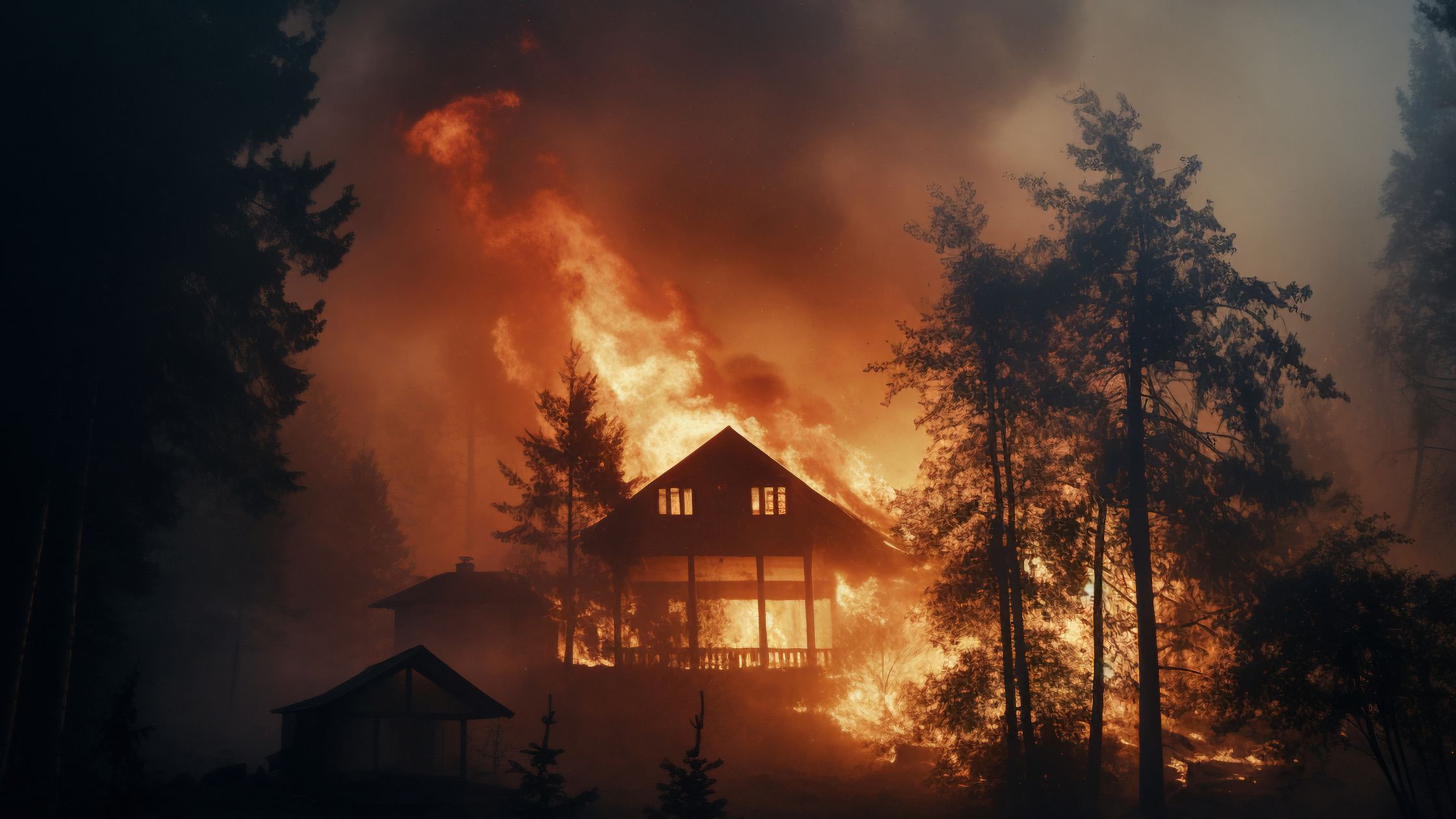


Wildfire risk is reshaping California real estate in ways that were unimaginable a decade ago. Properties in high-fire-risk areas are seeing value declines, longer time on market, and increasingly difficult insurance challenges. For California homeowners, understanding how wildfire risk affects property value—and what you can do to protect your investment—is no longer optional. This guide examines the data, the market dynamics, and the strategies that protect and enhance property value in fire-prone areas.
Editor’s note: Your insurance situation depends heavily on your property’s actual fire exposure. Our free risk assessment factors in official CAL FIRE data to show what your risk level actually is — useful context before talking to your carrier.
The Data: How Wildfire Risk Affects Property Values
Research from multiple sources confirms that wildfire risk has measurable effects on California property values:
- Post-fire price declines: Properties within 2 miles of a major wildfire experience average price declines of 10-20% that can persist for 3-5 years
- High-risk zone discounts: Properties in Very High Fire Hazard Severity Zones (VHFHSZ) sell at 5-15% discounts compared to similar properties in lower-risk areas
- Insurance-driven value loss: When insurance becomes unavailable or prohibitively expensive, property values decline further because buyers cannot secure mortgages without insurance
- Extended time on market: Homes in high-fire-risk areas take 15-30% longer to sell than comparable homes in lower-risk areas
- Buyer awareness: Post-2020 California real estate buyers are significantly more fire-conscious than previous generations
The Insurance-Value Connection
Insurance availability is now one of the most important factors in California real estate valuation. Here is why:
- Mortgage requirement: Lenders require homeowners insurance. If standard coverage is unavailable, buyers must use the FAIR Plan, which is more expensive and less comprehensive, reducing purchasing power
- FAIR Plan premium impact: FAIR Plan premiums of $5,000-$20,000+ annually reduce the amount buyers can afford for the home itself
- Non-renewal cascade: When insurers non-renew policies in a neighborhood, it signals increased risk to buyers and appraisers
- Appraisal considerations: Some appraisers are beginning to factor insurance availability and cost into property valuations
The connection is direct: difficult insurance equals lower property values. Conversely, properties with documented mitigation that maintains insurance availability protect their value.
Disclosure Requirements for California Sellers
California law requires sellers to disclose fire-related information to buyers:
- Natural Hazard Disclosure (NHD): Must disclose if the property is in a fire hazard zone (SRA, VHFHSZ)
- Fire hazard zone designation: Buyers must be informed of the property’s specific fire hazard zone
- Insurance history: Increasingly, buyers are asking about insurance claims history and current coverage availability
- Mitigation improvements: Sellers benefit from disclosing wildfire hardening improvements, as they add value
- Defensible space compliance: Evidence of defensible space compliance can be a selling point
How Wildfire Mitigation Protects Property Value
Proactive wildfire mitigation is one of the best investments a California homeowner can make for property value protection:
Direct Value Benefits
- Insurance maintenance: Documented mitigation helps maintain standard insurance coverage, avoiding FAIR Plan premiums that reduce property attractiveness
- Buyer confidence: A home with professional home hardening and documented mitigation reassures buyers about wildfire risk
- Appraisal support: Mitigation improvements can support higher appraisals in fire-prone areas
- Faster sales: Properties with documented wildfire protection sell faster in fire-risk areas
Mitigation ROI
The return on investment for wildfire mitigation is compelling:
- Defensible space compliance: $2,000-$10,000 investment can prevent $500,000+ in losses and maintain $5,000-$15,000 in annual insurance savings
- Vent and roof upgrades: $5,000-$30,000 in hardening can protect $500,000-$1,500,000 in property value
- Wildfire defense systems: $10,000-$30,000 investment provides both protection value and a marketable feature for future sales
- Insurance documentation: Professional assessment costs $300-$1,500 but can save thousands annually in premiums
Real Estate Strategies for Fire-Prone Areas
For Current Homeowners
- Invest in visible, documentable mitigation improvements
- Maintain comprehensive records of all fire protection measures
- Keep insurance current—even if expensive, it protects your equity
- Join Firewise USA community programs, which signal neighborhood-wide commitment to fire safety
- Consider professional wildfire defense system installation as a value-add improvement
For Buyers in Fire-Prone Areas
- Research fire hazard zone designations before making offers
- Get insurance quotes before closing—know your actual carrying costs
- Evaluate the property’s current fire resistance: roof type, siding, vents, defensible space
- Factor mitigation costs into your offer price
- Consider properties with existing home hardening improvements—they offer better long-term value
For Sellers in Fire-Prone Areas
- Complete defensible space work before listing
- Document all fire protection improvements with photos and receipts
- Obtain a professional wildfire risk assessment to provide to buyers
- Highlight insurance availability and current premium costs
- Market fire protection features prominently in listings
The Future of Property Values in Fire-Prone California
Several trends will shape property values in fire-prone areas going forward:
- Insurance reform: California’s insurance reforms may bring more carriers back to fire-prone areas, supporting values
- Building code evolution: Newer homes built to Chapter 7A standards will command premium prices compared to unretrofitted older homes
- Climate adaptation: Communities that invest in community-wide fire protection will maintain values better than those that do not
- Buyer sophistication: As buyers become more informed about fire risk, properties with documented mitigation will increasingly outperform
How Ember Pro Protects Your Property Value
Ember Pro’s wildfire mitigation services directly protect your property value by maintaining insurability, reducing fire risk, and creating documented improvements that buyers value. Our professional assessments provide the documentation that insurers, appraisers, and buyers need to see, while our defense systems and home hardening services provide the physical protection that preserves your investment.
Frequently Asked Questions
Will wildfire risk make my property unsellable?
No. Properties in fire-prone areas continue to sell, but at adjusted prices. Homes with documented mitigation, maintained insurance, and fire-resistant construction sell more easily and at better prices than unprotected homes.
Should I sell my home in a fire-prone area?
That depends on your personal risk tolerance and financial situation. If you choose to stay, invest in mitigation to protect both your safety and your equity. If you choose to sell, complete mitigation improvements first to maximize your sale price.
Do fire-hardened homes really sell for more?
In fire-prone areas, yes. Research from CoreLogic and Redfin shows that homes with fire-resistant features and documented defensible space sell faster and closer to asking price than comparable homes without these features.
How do I prove my home’s fire protection to buyers?
Professional documentation is key. Ember Pro’s wildfire risk assessments, defensible space evaluations, and hardening reports provide the credible third-party documentation that buyers and their agents want to see.
Will California real estate prices recover from fire risk discounts?
Areas with community-wide mitigation programs, improved building codes, and better insurance access will likely see value recovery. Areas without these improvements may see continued pressure on values.
References
- CoreLogic – Wildfire Risk and Property Value Analysis
- Redfin – Fire Zone Real Estate Market Data
- California Association of Realtors – Wildfire Disclosure Requirements
- California Department of Insurance – Insurance Availability in Fire Zones
- National Bureau of Economic Research (NBER) – Wildfire Risk Capitalization Studies
- Zillow Research – Impact of Natural Disasters on Home Values
Related Articles
- Wildfire Insurance: What California Homeowners Need to Know
- Complete Guide to Defensible Space in California
- Home Hardening Strategies for Wildfire Protection
- Wildfire Defense Systems for California Homes
- California Wildfire Laws 2026: What Changed
Ember Pro helps California homeowners protect their property value through professional wildfire mitigation, documentation, and defense systems. Whether you are staying, selling, or buying in a fire-prone area, our services protect your investment. Contact us today.
Curious about your property’s actual wildfire risk? Our free calculator shows your CAL FIRE zone, exposure level, and recommended next steps based on your address.
Get your free risk score