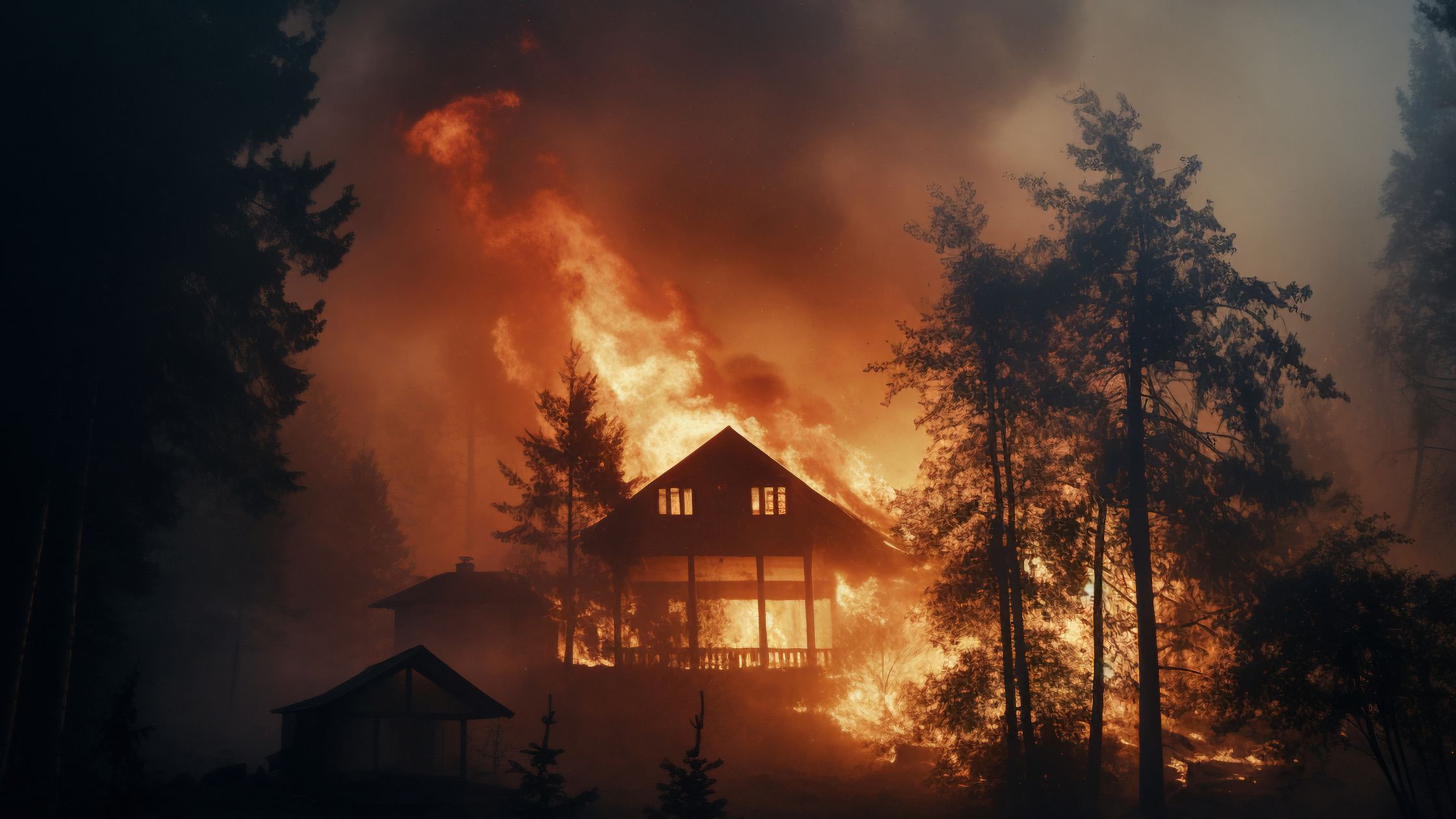

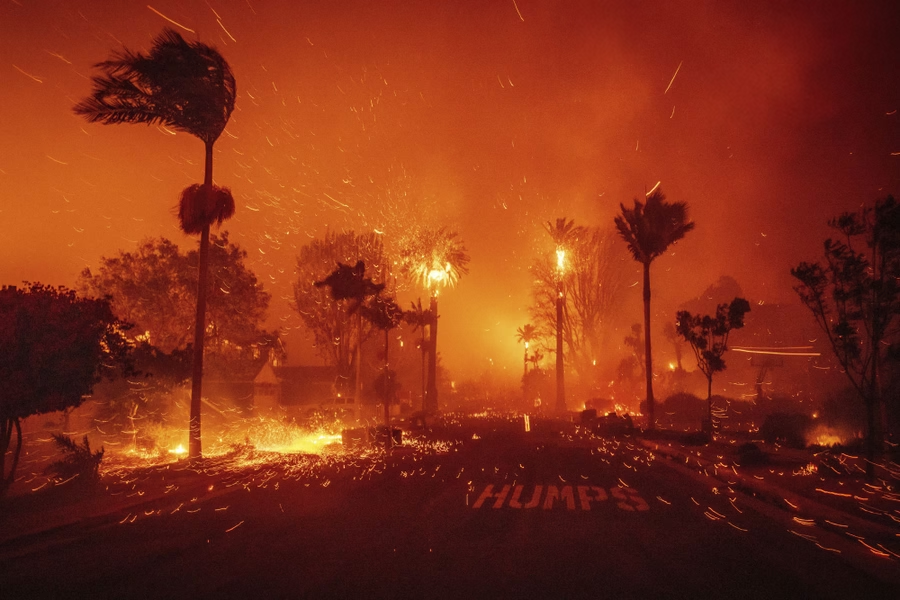
Your roof is the single most important building element for wildfire survival. As the largest horizontal surface on your home, it receives the heaviest bombardment of airborne embers during a wildfire. IBHS research confirms that roof material and condition are the strongest predictors of whether a home survives or ignites during a wildfire event. For California homeowners in fire-prone areas, choosing the right fire resistant roofing material is not just a construction decision—it is a survival decision.
Editor’s note: Your insurance situation depends heavily on your property’s actual fire exposure. Our free risk assessment factors in official CAL FIRE data to show what your risk level actually is — useful context before talking to your carrier.
Understanding Fire Resistance Ratings
Roofing materials are tested and rated under ASTM E108, which classifies fire resistance into three classes:
- Class A (highest): Effective against severe fire exposure. Required for all new construction in California’s fire hazard zones. Withstands burning brands, intermittent flame, and radiant heat
- Class B (moderate): Effective against moderate fire exposure. Not compliant with California Chapter 7A requirements in fire hazard areas
- Class C (minimal): Effective against light fire exposure only. Not appropriate for any fire-prone area
- Unrated: No fire resistance testing. This includes untreated wood shake, which is the most dangerous roofing material in a wildfire
California Building Code Chapter 7A requires Class A roofing on all new construction in State Responsibility Areas (SRA) and Very High Fire Hazard Severity Zones (VHFHSZ). While existing homes are not required to retrofit, insurers increasingly require Class A roofing for coverage renewal.
Fire Resistant Roofing Materials Compared
Standing Seam Metal Roofing
Fire Rating: Class A (non-combustible)
- Pros: Completely non-combustible, lightweight, extremely durable (40-70 year lifespan), excellent wind resistance, reflects solar heat, minimal maintenance
- Cons: Higher initial cost, can dent from falling branches, requires professional installation, potential noise during rain
- Cost: $8-$16 per square foot installed
- Best for: Maximum fire protection with long-term value. Ideal for high-risk areas
Metal roofing is arguably the best roofing choice for California wildfire zones. It cannot ignite, it sheds embers, and it withstands radiant heat without degradation. The higher upfront cost is offset by its exceptional lifespan and zero combustion risk.
Concrete Tile
Fire Rating: Class A (non-combustible)
- Pros: Non-combustible, extremely durable (50+ year lifespan), excellent aesthetic options, heavy weight resists wind uplift
- Cons: Very heavy (requires structural assessment), higher cost, tiles can crack from impact, gaps between tiles can trap embers
- Cost: $10-$18 per square foot installed
- Best for: Mediterranean and Spanish-style California homes where aesthetics matter
Critical detail: Concrete tile achieves Class A rating, but the gaps between tiles can allow ember intrusion. Use bird stops (mortar or metal closures) at the eave edge and seal gaps at ridges and hips to prevent ember penetration beneath tiles.
Clay Tile
Fire Rating: Class A (non-combustible)
- Pros: Non-combustible, beautiful traditional appearance, extremely long lifespan (75+ years), excellent thermal performance
- Cons: Very heavy, expensive, brittle (breaks when walked on), same ember gap concerns as concrete tile
- Cost: $12-$25 per square foot installed
- Best for: High-end homes where appearance and fire protection are both priorities
Asphalt Composition Shingles (Class A)
Fire Rating: Class A when fiberglass-based with proper underlayment
- Pros: Most affordable fire-resistant option, widely available, easy to repair, lightweight, variety of styles and colors
- Cons: Shorter lifespan (20-30 years), can deteriorate in extreme heat, may lose granules over time reducing fire resistance, moderate wind resistance
- Cost: $3-$7 per square foot installed
- Best for: Budget-conscious homeowners who need Class A compliance. The best value option for fire resistance
Important: Not all asphalt shingles are Class A rated. Verify the specific product’s fire rating before purchasing. Fiberglass-based shingles with mineral granules are Class A; organic-mat shingles are typically Class C or unrated.
Synthetic Slate and Shake
Fire Rating: Class A (most products)
- Pros: Looks like natural slate or shake without the fire risk, lightweight, durable (30-50 years), impact resistant
- Cons: Moderate to high cost, relatively new products with less long-term track record, quality varies by manufacturer
- Cost: $6-$12 per square foot installed
- Best for: Homeowners who want the appearance of wood shake or slate with fire resistance
Natural Slate
Fire Rating: Class A (non-combustible natural stone)
- Pros: Completely non-combustible, beautiful, extremely long lifespan (100+ years), zero maintenance
- Cons: Very heavy, very expensive, requires specialized installation, brittle
- Cost: $15-$30+ per square foot installed
- Best for: Luxury homes where cost is secondary to performance and aesthetics
Roofing Materials to Replace Immediately
- Wood shake (untreated): The most dangerous roofing material in a wildfire. Embers ignite wood shake within seconds. Replace immediately regardless of condition
- Wood shake (fire-treated): Better than untreated but still significantly more flammable than Class A alternatives. Treatment wears off over time. Replace when due for maintenance
- Class B or C rated materials: Not compliant in VHFHSZ areas and provide inadequate protection. Replace at end of life or sooner if in a high-risk area
Wondering if your property is in a high-risk fire zone? Check your wildfire risk score to see your CAL FIRE zone and exposure level based on your address.
Beyond the Roofing Material: Complete Roof System
Fire resistance depends on the entire roof system, not just the surface material:
- Underlayment: Use fire-resistant underlayment (fiberglass-based) beneath all roofing materials
- Sheathing: Solid sheathing (plywood or OSB) is preferable to skip sheathing for fire resistance
- Flashing: Metal flashing at all roof-wall intersections prevents ember entry
- Ridge and hip closures: Seal all gaps at ridges and hips to prevent ember penetration
- Eave closures: Bird stops and metal closures at eave edges block ember entry beneath tiles
- Gutters: Metal gutters with guards prevent debris accumulation at roof edges
Roof Maintenance for Fire Season
Even the best roofing material fails if not maintained:
- Clear all leaves, needles, and debris from roof surface monthly during fire season
- Clean gutters thoroughly before and during fire season
- Remove moss and lichen growth that can trap embers
- Inspect and replace cracked or missing tiles
- Check flashing for gaps or deterioration
- Trim tree branches to maintain 10-foot clearance from roof surface
How Roofing Affects Insurance
Your roof type directly impacts your wildfire insurance availability and premiums:
- Class A roofing is often required for coverage renewal in fire hazard areas
- Metal and tile roofs may qualify for additional premium discounts
- Wood shake roofs can result in immediate non-renewal
- Roof age and condition are evaluated during insurance inspections
- Documenting your roof’s fire rating and installation date supports insurance negotiations
How Ember Pro Helps with Roofing Decisions
Ember Pro’s home hardening assessments include detailed roof evaluation covering material, condition, ember vulnerability, and compliance with Chapter 7A. We help you prioritize roofing improvements within your overall wildfire protection strategy and provide documentation for insurance compliance.
Frequently Asked Questions
Is a metal roof worth the extra cost?
In high-fire-risk areas, yes. The combination of non-combustibility, 40-70 year lifespan, and insurance benefits makes metal roofing the best long-term value for fire protection. Over its lifespan, a metal roof costs less per year than asphalt shingles.
Can I put a Class A roof over my existing wood shake?
Some jurisdictions allow overlay, but best practice is to remove the wood shake completely. Wood shake beneath new roofing still represents a fire risk if embers penetrate the outer layer.
Do solar panels affect roof fire resistance?
Solar panels can both help and hinder. They shield the roof surface from ember landing but can trap debris beneath panels. Ensure adequate clearance for maintenance and use fire-resistant mounting systems. Solar panels do not change your roof’s fire rating.
How do I know if my roof is Class A rated?
Check the original building permit or contact your roofing manufacturer with your product information. A roofing contractor can also evaluate your current materials and confirm their fire rating.
Should I replace my roof before fire season?
If your roof is wood shake, replace it as soon as possible regardless of season. If your roof is aging Class A material, plan replacement for the off-season but ensure it is clean and maintained for the current fire season.
References
- ASTM International – Standard E108: Fire Tests of Roof Coverings
- California Building Code Chapter 7A – Roof Requirements for WUI Areas
- Insurance Institute for Business and Home Safety (IBHS) – Roofing and Wildfire Research
- CAL FIRE – Roof Material Requirements for Fire Hazard Areas
- Metal Roofing Alliance – Fire Resistance Data and Studies
- California State Fire Marshal – Approved Roofing Materials List
Related Articles
- Home Hardening Strategies for Wildfire Protection
- Complete Guide to Defensible Space in California
- Wildfire Defense Systems for California Homes
- Wildfire Insurance: What California Homeowners Need to Know
- California Wildfire Laws 2026: What Changed
Ember Pro evaluates your roof as part of our comprehensive wildfire risk assessment and helps you choose the right fire-resistant roofing for your home and budget. Contact us today for a professional home hardening consultation.
Curious about your property’s actual wildfire risk? Our free calculator shows your CAL FIRE zone, exposure level, and recommended next steps based on your address.
Get your free risk score