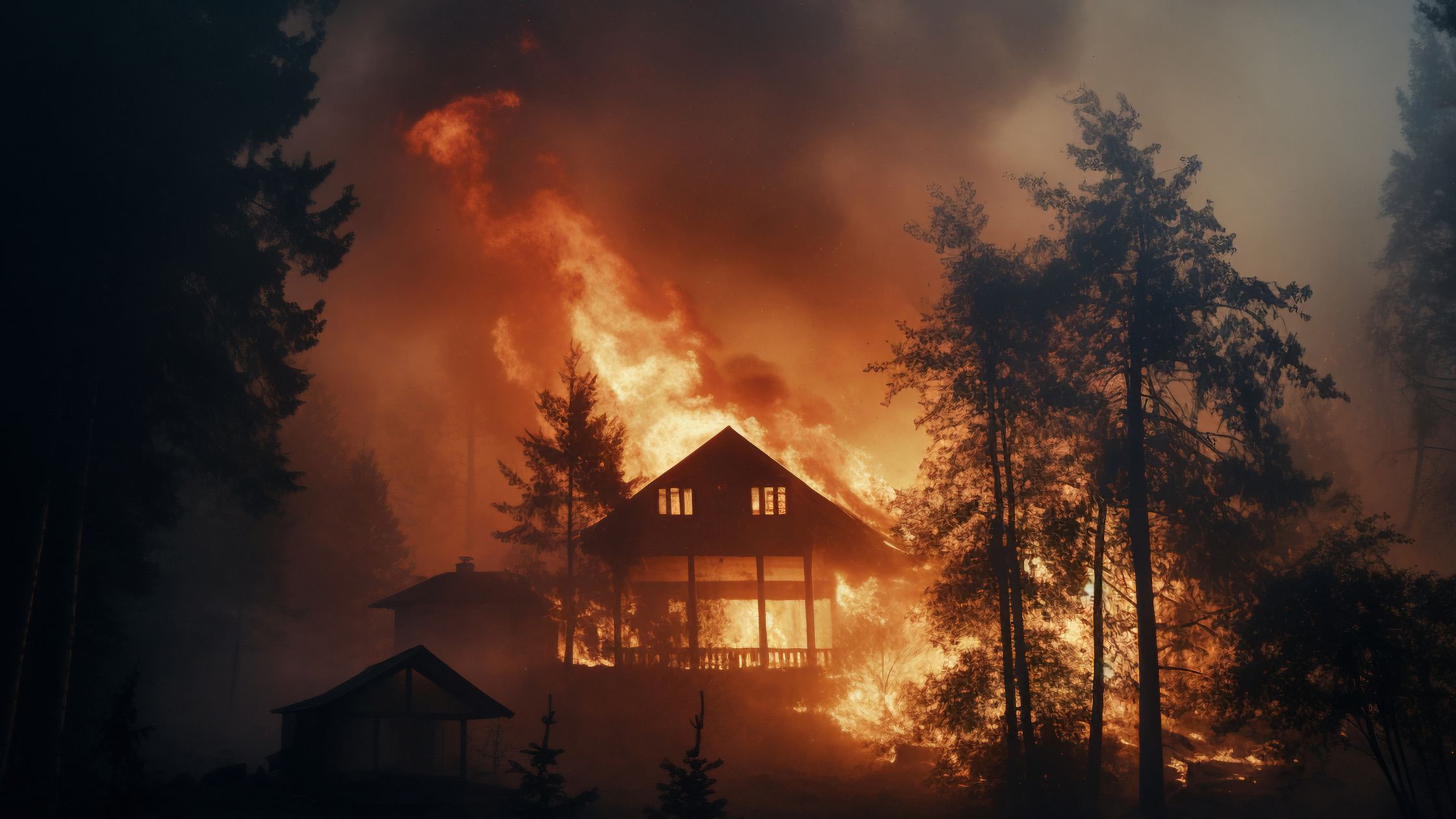

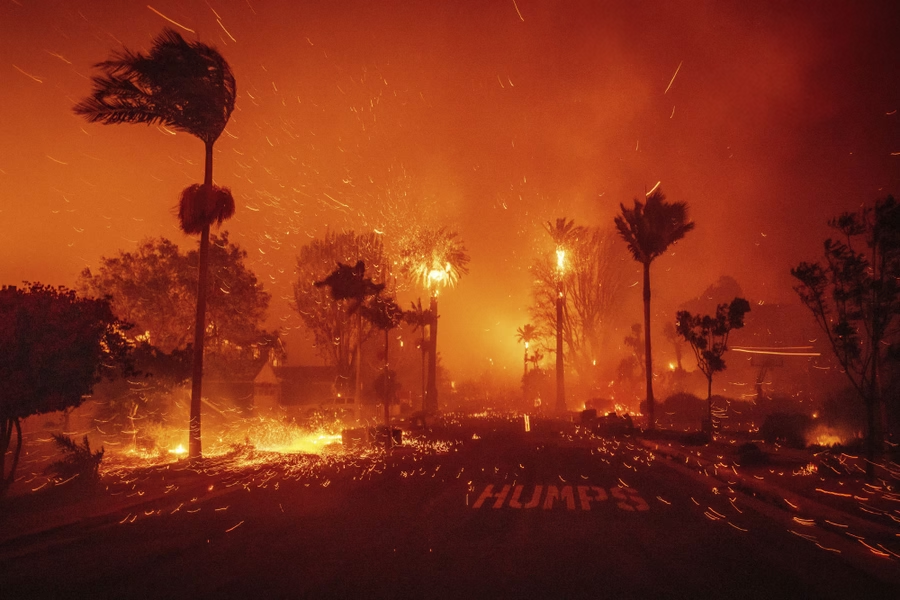
Wildfire does not respect property lines. A single unmitigated home in a neighborhood can put every surrounding property at risk. Community Wildfire Protection Plans (CWPPs) address this reality by coordinating wildfire preparedness at the neighborhood, HOA, and municipal level. In California, where millions of homes sit in the wildland-urban interface, community-wide coordination is not just beneficial—it is essential for meaningful wildfire protection. This guide explains how to create, implement, and sustain a CWPP for your California community.
Editor’s note: Your insurance situation depends heavily on your property’s actual fire exposure. Our free risk assessment factors in official CAL FIRE data to show what your risk level actually is — useful context before talking to your carrier.
What Is a Community Wildfire Protection Plan?
A CWPP is a collaborative plan developed by a community in partnership with local fire departments, CAL FIRE, and other stakeholders. Authorized by the Healthy Forests Restoration Act of 2003, CWPPs provide communities with a framework for identifying wildfire risks, prioritizing mitigation actions, and accessing federal and state funding for implementation.
A CWPP typically includes:
- Community wildfire risk assessment
- Prioritized fuel reduction and vegetation management projects
- Structural ignitability reduction strategies
- Evacuation route identification and improvement
- Community education and outreach programs
- Coordination with local, state, and federal fire agencies
Not sure which step to prioritize first? Our wildfire risk calculator shows your CAL FIRE zone and exposure level — so you know exactly where to start.
Why Community-Level Planning Matters
Individual homeowner efforts—defensible space, home hardening, and defense systems—are essential but insufficient alone. Community-wide coordination multiplies the effectiveness of individual efforts:
- Continuous fuel breaks: When every property maintains defensible space, the community creates a continuous fuel break that stops fire spread
- Shared evacuation planning: Coordinated evacuation plans prevent bottlenecks and ensure vulnerable residents get help
- Group purchasing power: Communities can negotiate better rates for mitigation services, fire-retardant application, and defense systems
- Insurance benefits: Firewise USA recognized communities may receive insurance benefits that individual homeowners cannot access
- Grant eligibility: CWPPs unlock federal and state grant funding for community mitigation projects
- Accountability: Community standards encourage compliance and address non-participating neighbors
Steps to Create a Community Wildfire Protection Plan
Step 1: Form a Planning Committee
Assemble a diverse committee representing your community:
- HOA board members or community leaders
- Local fire department representatives
- CAL FIRE liaison (contact your local CAL FIRE unit)
- Concerned homeowners willing to lead outreach
- Commercial property representatives if applicable
- Local government officials (county supervisor’s office, planning department)
Step 2: Conduct a Community Risk Assessment
Evaluate your community’s overall wildfire risk:
- Map fire hazard severity zones within and adjacent to the community
- Identify fuel types and densities surrounding the community
- Assess topography—slope, aspect, and terrain features that affect fire behavior
- Evaluate community access and evacuation routes
- Survey structural ignitability—roof types, siding, vent conditions, Zone 0 compliance across the community
- Identify water supply for firefighting (hydrants, ponds, tanks)
- Review historical fire data for the area
Step 3: Prioritize Mitigation Actions
Based on the risk assessment, prioritize community actions:
- High priority: Community-wide defensible space compliance, vent screening, gutter cleaning, and Zone 0 establishment
- Medium priority: Shared fuel reduction projects on common areas, road shoulders, and open space
- Ongoing: Annual maintenance, education programs, and new resident orientation
- Long-term: Community-wide home hardening upgrades, infrastructure improvements, water supply enhancement
Step 4: Develop the Written Plan
Document your CWPP with these required components:
- Community description and boundaries
- Risk assessment findings
- Prioritized project list with timelines and responsible parties
- Evacuation plan with routes and assembly points
- Community education strategy
- Maintenance and monitoring schedule
- Signatures from local fire department, CAL FIRE, and community representatives
Step 5: Secure Funding
CWPPs unlock access to multiple funding sources:
- FEMA Hazard Mitigation Grant Program (HMGP): Available after presidential disaster declarations for community-wide mitigation
- FEMA Building Resilient Infrastructure and Communities (BRIC): Annual competitive grants for hazard mitigation projects
- CAL FIRE Fire Prevention Grants: State funding for vegetation management and community fire prevention
- California Climate Investments: State cap-and-trade funding for fire-related community projects
- USDA Community Wildfire Defense Grant: Federal program specifically for CWPP implementation
- HOA assessments: Community-funded mitigation through HOA budgets
Firewise USA: The National Recognition Program
Firewise USA, administered by the National Fire Protection Association (NFPA), provides a nationally recognized framework for community wildfire preparedness. To achieve Firewise USA recognition:
- Form a Firewise committee of at least three residents and one wildfire professional
- Complete a community wildfire risk assessment
- Develop and submit an action plan addressing identified risks
- Invest a minimum of $2 per capita annually in wildfire mitigation activities (volunteer labor counts)
- Host at least one community wildfire education event annually
- Submit annual renewal documentation
Firewise USA recognition provides tangible benefits: some insurers offer premium discounts for Firewise communities, grant applications are strengthened, and community awareness increases.
HOA-Specific Considerations
For HOA communities, CWPPs align with existing governance structures:
- Incorporate wildfire mitigation requirements into CC&Rs (Covenants, Conditions, and Restrictions)
- Establish minimum defensible space and compliance standards for all properties
- Budget for community-wide vegetation management in common areas
- Coordinate annual community defensible space days
- Create enforcement mechanisms for non-compliant properties
- Negotiate community-wide contracts for mitigation services
Commercial and Mixed-Use Community Planning
Communities with commercial properties face additional considerations:
- Commercial buildings may have different construction standards and fire protection requirements
- Business continuity planning should be integrated with community wildfire plans
- Commercial property owners may have access to different insurance and mitigation programs
- Large commercial properties can serve as fire breaks or staging areas during wildfire events
- Commercial vegetation management budgets can supplement community-wide efforts
Maintaining Your CWPP Over Time
A CWPP is not a one-time document. Effective plans require ongoing maintenance:
- Annual review and update of risk assessments
- Regular community education events and outreach
- Monitoring and enforcement of defensible space standards
- New resident orientation to community fire safety expectations
- Updated evacuation plans reflecting road changes and development
- Documentation of completed projects for grant reporting
Success Stories: California Communities That Got It Right
Several California communities have demonstrated the effectiveness of coordinated wildfire planning:
- Communities with active Firewise programs experienced significantly lower structure loss rates during the 2025 fire season compared to non-participating neighbors
- HOAs with mandatory defensible space requirements have maintained insurance availability when surrounding areas lost coverage
- Communities with CWPPs accessed millions in federal and state grant funding for vegetation management projects that individual homeowners could not have funded alone
How Ember Pro Supports Community Wildfire Plans
Ember Pro works with HOAs, community organizations, and municipalities to develop and implement wildfire protection at the community level. Our services include:
- Community-wide wildfire risk assessments
- CWPP development and documentation
- Firewise USA recognition assistance
- Group defensible space and home hardening programs
- Community-wide defense system design and installation
- Fire-retardant spray application for entire neighborhoods
- Community education workshops and training
- Insurance documentation for community-wide mitigation
Our community programs leverage group purchasing power to deliver professional mitigation at lower per-property costs than individual service.
Frequently Asked Questions
How long does it take to create a CWPP?
A basic CWPP can be developed in 3-6 months. More comprehensive plans with detailed risk assessments and stakeholder engagement may take 6-12 months. The planning process itself builds community engagement and awareness.
Do we need a professional to create a CWPP?
While communities can develop CWPPs independently, professional assistance improves plan quality and grant competitiveness. Many communities hire wildfire consultants for risk assessments while handling community engagement internally.
What if some neighbors refuse to participate?
Non-participating neighbors are a common challenge. HOAs can enforce compliance through CC&Rs. In non-HOA communities, peer pressure, education, and demonstrating the benefits of participation are the primary tools. CAL FIRE can also enforce PRC 4291 compliance independently.
How much does a community wildfire plan cost?
Costs vary widely. A basic CWPP with volunteer labor can be developed for $5,000-$15,000. Comprehensive plans with professional risk assessment and detailed implementation strategy may cost $25,000-$100,000. Grant funding can offset most or all of these costs.
Can our community access grants without a CWPP?
Some grants require a CWPP. Others prioritize communities with CWPPs. Having a CWPP significantly improves your competitiveness for federal and state wildfire mitigation funding.
What is the difference between a CWPP and Firewise USA?
A CWPP is a planning document. Firewise USA is an ongoing recognition program. They complement each other: a CWPP provides the strategic framework, while Firewise USA provides the annual implementation structure and national recognition.
References
- Healthy Forests Restoration Act of 2003 – CWPP Authority
- National Fire Protection Association (NFPA) – Firewise USA Program Guidelines
- CAL FIRE – Community Wildfire Protection Planning Resources
- FEMA – Hazard Mitigation Grant Program and BRIC Program
- USDA Forest Service – Community Wildfire Defense Grant Program
- International Association of Fire Chiefs – Community Wildfire Planning Guide
These are general costs. Your actual investment depends on your property’s fire zone, exposure level, and available grants or rebates.
Check my risk scoreRelated Articles
- Complete Guide to Defensible Space in California
- Home Hardening Strategies for Wildfire Protection
- Wildfire Defense Systems for California Homes
- Wildfire Insurance: What California Homeowners Need to Know
- California Wildfire Laws 2026: What Changed
Ember Pro partners with California communities to develop and implement effective wildfire protection plans. From risk assessment to community-wide defense system installation, we help neighborhoods protect every home. Contact us to discuss community wildfire protection for your HOA or neighborhood.
Curious about your property’s actual wildfire risk? Our free calculator shows your CAL FIRE zone, exposure level, and recommended next steps based on your address.
Get your free risk score