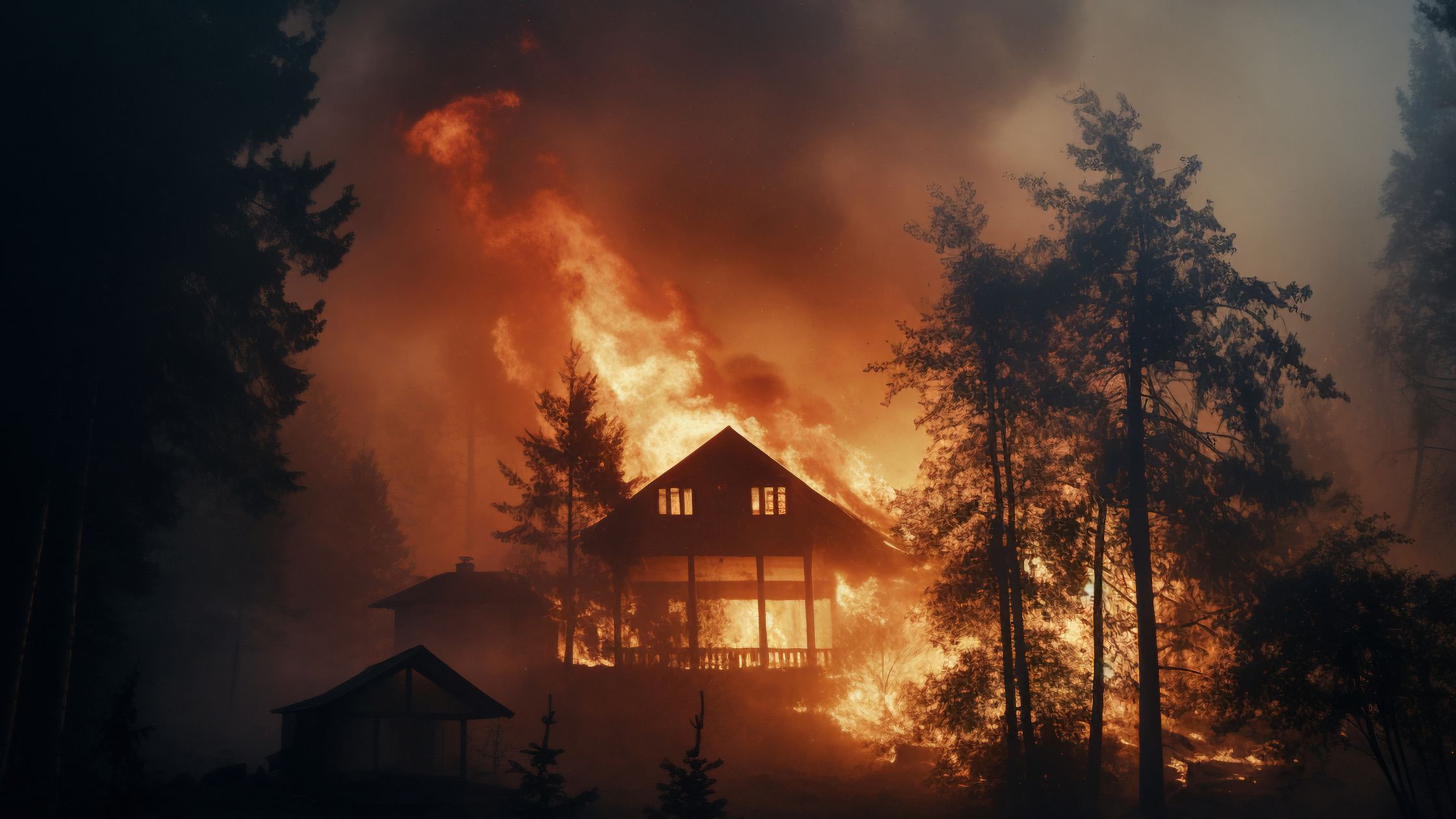

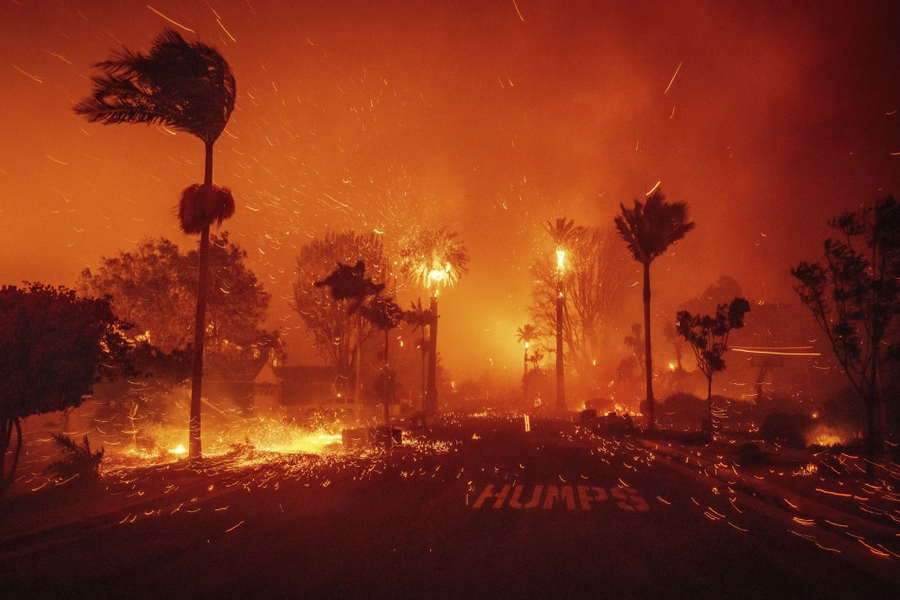
When a wildfire evacuation order comes, you may have minutes to leave your home. The difference between a calm, organized departure and a panicked scramble is preparation. A well-stocked wildfire preparedness kit, combined with a practiced evacuation plan, gives you the critical advantage of being ready before the threat arrives. For California homeowners in fire-prone areas, a go-bag is not a luxury—it is a necessity that should be maintained year-round alongside your defensible space and home hardening measures.
Not sure which step to prioritize first? Our wildfire risk calculator shows your CAL FIRE zone and exposure level — so you know exactly where to start.
Go-Bag Essentials: What to Pack
Your go-bag should contain everything you need to sustain your family for 72 hours away from home. Keep it in an easily accessible location near your primary exit, and check contents every six months.
Critical Documents
Documents are irreplaceable and should be the first priority in your go-bag. Store originals or certified copies in a waterproof, fireproof document bag.
- Government-issued IDs (driver’s license, passport) for all family members
- Birth certificates and Social Security cards
- Homeowners insurance policy number and agent contact information
- Property deed or mortgage documents
- Vehicle titles and registration
- Medical records, prescription lists, and immunization records
- Financial account information (bank accounts, investment accounts)
- Emergency contact list (printed, not just stored on your phone)
- Recent home inventory with photos or video documentation
Medications and Medical Supplies
- Minimum 7-day supply of all prescription medications
- First aid kit with bandages, antiseptic, pain relievers, and antihistamines
- Prescription eyeglasses or contact lenses with solution
- Medical devices (hearing aids, CPAP, insulin pump supplies)
- N95 or P100 respirator masks for smoke protection (minimum 2 per person)
- Eye drops and saline solution for smoke irritation
Electronics and Communication
- Fully charged portable power bank (minimum 20,000 mAh)
- Phone chargers and cables for all devices
- Battery-powered or hand-crank AM/FM radio for emergency broadcasts
- Flashlights with extra batteries
- Laptop or tablet with critical files (if time permits)
- Portable Wi-Fi hotspot or ensure cellular plan has adequate data
Clothing and Personal Items
- Change of clothing for each family member (long pants, long sleeves, closed-toe shoes)
- Sturdy shoes or boots suitable for walking on debris
- Jacket or sweatshirt (temperatures drop at night, even in summer)
- Toiletries: toothbrush, toothpaste, soap, deodorant, feminine hygiene products
- Blankets or sleeping bags (one per person)
- Cash in small bills ($200-$500; ATMs may be down during emergencies)
Food and Water
- Water: minimum 1 gallon per person per day for 3 days
- Non-perishable food for 3 days (energy bars, canned goods, dried fruit, nuts)
- Manual can opener
- Disposable plates, cups, and utensils
- Baby formula and food if applicable
Editor’s note: Your insurance situation depends heavily on your property’s actual fire exposure. Our free risk assessment factors in official CAL FIRE data to show what your risk level actually is — useful context before talking to your carrier.
Pet Supplies
Pets cannot be left behind during a wildfire evacuation. Many shelters do not accept animals, so plan for pet-friendly accommodations in advance.
- Pet carrier or crate (large enough for comfort during extended travel)
- 3-day supply of pet food and water
- Pet medications (minimum 7-day supply)
- Leash, collar with ID tag, and harness
- Vaccination records and microchip information
- Recent photo of each pet (for identification if separated)
- Familiar blanket or toy to reduce stress
- Waste bags and litter supplies
- List of pet-friendly hotels and boarding facilities along your evacuation routes
Vehicle Preparation
Your vehicle is your evacuation lifeline. Keep it maintained and ready for emergency departure at all times during fire season.
- Keep gas tank at least half full during fire season (three-quarters is better)
- Maintain a vehicle emergency kit: jumper cables, tire inflator, basic tools
- Keep a physical road map in the vehicle (GPS may be unreliable during emergencies)
- Store an extra set of car keys in your go-bag
- Park your vehicle facing outward in your driveway for fastest departure
- Keep windows rolled up and air recirculation set to ON when driving through smoke
- Ensure wiper fluid is full (ash and debris coat windshields rapidly)
Communication Plan
Cell networks often become overwhelmed during large evacuations. A communication plan ensures your family can reconnect if separated.
- Designate an out-of-area contact person who all family members can check in with
- Establish a meeting point outside the evacuation zone
- Program emergency numbers into all family phones: local fire, county sheriff, CAL FIRE
- Sign up for county emergency alerts (Nixle, Alert California, or county-specific systems)
- Download Watch Duty app for real-time wildfire tracking
- Text rather than call during emergencies (texts use less bandwidth and are more likely to go through)
- Ensure all family members know the plan, including children old enough to understand
Evacuation Route Planning
Do not wait for an evacuation order to figure out your routes. Plan and practice multiple routes in advance.
- Identify at least 2-3 different evacuation routes from your home
- Drive each route during non-emergency conditions to familiarize yourself
- Note potential bottlenecks, narrow roads, and one-way-out neighborhoods
- Identify evacuation centers and shelters along each route
- Consider routes that avoid canyon roads, which can become fire traps
- Plan for traffic: evacuations create gridlock, so the earlier you leave, the safer you are
- If you have livestock or large animals, identify loading points and trailer routes
Important Documents to Protect
Beyond your go-bag documents, protect critical records against loss by creating redundant copies.
- Scan all important documents and store in cloud storage (Google Drive, Dropbox, iCloud)
- Create a home inventory video: walk through every room recording contents and serial numbers
- Photograph all insurance documents, including declarations pages and endorsements
- Store copies of estate planning documents (wills, trusts, powers of attorney) with your attorney
- Keep digital copies of property surveys, permits, and renovation records
Digital Backup Strategies
Digital backups ensure that even if physical documents are lost, you retain access to critical information.
- Use automatic cloud backup for all phones and computers
- Store a USB drive or external hard drive with critical files in your go-bag
- Use a password manager so you can access all accounts from any device
- Email yourself a summary of critical account numbers and contacts
- Consider a secure digital vault service for the most sensitive documents
- Ensure at least two family members have access to cloud storage accounts
Curious about your property’s actual wildfire risk? Our free calculator shows your CAL FIRE zone, exposure level, and recommended next steps based on your address.
Get your free risk scoreSeasonal Readiness Checklist
Wildfire preparedness is not a one-time task. Use this seasonal checklist to stay ready year-round.
Spring (Before Fire Season)
- Check and refresh all go-bag contents: rotate food, update medications, charge electronics
- Review and update evacuation routes
- Verify insurance coverage and update home inventory
- Complete defensible space vegetation management
- Test smoke detectors and replace batteries
- Practice evacuation with all family members including pets
Summer (Active Fire Season)
- Monitor Watch Duty and CAL FIRE alerts daily
- Keep go-bags in vehicles during red flag warnings
- Maintain vehicle fuel above three-quarters tank
- Review evacuation triggers with family: what conditions prompt departure
Fall (Peak Fire Danger)
- Maintain heightened readiness through October-November
- Re-check all go-bag supplies
- Clear accumulated fall leaves from Zone 0
When to Evacuate vs. Shelter in Place
The default answer is always evacuate when ordered. However, understanding the difference helps you make informed decisions.
- Always evacuate when: An evacuation order is issued, fire is approaching rapidly, you have limited egress routes, or visibility is severely reduced by smoke
- Consider early departure when: An evacuation warning is issued, fire activity is increasing in your area, or wind conditions are unfavorable
- Shelter in place only when: Evacuation routes are blocked and you cannot safely leave. This is a last resort, not a planned strategy
Ember Pro always recommends erring on the side of early evacuation. Your home can be rebuilt; you cannot. Proper home hardening and defensible space give your home the best chance of surviving without you present.
Frequently Asked Questions
How much does a wildfire preparedness kit cost?
A basic go-bag can be assembled for $150-$300 per person. Higher-end kits with premium gear, extensive medical supplies, and multi-day food provisions run $500-$1,000. The cost is minimal compared to the consequences of being unprepared.
Should I have separate kits for home and car?
Yes. Keep your primary go-bag near your exit door and a smaller emergency kit in your vehicle at all times during fire season. The vehicle kit should include water, snacks, a flashlight, N95 masks, and a phone charger.
How often should I update my preparedness kit?
Check and refresh kit contents every six months minimum. Rotate food and water annually. Update medications whenever prescriptions change. Replace batteries in all devices before each fire season.
What about valuable items like jewelry or heirlooms?
Identify your most important irreplaceable items and keep a grab list near your go-bag. During evacuation warnings, stage these items near your exit. Do not delay evacuation to search for valuables.
Do I need a generator during evacuation?
Portable generators are useful at evacuation shelters or temporary housing but are not essential for the go-bag itself. If you stay with friends or family, a small power station can keep devices charged.
What if I have elderly family members who need assistance?
Register elderly or mobility-limited family members with your county’s special needs evacuation program. Many counties provide assisted evacuation for those who cannot self-evacuate. Contact your local fire department for details.
References
- CAL FIRE – Ready, Set, Go! Wildfire Action Plan
- FEMA – Emergency Supply Kit Recommendations
- American Red Cross – Wildfire Preparedness Checklist
- California Governor’s Office of Emergency Services – Evacuation Planning Guide
- Watch Duty – Real-Time Wildfire Monitoring Application
- National Weather Service – Red Flag Warning Criteria and Response
Related Articles
- Home Hardening Strategies for California Homes
- Defensible Space: The 100-Foot Rule Explained
- Active Wildfire Defense Systems for Your Property
- Wildfire Insurance: Protecting Your Coverage
- California Wildfire Laws 2026: What You Need to Know
Ember Pro helps California homeowners prepare for wildfire season with comprehensive risk assessments, home hardening services, and preparedness planning. Contact us today to ensure your home and family are ready before the next fire season.