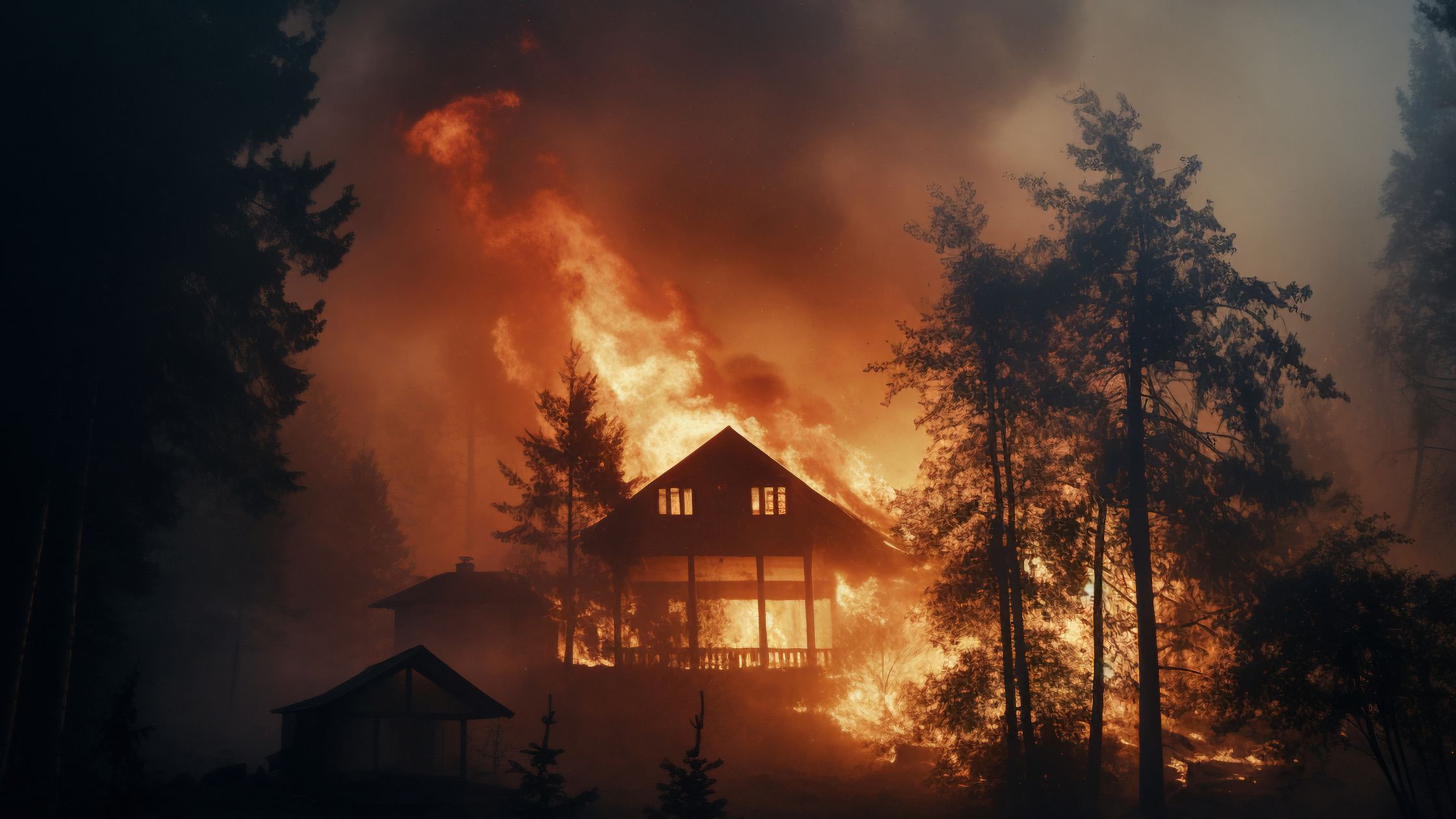


Ember attack is the number one cause of home ignition during wildfires. Research from the Insurance Institute for Business and Home Safety (IBHS) and CAL FIRE confirms that embers—not direct flame contact—are responsible for destroying the majority of homes lost to wildfire in California. These burning particles can travel more than a mile ahead of the fire front, landing on and igniting vulnerable parts of your home long before flames reach your property. Understanding how ember attack works and how to protect your home from it is the single most important step you can take to survive wildfire season.
Editor’s note: Your insurance situation depends heavily on your property’s actual fire exposure. Our free risk assessment factors in official CAL FIRE data to show what your risk level actually is — useful context before talking to your carrier.
How Ember Attack Destroys Homes
During a wildfire, intense heat creates convection columns that loft burning embers—also called firebrands—high into the air. Wind carries these embers downwind, where they land on homes, in gutters, on decks, and in any opening they can find. A single ember the size of a fingernail can ignite a home if it lands in the right spot.
The IBHS post-fire research consistently shows the same pattern: homes ignite not from wall-of-flame contact but from embers entering through vents, accumulating in gutters, landing on combustible roofing, or finding dead vegetation in Zone 0—the critical 0-5 foot perimeter around your home.
This means your home’s vulnerability to ember attack is largely within your control. By eliminating ember entry points and removing combustible materials from your home’s immediate perimeter, you dramatically improve your chances of survival.
The Science of Ember Transport
Understanding ember behavior helps you prioritize protection measures:
- Travel distance: Embers can travel 1-2 miles ahead of the fire front during extreme wind events like Santa Ana winds
- Size range: From tiny sparks to burning branches several inches long
- Accumulation: Individual embers may not ignite materials, but ember showers create accumulations that generate enough heat to ignite even fire-resistant materials
- Duration: Ember showers can last hours, meaning your home must withstand sustained bombardment, not just a single event
- Wind-driven penetration: Embers are pushed into gaps as small as 1/16 inch by high winds
Not sure which step to prioritize first? Our wildfire risk calculator shows your CAL FIRE zone and exposure level — so you know exactly where to start.
Critical Ember Entry Points on Your Home
Attic and Soffit Vents
Vents are the most vulnerable ember entry point on most California homes. Standard 1/4-inch mesh vents allow embers to enter attic spaces, where they ignite insulation and framing. The solution:
- Replace all vents with 1/8-inch corrosion-resistant metal mesh
- Install ember-resistant vent covers that automatically close during extreme heat
- Ensure all soffit, ridge, gable, and foundation vents are properly screened
- Check for gaps around vent installations where embers could bypass screens
Gutters and Roof Edges
Gutters filled with dry leaves and pine needles are ember catchers. A single ember landing in debris-filled gutters can ignite your roof line:
- Clean gutters before and throughout fire season
- Install metal gutter guards that prevent debris accumulation
- Replace plastic or vinyl gutters with metal
- Ensure no debris accumulates at roof valleys and edges
Roof Surface
Your roof is the largest horizontal surface on your home and receives the most ember exposure:
- Install Class A fire-rated roofing (required by California building code in high-risk areas)
- Replace wood shake roofs immediately—they are the highest-risk roofing material
- Seal gaps between roofing tiles where embers can penetrate
- Install metal flashing at roof-wall intersections
- Keep roof surface clear of leaves, needles, and moss
Eaves and Soffits
Open eaves expose rafters and roof sheathing to ember intrusion and radiant heat:
- Box in all open eaves with fire-resistant materials
- Install ignition-resistant soffits
- Seal any gaps where soffits meet the wall
Windows and Doors
Single-pane windows can crack and break from radiant heat, allowing embers inside:
- Install dual-pane or tempered glass windows
- Ensure weather-stripping is intact on all exterior doors
- Install tight-fitting door sweeps
- Consider fire shutters for windows facing high-risk vegetation
Decks and Porches
Combustible decks are significant ember catchers, especially the spaces beneath them:
- Enclose deck undersides with fire-resistant skirting
- Remove stored items beneath decks
- Use fire-resistant composite decking or non-combustible materials
- Keep deck surfaces clear of all combustible items during fire season
Zone 0: Your Primary Ember Defense
California’s AB 3074 created Zone 0—the 0-5 foot area immediately around your home—specifically to address ember attack. This zone must be completely free of combustible vegetation, mulch, and stored materials. Only hardscape materials—gravel, stone, concrete—are permitted.
Zone 0 compliance is your single most effective ember defense because it eliminates the combustible materials where embers accumulate and ignite next to your walls, windows, and doors. When embers land on gravel instead of bark mulch, they burn out harmlessly.
Beyond Zone 0, maintaining proper defensible space throughout Zones 1 and 2 reduces ember generation from vegetation on your own property and creates space for ember fallout to burn out before reaching your structure.
Active Ember Defense Systems
Beyond passive hardening, active wildfire defense systems provide additional protection during ember attack events:
- Exterior sprinkler systems: Wet your roof, walls, and Zone 0 before and during ember showers to prevent ignition
- Ember-resistant vent systems: Automatically close when they detect extreme heat
- Fire-retardant spray application: Professional application of fire retardant to structures and vegetation creates a protective barrier that resists ember ignition
- Automated monitoring systems: Detect ember arrival and activate protective measures without human presence
These systems are particularly valuable because ember attacks often occur after evacuation orders are issued, meaning homeowners are not present to fight spot fires from ember landings. Automated systems provide protection when you cannot.
Post-Fire Ember Hazards
Ember attack does not end when the fire front passes. Burning embers can continue falling for hours or even days after a wildfire moves through an area. Additionally, embers that entered attic spaces, wall cavities, or accumulated beneath decks may smolder for extended periods before producing visible flames.
After a wildfire passes your area:
- Check your attic for any signs of smoke, heat, or smoldering
- Inspect beneath decks, porches, and stairs
- Look for smoke from walls, eaves, and roof lines
- Check rain gutters and roof valleys for smoldering debris
- Monitor for several days—embers can smolder for 48-72 hours before igniting
How Ember Pro Protects Against Ember Attack
Ember Pro specializes in comprehensive ember attack protection for California homes. Our approach combines structural hardening, defensible space management, and active defense systems to create layered ember protection.
Our services include:
- Professional ember vulnerability assessment identifying all entry points
- Vent replacement and screening to 1/8-inch mesh standards
- Zone 0 compliance evaluation and implementation
- Fire-retardant spray application for structures and vegetation
- Active defense system design and installation
- Insurance compliance documentation proving ember protection measures
Our ember protection assessments have helped hundreds of California homeowners identify and eliminate the vulnerabilities that would otherwise lead to home loss during a wildfire.
Frequently Asked Questions
How far can embers travel during a wildfire?
Embers routinely travel 1 mile and can travel up to 2 miles ahead of a fire front during extreme wind events. During Santa Ana wind conditions in Southern California, embers have been documented traveling even farther.
Can my home survive ember attack without me being there?
Yes. Homes properly hardened against embers with sealed vents, fire-rated roofing, Zone 0 compliance, and clean gutters can survive ember attack without any human intervention. This is why passive hardening is so important—your home must protect itself when you evacuate.
What is the most important thing I can do to protect against embers?
Replace or screen all vents with 1/8-inch metal mesh and maintain Zone 0 compliance. These two measures address the primary ember entry point (vents) and the primary ember ignition zone (the 0-5 foot perimeter).
Do fire-resistant plants protect against ember attack?
Fire-resistant plants reduce ember generation from your own property, but they do not stop embers arriving from distant fires. Proper spacing and Zone 0 hardscape are more important than plant selection for ember defense.
How much does ember protection cost?
Basic ember hardening—vent screening, gutter guards, and Zone 0 compliance—typically costs $2,000 to $8,000 for a standard California home. Comprehensive protection including active defense systems ranges from $10,000 to $30,000, depending on home size and complexity.
Will my insurance cover ember protection improvements?
Most insurers do not cover the cost of improvements directly, but many offer premium reductions for homes with documented ember protection measures. Some California programs provide grants for wildfire hardening in high-risk areas.
References
- Insurance Institute for Business and Home Safety (IBHS) – Ember Intrusion Research
- CAL FIRE – Home Hardening and Ember Protection Guidelines
- National Institute of Standards and Technology (NIST) – Wildland-Urban Interface Fire Research
- California Building Code Chapter 7A – Materials and Construction for Wildfire Exposure
- USDA Forest Service – Ember Production and Transport Studies
- California Assembly Bill 3074 (AB 3074) – Zone 0 Requirements
Related Articles
- Complete Guide to Defensible Space in California
- Understanding Zone 0 Requirements
- Wildfire Defense Systems for California Homes
- Home Hardening Strategies for Wildfire Protection
- Wildfire Insurance: What California Homeowners Need to Know
Ember Pro is California’s specialist in ember attack protection. Our professional assessments, hardening services, and defense systems help homeowners eliminate the vulnerabilities that lead to home loss during wildfire. Contact us today to schedule your ember vulnerability assessment.
Curious about your property’s actual wildfire risk? Our free calculator shows your CAL FIRE zone, exposure level, and recommended next steps based on your address.
Get your free risk score