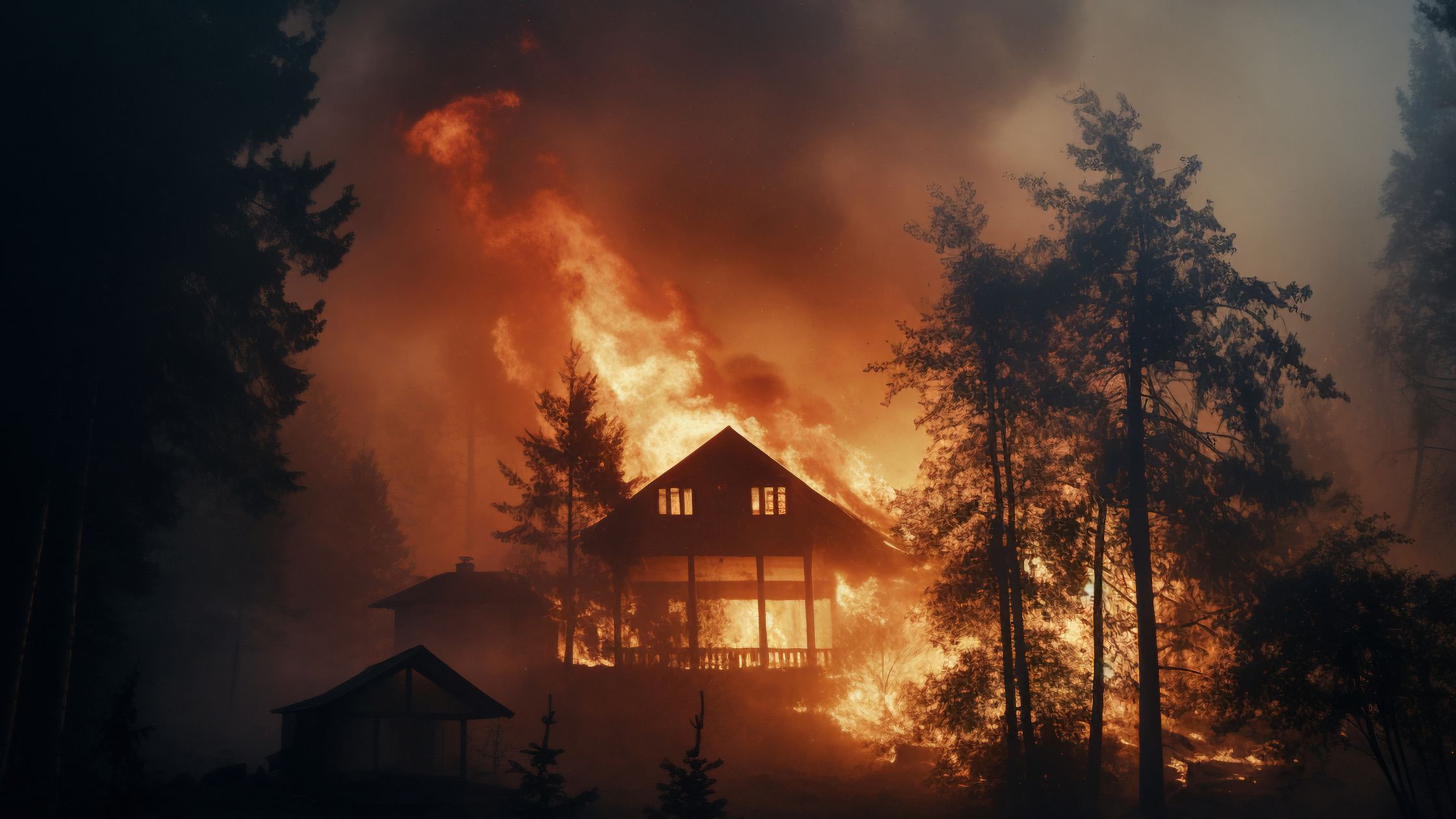

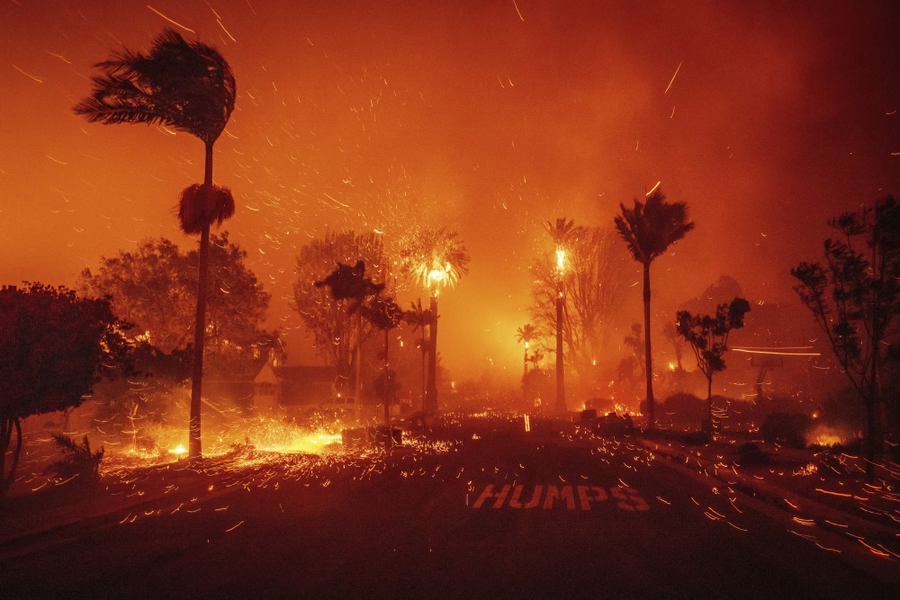
Rural and off-grid properties face unique wildfire challenges that traditional fire suppression systems simply cannot address. When your home is located beyond city limits—miles from municipal water supplies, emergency services, and even cellular coverage—conventional fire defense strategies become ineffective. Off-grid wildfire defense with remote activation represents a revolutionary approach to protecting properties where property owners are often absent during peak fire season. These systems combine solar power, satellite connectivity, and automated fire suppression to defend homes even when no one is present.
Editor’s note: Your insurance situation depends heavily on your property’s actual fire exposure. Our free risk assessment factors in official CAL FIRE data to show what your risk level actually is — useful context before talking to your carrier.
The Unique Challenges of Off-Grid Wildfire Protection
Off-grid properties operate independently from municipal infrastructure, which creates both advantages and significant vulnerabilities when it comes to wildfire protection. Unlike homes connected to city water systems that can rely on outdoor sprinklers and fire department access, off-grid homes must be self-sufficient in their defense strategies. The isolation that appeals to many rural property owners becomes a critical liability during wildfire events.
Water Supply and Accessibility Issues
Off-grid homes typically depend on well water or cistern systems designed for residential use, not firefighting. These systems rarely provide adequate pressure or volume for effective fire suppression. Furthermore, many off-grid properties are accessed by long driveways or forest roads that become impassable once fire approaches. Emergency responders may be unable to reach your property in time, meaning your home must be capable of self-defense.
Remote Location Disadvantages
Distance compounds the protection problem. When your property is miles from the nearest fire station, emergency response times measure in hours rather than minutes. Seasonal properties that sit vacant during summer and fall—exactly when wildfire risk peaks—face particular danger. Property owners cannot monitor conditions in real-time or activate manual defenses, leaving homes completely unprotected during the highest-risk periods.
Communication and Monitoring Gaps
Traditional fire alarm systems depend on cellular or internet connectivity that may not exist at remote properties. Satellite internet has improved dramatically in recent years, but many off-grid properties still struggle with reliable communication infrastructure. This communication gap means property owners cannot receive real-time fire warnings or activate defenses manually when emergencies occur.
Remote Activation Technology for Off-Grid Defense
Modern off-grid wildfire defense systems overcome these challenges through three integrated technologies: satellite communication, solar power generation, and automated suppression systems. Together, these technologies create a complete defense solution that operates independently of municipal infrastructure and external power sources.
Satellite-Connected Activation Systems
Satellite communication eliminates the connectivity problem entirely. Unlike cellular networks that may have dead zones in rural areas, satellite systems provide coverage everywhere on Earth. Fire defense systems equipped with satellite modules receive real-time fire condition alerts from monitoring services and can be remotely activated by property owners from anywhere in the world. When a wildfire threat is detected, the system can immediately engage suppression mechanisms without requiring human presence at the property.
Solar-Powered System Architecture
Off-grid properties already embrace renewable energy through solar power systems. Wildfire defense systems integrate seamlessly with existing solar installations, drawing power from the same battery banks that power home electrical systems. Solar-powered systems eliminate dependency on municipal electricity and ensure that fire suppression continues operating even if power lines are damaged or utility services are disrupted. Battery backup systems provide multiple days of operation, ensuring defenses remain active throughout extended fire events.
Automated Activation Triggers
Remote activation can occur in multiple ways. Property owners receive real-time notifications from Zone Zero fire protection monitoring services and can activate systems manually through web or mobile apps. Alternatively, systems can be programmed to activate automatically when heat or smoke sensors detect fire in proximity to the property. This dual activation approach ensures protection even if remote activation fails—the systems engage automatically when danger arrives at your door.
How Remote Activation Works When You’re Not Home
The primary advantage of remote activation technology is protection during property vacancy. Seasonal homes, vacation properties, and investment real estate are often unoccupied during peak wildfire season. Remote activation systems eliminate this vulnerability entirely.
Real-Time Threat Detection and Response
Integrated monitoring systems track wildfire proximity, air quality indexes, and fire weather conditions. When designated threat thresholds are reached, property owners receive notifications. They can then remotely activate fire suppression systems through their smartphone or computer. The system receives the activation command via satellite, confirms reception, and immediately engages fire suppression mechanisms. The entire process takes seconds, providing protection even when property owners are thousands of miles away.
Autonomous Protection Systems
Backup automatic activation ensures protection if remote systems fail. Heat and smoke detection sensors installed around the property perimeter can trigger suppression systems automatically when fire approaches. These systems can also activate based on thermal imaging or air quality data when manual activation is not possible. Multiple redundant activation pathways guarantee that your property receives protection under virtually all circumstances.
24/7 Monitoring Service Integration
Professional fire monitoring services provide around-the-clock threat assessment. When fire danger increases to dangerous levels, these services notify property owners and can coordinate with emergency responders. Some advanced systems allow monitoring services to activate suppression systems directly with property owner authorization, ensuring rapid response during critical moments when owners may be sleeping or unable to receive notifications.
These are general costs. Your actual investment depends on your property’s fire zone, exposure level, and available grants or rebates.
Check my risk scoreBenefits for Vacation and Seasonal Properties
Seasonal property owners face extreme wildfire risk. A property occupied for three months annually experiences nine months of complete vulnerability. Off-grid remote activation systems transform this equation by providing protection during both occupied and vacant periods.
Continuous Protection Throughout the Year
Your vacation home remains defended whether you’re present or in another state. Remote activation systems continue monitoring and protecting your investment 365 days per year. This comprehensive protection eliminates the anxiety of leaving seasonal properties undefended during peak fire season, allowing owners to enjoy their properties with confidence.
Insurance Benefits and Premium Reductions
Insurance companies recognize the risk reduction provided by remote activation fire defense systems. Properties equipped with these systems often qualify for significant premium discounts—sometimes 15-25% depending on your insurer and specific system specifications. Over a multi-year period, these premium reductions can offset the entire cost of system installation. Talk to your insurer about {link_or_text(‘mitigation_insurance’, ‘fire mitigation insurance discounts’)} available for remote-controlled suppression systems.
Preventing Total Loss Scenarios
The difference between early suppression and no suppression is often the difference between property loss and preservation. A home that catches fire at night while unoccupied faces catastrophic damage without active suppression. Remote activation systems suppress fires in their earliest stages, before they become uncontrollable. For vacation properties, this early suppression capability often prevents total loss.
Integration with Professional Monitoring Services
The most effective remote activation systems integrate with professional fire monitoring services that track wildfire conditions across your region. These services provide several critical functions beyond simple activation coordination.
Real-Time Threat Assessment
Professional services track active wildfires, evacuation orders, air quality data, and fire weather conditions. They notify property owners when threats escalate and can recommend when to activate preventive suppression. This professional assessment removes guesswork from protection decisions and ensures that resources are deployed efficiently.
Coordination with Emergency Services
Advanced monitoring services coordinate with local fire departments and emergency responders. When your property’s suppression systems activate, coordinating services can notify responding fire crews, improving response coordination and ensuring that your property is prioritized appropriately during emergency response.
Documentation and Compliance Verification
Professional monitoring maintains detailed records of all activation events, system status checks, and maintenance activities. This documentation proves {link_or_text(‘compliance’, ‘fire safety compliance’)} with insurance requirements and local {link_or_text(‘wildfire_laws’, ‘wildfire safety regulations’)}. Complete documentation also supports insurance claims if property damage does occur.
How Ember Pro Enables Off-Grid Remote Activation
Ember Pro specializes in solving the unique challenges of rural and off-grid property protection. Our {link_or_text(‘defense_systems’, ‘automated fire defense systems’)} combine proven suppression technology with cutting-edge remote activation capability specifically designed for off-grid environments.
Ember Pro Integrated Solutions
Rather than requiring complex integration of separate systems, Ember Pro provides complete {link_or_text(‘defensible_space’, ‘defensible space’)} solutions that work seamlessly together. Our systems combine {link_or_text(‘retardants’, ‘fire retardant’)} application, automatic ignition suppression, and satellite-enabled remote activation in unified systems that share power infrastructure and monitoring platforms.
Expert Installation and Ongoing Support
Our technicians understand off-grid property challenges from years of experience installing systems at remote rural properties. We work with existing solar installations, water systems, and {link_or_text(‘preparedness’, ‘fire preparedness’)} infrastructure to create seamless integrations. After installation, Ember Pro provides ongoing monitoring, system updates, and {link_or_text(‘preparedness’, ‘preparedness support’)} to ensure your systems remain effective year-round.
Not sure which step to prioritize first? Our wildfire risk calculator shows your CAL FIRE zone and exposure level — so you know exactly where to start.
Frequently Asked Questions About Off-Grid Remote Activation
Will remote activation work during poor satellite conditions?
Modern satellite systems provide coverage even in challenging conditions, though extreme weather or terrain obstruction can temporarily degrade signals. For this reason, the best remote activation systems include multiple backup activation pathways—automatic thermal triggers, cellular backup where available, and manual local controls. Redundancy ensures protection even if one activation method fails.
How often does a remote activation system require maintenance?
Professional-grade systems require seasonal maintenance before fire season begins and after major use events. Maintenance includes sensor calibration, power system verification, {link_or_text(‘retardants’, ‘retardant’)} supply checks, and communication system testing. Most systems require 2-4 hours of professional maintenance annually.
Can I test my remote activation system without discharging suppression chemicals?
Yes—professional systems include dry-test capabilities that verify all activation pathways and communication systems without deploying suppression chemicals. We recommend quarterly dry tests to ensure system reliability.
What happens if the property is sold?
Remote activation systems transfer to new owners and can be reconfigured for their contact information and activation preferences. Professional monitoring services and insurance coordination continue seamlessly with new ownership.
Next Steps: Protecting Your Off-Grid Property
Off-grid properties deserve defense solutions engineered for their unique challenges. Remote activation systems eliminate the vulnerability of vacant properties and provide protection that survives communication failures, power outages, and emergency service delays. For rural California property owners, this technology transforms wildfire risk from an uncontrollable threat into a manageable concern.
Ready to protect your off-grid property with remote activation capability? Ember Pro’s wildfire defense specialists can assess your property’s specific challenges and design a custom protection system that integrates with your existing infrastructure. Contact us today for a free site evaluation and custom protection proposal. Let’s ensure your property is defended, whether you’re home or away.
Curious about your property’s actual wildfire risk? Our free calculator shows your CAL FIRE zone, exposure level, and recommended next steps based on your address.
Get your free risk score