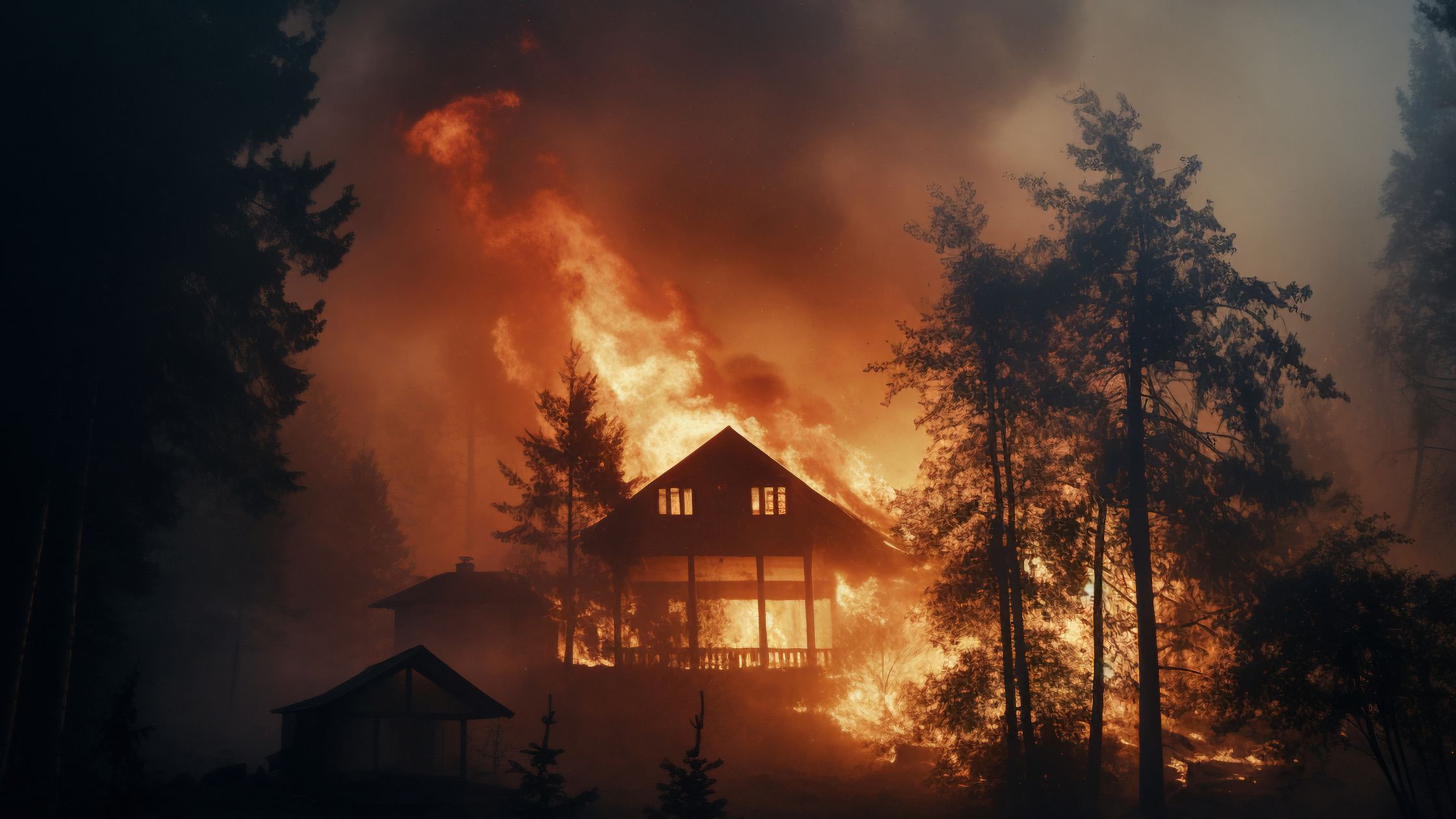

Seasonal fire protection before Santa Ana season
Fire Retardant Spray for California Homes
What Is Fire Retardant Spray for Homes?
Fire retardant spray is a professionally applied, non-toxic coating for homes and landscaping that reduces ember and radiant-heat ignition in wildfire season. Ember Pro frames it as seasonal—about 3–6 months; heavy rain can wash it off, so most SoCal homes plan roughly 2–4 applications per year—not a substitute for hardening or Zone 0.
- Satellite review — map exposure and priority surfaces before you meet on site.
- Zoom consult — align spray timing with fire weather and insurance goals.
- On-site assessment — Zone 0 edges, vegetation, decks, eaves, and wind corridors.
- Apply & document — professional treatment with notes/photos for your broker file.
- Reapply calendar — refresh after heavy rain or on a 2–4×/year seasonal cadence.
- Seasonal spray — fast barrier for peak season; no permanent install.
- Wildfire Defense System — remotely activated off-grid protection when you evacuate.
- Hardening / Zone 0 — clear combustibles and close ember entry points spray cannot “fix.”
How long does fire retardant spray last on a California home?
Homepage framing: protection typically lasts about 3–6 months depending on weather. Heavy rain can wash the barrier off. Many Southern California homeowners schedule roughly 2–4 applications per year around peak fire season.
Is the spray safe for people, pets, and plants?
Ember Pro uses non-toxic, life-safe fire-inhibiting agents intended for occupied homes and landscaping. Your assessment confirms product fit for the surfaces and vegetation on your lot.
Can spray replace a wildfire defense system?
Not always. Spray is a seasonal coat applied before threat. A wildfire defense system is permanently installed and remotely activated when fire is near. Many owners start with spray, then add WFDS—or use both after assessment.
Does spray help with insurance or non-renewal?
Documented mitigation often strengthens broker and carrier conversations. Pair spray records with Zone 0, hardening, and the paper trail on wildfire insurance / FAIR Plan. No treatment guarantees a renewal.
Where should spray be applied?
Priority is usually near-structure vegetation and exterior ignition surfaces identified on assessment—not a random fence-only DIY coat. Ember Pro scopes what your risk and budget actually need.
Ember Pro’s process is free satellite review → Zoom → on-site assessment → seasonal spray and/or remotely activated off-grid WFDS. Request an assessment at emberprousa.com/contact-eco-friendly-wildfire-defense-experts or call ((858) 939-9345. Full menu: wildfire mitigation services.
Reviewed by Ember Pro’s wildfire mitigation team · CSLB-licensed contractor · Serving Southern California
Seasonal, non-toxic protection for vegetation and exterior surfaces—before Santa Ana season, not after the non-renewal letter.
Get a Wildfire Risk Assessment · Call (858) 939-9345
Process: free satellite property review → consult (Zoom) → on-site assessment → spray schedule and/or defense system scope.
What it is
Fire retardant spray is a professionally applied, non-toxic / biodegradable fire inhibitor coated onto high-risk surfaces and landscaping so embers and radiant heat are less likely to ignite the home.
Ember Pro’s spray program is seasonal—timed for Southern California’s peak fire weather—not a one-time DIY bottle on the fence.
- Professional application to homes and landscaping
- Protection typically lasts 3–6 months depending on weather; heavy rain (about 2 inches or more) can wash it away
- Recommended 2–4 applications per year
This is the commercial service page. Deep education stays on the supporting guide: Fire Retardant Spray for Homes: The Complete California Guide.
Process
- Satellite property review — CAL FIRE / exposure context before you talk to a carrier or broker.
- Consult (Zoom) — walk roof, vegetation, and insurance goals without a sales circus.
- Wildfire risk assessment — ignition pathways: Zone 0, vents/eaves, decks/fences, vegetation, wind exposure.
Optional stack: add a permanently installed, remotely activated Wildfire Defense System for evacuation-day protection when you are already gone.
Who it’s for
- SoCal homeowners in WUI / high fire severity zones (San Diego County, LA basin, inland valleys, coastal canyons)
- Properties with wood decks, fences, siding, ornamental vegetation, or dry fuels near the structure
- Owners facing non-renewal, FAIR Plan placement, or broker requests for documented mitigation
- HOAs / property managers who need a repeatable seasonal program, not a one-off weekend project
- Homes that already hardened Zone 0 but still want an active chemical barrier ahead of Red Flag weeks
Not a substitute for: clearing Zone 0 combustibles, ember-resistant vents, or defensible space under PRC 4291 / AB 3074.
How spray fits with other Ember Pro services
Fire retardant spray is the seasonal coating on vegetation and exterior surfaces. Use it when you want a temporary barrier that lasts until weather wears it off—often 3–6 months, with reapplication a few times a year.
- Need an installed system that can activate when youre away? That’s the Wildfire Defense System. Many homes use spray and the system together.
- Need structure and 0–5 ft ignition-zone upgrades? See home hardening and Zone 0.
- Need help with carriers, inspections, or FAIR Plan? Start with wildfire insurance and the California FAIR Plan hub.
- Want the full menu? Visit mitigation services.
Spray leaves a dried barrier on the surface; a defense system is the on-demand layer when fire weather is already here. They’re complementary, not either/or.
Insurance angle
Carriers and the California FAIR Plan increasingly price and underwrite on documented mitigation, not zip code alone. Spray helps when it is part of a package that includes:
- Assessment notes + photos
- Zone 0 / hardening status
- Application dates and product type
- Optional defense-system documentation
Goal: stronger renewal / placement story and less reliance on bare FAIR limits—not a guaranteed discount. See Wildfire Insurance and California FAIR Plan.
CSLB #1142407 when you need a licensed contractor on the paperwork.
Frequently asked questions
What is fire retardant spray for homes?
A chemical (fire-inhibitor) coating applied to reduce ignition risk from embers, radiant heat, and flame contact on vegetation and exterior surfaces.
Is Ember Pro’s spray non-toxic?
Yes—modern formulations are non-toxic, biodegradable, and plant-safe, with safety for children, pets, and plants.
How long does protection last?
Typically 3–6 months depending on weather. Heavy rainfall (about 2 inches or more) can wash it away. Plan on 2–4 applications per year.
How is spray different from a wildfire defense system?
Spray is a seasonal service that leaves a lasting barrier on treated surfaces. A Wildfire Defense System is a permanently installed, remotely activated system for when fire weather is already on you—often used together.
Does spray replace Zone 0 or defensible space?
No. It works alongside Zone 0 cleanup, home hardening, and defensible space—not instead of them.
Will spray help with insurance?
It can help when included in a documented mitigation package (assessment + photos + application records). Discounts and renewals still depend on the carrier and the whole property condition.
DIY or professional?
DIY products exist; professional coverage and documentation are what brokers and underwriters actually use. Ember Pro scopes from a property assessment, not a guess from the driveway.
Who should book first?
Anyone in a high-risk SoCal zone, anyone with wood attachments near the structure, or anyone under insurance pressure. Start with the wildfire risk assessment.
Related links
- Wildfire Defense System
- All mitigation services
- Zone 0
- Home hardening / AB 3074
- Wildfire insurance
- FAIR Plan hub