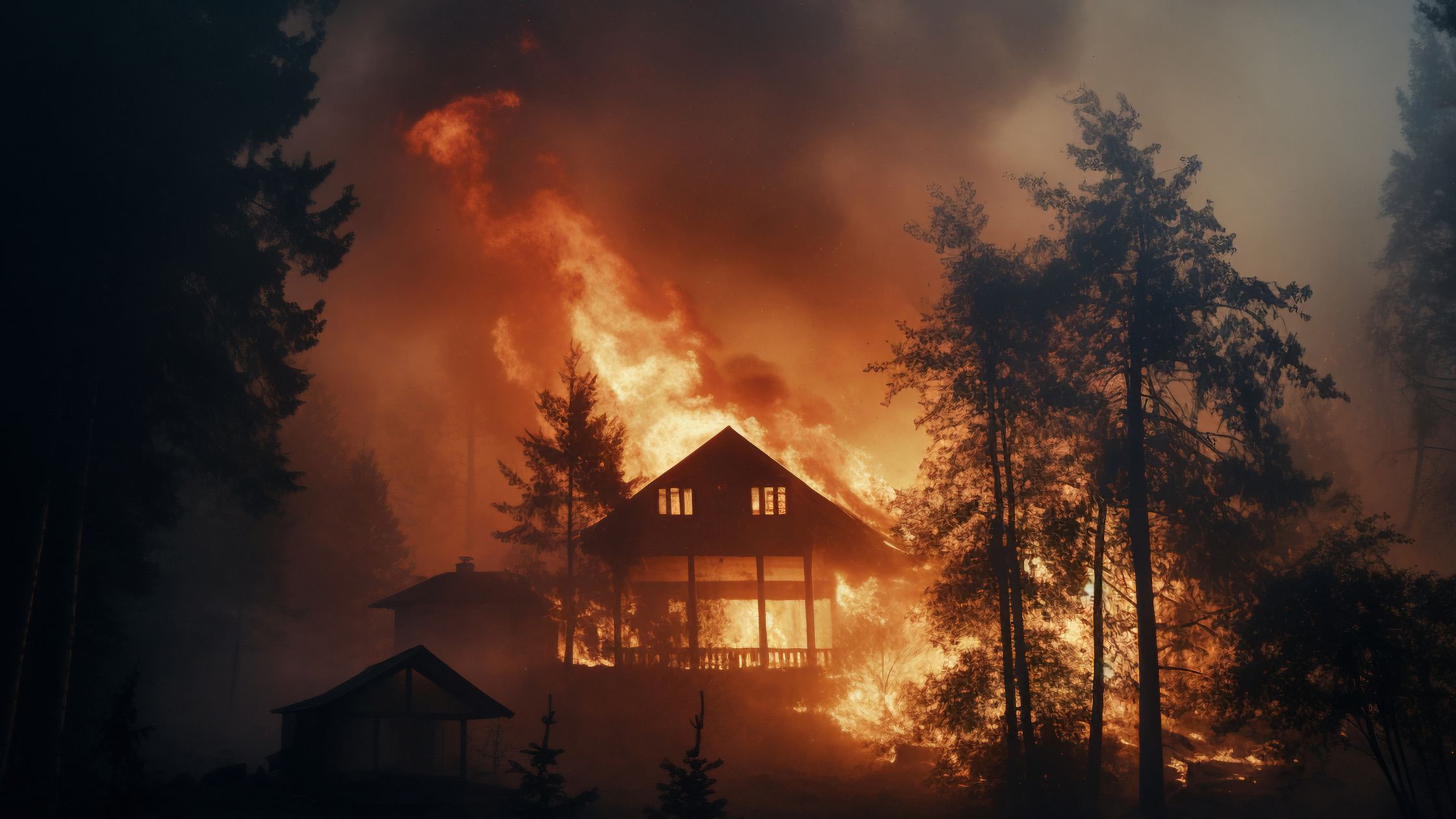

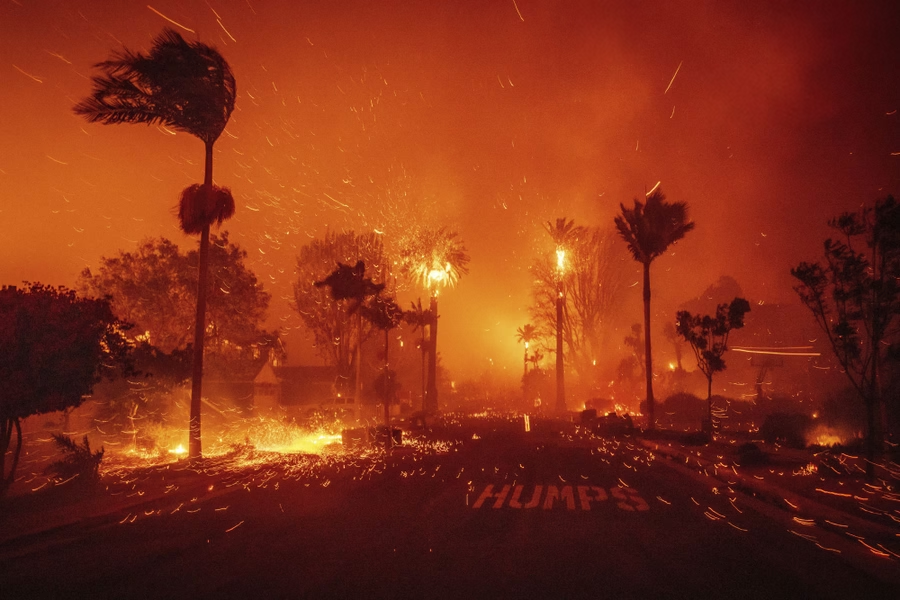
Wildfire smoke is one of the most underestimated health threats facing California residents. While flames destroy homes, smoke affects millions of people across hundreds of miles—including communities far from the actual fire. During major wildfire events, air quality in California cities can deteriorate to levels worse than the most polluted cities on earth. Understanding the health effects of wildfire smoke and knowing how to protect yourself is critical for every California resident.
What Is in Wildfire Smoke?
Wildfire smoke is a complex mixture of gases and fine particles produced by burning vegetation, structures, and other materials. The most dangerous component is particulate matter, specifically PM2.5—particles smaller than 2.5 micrometers in diameter. These particles are so small they penetrate deep into your lungs and can even enter your bloodstream.
Wildfire smoke also contains:
- Carbon monoxide: A colorless, odorless gas that reduces oxygen delivery to organs
- Volatile organic compounds (VOCs): Including benzene, formaldehyde, and acrolein
- Polycyclic aromatic hydrocarbons (PAHs): Known carcinogens released from burning organic material
- Nitrogen oxides: Irritants that worsen respiratory conditions
- Heavy metals: When structures burn, metals from building materials become airborne
When homes and commercial buildings burn, the smoke becomes even more toxic, containing plastics, synthetic materials, asbestos, lead paint, and other hazardous substances. This is why wildfire defense systems that prevent structure fires also protect community air quality.
Health Effects of Wildfire Smoke Exposure
Short-Term Effects
Even brief exposure to wildfire smoke can cause:
- Eye irritation, tearing, and redness
- Runny nose and sinus irritation
- Coughing, wheezing, and difficulty breathing
- Sore throat and scratchy voice
- Headaches and dizziness
- Chest tightness and shortness of breath
- Worsening of asthma and COPD symptoms
- Increased heart rate and blood pressure
Long-Term Health Risks
Research from the California Air Resources Board (CARB) and multiple medical studies shows that repeated or prolonged wildfire smoke exposure can lead to:
- Chronic respiratory disease development
- Increased cardiovascular disease risk, including heart attack and stroke
- Reduced lung function that may not fully recover
- Increased cancer risk from carcinogenic compounds
- Cognitive impairment and neurological effects
- Adverse pregnancy outcomes including preterm birth and low birth weight
- Immune system suppression
Vulnerable Populations at Highest Risk
While wildfire smoke affects everyone, certain populations face significantly higher risks:
- Children: Developing lungs absorb more pollutants relative to body weight, and children breathe faster than adults
- Elderly adults (65+): Existing cardiovascular and respiratory conditions make smoke exposure more dangerous
- Pregnant women: Smoke exposure is linked to preterm birth, low birth weight, and developmental effects
- People with asthma or COPD: Smoke triggers severe exacerbations requiring emergency medical care
- People with cardiovascular disease: PM2.5 increases heart attack and stroke risk within hours of exposure
- Outdoor workers: Construction, agriculture, and delivery workers face prolonged unavoidable exposure
Editor’s note: Your insurance situation depends heavily on your property’s actual fire exposure. Our free risk assessment factors in official CAL FIRE data to show what your risk level actually is — useful context before talking to your carrier.
Understanding Air Quality Index (AQI)
The Air Quality Index is your primary tool for assessing wildfire smoke risk:
- 0-50 (Green): Good air quality—no health concerns
- 51-100 (Yellow): Moderate—unusually sensitive people should limit prolonged outdoor exertion
- 101-150 (Orange): Unhealthy for sensitive groups—children, elderly, and those with respiratory conditions should limit outdoor activity
- 151-200 (Red): Unhealthy—everyone should reduce prolonged outdoor exertion
- 201-300 (Purple): Very unhealthy—everyone should avoid prolonged outdoor exertion
- 301-500 (Maroon): Hazardous—everyone should avoid all outdoor activity
During major California wildfires, AQI levels frequently exceed 300 and can surpass 500 in communities near active fires. Monitor AQI at AirNow.gov or through the EPA’s AirNow app.
Protecting Yourself from Wildfire Smoke
Indoor Air Quality
- Keep all windows and doors closed during smoke events
- Run your HVAC system on recirculate mode—do not pull in outside air
- Use portable HEPA air purifiers in bedrooms and main living areas
- Create a clean air room: seal one room with plastic sheeting and run a HEPA filter
- Avoid activities that add to indoor air pollution: cooking with gas, burning candles, vacuuming
- Replace HVAC filters with MERV 13 or higher rated filters during fire season
Respiratory Protection
- N95 respirators: The minimum standard for wildfire smoke protection. Must be properly fitted—facial hair prevents a seal
- P100 respirators: Provide superior protection for extended exposure
- Surgical masks and cloth masks: Provide minimal to no protection against PM2.5 particles
- Stockpile N95 masks before fire season—they sell out quickly during smoke events
When to Seek Medical Attention
Seek immediate medical care if you experience:
- Severe shortness of breath or difficulty breathing
- Chest pain or pressure
- Persistent coughing with blood
- Confusion or altered mental status
- Rapid heartbeat that does not slow with rest
- Severe asthma attack unresponsive to rescue inhaler
Protecting Your Home from Smoke Infiltration
Smoke enters homes through gaps, cracks, and ventilation systems. Reducing smoke infiltration complements your home hardening efforts:
- Seal gaps around windows and doors with weatherstripping
- Install door sweeps on exterior doors
- Close fireplace dampers
- Seal attic and crawlspace vents with temporary covers during smoke events
- Upgrade to MERV 13+ HVAC filters
- Consider whole-house HEPA filtration systems for homes in high-risk areas
The Connection Between Wildfire Prevention and Air Quality
Every wildfire prevented means cleaner air for millions of Californians. Defensible space maintenance, wildfire defense systems, and community-wide mitigation efforts directly reduce the severity and duration of smoke events. When homes are protected from ignition, structure fires are prevented, eliminating the most toxic components of wildfire smoke.
Ember Pro’s approach to wildfire mitigation protects both your home and your community’s air quality. By preventing structure fires through comprehensive defense strategies, we help reduce the overall smoke burden on California communities.
Not sure which step to prioritize first? Our wildfire risk calculator shows your CAL FIRE zone and exposure level — so you know exactly where to start.
Frequently Asked Questions
How far can wildfire smoke travel?
Wildfire smoke can travel thousands of miles. California wildfires have produced smoke detectable across the entire United States. Significant health-affecting smoke concentrations typically extend 100-500 miles from active fires.
Can wildfire smoke cause permanent lung damage?
Yes. Repeated or prolonged exposure to high concentrations of wildfire smoke can cause permanent reduction in lung function. Children exposed during critical developmental periods may experience lifelong respiratory impacts.
Do air purifiers really help with wildfire smoke?
Yes, HEPA air purifiers are highly effective at removing PM2.5 particles from indoor air. Choose a purifier rated for your room size and run it continuously during smoke events. HEPA filters capture 99.97% of particles 0.3 micrometers and larger.
Is it safe to exercise outdoors during wildfire smoke?
No. Exercise increases your breathing rate and depth, dramatically increasing the amount of PM2.5 you inhale. Avoid outdoor exercise when AQI exceeds 100. Move workouts indoors or postpone them.
How long do health effects last after smoke exposure?
Short-term symptoms typically resolve within days to weeks after exposure ends. However, cardiovascular and respiratory risks may remain elevated for weeks to months. People with pre-existing conditions may experience lasting exacerbations.
Should I leave California during fire season?
Temporary relocation during major smoke events is a valid health strategy, especially for vulnerable populations. However, proper home preparation including defensible space and air sealing allows most residents to safely shelter in place during moderate smoke events.
References
- California Air Resources Board (CARB) – Wildfire Smoke Health Effects Research
- U.S. EPA – Wildfire Smoke: A Guide for Public Health Officials
- California Department of Public Health – Wildfire Smoke and Health
- American Lung Association – Wildfire Smoke Health Advisory
- Stanford University Medicine – Long-Term Health Impacts of Wildfire Smoke Exposure
- CDC – Wildfire Smoke and Your Health
Related Articles
- Complete Guide to Defensible Space in California
- Wildfire Defense Systems for California Homes
- Home Hardening Strategies for Wildfire Protection
- Wildfire Insurance: What California Homeowners Need to Know
- California Wildfire Laws 2026: What Changed
Ember Pro helps California homeowners protect their homes and families from wildfire through professional defense systems, defensible space management, and comprehensive mitigation planning. Contact us today for a wildfire risk assessment.
Curious about your property’s actual wildfire risk? Our free calculator shows your CAL FIRE zone, exposure level, and recommended next steps based on your address.
Get your free risk score