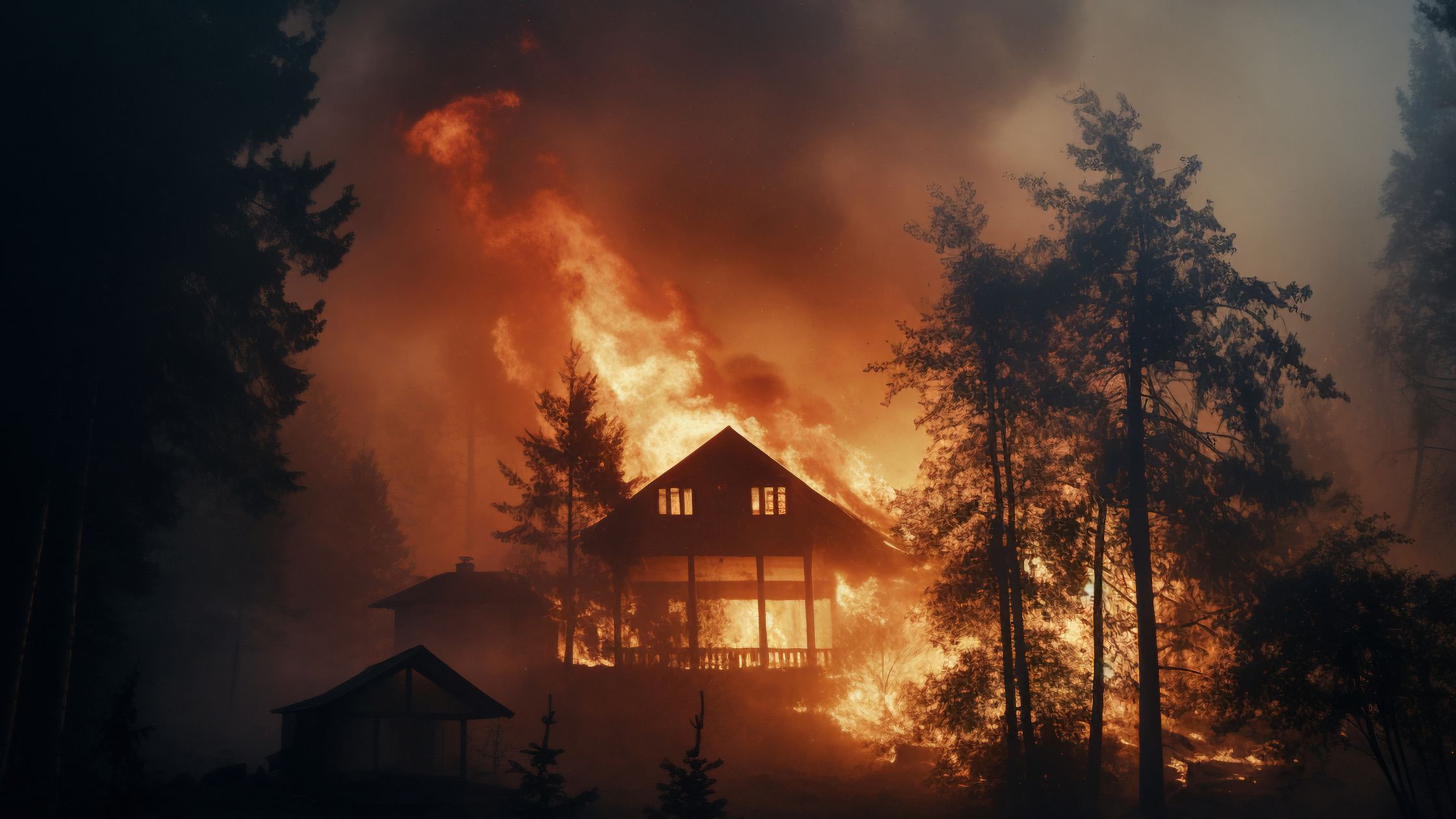

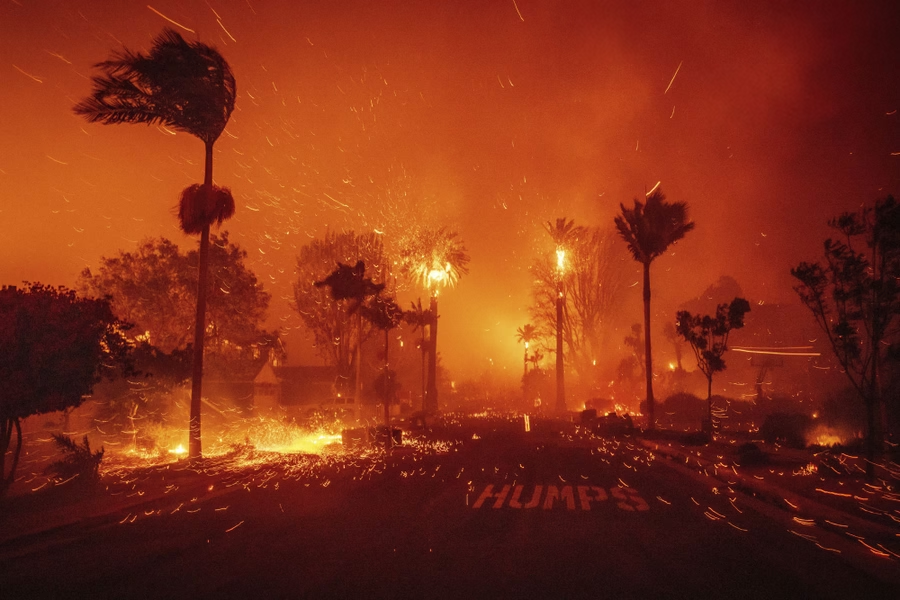
California’s 2026 fire season is projected to be among the most challenging in state history. After consecutive years of devastating wildfires, including the historic 2025 fire season that destroyed thousands of homes across Los Angeles and San Diego Counties, the need for comprehensive fire season preparation has never been greater. This pillar guide covers every aspect of preparing your California home, family, and finances for the 2026 fire season—from defensible space and home hardening to evacuation planning, insurance review, and professional wildfire defense systems.
Editor’s note: Your insurance situation depends heavily on your property’s actual fire exposure. Our free risk assessment factors in official CAL FIRE data to show what your risk level actually is — useful context before talking to your carrier.
2026 Fire Season Outlook: What Experts Are Predicting
Multiple factors shape the 2026 fire season outlook:
- Vegetation growth: Above-average winter rainfall in 2025-2026 produced abundant vegetation growth, which becomes fuel as it dries during summer
- Climate trends: Extended drought cycles, higher average temperatures, and lower humidity create increasingly favorable conditions for large fires
- Santa Ana wind patterns: Seasonal wind events remain the primary driver of the most destructive Southern California fires
- Development patterns: Continued expansion of housing into the wildland-urban interface (WUI) means more homes are at risk than ever before
CAL FIRE and the National Interagency Fire Center project above-normal fire potential across much of California from June through November 2026. Preparation must begin now.
Not sure which step to prioritize first? Our wildfire risk calculator shows your CAL FIRE zone and exposure level — so you know exactly where to start.
Phase 1: Defensible Space — Your First Line of Defense
Defensible space is the single most important factor in determining whether your home survives a wildfire. California’s PRC 4291 requires 100 feet of defensible space around all structures in fire-prone areas.
Zone 0: The Ember-Resistant Perimeter (0-5 Feet)
California’s AB 3074 established Zone 0 as the most restrictive defensible space zone. Complete these tasks immediately:
- Remove all combustible vegetation, mulch, and bark from the 0-5 foot perimeter
- Replace with non-combustible hardscape: gravel, stone, concrete pavers
- Remove all stored items, furniture cushions, and flammable materials from this zone
- Ensure no tree branches overhang the roof or extend into Zone 0
- Replace combustible fencing within 5 feet of the house with metal or masonry
Zone 1: Lean, Clean, and Green (5-30 Feet)
- Space trees at least 10 feet apart (branch tip to branch tip)
- Space shrubs at twice their mature height apart
- Trim tree branches to 6-10 feet above ground
- Remove all dead vegetation, fallen branches, and accumulated leaves
- Replace wood mulch with gravel or rock
- Prune shrubs away from tree trunks (minimum 6-foot clearance)
- Mow grass to 4 inches or shorter
Zone 2: Reduced Fuel (30-100 Feet)
- Thin trees to 12 feet apart (branch tip to branch tip)
- Remove all dead and dying trees
- Clear understory shrubs growing beneath trees
- Create horizontal separation between tree canopies
- Remove low-hanging branches
- Clear ground of accumulated needles and small debris
Phase 2: Home Hardening — Protecting the Structure
Home hardening addresses the vulnerabilities in your home’s construction that allow wildfire to ignite your structure. Focus on these critical areas:
Roof
- Verify your roof is Class A fire-rated (required in all fire hazard areas)
- If you have a wood shake roof, replace it immediately—it is the single highest-risk material on most homes
- Clean all debris from roof surface, valleys, and around skylights
- Seal gaps in tile roofing where embers can penetrate
- Install metal flashing at roof-wall intersections
Vents
- Screen all attic, soffit, gable, foundation, and ridge vents with 1/8-inch corrosion-resistant metal mesh
- Consider upgrading to ember-resistant vent assemblies that automatically close during extreme heat
- Check for gaps around vent installations
Gutters
- Clean gutters thoroughly—debris-filled gutters are ember catchers
- Replace plastic or vinyl gutters with metal
- Install metal gutter guards to prevent debris accumulation
Windows
- Upgrade single-pane windows to dual-pane tempered glass
- Prioritize windows facing uphill vegetation or the direction of prevailing winds
- Replace combustible window frames with metal or fiberglass
Siding and Walls
- Replace wood or vinyl siding with fiber cement, stucco, or masonry
- Seal gaps where siding meets the foundation
- Ensure there are no gaps between siding and window or door frames
Decks and Porches
- Enclose the underside of decks with fire-resistant skirting
- Remove all stored items from beneath decks
- Replace combustible decking with fire-resistant composite or non-combustible materials when deck reaches end of life
- Clear all combustible items from deck surfaces during fire season
Phase 3: Evacuation Planning
No amount of home preparation replaces a solid evacuation plan. Prepare now so you can execute without thinking during a fire:
Route Planning
- Identify three evacuation routes from your home to safety
- Drive each route so every family member knows the way
- Keep printed maps in each vehicle—cell service fails during fires
- Identify multiple meeting locations outside the fire zone
Go-Bag Preparation
- Pack a go-bag for each family member with 72 hours of essentials
- Include copies of critical documents (insurance policies, IDs, medical records)
- Stock N95 masks (minimum 5 per person), medications, phone chargers, and cash
- Store go-bags near the front door or in vehicle trunks
- Refresh medications and water before each fire season
Communication Plan
- Designate an out-of-state emergency contact
- Register for your county’s emergency alert system
- Download the CAL FIRE Ready for Wildfire app
- Establish a family meeting point outside the evacuation zone
Pet and Livestock Preparation
- Keep pet carriers accessible with blankets and food
- Maintain current vaccination records in your go-bag
- Microchip all pets
- Pre-arrange large animal transport and evacuation destinations
Phase 4: Insurance Review
Your wildfire insurance is your financial safety net. Review it before fire season, not after a loss:
Coverage Adequacy
- Verify your dwelling coverage reflects current rebuilding costs (California averages $300-$500+ per square foot)
- Ensure personal property coverage is adequate—most homeowners underestimate by 40-60%
- Check Additional Living Expenses (ALE) limits—are they sufficient for 12-24 months of displacement?
- Review other structures coverage for detached garages, fences, pools, and outbuildings
Policy Understanding
- Confirm you have replacement cost coverage, not actual cash value
- Understand your deductible and whether you have a separate wildfire deductible
- Know your policy’s code upgrade coverage for rebuilding to current standards
- Review exclusions—what is specifically not covered?
Documentation
- Create a complete home inventory with photos, videos, and estimated values
- Store inventory in cloud storage and on a USB drive in your go-bag
- Document all wildfire mitigation improvements for potential premium reductions
- Keep your policy documents in your go-bag and digitally
Phase 5: Professional Wildfire Defense Systems
Beyond passive hardening, professional wildfire defense systems provide active protection during the critical hours when you are evacuated:
Exterior Sprinkler Systems
Professionally designed exterior sprinkler systems wet your roof, walls, and immediate perimeter before and during a wildfire event. These systems can operate automatically or by remote activation, providing protection even when you are miles away.
Fire-Retardant Spray Application
Professional fire-retardant spray applied to your home’s exterior and surrounding vegetation creates a protective barrier that resists ember ignition. Retardant applications are typically performed before anticipated high-risk periods and can last several weeks.
Ember Defense Systems
Advanced ember defense systems combine vent protection, perimeter wetting, and fire-retardant application into a comprehensive automated defense. These systems activate based on temperature, ember detection, or remote command.
Professional Risk Assessment
A professional wildfire risk assessment identifies vulnerabilities you may have missed. Ember Pro’s assessments evaluate every aspect of your property—structure, vegetation, topography, and exposure—and provide prioritized recommendations for improvement.
Phase 6: Community Coordination
Wildfire preparedness is most effective when your entire community participates:
- Join or establish a Firewise USA community through the National Fire Protection Association
- Coordinate neighborhood defensible space days
- Share evacuation routes and meeting points with neighbors
- Identify neighbors who need evacuation assistance (elderly, disabled, families with infants)
- Support community-wide vegetation management programs
- Advocate for local fire safety ordinances and enforcement
Month-by-Month Preparation Calendar
January-March: Assessment and Planning
- Schedule professional wildfire risk assessment
- Review and update insurance coverage
- Plan defensible space and hardening projects
- Order materials for spring projects
April-May: Implementation
- Complete all defensible space work
- Finish home hardening projects
- Clean gutters and roof
- Test and maintain defense systems
- Update go-bags with fresh medications, water, and supplies
- Practice evacuation routes with family
June-August: Vigilance
- Maintain defensible space weekly
- Monitor fire weather forecasts daily
- Keep vehicles fueled and go-bags accessible
- Stay subscribed to emergency alerts
- Schedule professional fire-retardant spray applications before anticipated high-risk periods
September-December: Peak Season
- Highest alert during Santa Ana wind season (especially October-December)
- Pre-position go-bags near exits
- Review evacuation routes with all family members
- Activate defense systems during Red Flag Warnings
- Maintain contact with neighbors for mutual support
Cost of Preparation vs. Cost of Loss
Comprehensive fire season preparation costs $5,000 to $30,000 depending on your property’s current condition and the level of protection you choose. Compare this to:
- Average California home loss: $500,000 to $1,500,000+
- Insurance non-renewal: Can add $5,000-$20,000 annually in FAIR Plan premiums
- Property value decline: Homes in unmitigated fire zones lose 5-15% of market value
- Displacement costs: 12-24 months of temporary housing typically costs $30,000-$80,000
The return on investment for wildfire preparation is among the highest of any home improvement.
How Ember Pro Prepares Your Home for 2026
Ember Pro provides end-to-end fire season preparation for California homeowners:
- Professional wildfire risk assessment with prioritized recommendations
- Defensible space evaluation and compliance planning
- Home hardening consultation and contractor coordination
- Wildfire defense system design, installation, and maintenance
- Fire-retardant spray application services
- Insurance compliance documentation
- Ongoing maintenance programs for year-round protection
Our comprehensive approach ensures no vulnerability is overlooked and every dollar is invested where it provides the greatest protection.
Frequently Asked Questions
When should I start preparing for fire season?
Start in January or February. Defensible space work should be completed by May. Home hardening projects should be planned in winter and completed by late spring. Go-bags should be maintained year-round.
What is the single most important thing I can do?
Create and maintain defensible space, particularly Zone 0 compliance. Removing combustible materials from the 0-5 foot perimeter around your home is the highest-impact, lowest-cost action you can take.
Do I need professional help or can I do it myself?
Many defensible space and home hardening tasks can be done yourself. However, professional assessment ensures you do not miss critical vulnerabilities. Defense system installation and fire-retardant application require professional expertise.
How much does a professional wildfire risk assessment cost?
Professional assessments typically range from $300 to $1,500 depending on property size and complexity. The investment is nominal compared to the potential savings in insurance premiums and loss prevention.
Will fire season preparation help with my insurance?
Yes. Many insurers require documented wildfire mitigation for coverage renewal in high-risk areas. Properly documented preparation can qualify you for premium reductions and prevent non-renewal.
What if I rent my home?
Renters should focus on evacuation planning, go-bag preparation, and renters insurance review. Discuss defensible space and hardening with your landlord—California law requires property owners to maintain defensible space regardless of occupancy.
Is fire season really getting worse?
Yes. Data from CAL FIRE and the National Interagency Fire Center shows that California’s fire seasons are longer, fires are larger, and more structures are being destroyed. Climate change, drought, and development patterns all contribute to increasing risk.
What about community fire protection plans?
Community Wildfire Protection Plans (CWPPs) coordinate neighborhood-wide preparation. Contact your local fire department to learn about existing plans or how to establish one for your community.
References
- CAL FIRE – 2026 Fire Season Outlook and Preparedness Resources
- National Interagency Fire Center – Seasonal Fire Potential Outlook
- California Public Resources Code Section 4291 (PRC 4291)
- California Assembly Bill 3074 (AB 3074) – Zone 0 Requirements
- California Building Code Chapter 7A
- California Department of Insurance – Wildfire Insurance Guide
- NFPA Firewise USA – Community Wildfire Preparedness
- Insurance Institute for Business and Home Safety (IBHS) – Wildfire Prepared Home
Related Articles
- Complete Guide to Defensible Space in California
- Home Hardening Strategies for Wildfire Protection
- Understanding Zone 0 Requirements
- Wildfire Defense Systems for California Homes
- Wildfire Insurance: What California Homeowners Need to Know
- AB 3074 and California Wildfire Compliance
- California Wildfire Laws 2026: What Changed
Ember Pro is your partner in 2026 fire season preparation. From professional risk assessments to defense system installation, we help California homeowners protect their homes, families, and financial futures from wildfire. Contact us today to begin your preparation.
Curious about your property’s actual wildfire risk? Our free calculator shows your CAL FIRE zone, exposure level, and recommended next steps based on your address.
Get your free risk score