
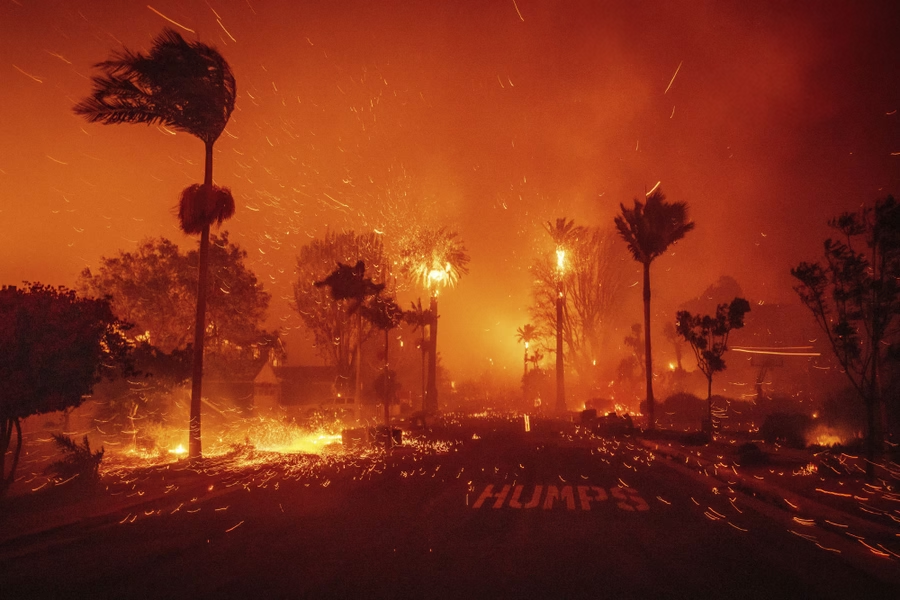
Fireproofing your California home is no longer optional for homeowners in wildfire-prone areas. With fire seasons growing longer and more intense, the difference between a home that survives and one that is lost often comes down to preparation. This comprehensive guide covers every aspect of fireproofing, from exterior hardening and defensible space landscaping to interior preparation and seasonal maintenance. Whether you are retrofitting an existing home or building new, these steps will dramatically reduce your wildfire risk.
Not sure which step to prioritize first? Our wildfire risk calculator shows your CAL FIRE zone and exposure level — so you know exactly where to start.
Exterior Hardening Checklist: Your First Line of Defense
The exterior of your home is where wildfire makes contact. Home hardening focuses on eliminating vulnerabilities that allow embers, radiant heat, and flames to ignite your structure. Work through this checklist systematically, prioritizing the highest-risk elements first.
Roof
Your roof is the single most important element for wildfire survival. As the largest horizontal surface, it receives the heaviest ember bombardment.
- Install Class A fire-rated roofing materials (metal, concrete tile, or fiberglass asphalt)
- Replace any wood shake or untreated shingle roofing immediately
- Seal gaps at ridges, hips, and eaves with metal flashing or bird stops
- Install metal gutters with gutter guards to prevent debris accumulation
- Use fire-resistant underlayment beneath all roofing materials
- Clear all leaves, needles, and debris from roof surface before fire season
Walls and Siding
Exterior walls face radiant heat and direct flame contact from burning vegetation or neighboring structures.
- Use non-combustible siding: fiber cement, stucco, brick, or stone
- Replace vinyl siding, which melts and exposes wall framing
- Seal gaps where siding meets foundation, corners, and trim
- Ensure siding extends to within 6 inches of grade level with no exposed framing
- Install metal flashing at wall-to-roof intersections
Windows
Windows are among the weakest points in wildfire defense. Single-pane windows can shatter from radiant heat alone, allowing embers to enter the home.
- Install dual-pane or tempered glass windows (minimum)
- Consider fire-rated window assemblies for highest-risk exposures
- Limit window size on the side of the home facing the greatest wildfire exposure
- Install metal shutters or fire-rated exterior shutters for maximum protection
- Ensure window frames are non-combustible or fire-resistant
Vents
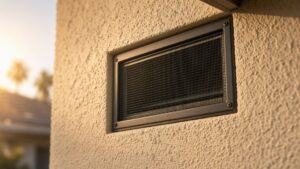
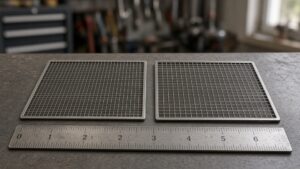
Attic, soffit, and foundation vents are primary entry points for windblown embers. Standard 1/4-inch mesh screens do not stop embers.
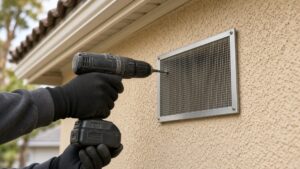
- Replace all vent screens with 1/8-inch corrosion-resistant metal mesh
- Install ember-resistant vent products (Brandguard, Vulcan, or similar)
- Ensure attic, soffit, crawlspace, and gable vents are all screened
- Check that dryer, bathroom, and kitchen exhaust vents have proper screening
- Consider retrofitting with intumescent vents that seal automatically in heat
Decks and Porches
Attached wood decks are a significant fire vulnerability because they provide a large combustible surface directly connected to your home.
- Replace wood decking with composite, metal, or concrete decking materials
- Enclose deck undersides with non-combustible skirting to prevent ember accumulation
- Remove combustible storage from under and around decks
- Use non-combustible deck railings if possible
- Clear all debris from deck surfaces and gaps between deck boards
Eaves and Soffits
Open eaves and exposed soffits allow embers to enter the roof structure and ignite framing.
- Box in all open eaves with non-combustible materials
- Install 1/8-inch metal mesh screening on all soffit vents
- Use fiber cement, stucco, or metal for soffit materials
- Seal all gaps between soffit panels and wall connections
Editor’s note: Your insurance situation depends heavily on your property’s actual fire exposure. Our free risk assessment factors in official CAL FIRE data to show what your risk level actually is — useful context before talking to your carrier.
Zone 0 Through Zone 2 Landscaping
California’s defensible space regulations require vegetation management in three distinct zones around your home. Proper landscaping in these zones is as important as structural hardening.
Zone 0: The Ember-Resistant Zone (0-5 Feet)
- Remove ALL vegetation within 5 feet of your home’s exterior
- Use only non-combustible hardscape: gravel, stone, pavers, or concrete
- No mulch, bark, or wood chips of any kind
- Remove any storage of combustible materials (firewood, lumber, propane tanks)
- Clear all leaves, needles, and debris from this zone continuously
Zone 1: Lean and Clean (5-30 Feet)
- Space trees minimum 10 feet apart (branch tip to branch tip)
- Remove all dead and dying vegetation
- Trim tree branches to 6-10 feet above ground level
- Space shrubs at 2 times their mature height apart
- Remove tree branches overhanging any structure
- Use rock or gravel groundcover instead of organic mulch
- Create fuel breaks with driveways, walkways, or gravel beds
Zone 2: Reduced Fuel (30-100 Feet)
- Space trees minimum 12 feet apart (branch tip to branch tip)
- Remove all dead trees, branches, and accumulated ground debris
- Remove shrubs growing beneath tree canopies
- Create horizontal separation between tree canopies
- Thin tree density to prevent crown-to-crown fire spread
- Mow grass to 4 inches or less during fire season
Interior Preparation
While exterior hardening prevents fire entry, interior preparation minimizes damage if fire does breach your home’s envelope.
- Install smoke detectors on every level and in every bedroom
- Keep fire extinguishers accessible on each floor (ABC-rated)
- Store important documents in a fireproof safe or off-site
- Close all interior doors when evacuating to compartmentalize fire spread
- Move furniture away from windows on the fire-exposure side of your home
- Remove flammable window treatments (consider metal blinds or fire-resistant curtains)
Garage Protection
Attached garages are a high-risk area because they contain flammable materials and have large openings that can admit embers.
- Install a fire-rated garage door or retrofit with weather stripping to seal gaps
- Store flammable liquids (gasoline, solvents, propane) in approved containers away from ignition sources
- Remove excess combustible storage from the garage
- Install 1/8-inch metal mesh screening on any garage vents
- Ensure the wall between the garage and living space is fire-rated (typically 5/8-inch Type X drywall)
Utility Shutoffs
Knowing how to shut off utilities quickly is critical during wildfire evacuation.
- Label your gas shutoff valve and keep a wrench attached nearby
- Know where your main electrical breaker panel is located
- Turn off propane tanks before evacuating
- Shut off irrigation systems (they reduce water pressure for firefighting)
- Consider an automatic gas shutoff valve that triggers during seismic or fire events
Creating a Defensible Perimeter
Beyond the three vegetation zones, your overall property layout should create clear defensible perimeters that firefighters can use as anchor points.
- Maintain clear driveway access for fire trucks (minimum 12 feet wide, 13.5 feet vertical clearance)
- Create turnaround areas for emergency vehicles
- Post your address clearly and visibly from the road
- Ensure water sources (hydrants, tanks, pools) are accessible to firefighters
- Remove fences or gates that block firefighter access
Seasonal Maintenance Schedule
Fireproofing is not a one-time project. Use this seasonal schedule to stay compliant with California regulations and maintain protection year-round.
Spring (March-May)
- Complete all vegetation management in Zones 0-2
- Clean roof, gutters, and all exterior surfaces of debris
- Inspect and repair vents, screens, and weather stripping
- Test sprinkler systems and check water supply levels
- Schedule professional assessment if needed
Summer (June-August)
- Mow grass weekly and remove dead vegetation immediately
- Clear debris from roof and gutters monthly
- Monitor for dead branches and remove promptly
- Keep 5-foot Zone 0 clear at all times
- Review and practice evacuation plan
Fall (September-November)
- Maintain high alert through October and November (peak fire months)
- Continue all summer maintenance activities
- Clear fallen leaves immediately
- Store patio furniture and combustible outdoor items
Winter (December-February)
- Plan and budget for spring improvements
- Schedule contractor work for hardening projects
- Review insurance coverage and documentation
- Research available rebates and cost-sharing programs
Cost Breakdown by Priority
If budget is limited, prioritize fireproofing investments in this order:
- Priority 1 ($0-$500): Zone 0 clearance, debris removal, vent screening, gutter cleaning
- Priority 2 ($500-$3,000): Ember-resistant vents, gap sealing, defensible space Zones 1-2 vegetation management
- Priority 3 ($3,000-$10,000): Deck enclosure, soffit boxing, window upgrades
- Priority 4 ($10,000-$30,000): Roof replacement with Class A materials, siding replacement
- Priority 5 ($5,000-$30,000): Exterior sprinkler system, comprehensive landscaping redesign
How Ember Pro Helps You Fireproof Your Home
Ember Pro provides comprehensive wildfire assessment services that evaluate every aspect of your home’s fire vulnerability. Our team inspects your roof, walls, vents, decks, eaves, landscaping, and overall property layout against current California wildfire laws and CAL FIRE standards.
Our fireproofing services include:
- Professional home hardening assessment with prioritized recommendations
- Custom vegetation management plans for your property
- Compliance documentation for insurance and fire inspectors
- Contractor referrals for specialized hardening work
- Annual maintenance programs to keep your home protected year-round
- Integration with active defense systems for maximum protection
Frequently Asked Questions
How much does it cost to fully fireproof a home?
Full fireproofing ranges from $15,000 to $75,000+ depending on home size, current condition, and scope of work. However, many critical measures cost under $500 and can be done immediately. Start with low-cost, high-impact steps and work up.
Does fireproofing guarantee my home will survive a wildfire?
No mitigation measure provides a 100% guarantee. However, IBHS research shows that homes with comprehensive hardening and defensible space are up to 85% more likely to survive a wildfire than unprotected homes.
Is fireproofing required by California law?
Defensible space is required by PRC 4291 for homes in SRA and VHFHSZ areas. New construction must comply with Chapter 7A building standards. Existing homes are not required to retrofit, but insurance requirements increasingly mandate hardening measures.
Can I do fireproofing work myself?
Many measures are DIY-friendly: clearing Zone 0, cleaning gutters, screening vents, removing dead vegetation. Structural work like roof replacement, window upgrades, and siding installation should be done by licensed contractors.
How does fireproofing affect my home value?
In fire-prone areas, documented wildfire hardening increases home value and reduces time on market. Buyers increasingly prioritize fire-safe homes, and real estate disclosures now include wildfire risk information.
What should I do first if I have never fireproofed my home?
Start with Zone 0 clearance (free), gutter and roof cleaning (free to minimal cost), and vent screening ($50-$200). These three steps address the most common ignition pathways and can be done in a single weekend.
References
- California Building Code Chapter 7A – Materials and Construction Methods for Exterior Wildfire Exposure
- CAL FIRE – Defensible Space Guidelines (PRC 4291 and AB 3074)
- Insurance Institute for Business and Home Safety (IBHS) – Wildfire Prepared Home Standards
- National Institute of Building Sciences (NIBS) – Wildfire Mitigation Research
- UC Cooperative Extension – Fire-Safe Landscaping for California Homes
- California Department of Insurance – Wildfire Mitigation and Insurance Guidance
Related Articles
- Home Hardening Strategies for Wildfire Protection
- Complete Guide to Defensible Space in California
- Zone 0: The Most Critical 5 Feet Around Your Home
- Wildfire Insurance: What California Homeowners Need to Know
- California Wildfire Laws 2026: What Changed
Ember Pro provides comprehensive fireproofing assessments and implementation services for California homeowners. From initial evaluation to ongoing maintenance, we help you protect your home, your family, and your investment. Contact us today for a professional wildfire risk assessment.
Curious about your property’s actual wildfire risk? Our free calculator shows your CAL FIRE zone, exposure level, and recommended next steps based on your address.
Get your free risk score