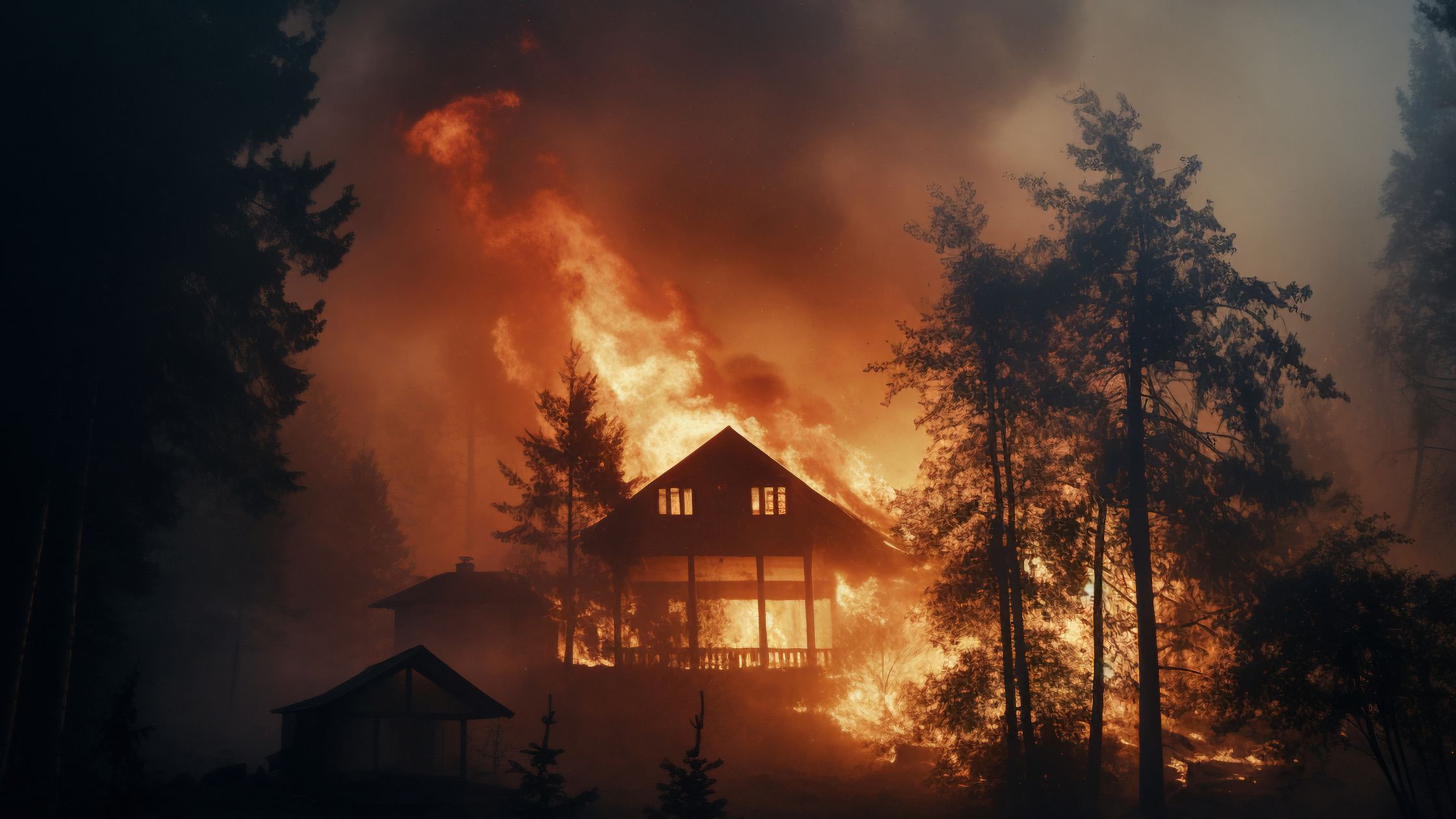


For California homeowners in wildfire-prone areas, protecting the exterior of your home is a race against time when fire season arrives. Fire retardant spray for home exteriors is one of the most effective, immediate-action solutions available to reduce your home’s ignition risk during a wildfire. Unlike structural retrofits that take weeks or months, fire retardant spray can be applied in a single day and dramatically reduce the combustibility of exterior surfaces, vegetation, and landscaping around your property.
Editor’s note: Your insurance situation depends heavily on your property’s actual fire exposure. Our free risk assessment factors in official CAL FIRE data to show what your risk level actually is — useful context before talking to your carrier.
How Fire Retardant Spray Works
Fire retardant spray works by chemically altering the combustion process on treated surfaces. When applied to wood siding, fences, decks, vegetation, or other combustible materials, the active ingredients create a barrier that inhibits ignition and slows flame spread. Most modern fire retardants use phosphate-based or borate-based compounds that react with heat to form a protective char layer. This char insulates the underlying material and limits the release of flammable gases, which are what actually sustain open flames.
When embers land on a treated surface, they are far less likely to ignite the material. Instead of catching fire within seconds, treated wood and vegetation resist ignition long enough for embers to burn out on their own. This is especially critical during Zone 0 wildfire protection where the first five feet around your home determine whether an ember storm results in ignition or survival.
Not sure which step to prioritize first? Our wildfire risk calculator shows your CAL FIRE zone and exposure level — so you know exactly where to start.
Types of Fire Retardant Spray
Long-Term Fire Retardants
Long-term fire retardants are designed to remain effective for months or even years after application. They chemically bond with the treated material and are not washed away by rain or irrigation. These products are ideal for permanent structures such as wood siding, fences, decks, and pergolas. Most long-term retardants are clear or lightly tinted and do not significantly alter the appearance of treated surfaces.
- Duration: 1 to 5 years depending on product and exposure conditions
- Best for: Wood siding, fences, decks, pergolas, outbuildings, and other permanent structures
- Cost: Higher per application but lower annualized cost due to longevity
Seasonal Fire Retardants
Seasonal fire retardants are applied at the beginning of fire season and provide protection through the high-risk months. They are water-soluble and gradually wash off with rain and irrigation, making them ideal for vegetation and landscaping that changes with the seasons. These products are commonly used on brush, ornamental plants, mulch, and ground cover within the defensible space zone around a home.
- Duration: 3 to 6 months depending on weather and irrigation
- Best for: Vegetation, mulch, landscaping, brush, and ground cover
- Cost: Lower per application but requires reapplication each fire season
Application Process
Professional fire retardant application follows a structured process to ensure complete coverage and maximum effectiveness:
- Property assessment: A technician evaluates the home’s exterior, identifying all combustible surfaces, high-risk areas, and priority zones
- Surface preparation: Surfaces are cleaned of loose debris, dirt, and organic matter to ensure proper adhesion
- Product selection: Long-term retardant is chosen for structures and seasonal retardant for vegetation, with products matched to specific materials
- Application: Retardant is applied using professional spray equipment at manufacturer-specified coverage rates, typically measured in gallons per square foot
- Drying and curing: Most retardants require 4 to 8 hours of dry weather after application to fully cure and bond with treated surfaces
- Documentation: The treatment is documented for insurance records and compliance verification
Coverage Area and Cost
The cost of fire retardant spray treatment depends on property size, the number of structures, vegetation density, and which products are used. Typical pricing for California residential properties:
- Small property (under 5,000 sq ft lot): $800 to $1,500 per treatment
- Medium property (5,000 to 15,000 sq ft lot): $1,500 to $3,500 per treatment
- Large property (over 15,000 sq ft lot): $3,500 to $6,000+ per treatment
- Per-structure add-ons: Wood fencing ($3-$5 per linear foot), decks ($1-$2 per sq ft), outbuildings ($200-$500 each)
When compared to the cost of fire damage or the increase in wildfire insurance premiums, fire retardant treatment is one of the most cost-effective wildfire mitigation investments a homeowner can make.
How Long Does Fire Retardant Spray Last?
The durability of fire retardant spray varies by product type and environmental conditions:
- Long-term structural retardants: 1 to 5 years. Some premium products tested to maintain effectiveness for up to 10 years on protected surfaces
- Seasonal vegetation retardants: 3 to 6 months. Reapplication is recommended at the start of each fire season, typically in May or June
- Factors that reduce lifespan: Heavy rain exposure, direct irrigation overspray, UV degradation on south-facing surfaces, and physical abrasion
Environmental Safety
Modern fire retardant sprays are formulated to minimize environmental impact. The most commonly used phosphate-based and borate-based retardants are considered low toxicity to mammals and break down into naturally occurring compounds in the soil. Key environmental considerations:
- EPA-registered products are tested for aquatic toxicity, soil persistence, and mammalian safety
- Avoid application near waterways, storm drains, and sensitive habitats
- Most residential retardants are safe for pets and humans once dried and cured (typically 4 to 8 hours)
- Vegetation-applied retardants do not harm treated plants and many formulations include nutrients that support plant health
- Professional applicators follow buffer zone requirements near water features and protected areas
Effectiveness Research
Independent testing and field research confirm the effectiveness of fire retardant spray on home exteriors:
- IBHS testing shows that treated wood siding resists ember ignition up to 10 times longer than untreated wood
- CAL FIRE research indicates that properties with professional retardant treatment have significantly higher survival rates during wildfire events
- Laboratory burn tests demonstrate that treated vegetation produces 60 to 80 percent less flame length and heat output compared to untreated vegetation
- Field studies from the 2020 and 2021 California fire seasons documented treated properties surviving where adjacent untreated properties were lost
When to Apply Before Fire Season
Timing your fire retardant application correctly is critical for maximum protection. Recommended scheduling for California homeowners:
- Structural treatments (long-term): Apply any time during dry weather. Spring is ideal to ensure protection before fire season
- Vegetation treatments (seasonal): Apply in May or early June, after spring growth has completed but before peak fire season begins
- Pre-event emergency treatment: Can be applied within 24 hours when fire is threatening. Many retardants are effective within 4 hours of application
- Reapplication: For seasonal products, check coverage in September before Santa Ana wind season and reapply if needed
Incorporating fire retardant spray into your broader home hardening strategy provides layered protection that significantly improves your property’s chances of surviving a wildfire event. Combined with proper defensible space maintenance and compliance with California wildfire laws, retardant treatment is a key component of a comprehensive wildfire defense system.
Ember Pro Fire Retardant Spray Services
Ember Pro provides professional fire retardant spray services for California homeowners throughout the state. Our certified technicians assess your property, recommend the right combination of long-term and seasonal retardants, and apply products using commercial-grade equipment for complete coverage. Every treatment includes documentation for insurance compliance and a detailed report of all treated surfaces and products used.
Our spray services integrate with our full suite of wildfire mitigation offerings including defensible space clearing, home hardening assessments, and ongoing vegetation management. Whether you need a single pre-season treatment or year-round protection, Ember Pro delivers professional-grade fire retardant services tailored to your property’s specific risk profile.
Frequently Asked Questions
Is fire retardant spray safe for my family and pets?
Yes. EPA-registered fire retardant products used for residential application are low toxicity to mammals. Once the product has dried and cured, typically 4 to 8 hours after application, treated surfaces are safe for contact by people and pets.
Will fire retardant spray damage my landscaping?
No. Modern vegetation-grade retardants are formulated to be plant-safe. Many products include phosphate compounds that actually provide nutritional benefit to treated plants. Professional applicators use products specifically designed for the type of vegetation being treated.
Does fire retardant spray change the appearance of my home?
Most long-term structural retardants are clear or very lightly tinted and do not visibly alter the appearance of treated surfaces. Seasonal vegetation retardants may leave a slight residue that fades within a few days. Some products are available in tinted formulations that serve as visual indicators of coverage during application.
Can I apply fire retardant spray myself?
While consumer-grade fire retardant products are available at hardware stores, professional application is strongly recommended. Professional-grade products are more effective, commercial equipment ensures proper coverage rates, and certified technicians know how to address the specific vulnerabilities of each property. Professional application also provides documentation required by many insurers.
Will fire retardant spray lower my insurance premiums?
Many California insurers recognize fire retardant treatment as a mitigation measure that can support coverage renewal and may contribute to premium reductions. Documentation of professional treatment is increasingly requested during insurance inspections and policy reviews.
References
- Insurance Institute for Business and Home Safety (IBHS) — Ember Ignition Testing on Treated and Untreated Materials
- CAL FIRE — Fire Retardant Use Guidelines for Wildland-Urban Interface Properties
- EPA — Registered Fire Retardant Products for Residential Use
- California State Fire Marshal — Fire Retardant Material Testing and Approval
- UC Agriculture and Natural Resources — Vegetation Fire Retardant Effectiveness Studies
- National Fire Protection Association (NFPA) — Wildfire Home Ignition Zone Research
Related Articles
- Complete Guide to Defensible Space and Home Hardening
- Understanding Zone 0 Wildfire Protection
- Wildfire Insurance Guide for California Homeowners
- Home Hardening Essentials for Fire Protection
- Integrated Fire Defense Systems for Your Property
- California Building Code Compliance for Fire Safety
- California Wildfire Laws You Need to Know
Ember Pro’s professional fire retardant spray services protect California home exteriors with proven, EPA-registered products applied by certified technicians. Contact us today to schedule your pre-season treatment and protect your home before fire season arrives.
Curious about your property’s actual wildfire risk? Our free calculator shows your CAL FIRE zone, exposure level, and recommended next steps based on your address.
Get your free risk score