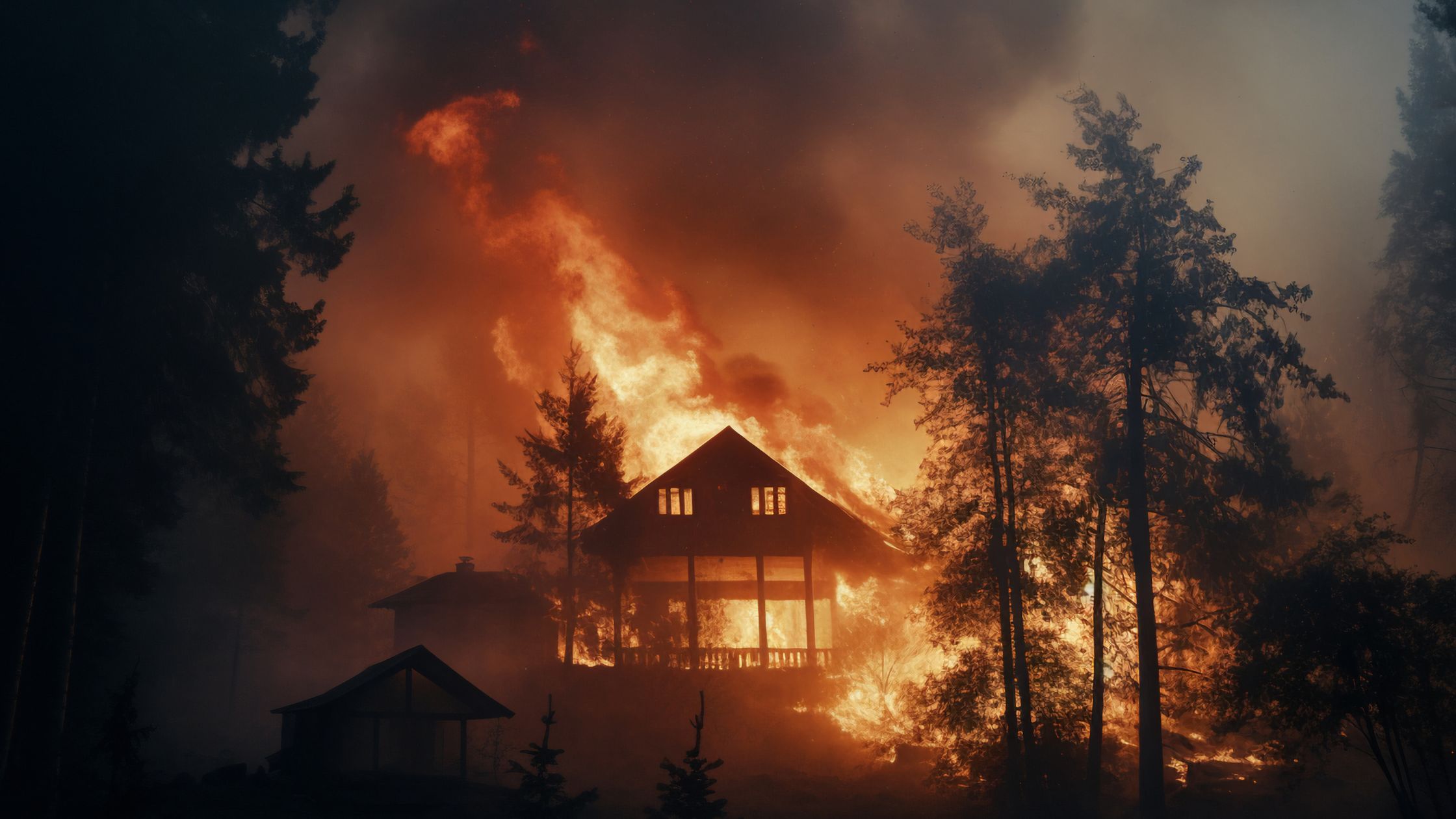

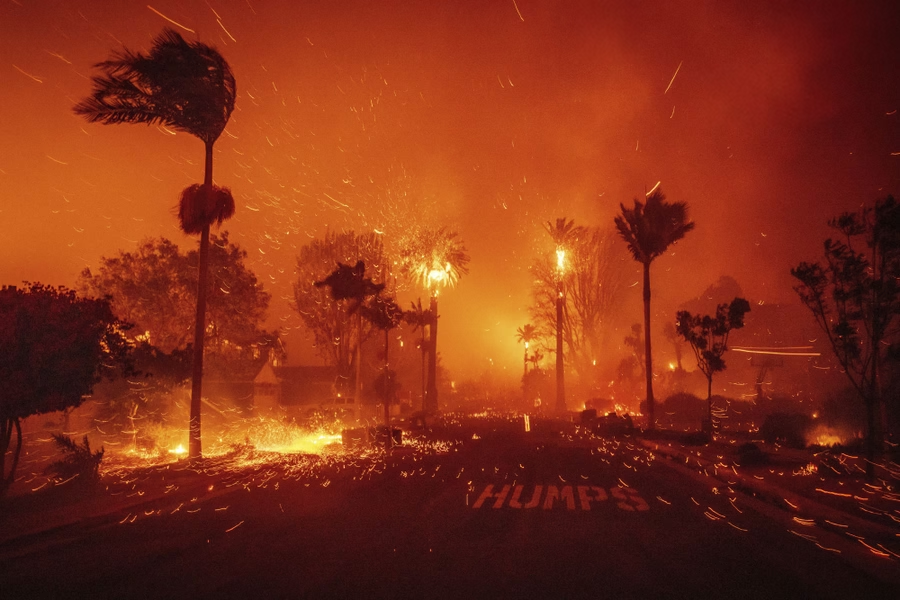
A Very High Fire Hazard Severity Zone, often abbreviated VHFHSZ, is the highest official wildfire-hazard class on California’s Fire Hazard Severity Zone maps. If your address falls in that class, the state has determined that the physical conditions around the property — fuels, terrain, weather, fire history, and ember exposure — create a particularly serious wildfire hazard over a 30- to 50-year period.
It is not a notice that your house will burn. It is not a score of the work you have already done. And according to the California Department of Insurance, it is not, by itself, the tool insurers use to set your rate. It is a planning and mitigation designation, and it does change which rules you should expect to follow.
If you have not yet checked your address, use our California fire zone map guide and the official Office of the State Fire Marshal resources linked there.
Editor’s note: Your insurance situation depends heavily on your property’s actual fire exposure. Our free risk assessment factors in official CAL FIRE data to show what your risk level actually is — useful context before talking to your carrier.
How a Property Gets a Very High Designation
The State Fire Marshal is required to classify State Responsibility Area lands into Moderate, High, or Very High Fire Hazard Severity Zones under Public Resources Code sections 4201-4204 and related regulations. In Local Responsibility Areas — most incorporated cities and many other local jurisdictions — the State Fire Marshal makes recommendations, and the local agency designates the zones by ordinance.
Government Code section 51179 gives local agencies 120 days after receiving those recommendations to designate moderate, high, and very high zones. A local agency may add area or raise a recommended class, with findings, but it may not lower the State Fire Marshal’s recommended level.
That is why two lookups can disagree if one shows a recommended OSFM map and the other shows a city ordinance that has not been updated, or has been amended. For a city lot in Los Angeles, San Diego, or Orange County, confirm both the official viewer and the local fire or building department. Current SRA maps took effect on April 1, 2024; recommended LRA maps were released in 2025 phases; and a 2026 SRA update is in comment through January 8, 2027. See the OSFM Fire Hazard Severity Zones page.
Not sure which step to prioritize first? Our wildfire risk calculator shows your CAL FIRE zone and exposure level — so you know exactly where to start.
What “Very High” Does — and Does Not — Say About Your House
The official maps measure hazard, not mitigated risk. OSFM is explicit: the classification is based on physical conditions and expected fire behavior, without subtracting home hardening, recent wildfire, or fuel reduction.
A Very High designation can therefore be accurate even if you already replaced vents, cleaned the first five feet, or installed a wildfire defense system. The map will not give you credit for that work. A property assessment will. OSFM also notes that embers can ignite buildings up to a mile from the main fire, which is why hillside, canyon, and some urban-edge homes in Southern California still sit in Very High zones.
Defensible Space Duties in a Very High Zone
If you own, lease, control, operate, or maintain an occupied dwelling or occupied structure in a Very High Fire Hazard Severity Zone designated by the local agency, Government Code section 51182 requires you, at all times, to:
- Maintain 100 feet of defensible space from each side and from the front and rear of the structure, but not beyond the property line except as otherwise allowed.
- Use more intense fuel reduction between 5 and 30 feet.
- Create an ember-resistant zone within 5 feet of the structure, based on regulations adopted by the Board of Forestry and Fire Protection, in consultation with the Office of the State Fire Marshal, considering the elimination of materials that would likely be ignited by embers.
- Remove portions of trees within 10 feet of a chimney or stovepipe outlet.
- Keep trees, shrubs, or other plants adjacent to or overhanging a building free of dead or dying wood.
- Keep the roof free of leaves, needles, or other vegetative materials.
- Meet applicable building-standard certification rules when constructing or rebuilding after a fire in the zone, as described in the statute.
A similar 100-foot duty, including the same ember-resistant-zone language, already appears in Public Resources Code section 4291 for structures in the State Responsibility Area, whether or not the parcel is labeled Very High. You are not required to manage fuels on land if you lack the legal right to do so, and you cannot be required to work on a neighbor’s property without written consent. Local ordinances can require a greater distance in some cases.
Zone 0 Is Coming, but It Is Not Statewide Law Yet
The ember-resistant zone within five feet — Zone 0 — comes from AB 3074 and later amendments to PRC 4291 and Government Code 51182. The mandate is in statute. The detailed, enforceable checklist depends on Board of Forestry regulations.
As of November 21, 2026, those regulations were not yet in effect. The Board’s defensible-space page says staff continue to work with the Office of Administrative Law on a final review and will update the page when the California Secretary of State publishes the regulation. OAL’s list of proposed regulations under review still showed file 2026-1116-02, “Defensible Space Zone 0,” as an emergency filing.
Until that publication happens, existing defensible-space duties still apply, and some local agencies already enforce strict rules near the house. The practical work is the same work that will be expected later: noncombustible ground in the first five feet, no firewood against the wall, clear roofs and gutters, and no wood fence acting as a wick into the siding. See fire-resistant landscaping.
Under PRC 4291 as amended in 2025, the ember-resistant zone does not take effect for new structures until the Board updates both the regulations and the guidance document. For existing structures, it takes effect three years after the new-structure effective date. CAL FIRE also may not change inspection practices or enforcement to implement Zone 0 until the State Fire Marshal posts a written finding that the Legislature has appropriated enough resources.
Building Standards and Home Hardening
Very High zones are also where ignition-resistant construction gets the most attention. California Building Code Chapter 7A addresses exterior wildfire exposure, including ember-resistant vents, for new buildings and certain remodels in designated fire hazard areas. Confirm the exact trigger with your building department.
For an existing house, Chapter 7A may not automatically force a retrofit, but the same weak points still matter. Upgrading to ember-resistant vents is one of the highest-value steps, because embers enter attics, eaves, and crawl spaces through ordinary screens. Ember Pro can also review fence connections, roofline exposure, and whether a defense system is a fit. Financing is at emberprousa.com/finance/.
Insurance: Do Not Treat the Map as a Premium Bill
A Very High label is serious. It is not an insurance invoice.
The Department of Insurance’s consumer alert states that insurers use their own wildfire models, not FHSZ maps, to decide where they write and renew policies and how much premium to charge. Ember Pro does not promise that a Very High designation, or leaving one, will change your premium, and we do not promise a mitigation discount.
If coverage is difficult to find, talk with a broker. Treat insurance explainers as context, not a guarantee.
What Homeowners in Los Angeles, Orange, and San Diego Counties Should Do Now
Confirm your official and locally adopted designation. Maintain the items already in statute: 100 feet where required, roof and gutter clearance, chimney clearance, and removal of dead wood on plants next to the building. Get the first five feet into ember-resistant condition, harden vents and other openings, and get a property-specific plan rather than relying on a map screenshot.
Ember Pro does not offer brush clearance. If your lot needs vegetation management out to 30 or 100 feet, hire a qualified vegetation-management contractor. We focus on the structure and the ignition zone immediately around it.
Frequently Asked Questions
What does VHFHSZ stand for?
Very High Fire Hazard Severity Zone, the highest of California’s three official fire-hazard classes.
Does Very High automatically mean Zone 0 is being enforced?
No. Zone 0 regulations were still in state review as of November 21, 2026. The statutory duty to create an ember-resistant zone is tied to those regulations. Check your local fire agency for any local standard already in force.
Does a Very High designation change my insurance rate by itself?
The Department of Insurance says CAL FIRE maps are not used for insurance rates or underwriting. Carriers use other models. Ember Pro does not promise a rate change.
Get a Free Risk Assessment
If your home is in a Very High Fire Hazard Severity Zone — or you think it might be — Ember Pro can inspect the points embers actually use: vents, the first five feet, fences, decks, and the roofline. Schedule a free 10-point wildfire risk assessment or call (858) 939-9345.
Wondering if your property is in a high-risk fire zone? Check your wildfire risk score to see your CAL FIRE zone and exposure level based on your address.
Sources
- OSFM, Fire Hazard Severity Zones
- Government Code section 51179
- Government Code section 51182
- Public Resources Code section 4291
- Board of Forestry, Defensible Space Zones
- OAL, Proposed Regulations Under Review
- CDI consumer alert on CAL FIRE maps
Curious about your property’s actual wildfire risk? Our free calculator shows your CAL FIRE zone, exposure level, and recommended next steps based on your address.
Get your free risk score
Leave a Reply