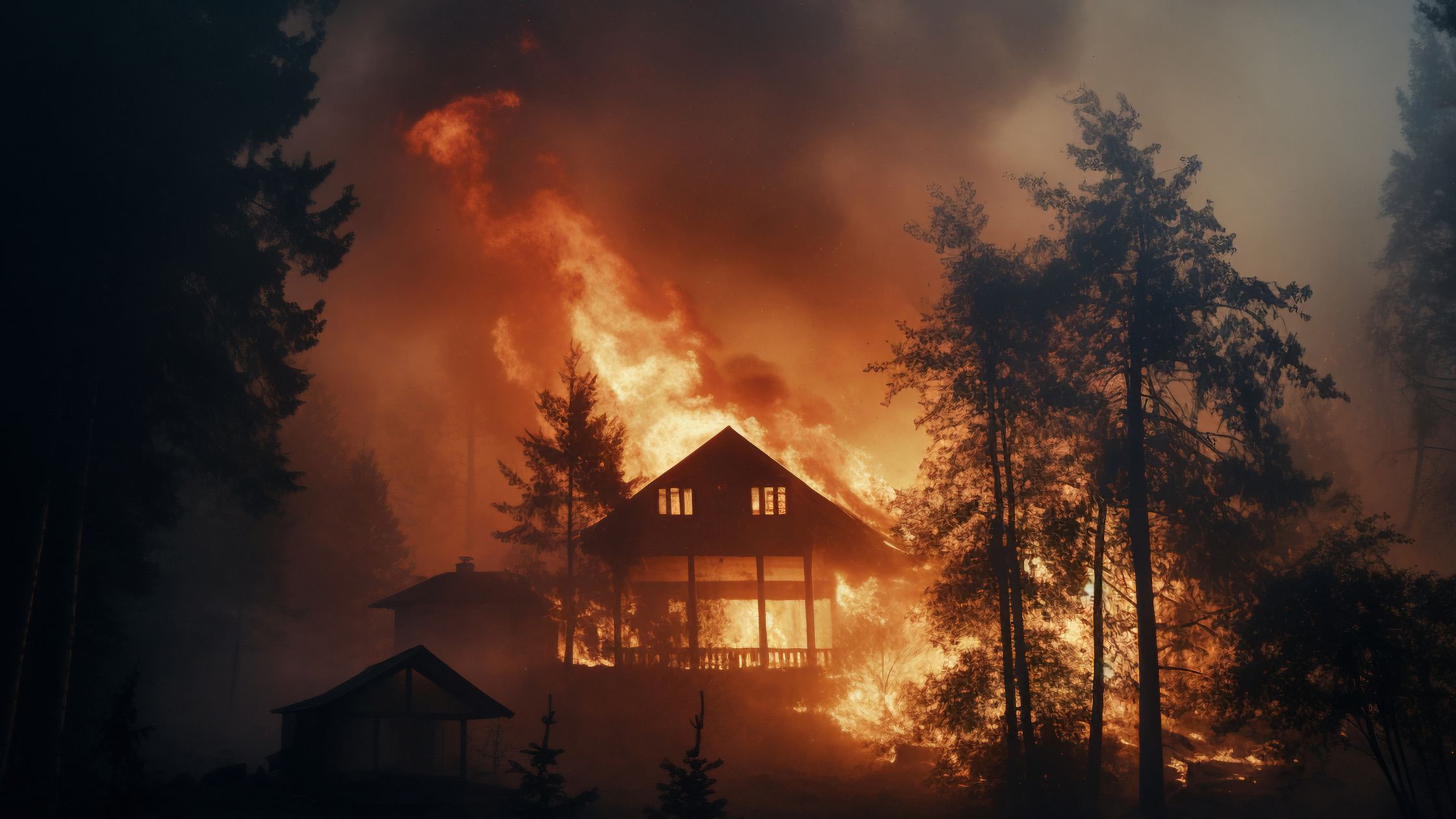

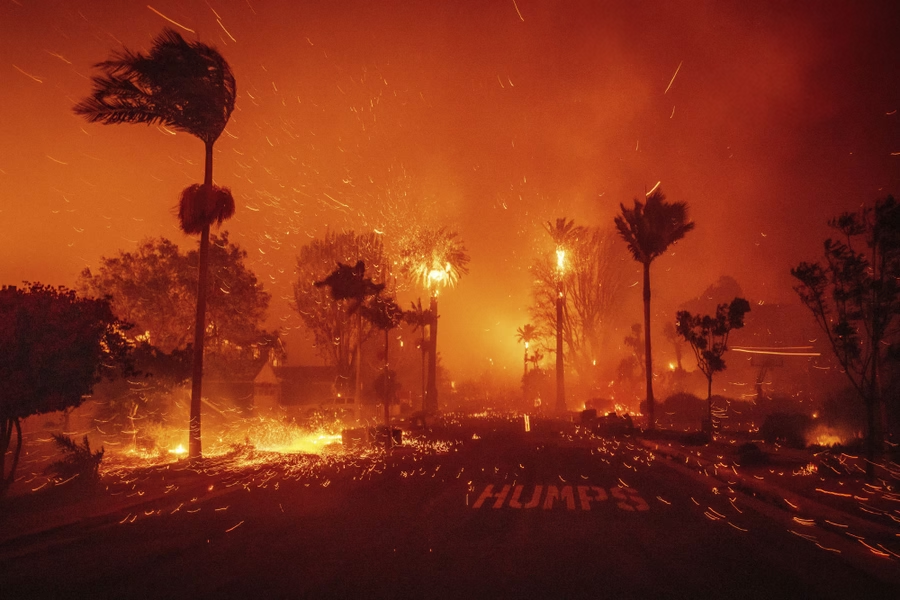
Calabasas and Agoura Hills sit at the edge of the Santa Monica Mountains, surrounded by thousands of acres of dry chaparral and coastal sage scrub. The 2018 Woolsey Fire burned nearly 97,000 acres across this exact landscape, destroying more than 1,600 structures and killing three people. That fire tore through Monte Nido, Cornell, and the hillside neighborhoods of Calabasas with devastating speed. For property owners here, brush clearance and weed abatement are not optional maintenance tasks. They are the single most important thing you can do to protect your home from the next wildfire. Ember Pro USA provides professional brush clearance and weed abatement services throughout Calabasas, Agoura Hills, and western Los Angeles County.
LA County Fire Jurisdiction: Calabasas and Agoura Hills Requirements
Both Calabasas and Agoura Hills fall under the Los Angeles County Fire Department (LACoFD) jurisdiction for brush clearance enforcement. LACoFD requires all property owners in designated Very High Fire Hazard Severity Zones (VHFHSZ) to maintain defensible space of at least 200 feet around habitable structures when terrain and property boundaries allow. This exceeds the state minimum of 100 feet under PRC 4291.
LACoFD enforces brush clearance under the County of Los Angeles Fire Code Title 32, which mandates vegetation management in three distinct zones:
- Zone 0 (0-5 feet from structure): An ember-resistant zone requiring removal of all combustible vegetation. Under AB 3074 compliance requirements, this Zone 0 is now mandatory for all properties in fire hazard zones. Only non-combustible hardscape such as gravel, stone, or concrete is permitted.
- Zone 1 (5-30 feet): Lean, clean, and green landscaping only. All dead vegetation must be removed. Trees pruned to a minimum of 6 feet above ground. Shrubs spaced at twice their height apart and kept under 4 feet tall.
- Zone 2 (30-100 feet or to property line): Reduce fuel loads and eliminate horizontal and vertical fuel continuity. Trees thinned to 10-foot canopy separation. Grass maintained at 3 inches or shorter. All dead and dying vegetation removed.
Not sure which step to prioritize first? Our wildfire risk calculator shows your CAL FIRE zone and exposure level — so you know exactly where to start.
WUI Zone Challenges in the Calabasas and Agoura Hills Corridor
The Wildland-Urban Interface (WUI) around Calabasas and Agoura Hills presents some of the most challenging fire terrain in all of Southern California. Steep canyon topography accelerates fire spread, with slopes that can push flame lengths to over 100 feet during Santa Ana wind events. The dominant vegetation types in this corridor include:
- Chaparral: Dense, highly combustible brush dominated by chamise, ceanothus, and manzanita. Chaparral in the Santa Monica Mountains accumulates massive fuel loads over 15- to 30-year growth cycles.
- Coastal sage scrub: California sagebrush, black sage, and buckwheat create dense understory layers that ignite easily and carry fire rapidly across hillsides.
- Oak woodland: Coast live oaks and valley oaks throughout Monte Nido, Cornell, and Old Agoura create canopy fuel that enables crown fire when combined with dense understory growth.
These vegetation types recover aggressively after fire. Since the 2018 Woolsey Fire, regrowth throughout the burn area has been substantial. Properties that were cleared during post-fire rebuilding now face fuel loads that rival pre-fire conditions in many areas.
Wondering if your property is in a high-risk fire zone? Check your wildfire risk score to see your CAL FIRE zone and exposure level based on your address.
Compliance Deadlines and Inspection Timeline
LA County Fire issues annual brush clearance notices beginning in late February and early March. Property owners must complete all brush clearance and weed abatement work by May 1 for the initial compliance deadline. Key dates for Calabasas and Agoura Hills property owners:
- February-March: LACoFD mails Brush Clearance and Hazard Reduction notices to all properties in designated zones
- May 1: Initial clearance deadline. All vegetation management must be completed by this date.
- May-June: LACoFD inspectors conduct field inspections of notified properties
- 30-day reinspection: Non-compliant properties receive a second notice with 30 days to correct violations
- Year-round: Properties must maintain compliance throughout fire season, typically May through November
Non-compliant properties face administrative fines of $250 to $1,000 per violation, and LACoFD may contract crews to perform abatement at the property owner’s expense, with costs added as liens against the property.
Neighborhood-Specific Considerations
Each community in the Calabasas and Agoura Hills corridor faces unique brush clearance challenges based on terrain, vegetation, and lot characteristics:
- Calabasas Park: Larger residential lots with direct exposure to Santa Monica Mountains chaparral. Many properties border open space with limited access, requiring specialized equipment for hillside clearance.
- Monte Nido: Heavily impacted by the 2018 Woolsey Fire, Monte Nido properties sit in narrow canyons with dense oak woodland and steep slopes. Post-fire regrowth creates annual clearance obligations. Properties here require careful oak management alongside standard brush thinning.
- Cornell: Unincorporated community along Cornell Road surrounded by state and national parkland. Properties face extreme WUI exposure on multiple sides with limited defensible perimeters.
- Old Agoura: Rural character with larger lots, horse properties, and mixed vegetation including non-native grasses that create continuous ground fuel during dry season. Many properties require both structural clearance and pasture-level weed abatement.
Editor’s note: Your insurance situation depends heavily on your property’s actual fire exposure. Our free risk assessment factors in official CAL FIRE data to show what your risk level actually is — useful context before talking to your carrier.
Brush Clearance and Weed Abatement Costs
Properties in Calabasas and Agoura Hills tend toward larger lot sizes with steep terrain and dense native vegetation. Typical cost ranges for professional brush clearance in this area:
- Standard residential lots (0.25-0.5 acres): $2,500 to $4,000
- Hillside or canyon-adjacent lots (0.5-1 acre): $4,000 to $6,000
- Large estate or rural parcels (1-3+ acres): $5,000 to $8,000
- Post-fire regrowth clearance on previously burned lots: $3,000 to $5,500
Costs increase on properties with steep slopes requiring hand crews rather than mechanical equipment, heavy oak tree pruning, or limited road access for debris hauling. Ember Pro provides free on-site assessments for all Calabasas and Agoura Hills properties so homeowners know exactly what the project will cost before any work begins.
These are general costs. Your actual investment depends on your property’s fire zone, exposure level, and available grants or rebates.
Check my risk scoreEmber Pro Services in Western LA County
Ember Pro USA delivers comprehensive brush clearance, weed abatement, and defensible space management across western Los Angeles County. Unlike general landscapers, Ember Pro understands fire science, LACoFD compliance standards, and the specific vegetation challenges of the Santa Monica Mountains corridor.
Ember Pro’s western LA County services include:
- Free Property Assessment: Ember Pro walks your property, identifies all compliance gaps across Zones 0, 1, and 2, and delivers a detailed scope of work with a fixed-cost estimate.
- Zone-by-Zone Clearance: Systematic clearance starting from the structure outward, ensuring every zone meets LACoFD and PRC 4291 standards.
- Native Vegetation Thinning: Careful management of chaparral, coastal sage scrub, and oak woodland to reduce fire risk without destroying the native plant community.
- Weed Abatement: Mowing, cutting, and removal of annual grasses and invasive weeds across cleared zones and open lot areas.
- Debris Hauling: All cleared vegetation is removed from the property and disposed of according to LA County regulations.
- Compliance Documentation: Ember Pro photographs completed work and provides documentation for LACoFD inspectors and your insurance provider.
Annual Maintenance Plans
Brush clearance is not a one-time event. In the Calabasas and Agoura Hills climate, vegetation regrowth begins almost immediately after clearance. Annual grasses can reach 3 feet by April, and chaparral regrowth adds 12 to 18 inches of new growth per year. Ember Pro offers annual maintenance plans that include:
- Scheduled spring clearance before the May 1 deadline each year
- Mid-season maintenance during peak fire season (July-October)
- Post-season assessment and planning for the following year
- Priority scheduling so your property is never left waiting during the spring rush
Annual maintenance plans typically cost 20 to 30 percent less than one-time service because Ember Pro is managing regrowth rather than clearing years of accumulated vegetation. For Calabasas and Agoura Hills homeowners serious about long-term wildfire protection, annual maintenance with Ember Pro is the most cost-effective approach.
Lessons from the 2018 Woolsey Fire
The Woolsey Fire remains the defining wildfire event for the Calabasas and Agoura Hills corridor. Driven by 60 mph Santa Ana winds, the fire jumped the 101 Freeway and burned from Simi Valley to the Pacific Ocean in less than 48 hours. Properties with maintained defensible space and proper brush clearance had significantly higher survival rates than those without.
Post-fire analysis revealed that ember attack, not direct flame contact, was responsible for the majority of structure losses. Embers traveled up to a mile ahead of the fire front, igniting combustible vegetation and debris within Zone 0 of homes that otherwise had adequate clearance. This is why the ember-resistant Zone 0 requirement under AB 3074 is so critical for Calabasas and Agoura Hills properties. Ember Pro’s clearance protocols prioritize Zone 0 home hardening alongside vegetation management for complete protection.
Frequently Asked Questions
When is the brush clearance deadline in Calabasas?
LA County Fire requires initial brush clearance to be completed by May 1 each year. Properties must maintain compliance throughout fire season, which typically runs from May through November.
Is brush clearance different from weed abatement?
Brush clearance involves thinning and removing native shrubs, chaparral, and trees within designated clearance zones. Weed abatement focuses on mowing and removing annual grasses, invasive weeds, and dried ground cover. Most Calabasas and Agoura Hills properties require both services for full compliance.
Can I clear brush on my own property in a protected area?
Properties adjacent to Santa Monica Mountains National Recreation Area or state parkland may have restrictions on vegetation removal near boundaries. However, LACoFD fire code requirements take precedence for the required clearance zones around structures. Ember Pro navigates these overlapping regulations for property owners.
How does brush clearance affect my fire insurance?
Maintaining documented brush clearance compliance can help you retain or obtain wildfire insurance coverage. Many insurers now require proof of defensible space compliance before issuing or renewing policies in high-risk areas like Calabasas and Agoura Hills. Ember Pro provides compliance documentation that satisfies insurer requirements.
What are the penalties for not clearing brush?
LA County Fire can issue administrative fines of $250 to $1,000 per violation. If the county clears your property after non-compliance, the cost is placed as a lien on your property. Beyond financial penalties, non-compliant properties face significantly higher wildfire risk and potential insurance non-renewal.
References
- California Public Resources Code Section 4291 (PRC 4291) – Defensible Space Requirements
- Los Angeles County Fire Code Title 32 – Brush Clearance and Hazard Reduction
- Assembly Bill 3074 (AB 3074) – Ember-Resistant Zone 0 Requirements
- CAL FIRE Woolsey Fire Incident Report (2018)
- LA County Fire Department Brush Clearance Program Guidelines
- California wildfire laws and regulations for 2026
Related Articles
- Defensible Space Requirements for California Homeowners
- Home Hardening Guide for Wildfire Protection
- Wildfire Insurance and Coverage Requirements
- AB 3074 Compliance and Zone 0 Standards
- Wildfire Defense Systems for High Wind Areas
- California Wildfire Laws 2026: What Property Owners Need to Know
Ember Pro USA serves Calabasas, Agoura Hills, Monte Nido, Cornell, Old Agoura, and all of western Los Angeles County. Contact Ember Pro today at emberprousa.com for a free brush clearance and weed abatement assessment before the next fire season.
Curious about your property’s actual wildfire risk? Our free calculator shows your CAL FIRE zone, exposure level, and recommended next steps based on your address.
Get your free risk score