
By Jim Sprouse, Co-founder of Ember Pro | NFPA Certified Wildfire Mitigation Specialist
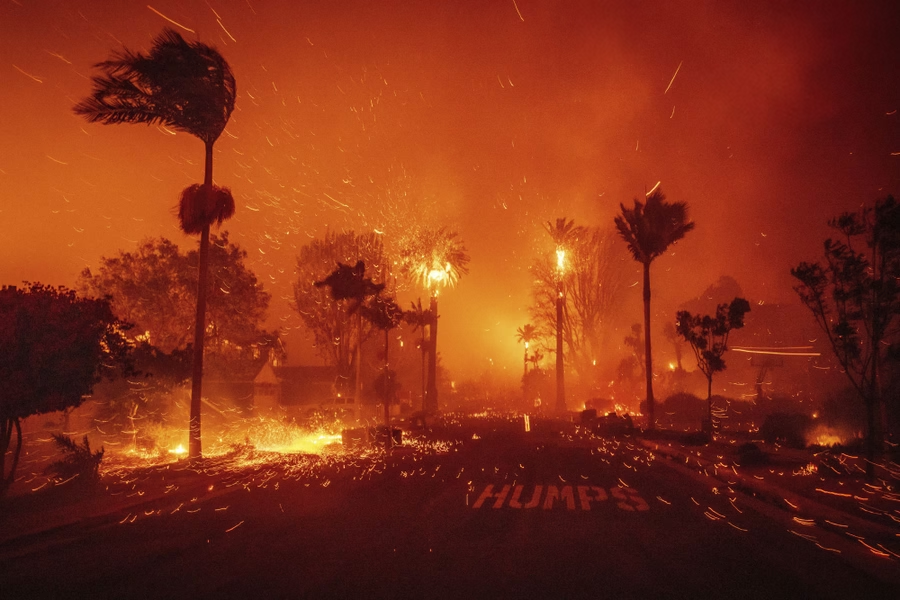
Ember-resistant mesh is one of the most cost-effective wildfire protection upgrades a homeowner can make. During a wildfire, wind-driven embers travel miles ahead of the flame front and enter your home through unprotected vents. The right mesh blocks those embers. The wrong mesh leaves your home vulnerable from the inside out.
These are general costs. Your actual investment depends on your property’s fire zone, exposure level, and available grants or rebates.
Check my risk scoreWhy Ember-Resistant Mesh Is Critical
Research from IBHS and CAL FIRE shows that ember intrusion is the number one cause of home ignition during wildfires. Embers enter through attic vents, soffit vents, foundation vents, and other openings. Once inside, they ignite dust, insulation, stored items, or structural wood. The home burns from the inside out while the exterior may show no direct flame contact.
Mesh Sizes Explained
- 1/4-inch mesh: Standard pest screen. NOT adequate for wildfire protection. Embers pass through easily.
- 1/8-inch mesh: Minimum for wildfire protection per California guidelines. Blocks most embers while allowing reasonable airflow.
- 1/16-inch mesh: Maximum ember protection. Blocks smaller embers and burning particles. Preferred for high-risk areas. Reduces airflow more than 1/8-inch.
California guidelines recommend noncombustible, corrosion-resistant metal mesh with openings between 1/16 inch and 1/8 inch.
Not sure which step to prioritize first? Our wildfire risk calculator shows your CAL FIRE zone and exposure level — so you know exactly where to start.
Materials: What Works and What Does Not
- Stainless steel: Best choice. Noncombustible, corrosion-resistant, durable.
- Galvanized steel: Good option. Less corrosion resistance but more affordable.
- Bronze: Excellent corrosion resistance. More expensive. Good for coastal areas.
- Aluminum: Lightweight, corrosion-resistant but lower melting point.
- Plastic mesh: DO NOT USE. Melts in heat. Zero wildfire protection.
- Fiberglass mesh: DO NOT USE. Melts and burns. Standard window screen is fiberglass and is not suitable.
California Chapter 7A Requirements
Chapter 7A of the California Building Code governs construction in WUI areas. For vents it requires:
- Vents must resist ember intrusion per ASTM E2886 testing
- Mesh must be noncombustible and corrosion-resistant
- Openings must not exceed 1/8 inch
- New construction in VHFHSZ zones must use State Fire Marshal approved ember-resistant vents
Types of Vents That Need Protection
Every vent is a potential entry point. Protect all of these:
- Attic vents
- Gable vents
- Eave and soffit vents
- Foundation and crawlspace vents
- Ridge vents
- Roof vents
- Dormer vents
- Dryer vents (use purpose-built ember-resistant caps)
- Garage vents
Missing even one vent can compromise the entire home.
DIY Mesh Installation
- Inspect the existing vent and measure the opening
- Cut stainless steel mesh to size with tin snips (wear gloves)
- Secure mesh tightly with noncombustible screws or fasteners
- Ensure no gaps at edges where embers could bypass
- Check that airflow is still adequate
- Inspect periodically for damage or debris buildup
Cost: DIY mesh retrofit typically costs $10 to $30 per vent for materials, making it one of the most affordable wildfire upgrades available.
When Professional Installation Is Better
- Vents are high up or difficult to access
- Complex rooflines or enclosed eaves
- Replacing vents entirely rather than adding mesh
- Mechanical vents like dryers
- You want intumescent vents that close in extreme heat
- You need documentation for insurance
Editor’s note: Your insurance situation depends heavily on your property’s actual fire exposure. Our free risk assessment factors in official CAL FIRE data to show what your risk level actually is — useful context before talking to your carrier.
Intumescent Vents vs Mesh Retrofit
Mesh retrofit: Adds physical barrier over existing vents. Cost $10 to $30 per vent DIY, $50 to $150 professionally. Good ember protection but does not seal under extreme heat.
Intumescent vents: Replace existing vents entirely. Materials expand and seal at approximately 450 to 500 degrees. Cost $30 to $100 per vent plus installation. Provides ember resistance plus heat-activated closure.
For Very High FHSZ zones, intumescent vents are worth the investment. For moderate risk, mesh retrofit provides excellent protection at lower cost.
Common Mistakes
- Wrong material: Plastic and fiberglass melt. Use metal only.
- Edge gaps: Even good mesh fails if embers bypass through gaps.
- Blocking airflow: Vents exist for ventilation. Do not seal completely.
- Missing hidden vents: Check under decks, behind shrubs, in the garage.
- Ignoring maintenance: Mesh gets damaged, debris collects. Inspect before fire season.
- Too-large mesh: Quarter-inch mesh is not adequate. Use 1/8-inch or smaller.
How Mesh Fits Into Home Hardening
Vent protection is one component of comprehensive home hardening. Combined with defensible space, Zone 0 compliance, roof hardening, and window upgrades, it creates a layered defense that significantly reduces ignition risk.
Get your free risk score at risk.emberprousa.com
Frequently Asked Questions
What size mesh should I use?
1/16-inch for maximum protection. 1/8-inch for good protection with better airflow. Never larger than 1/8-inch.
How much does a full vent retrofit cost?
For a typical home with 15 to 20 vents: $150 to $600 DIY, or $750 to $3,000 professionally.
Will mesh reduce attic ventilation?
Smaller mesh reduces airflow slightly. Most homes handle this fine, but marginal ventilation should be assessed professionally.
How often should I inspect?
At least annually before fire season. Also after storms, high winds, or pest activity.
Does mesh protect against radiant heat?
No. Mesh blocks embers but not radiant heat. That requires distance via defensible space.
Are ember-resistant vents required by code?
In new construction in VHFHSZ zones, yes. For existing homes, highly recommended but not always required.
Can I use hardware cloth?
Only if 1/8-inch or smaller openings and made of noncombustible metal.
What about soffit vents in enclosed eaves?
Particularly vulnerable. Either mesh heavily or replace with intumescent vents.
Next Steps
Walk your property and count every vent. Check mesh size and material. Then check your wildfire risk score to prioritize improvements.
Protect. Defend. Preserve.
Curious about your property’s actual wildfire risk? Our free calculator shows your CAL FIRE zone, exposure level, and recommended next steps based on your address.
Get your free risk scoreReferences
- CAL FIRE Home Hardening Guidelines
- California Building Code Chapter 7A
- IBHS Wildfire Prepared Home
- ASTM E2886 Standard
- UC ANR Fire Network