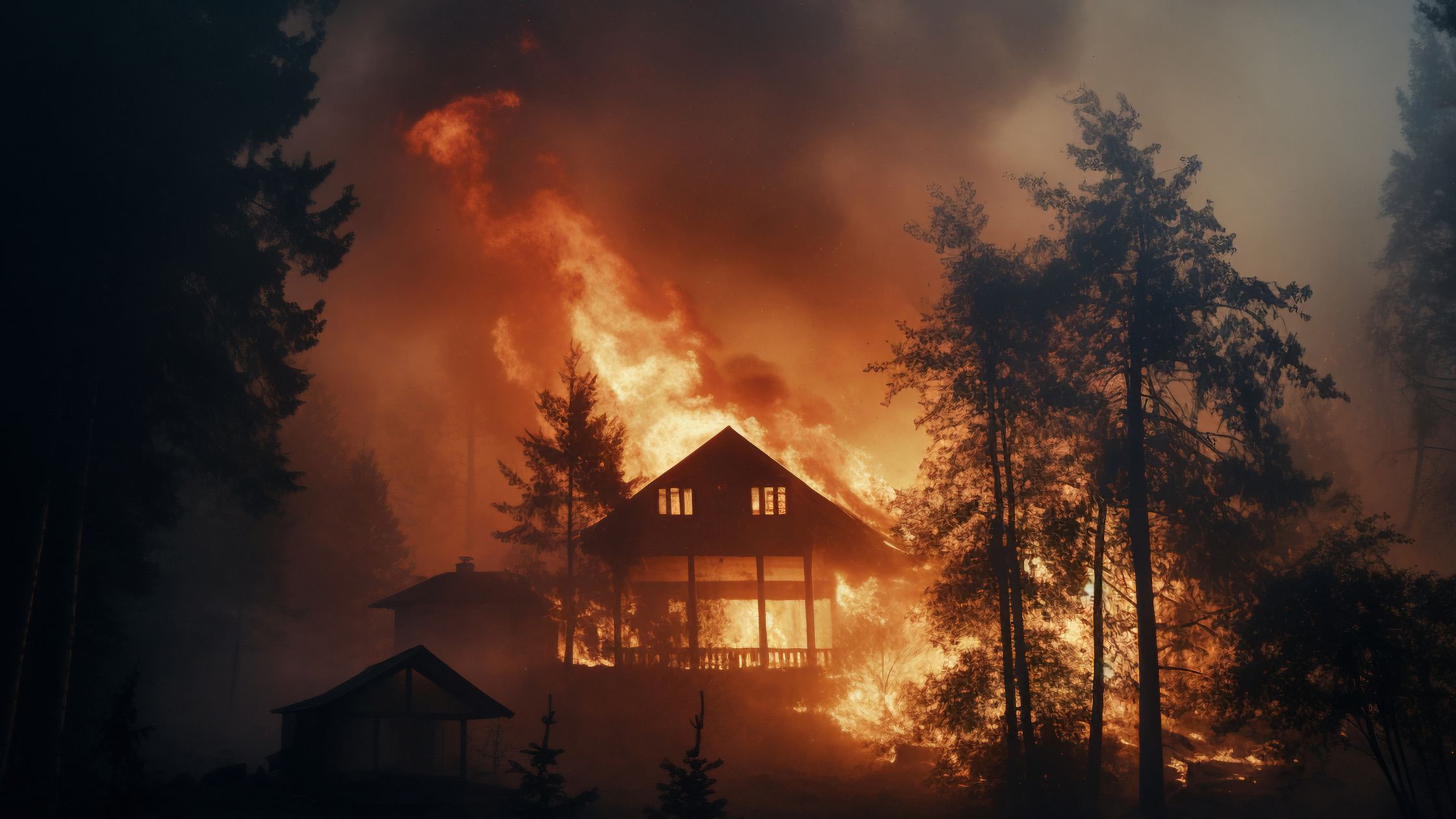


The ember resistant zone is the first five feet around your home — Zone 0 — engineered so that when wind-driven embers land against your foundation, siding, deck, or fence, there is nothing there to ignite. Created by AB 3074 and built into California’s defensible space law under PRC 4291, this is the closest and most decisive band of wildfire protection you have. This guide covers what belongs in it, what has to go, the materials that make it work, and how to keep it compliant year after year.
Not sure which step to prioritize first? Our wildfire risk calculator shows your CAL FIRE zone and exposure level — so you know exactly where to start.
Why the Ember Resistant Zone Exists
Most homes lost to wildfire do not burn from a wall of flame sweeping through. They ignite from embers — burning fragments carried a mile or more ahead of the fire — that pile against the structure and find something to catch.
The ember resistant zone removes that fuel. If the first five feet are noncombustible, embers land, cool, and die instead of starting a fire against your house.
Ember cast is the real threat
During a wind event, embers accumulate in corners, against fences, under decks, and in bark mulch beds. A single ember in the wrong spot is enough. This five-foot buffer is a direct answer to that physics — it is not landscaping theory, it is what post-fire investigators find again and again.
These are general costs. Your actual investment depends on your property’s fire zone, exposure level, and available grants or rebates.
Check my risk scoreWhat Belongs in the First Five Feet
Think noncombustible ground and clean surfaces. The materials that work in the band include:
- Gravel, crushed rock, or decomposed granite.
- Concrete, pavers, brick, or stone hardscape.
- Bare mineral soil.
- Noncombustible metal or masonry fencing where a fence meets the structure.
The goal is a clean, hardscaped perimeter that gives fire nothing to hold onto within arm’s reach of the wall.
What Has to Leave
Everything combustible within five feet is a liability. Remove:
- Bark, wood-chip, and shredded-rubber mulch.
- Wood or vinyl fencing and gates attached to the house.
- Firewood, lumber, propane tanks, and combustible patio furniture against the wall.
- Shrubs, ornamental grasses, and vegetation crowding the foundation.
- Anything stored under attached decks and stairs.
The Fence Is the Weakest Link in the Ember Resistant Zone
A combustible fence tied to your house is the most overlooked failure point in the whole system. Embers ignite the fence at a distance, and the fire travels its length straight into your siding — the fence becomes a fuse.
The fix is specific and high-value: the last five feet of any fence connecting to the structure should be noncombustible — a metal panel, a steel gate, or a masonry pilaster. Budget roughly $40 to $100 per linear foot for a metal section, or $500 to $2,000 for a noncombustible gate.
You do not have to replace the whole fence
Only the portion within the five-foot band needs to change. Keep your existing fence line beyond five feet; swap just the stretch that meets the house. It is one of the cheapest, highest-impact hardening moves available.
The Ember Resistant Zone Works With Home Hardening
This buffer protects the ground; California Building Code Chapter 7A protects the building. The two are designed to work together.
- Ember-resistant vents with 1/8-inch or finer mesh to keep embers out of attics and crawlspaces.
- Class A roofing and clean gutters so embers on the roof cannot ignite it.
- Ignition-resistant siding and closed, boxed eaves.
- Dual-pane, tempered windows that resist radiant heat.
An open vent above a gravel perimeter still lets embers into the attic. Hardening the structure and clearing the ember resistant zone together is what actually stops ignition.
Decks, Stairs, and Hidden Fuel
Attached decks extend your home’s footprint, and the space under them is a classic ember trap. The zone extends to the deck: keep the area under and around it clear of vegetation, mulch, and stored combustibles, and consider noncombustible or ignition-resistant decking materials.
Wooden raised planter boxes along the foundation are another common oversight — they hold soil, plants, and combustible wood right where you need noncombustible ground. Replace them with metal or masonry, or move them past five feet.
Editor’s note: Your insurance situation depends heavily on your property’s actual fire exposure. Our free risk assessment factors in official CAL FIRE data to show what your risk level actually is — useful context before talking to your carrier.
Building an Ember Resistant Zone, Step by Step
A retrofit is more manageable than most homeowners expect when you work one wall at a time.
- Assess: Walk the perimeter and mark every combustible item within five feet of a wall or deck.
- Strip: Remove mulch, plants, firewood, furniture, and wood planters from the band.
- Re-material: Lay gravel, decomposed granite, or pavers over weed barrier for a clean, permanent surface.
- Fence: Cut in a noncombustible section or gate where any fence meets the house.
- Harden: Add ember-resistant vent screens and clear the roof, gutters, and under-deck space.
Most single-family retrofits are completed in a few days by a small crew, and the finished perimeter needs far less ongoing upkeep than the mulch beds and foundation shrubs it replaces.
Maintaining the Ember Resistant Zone
The zone is not “set and forget.” Wind and seasons keep depositing fuel, so a short routine keeps it compliant.
- Rake leaves and needles out of the gravel and off the roof each season.
- Pull any weeds that sprout through the hardscape.
- Move seasonal items — firewood, holiday decorations, storage bins — back outside the five-foot line.
- Re-check the fence and deck connections annually.
The Ember Resistant Zone in California Law
AB 3074 wrote this buffer into statute by amending PRC 4291, and directed the Board of Forestry and Fire Protection to finalize the enforceable standard. That regulation is being locked down, with new construction complying first and existing homes roughly a year after adoption.
The ember resistant zone in California applies to homes in the State Responsibility Area and Very High Fire Hazard Severity Zones on CAL FIRE’s 2025 maps. Related measures such as CBC Chapter 7A and SB 896-era wildfire legislation reinforce the same direction: harden the home and the five feet around it.
What It Costs
For a typical single-family perimeter:
- Mulch-to-gravel or paver conversion in the 5-foot band: $3 to $8 per square foot.
- Noncombustible fence section or gate at the structure: $40 to $100 per linear foot.
- Complete retrofit: commonly $3,000 to $15,000 depending on fencing, hardscape, and deck work.
This is also mitigation that California’s wildfire-safety insurance framework recognizes toward eligibility and discounts.
Prioritize the Highest-Risk Feet First
If you cannot do everything at once, sequence the work by exposure rather than by convenience. Not all five-foot sections carry equal risk.
Start with any wall where a combustible fence, gate, or wood deck connects to the house — those are the direct fire paths. Next, address the downwind and downslope sides, where embers and fire concentrate during a wind-driven event. Corners and re-entrant angles that trap blowing embers come next.
Broad, open walls that face away from the prevailing wind and have no attachments are the lowest priority. Tackling the zone in that order means every dollar goes to the section most likely to fail first.
Frequently Asked Questions
What is the ember resistant zone?
It is the first five feet around your home — Zone 0 — kept noncombustible so embers cannot ignite anything against the structure.
How big is it?
Five feet, measured outward from every exterior wall, attached deck, and structure.
Is the ember resistant zone required in California?
AB 3074 created the requirement; the enforceable regulation is being finalized, with new construction complying first and existing homes about a year later.
What can I put in it?
Noncombustible ground cover — gravel, decomposed granite, pavers, concrete, or stone — and noncombustible fencing where a fence meets the house.
Can I keep mulch in it?
No combustible mulch. Bark, wood chips, and rubber must be replaced with gravel or hardscape.
Do I need to replace my fence?
Only the five-foot section connecting to the house needs to be noncombustible; the rest of the fence can stay.
What about plants close to the house?
The standard favors a plant-free band; at most, low, well-watered, spaced plants — never shrubs or vegetation against the wall.
Does the ember resistant zone include my deck?
Yes. Keep the area under attached decks clear of vegetation and combustibles, and use ignition-resistant decking where possible.
Will it lower my insurance?
It is one of the recognized mitigation actions under California’s wildfire-safety framework and can support insurance eligibility and discounts.
Next Steps
The ember resistant zone is the highest-return five feet on your entire property — it is where fires are won or lost when the embers arrive. Building it does not require tearing out your yard; it requires eliminating the specific combustibles closest to your walls.
Start with the weakest link: the combustible fence or gate attached to your house. Replacing that five-foot section with metal or masonry closes the most common path for fire into a home. Measure your exposure with our wildfire risk assessment tool before you plan the work.
Want to know where your home stands? Get Your Free Satellite Property Review
Curious about your property’s actual wildfire risk? Our free calculator shows your CAL FIRE zone, exposure level, and recommended next steps based on your address.
Get your free risk score
Leave a Reply