
Defensible Space · Zone 0 · AB 3074
Zone Zero Gates and Fencing: What California’s New Defensible Space Rules Mean for Your Property
AB 3074 added Zone 0 — the 0-to-5-foot perimeter immediately around your home. Your fence and gate are now the first line of defense. Here’s what that means in practice.
Not sure which step to prioritize first? Our wildfire risk calculator shows your CAL FIRE zone and exposure level — so you know exactly where to start.
What Is Zone 0?
Before AB 3074, California’s defensible space rules started at the house and extended outward in two zones: 0–30 feet (Zone 1, lean/clean) and 30–100 feet (Zone 2, reduced fuel). The immediate area against the structure — the first five feet — didn’t have its own designation.
That changed in 2023. The new Zone 0 covers everything from 0 to 5 feet from the building, and it carries the strictest requirements of any defensible space zone. This is where fire behavior research shows the most ignitions happen — not from direct flame contact with the forest, but from embers landing on or against combustible materials touching the house.
And the number-one combustible material in Zone 0 that homeowners overlook? Their fence.
Why Your Fence Is the Biggest Zone 0 Risk
Think about how most California homes are built. The wood privacy fence runs right up to the house — often attached directly to the structure. During a wildfire, that fence becomes a 40-to-60-foot fuse that carries fire from the property line straight to your siding.
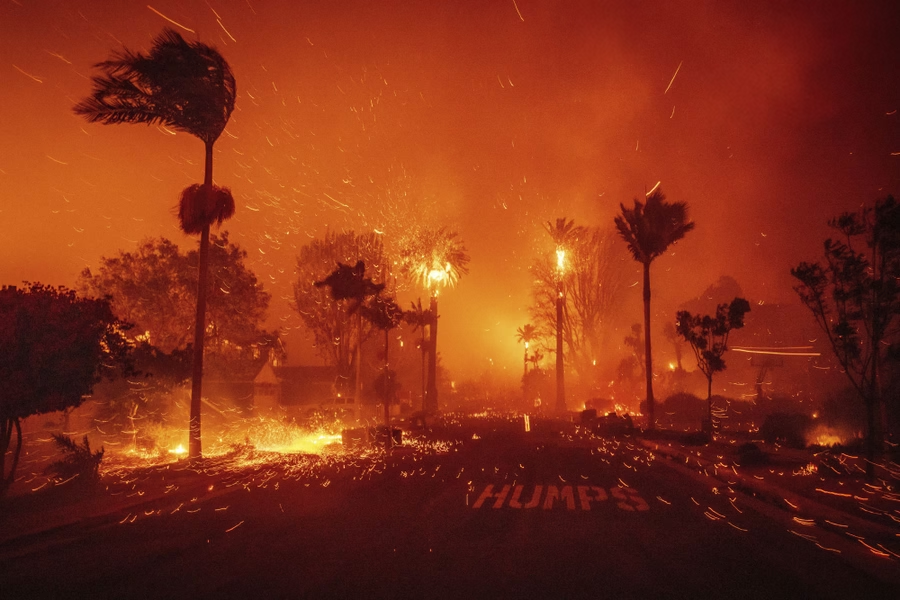
This isn’t theoretical. Post-fire damage assessments from the 2017 Tubbs Fire, 2018 Camp Fire, and 2025 Palisades Fire consistently show the same pattern: homes that survived had non-combustible barriers in the first five feet. Homes that didn’t had wood fencing running to the structure.
Editor’s note: Your insurance situation depends heavily on your property’s actual fire exposure. Our free risk assessment factors in official CAL FIRE data to show what your risk level actually is — useful context before talking to your carrier.
Fire-Resistant Fence Materials That Meet Zone 0
Not every “fire-resistant” fence actually qualifies for Zone 0. Here’s what works and what doesn’t:
| Material | Zone 0 Compliant? | Notes |
|---|---|---|
| Steel / wrought iron | Yes | Best option. Non-combustible, durable, allows airflow |
| Concrete block / masonry | Yes | Maximum fire resistance but blocks airflow; needs proper drainage |
| Aluminum | Yes | Lightweight, non-combustible, won’t rust in coastal areas |
| Corten / weathering steel | Yes | Premium look, develops protective patina, excellent fire resistance |
| Composite (wood-plastic) | No | Melts and burns. Marketing says “fire-resistant” but does not meet non-combustible standard |
| Vinyl / PVC | No | Melts at 300°F, produces toxic smoke, collapses in radiant heat |
| Wood (any species) | No | Even pressure-treated or “fire-retardant” treated wood is combustible |
| Bamboo | No | Extremely combustible, ignites faster than most wood species |
Zone Zero Gates: The Part Everyone Forgets
Homeowners replace their fence panels and leave the original wood gate hanging right next to the house. That gate is now the weak link in your entire Zone 0 perimeter.
A proper Zone 0 gate needs to meet the same non-combustible standard as the fence itself. That means:
- Steel or aluminum frame and panels — no wood gates, even if the rest of the fence is metal
- Non-combustible hardware — hinges, latches, and mounting brackets rated for heat exposure
- Self-closing mechanism — during an evacuation, an open gate creates a direct ember pathway along the fence line to the structure
- Clearance from vegetation — gate swing area needs to be clear of combustible mulch, plants, and debris
The 5-Foot Transition Detail
If you want to keep your wood privacy fence for the rest of the property, the code-compliant solution is a non-combustible transition section. The last 5+ feet of fence approaching the structure switches from wood to metal or masonry. The gate itself is part of this transition — if it falls within 5 feet of the building, it must be non-combustible.
This transition detail is where most DIY attempts fail. The connection between the non-combustible section and the wood section needs to prevent fire from bridging the gap. It’s not enough to bolt a metal panel to a wood post — the post itself is within Zone 0 and needs to be non-combustible.
What a Professional Zone 0 Gate Installation Looks Like
1. Property Survey and Measurement
The first step is mapping exactly where your 5-foot perimeter falls relative to existing fencing and structures. This isn’t always obvious — bay windows, bump-outs, covered patios, and attached pergolas all extend the structure footprint and push Zone 0 further into the yard.
2. Material Selection
We match the fire-resistant fence material to the property’s aesthetic and the existing fence style. A steel gate doesn’t have to look industrial — modern steel and aluminum gates can be powder-coated to match wood tones, incorporate privacy panels, and maintain the curb appeal your HOA requires.
3. Foundation Work
Metal gates are heavier than wood. The posts need proper concrete footings — typically 24″ deep in undisturbed soil — and the hardware needs to handle the weight without sagging. This is the step that separates a gate that works for 20 years from one that drags on the ground after two summers.
4. Integration With Existing Fence
The transition from non-combustible to combustible fencing requires a fire-rated connection detail. We install a steel post at the transition point, with the wood fence terminating at the steel — not overlapping it. This creates a clean thermal break that prevents fire from wicking along the fence line.
5. Documentation for Insurance
Like ember-resistant vent retrofits, insurance companies are increasingly requiring proof of Zone 0 compliance. We provide photo documentation, material specifications, and a signed completion certificate you can submit with your renewal.
Common Zone 0 Gate Mistakes
Attaching a Metal Gate to Wood Posts
If the posts are within 5 feet of the structure, they need to be non-combustible too. A metal gate on wood posts is still a Zone 0 violation — and a fire risk. The posts burn, the gate falls, and the opening is now an ember highway.
Ignoring Attached Structures
Your pergola, carport, or covered patio is part of the structure for Zone 0 purposes. A fence that’s 8 feet from your house wall but 3 feet from your attached patio cover is inside Zone 0. We see this mistake on almost every property we assess.
Using “Fire-Retardant Treated” Wood
FRT lumber is rated for use in wall assemblies where it’s protected by exterior cladding. An exposed FRT fence post in direct contact with radiant heat and embers will still ignite. The Zone 0 standard is non-combustible, not fire-retardant — there’s a critical difference.
Forgetting the Gate Latch Side
The gate latch side typically has a wood jamb or stop. If that jamb is within Zone 0, it needs to be metal. We’ve seen properties where someone installed a beautiful steel gate and left the original wood gate jamb attached to the house — completely defeating the purpose.
What Zone 0 Fencing and Gates Cost
Pricing depends on how much fencing falls within your 5-foot Zone 0 perimeter:
- Single gate replacement (steel, powder-coated): $800–$2,000 installed
- 5-foot transition section + gate: $1,500–$3,500 installed
- Full Zone 0 perimeter (typical home): $3,000–$8,000 installed
- Premium Corten/architectural steel: $5,000–$12,000+ installed
For most homes, the practical solution is the transition approach — keeping the existing wood fence for the bulk of the property and switching to non-combustible materials only where the fence enters Zone 0. This keeps costs reasonable while achieving full compliance.
Is This Something I Can DIY?
If you’re comfortable setting steel posts in concrete, welding or bolting metal panels, and doing the transition detail correctly — maybe. But consider three things:
- Permits: Many jurisdictions in WUI areas require permits for fence replacement within defensible space zones. A licensed contractor handles this.
- Weight: A 6-foot steel gate panel weighs 80–150 lbs. Hanging it level on properly set posts is a two-person job with the right equipment.
- Documentation: Your insurance company wants a licensed contractor’s attestation, not your word. If you’re doing this to maintain coverage, DIY may not satisfy the requirement.
Check Your Zone 0 Exposure
Walk your property with a tape measure. Mark 5 feet from every exterior wall, window, door, and attached structure. Everything inside that line is Zone 0. Now look at what’s there: wood fence, combustible gate, wooden trellis, firewood stack, mulch bed, or vegetation touching the house.
Each of those is an ignition point. Zone 0 compliance means eliminating every one of them.
Get a Free Zone 0 Assessment →
Or call us: San Diego (858) 939-9345 · Los Angeles (310) 499-4891
Curious about your property’s actual wildfire risk? Our free calculator shows your CAL FIRE zone, exposure level, and recommended next steps based on your address.
Get your free risk score
Leave a Reply