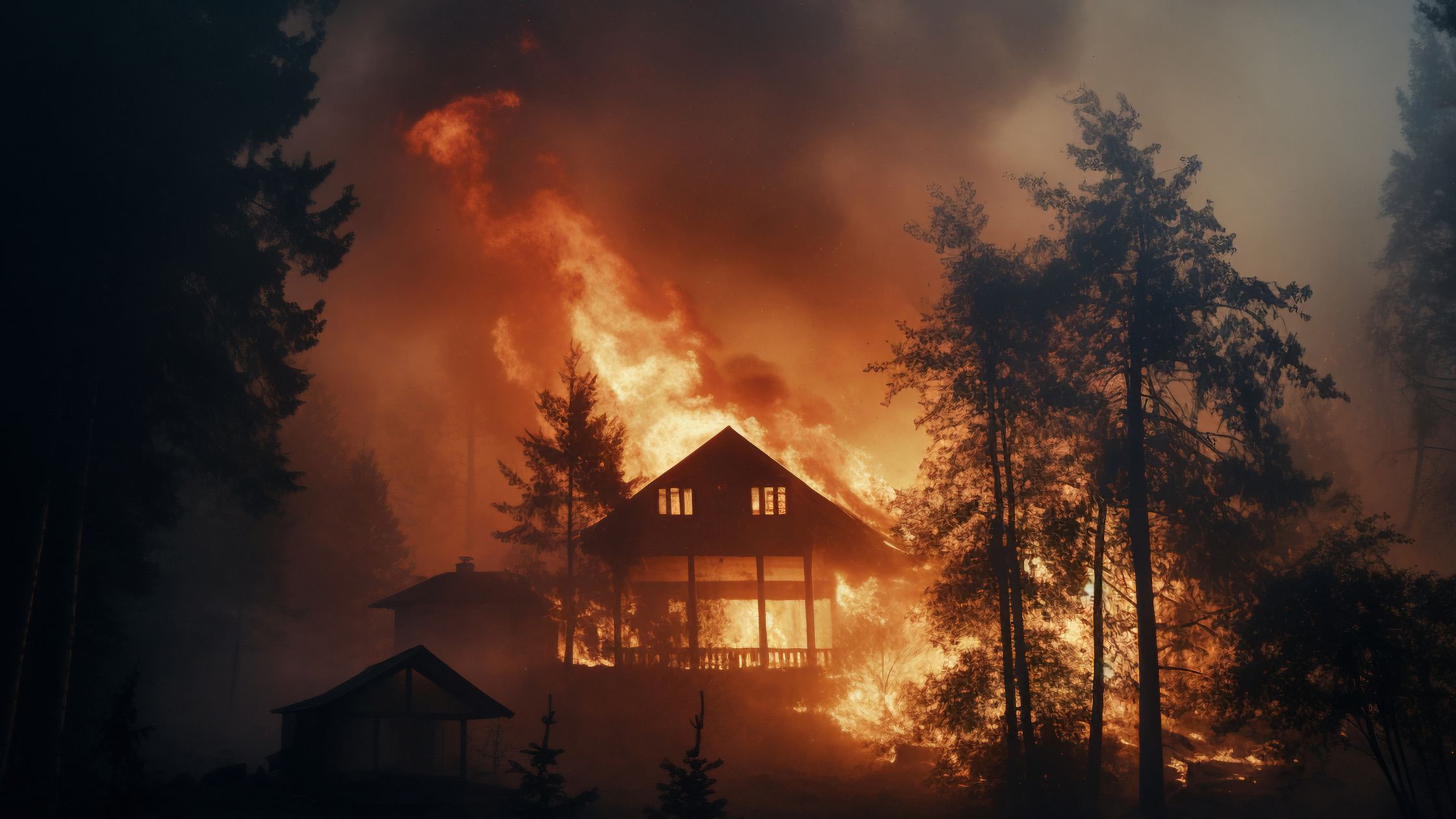

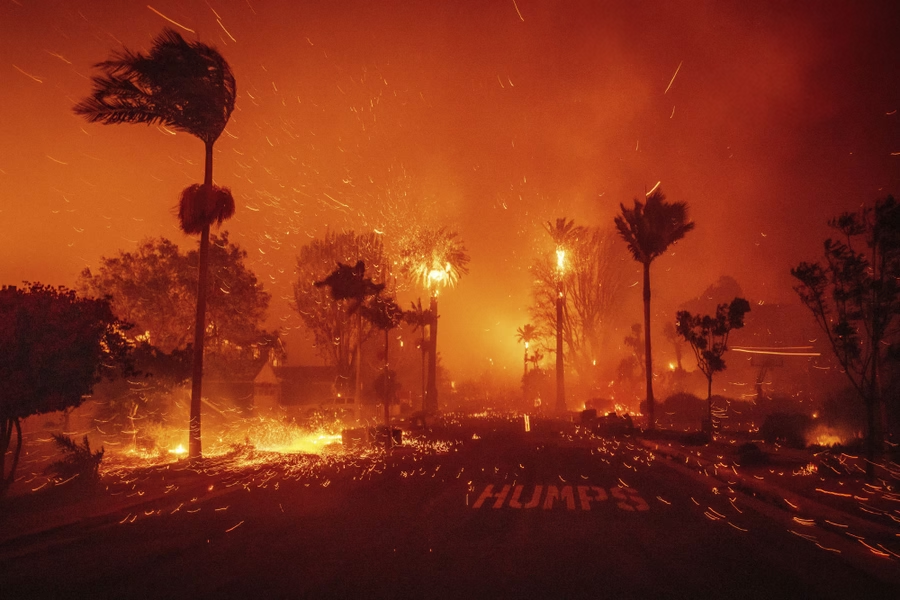
Wildfire sprinkler systems have become one of the most effective active defense tools available to California homeowners. Unlike passive measures such as fire-resistant roofing or defensible space, sprinkler systems actively fight fire by wetting structures and surrounding vegetation during a wildfire event. But with costs ranging from $3,000 to $30,000 depending on the system type, homeowners need to understand exactly what they are paying for, what level of protection they receive, and whether the investment makes financial sense.
Editor’s note: Your insurance situation depends heavily on your property’s actual fire exposure. Our free risk assessment factors in official CAL FIRE data to show what your risk level actually is — useful context before talking to your carrier.
Types of Wildfire Sprinkler Systems
There are three primary categories of exterior wildfire sprinkler systems, each designed for different protection strategies and budgets.
Rooftop Sprinkler Systems
Rooftop sprinklers mount directly on the roof ridge or along eave lines, wetting the roof surface and immediate surroundings. Since the roof is the most vulnerable part of a home during ember attack, rooftop systems target the highest-risk surface.
- Cost range: $3,000 to $8,000 for most residential installations
- Water usage: 15-30 gallons per minute depending on roof size
- Coverage: Roof surface plus 5-10 feet beyond eave line
- Best for: Homeowners focused on protecting the most vulnerable surface
Rooftop systems are the most affordable entry point and provide significant protection against ember ignition, which accounts for the majority of home losses in wildfires.
Exterior Wall Sprinkler Systems
Exterior wall sprinklers mount along the walls of the home, wetting siding, windows, and the ground immediately adjacent to the structure. These systems protect against radiant heat and direct flame contact on walls.
- Cost range: $5,000 to $15,000 depending on home size and number of zones
- Water usage: 20-50 gallons per minute
- Coverage: Full exterior wall surfaces plus Zone 0 perimeter
- Best for: Homes in areas with direct flame exposure risk or dense adjacent vegetation
Perimeter Sprinkler Systems
Perimeter systems create a wetted buffer zone around the entire property or around key structures. These are the most comprehensive systems, wetting vegetation and ground fuels in the defensible space zones surrounding your home.
- Cost range: $10,000 to $30,000 for full-perimeter residential installations
- Water usage: 40-100+ gallons per minute
- Coverage: 30 to 100 feet from structures in all directions
- Best for: Properties with significant wildland interface exposure or limited defensible space
Installation Considerations
Installing a wildfire sprinkler system involves more than mounting sprinkler heads. Several factors affect both the feasibility and cost of installation.
Water Supply Requirements
Water supply is the most critical factor in sprinkler system design. Systems require either a dedicated water tank, a swimming pool connection, a well with sufficient flow rate, or a municipal water connection with adequate pressure.
- Dedicated water tank: 2,500 to 5,000 gallons recommended. Tank costs $2,000 to $8,000 depending on material and size
- Swimming pool connection: Most pools provide 10,000+ gallons, making them an excellent water source. Connection costs $500 to $2,000
- Well water: Must deliver minimum 20 GPM sustained flow. May require a booster pump ($1,500 to $3,000)
- Municipal water: Adequate for rooftop systems but may not support full perimeter systems at required flow rates
Pump Systems
Most installations require a dedicated pump to achieve adequate pressure and flow. Gas-powered pumps are preferred because they operate during power outages, which commonly occur during wildfires. Expect to pay $1,500 to $5,000 for pump equipment and installation.
Automatic vs. Manual Activation
Systems can be activated manually (requiring someone present to turn them on) or automatically via heat sensors, smoke detectors, or remote activation through smartphone apps.
- Manual activation: Lower cost but requires someone present during a fire event. Not effective if you evacuate before fire reaches your property
- Automatic activation: Adds $1,000 to $3,000 to system cost but activates without human intervention. Heat-activated systems trigger at preset temperatures
- Remote activation: Allows activation via smartphone from any location. Adds $500 to $1,500 for cellular-connected controllers
Ember Pro strongly recommends automatic or remote activation systems. During evacuation, you will not be present to activate a manual system, and the window between fire arrival and structural ignition can be minutes.
Insurance Benefits of Wildfire Sprinklers
Wildfire sprinkler systems can significantly impact your homeowners insurance situation. Many insurers recognize exterior sprinkler systems as a meaningful risk reduction measure.
- Some insurers offer 5-15% premium discounts for homes with verified exterior sprinkler systems
- Sprinkler systems can help maintain coverage in areas where insurers are dropping policies
- Documentation of your sprinkler system supports insurance renewal applications
- Combined with home hardening and defensible space, sprinklers create a comprehensive risk profile that insurers favor
Comparison to Other Mitigation Measures
How do sprinkler systems compare to other wildfire mitigation investments?
- Defensible space maintenance: $2,000 to $15,000 annually. Passive protection that reduces fuel loads. Required by California law regardless of other measures
- Home hardening (roof, vents, siding): $10,000 to $50,000+. Passive structural protection. Permanent improvement with no ongoing operation costs
- Fire-resistant landscaping: $5,000 to $20,000. Passive fuel reduction. Improves property aesthetics and value
- Exterior sprinkler system: $3,000 to $30,000. Active defense. Requires water supply and power source but provides real-time fire suppression
The most effective approach combines multiple strategies. Sprinklers work best as part of a layered defense that includes defensible space, structural hardening, and proper vegetation management.
Not sure which step to prioritize first? Our wildfire risk calculator shows your CAL FIRE zone and exposure level — so you know exactly where to start.
ROI Analysis: Do Wildfire Sprinklers Pay for Themselves?
The return on investment for wildfire sprinklers depends on several factors:
- Property value protection: A $500,000 home destroyed costs far more than a $15,000 sprinkler system. Even a 5% improvement in survival probability makes the math compelling
- Insurance savings: A 10% discount on a $5,000 annual premium saves $500/year, providing payback on a basic system within 6-16 years
- Property value increase: Homes with documented wildfire protection systems sell faster and at higher prices in fire-prone areas
- Peace of mind: The psychological benefit of active fire defense during evacuation is significant for homeowners in high-risk zones
For homes valued over $300,000 in high-risk areas, a properly designed sprinkler system typically provides positive ROI through insurance savings and property value preservation alone.
How Ember Pro Approaches Sprinkler System Design
Ember Pro’s comprehensive wildfire mitigation approach includes sprinkler system evaluation as part of our home hardening assessments. We evaluate your property’s water supply, topography, vegetation exposure, and structural vulnerabilities to recommend the right sprinkler system type and coverage area.
Our services include:
- Water supply assessment and flow rate testing
- Custom sprinkler system design matched to your property’s risk profile
- Integration with existing defensible space and hardening measures
- System testing and maintenance planning
- Documentation for insurance compliance and premium negotiations
- Coordination with local compliance requirements
Frequently Asked Questions
How long will a sprinkler system run during a fire?
Run time depends on water supply. A 5,000-gallon tank provides approximately 2-4 hours of operation for a rooftop system. Most wildfire exposure events at a given property last 15-45 minutes, so adequate tank sizing provides substantial protection even without a continuous water supply.
Can I install a wildfire sprinkler system myself?
Basic rooftop systems are available as DIY kits, but professional installation ensures proper coverage, pressure, and activation. DIY installations may not qualify for insurance discounts without professional verification.
Do sprinkler systems work in freezing temperatures?
Most California wildfire zones rarely experience freezing, but systems should be designed with freeze protection if your area drops below 32 degrees F. Dry-pipe systems that only fill when activated avoid freeze concerns entirely.
Will my water pressure support a sprinkler system?
Municipal water typically provides 40-80 PSI, which is adequate for rooftop systems. Larger perimeter systems usually require a dedicated pump regardless of water source. A professional flow test determines your specific capacity.
How much maintenance do sprinkler systems require?
Annual maintenance includes testing the pump, checking sprinkler heads for clogs or damage, verifying water supply levels, and testing activation mechanisms. Most homeowners can perform basic checks; annual professional inspection is recommended.
Are there rebates or tax incentives for wildfire sprinklers?
Some California counties and fire safe councils offer cost-sharing programs for wildfire mitigation improvements including sprinkler systems. Check with your local fire safe council and county fire department for current programs.
References
- National Fire Protection Association (NFPA) – Exterior Fire Sprinkler Systems for Wildland-Urban Interface
- Insurance Institute for Business and Home Safety (IBHS) – Active Fire Protection Research
- CAL FIRE – Wildfire Mitigation Equipment Standards
- California State Fire Marshal – Exterior Sprinkler System Guidelines
- UC Cooperative Extension – Wildfire Home Protection Resources
Related Articles
- Complete Guide to Home Hardening for Wildfire Protection
- Defensible Space Requirements for California Homes
- Wildfire Defense Systems: Options and Costs
- How Wildfire Mitigation Affects Your Insurance Premiums
- California Wildfire Laws 2026: What Changed
Ember Pro helps California homeowners evaluate, design, and implement wildfire sprinkler systems as part of comprehensive wildfire protection strategies. Contact us today for a professional wildfire risk assessment and sprinkler system consultation.
Curious about your property’s actual wildfire risk? Our free calculator shows your CAL FIRE zone, exposure level, and recommended next steps based on your address.
Get your free risk score